




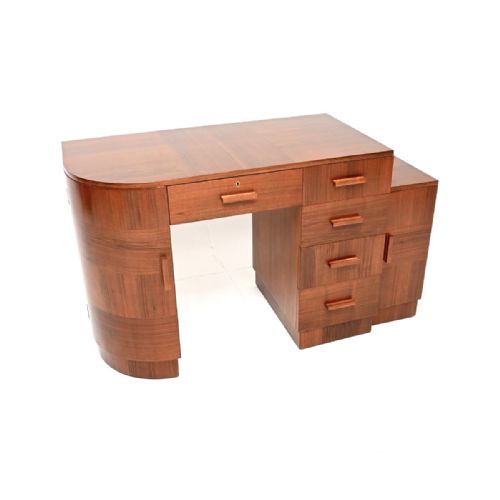
Walnut Pedestal Dressing Table
A walnut pedestal dressing table combines generous drawer storage with a dedicated mirror setup, offering an elegant centrepiece for any bedroom.
Walnut Pedestal Dressing Table
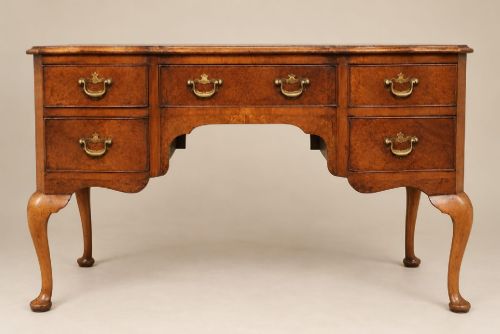
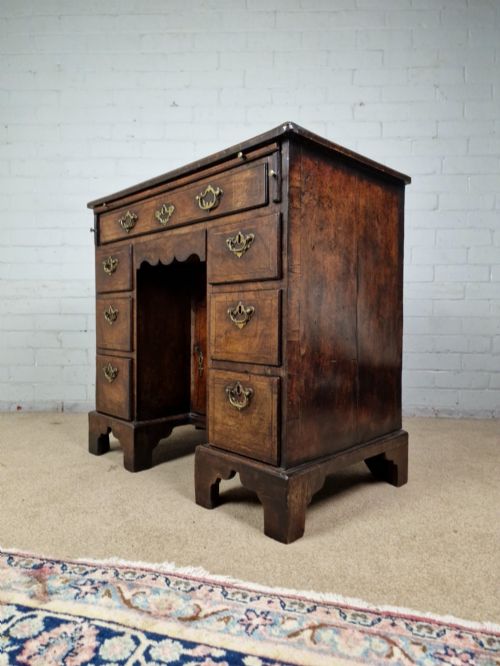
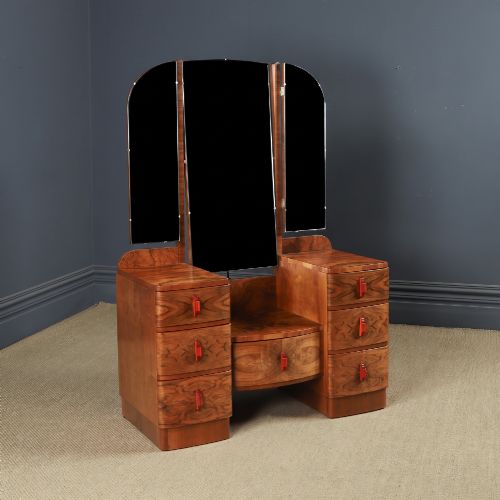
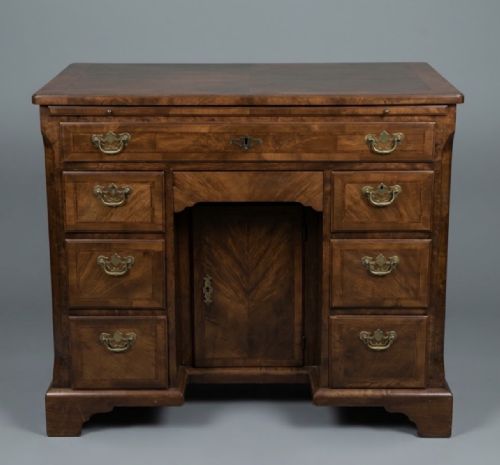
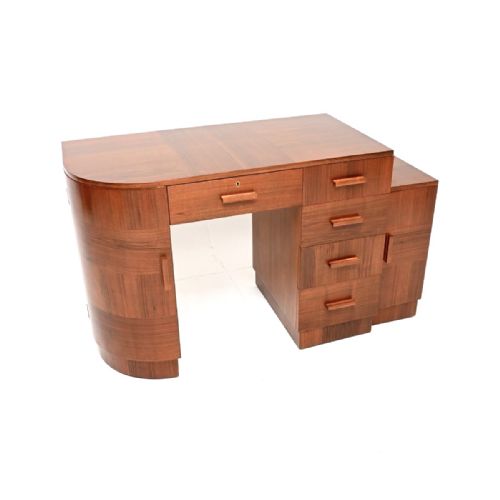
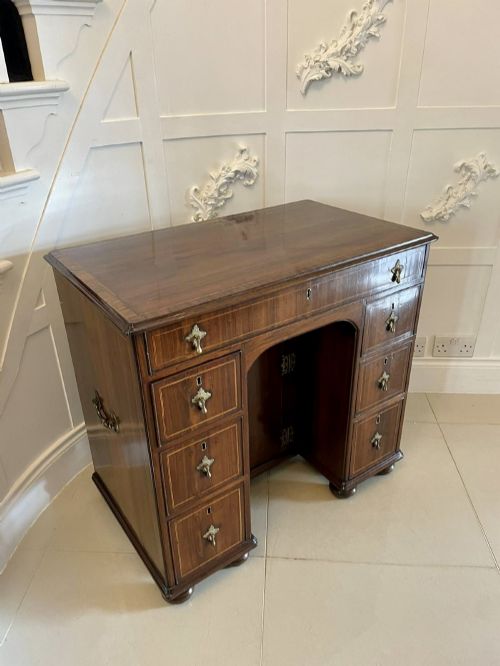
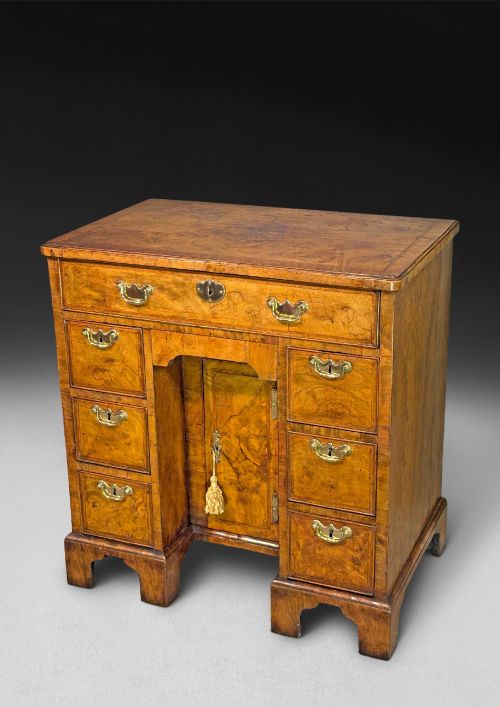
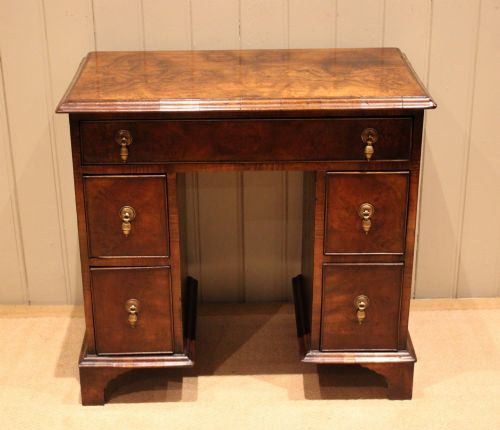
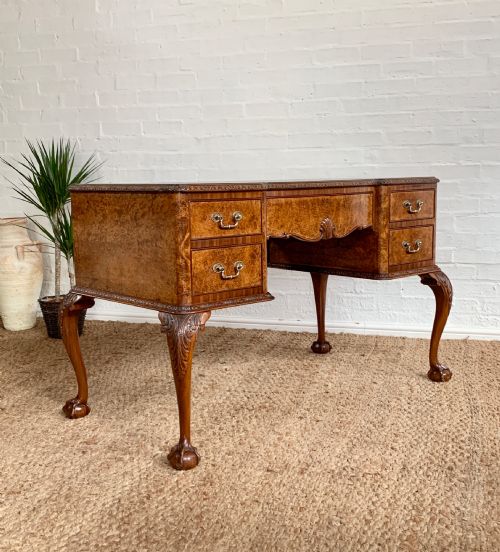
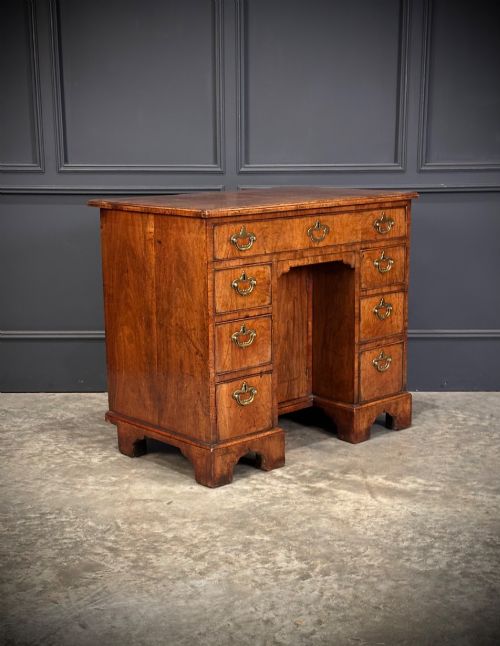
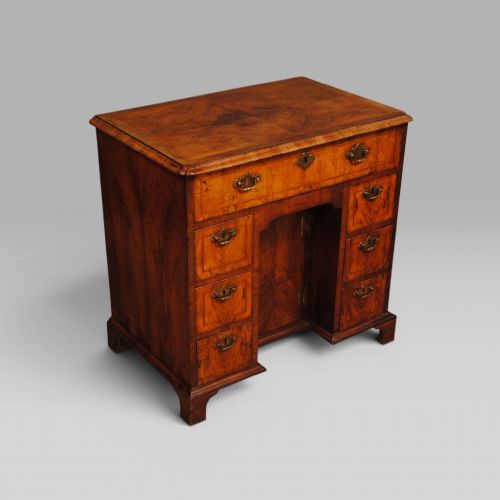
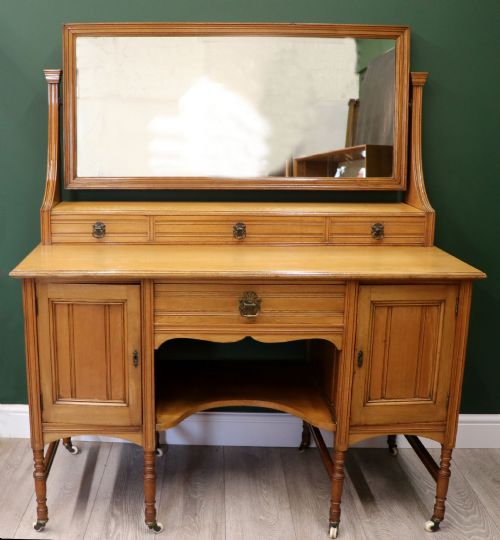
When you search for a walnut pedestal dressing table, you encounter substantial furniture pieces designed for personal grooming and writing. These items feature twin stacks of small drawers flanking a central kneehole space, often surmounted by adjustable mirrors.
The most common versions on this page span the 18th century, the Victorian era, and the 1930s Art Deco period. Early examples display restrained Georgian proportions, whereas later pieces embrace streamlined veneers and geometric forms.
How they were made
Cabinetmakers constructed these pieces using solid timbers like oak and secondary softwoods for internal framing, applying figured walnut or burr walnut veneers to the exterior surfaces. This technique exploited the rich grain patterns of the wood, particularly in fiddleback and burr selections.
Makers integrated brass hardware, such as drop handles and escutcheons, alongside inset leather writing surfaces and polished glass mirrors. Structural integrity relied on traditional dovetail joinery within the drawer construction.
Walnut Pedestal Dressing Table Retail Price Guide 2026
Typical asking prices for walnut pedestal dressing table among the pieces listed under this phrase on Sellingantiques today, from the lower quarter to the upper quarter. They describe what is for sale here now, not the wider market.
Listings feature walnut furniture spanning from the 18th century through the Victorian era up to 1930s Art Deco designs.
What varies in quality
The selection of the walnut timber determines much of the visual appeal, ranging from plain grain to highly figured burr and fiddleback veneers that require immense skill to match symmetrically across drawer fronts.
Construction details such as the thickness of the walnut timber, the precision of the dovetailing, and the preservation of original brass handles separate the finest historical examples from later revival pieces.
Harry and Lou Epstein
The Walnut Pedestal Dressing Table Glossary
- Burr walnut
- A veneer taken from the wart-like growths on walnut trees, creating swirling, highly decorative grain patterns. This material was favoured by cabinetmakers for high-status furniture fronts.
- Kneehole
- A central recessed space beneath the desktop or dressing surface designed to accommodate the user's legs. This arrangement divides the flanking pedestals of drawers.
- Fiddleback walnut
- A striped figure in the timber grain resembling the back of a violin, achieved through specific cutting angles. It reflects light differently depending on the viewing angle.
- Dovetail
- A joint formed by interlocking wedge-shaped fingers, used extensively in drawer construction. Hand-cut dovetails indicate earlier craftsmanship before machine production.
- Pedestal
- A structural support column or cabinet base containing multiple stacked drawers. Two such units typically support the main tabletop.
Walnut Pedestal Dressing Table: Frequently Asked Questions
What is a walnut pedestal dressing table?
A walnut pedestal dressing table is a freestanding bedroom furnishing featuring twin stacks of drawers beneath a central tabletop. These pieces typically incorporate integrated mirrors and compartments for toiletries.
They evolved from earlier kneehole desks to serve personal grooming needs while displaying decorative wood veneers in domestic interiors.
How do I date an antique dressing table?
Dating relies on examining construction methods, timber choices, and stylistic traits associated with periods like the Georgian era or the 1930s. Hand-cut joinery and specific brass hardware designs offer chronological markers.
Secondary woods inside the drawers and the presence of original mirror glass further help establish the period of manufacture.
How should I care for walnut veneer?
Walnut veneer requires protection from direct sunlight and excessive humidity to prevent the wood from drying out or the glue from failing. Maintaining stable indoor temperatures preserves the finish.
Regular dusting with a soft, dry cloth is sufficient, avoiding modern silicone-based polishes that can damage the historical polish.
Are these tables suitable for modern use?
These tables function effectively as dressing desks, vanity units, or compact writing stations in contemporary bedrooms. Their compartmentalised drawers provide practical storage for modern cosmetics and small items.
Their varied historical styles allow them to complement both traditional interiors and streamlined Art Deco room schemes.