




Walnut Pedestal Card Table
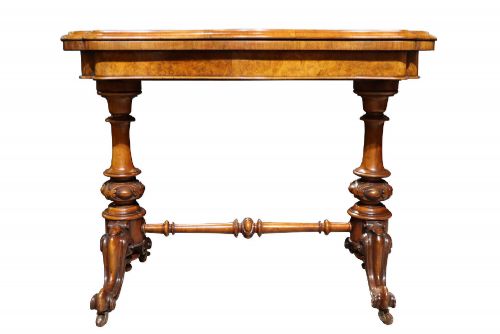
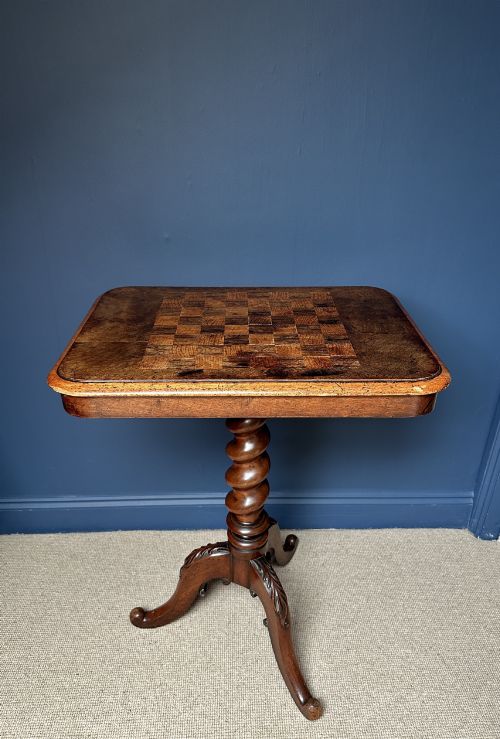
A walnut pedestal card table offers a clever fold-over top supported by a central pillar, built for nineteenth-century drawing rooms.
Walnut Pedestal Card Table
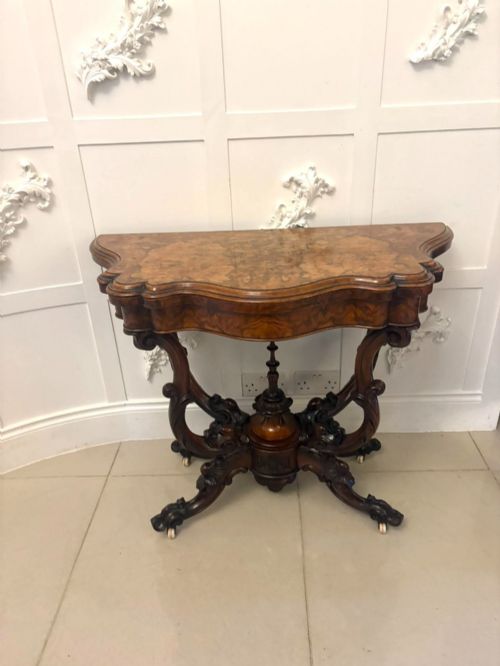
A walnut pedestal card table is primarily a Victorian creation, emerging in forms designed for nineteenth-century domestic entertainment. The examples found here span the Victorian era, the nineteenth century generally, and occasional twentieth-century Art Deco pieces, with dates clustering around eighteen-fifty to eighteen-eighty.
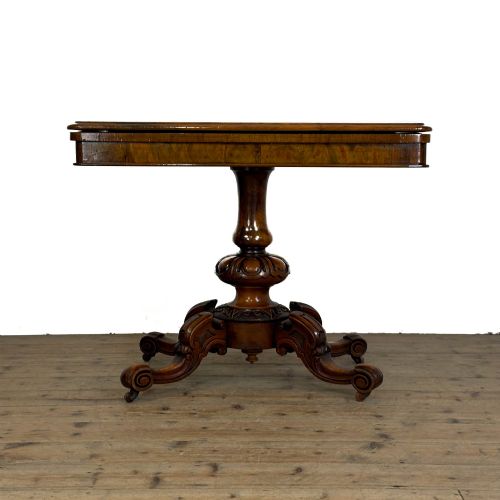
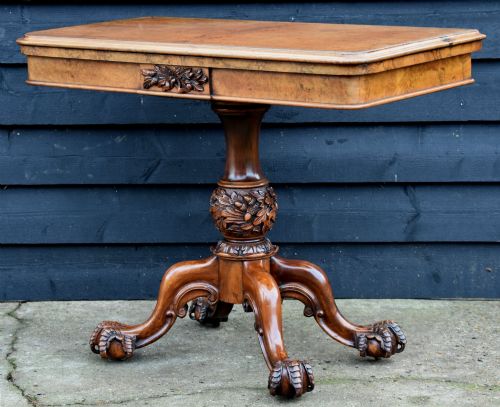
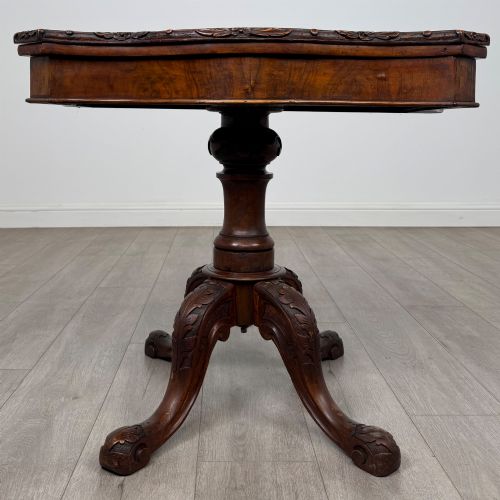
Most pieces meet the buyer as fold-over card tables or games tables, alongside related forms like loo tables, tea tables, and centre tables. These tables utilise central pedestals, often with carved basket bases, supports, or columns resting on feet.
Makers recorded in the broader tradition include Holmes Baldock, Lamb of Manchester, and William Sylvans Smee, though many pieces remain unsigned. Regional variations appear, including Irish Victorian walnut card tables alongside English examples.
Materials and Construction
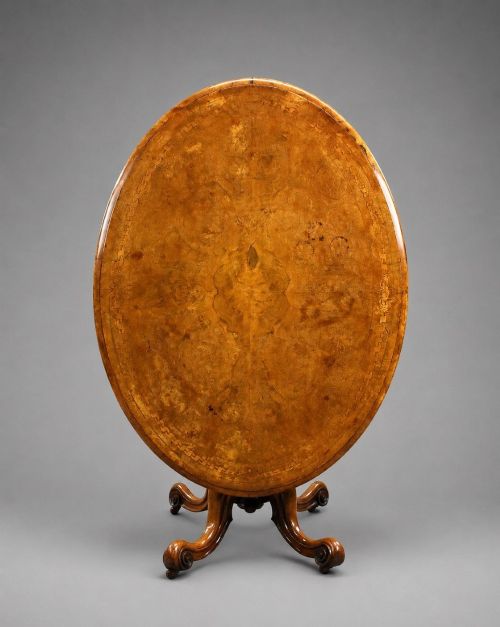
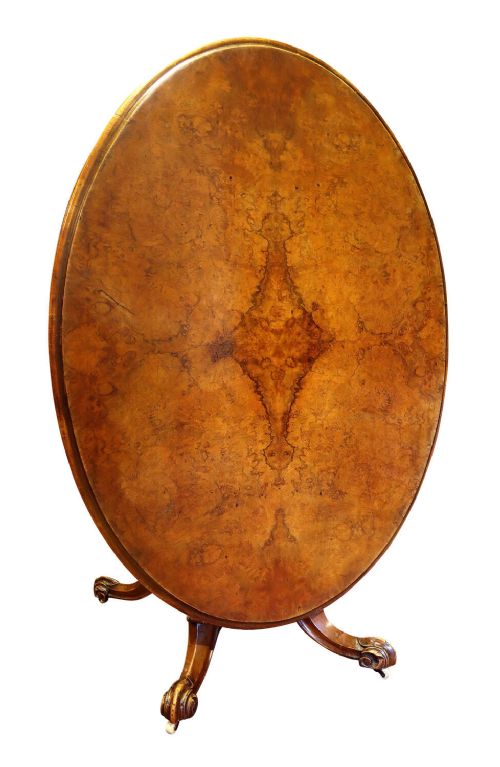
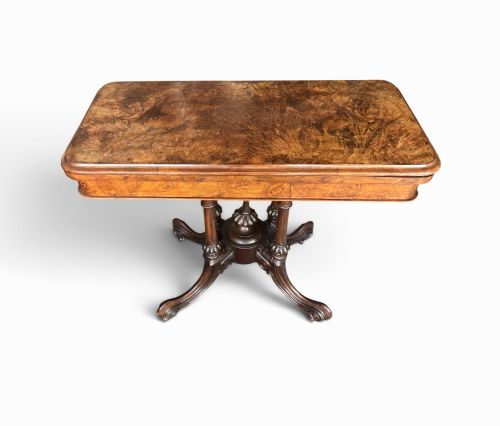
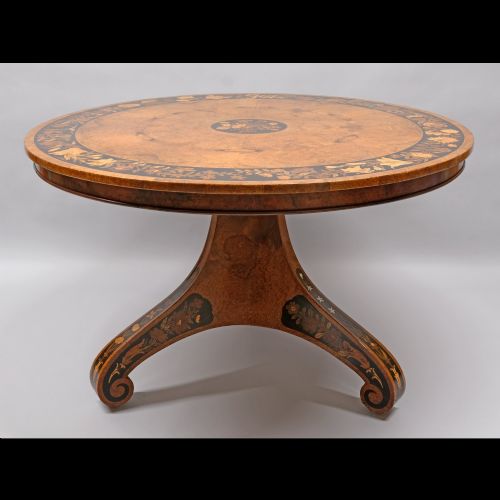
Makers built these tables using walnut and highly figured burr walnut veneers over secondary timbers, occasionally applying ebonised wood for contrast. Surfaces frequently display intricate boxwood inlay, wood inlay, or marquetry.
Card and games tables incorporate baize interiors to cushion counters and cards when the hinged top folds open. Pedestals and supports are shaped from solid walnut, often featuring carved details or applied mouldings.
Some nineteenth-century makers cleverly combined card playing with needlework, building tables that doubled as sewing compartments.
Craftsmanship and Detail
Quality rests in the choice of burr walnut veneer and the precision of the wood inlay or boxwood marquetry. Superior examples display carefully matched grain patterns across the fold-over top and serpentine edges.
Carved basket bases and pedestal supports demonstrate the carver's hand, where crisp, deep relief separates fine workshops from simpler production. The action of the fold-over mechanism and the quality of the internal baize surface also mark out better pieces.
Holmes Baldock·Lamb Of Manchester·William Sylvans Smee
The Walnut Pedestal Card Table Glossary
- Burr Walnut
- A timber derived from the irregular growths of walnut trees, prized for its swirling, highly figured grain patterns.
- Baize
- A coarse woollen fabric, traditionally green, used to line the playing surfaces of card and games tables.
- Marquetry
- Decorative veneer work forming pictures or geometric patterns using various woods and boxwood inlay.
- Serpentine
- A curved edge or outline shaped with alternating concave and convex sweeps, common in Victorian table tops.
- Fold Over
- A table top design featuring a hinged leaf that opens to double the surface area for gaming or dining.
Walnut Pedestal Card Table: Frequently Asked Questions
What is a walnut pedestal card table?
A walnut pedestal card table is a nineteenth-century furniture piece featuring a central column support and a hinged top that opens to reveal a baize-lined playing surface.
These tables were designed for drawing rooms to serve multiple functions, acting as console or side tables when closed and games tables when opened.
How do you use a fold over card table?
The hinged top swivels and folds out flat, supported by the pedestal base or a swing leg, creating a stable surface for card games and chess.
When not in use for games, the top folds back down and sits flush against the base, operating as a decorative side or centre table.
What is burr walnut?
Burr walnut is a specialised wood veneer taken from the knotty burl growths on walnut trees, known for intricate, swirling grain patterns.
Cabinet makers used these figured veneers on table tops to create striking visual decoration during the Victorian period.
How do I date a Victorian card table?
Dating relies on stylistic clues such as the presence of serpentine shaping, Reformed Gothic motifs, or specific marquetry and boxwood inlay patterns.
Most examples date between eighteen-fifty and eighteen-eighty, often reflecting Victorian revival styles or mid-nineteenth-century cabinet making standards.