

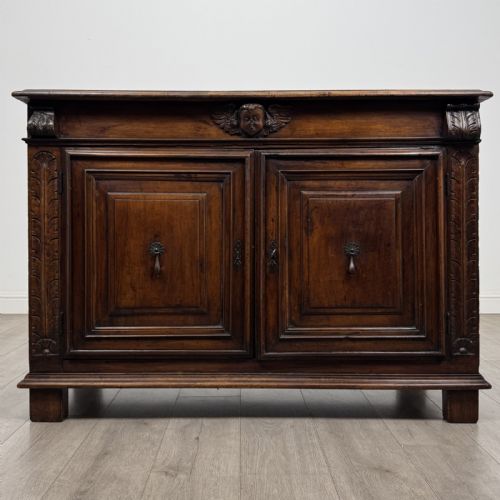
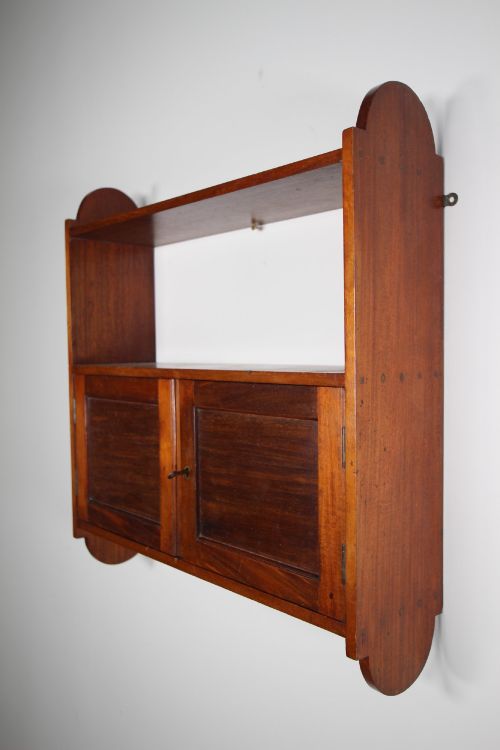
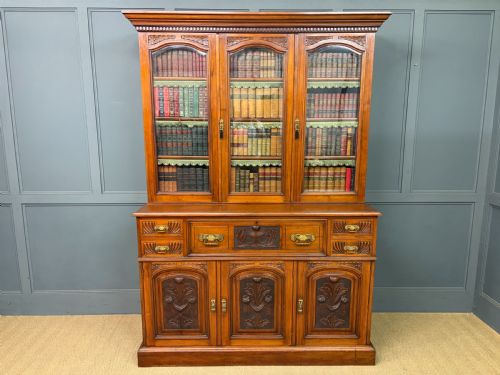
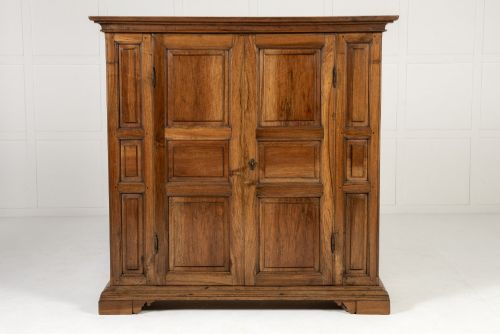


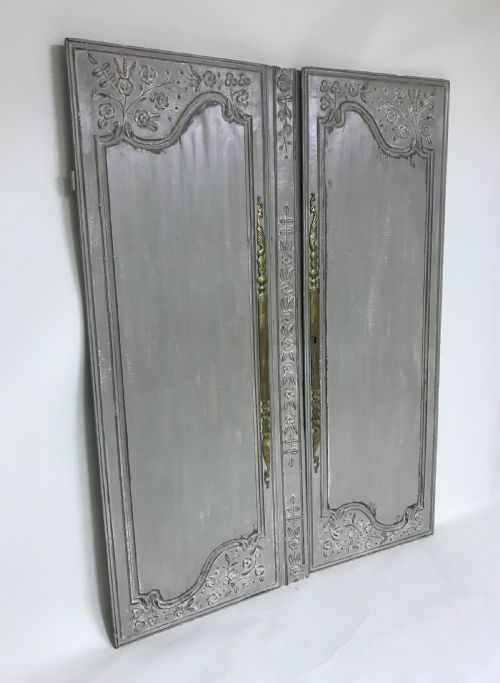
Walnut Panelled Cupboard
These walnut panelled cupboard items bring centuries of dense timber grain and sturdy storage into a room.
Walnut Panelled Cupboard
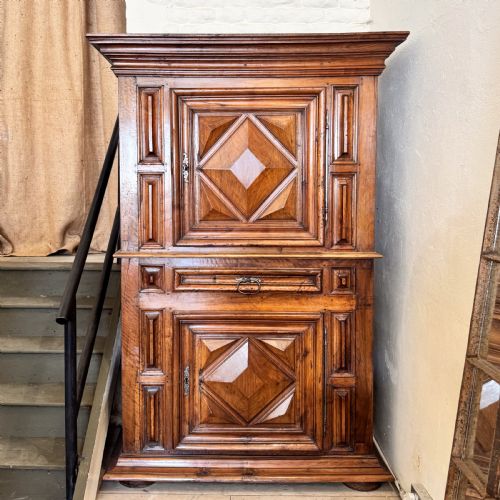
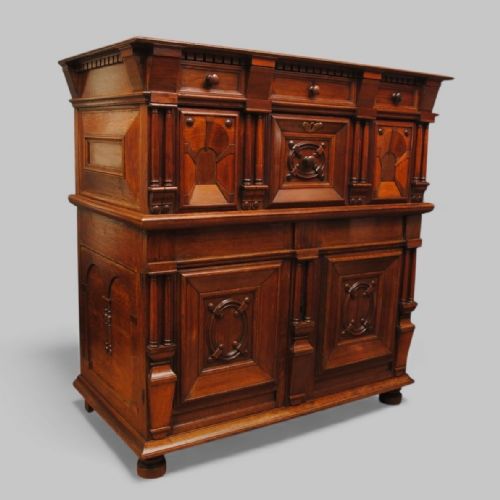
A walnut panelled cupboard brings heavy timber architecture into domestic spaces through doors, sideboards, and wall cabinets. Pieces span from the seventeenth century through to the Edwardian period, originating mainly from Italian, French, and British workshops.
The selection on this page ranges from large architectural cupboards and compactum wardrobes down to bedside cabinets and wall units. Italian and French provincial influences appear frequently alongside Victorian and Edwardian iterations.
Materials and construction methods
Makers utilised solid walnut, burr walnut, and figured walnut veneers applied over secondary timbers such as oak, fruitwood, and ash. Iron hinges and brass handles secure the heavy doors and drawers.
Panels are constructed using traditional frame and panel techniques to allow the timber to move naturally with changes in humidity. Carved details and marble tops appear on specific regional examples.
Walnut Panelled Cupboard Retail Price Guide 2026
Typical asking prices for walnut panelled cupboard among the pieces listed under this phrase on Sellingantiques today, from the lower quarter to the upper quarter. They describe what is for sale here now, not the wider market.
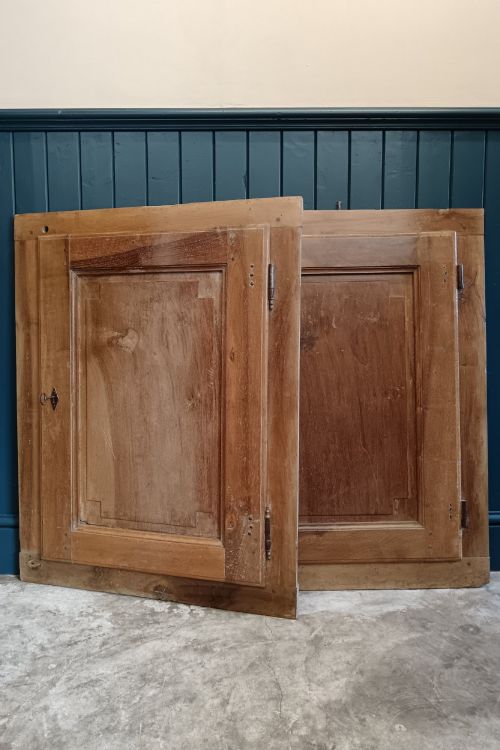
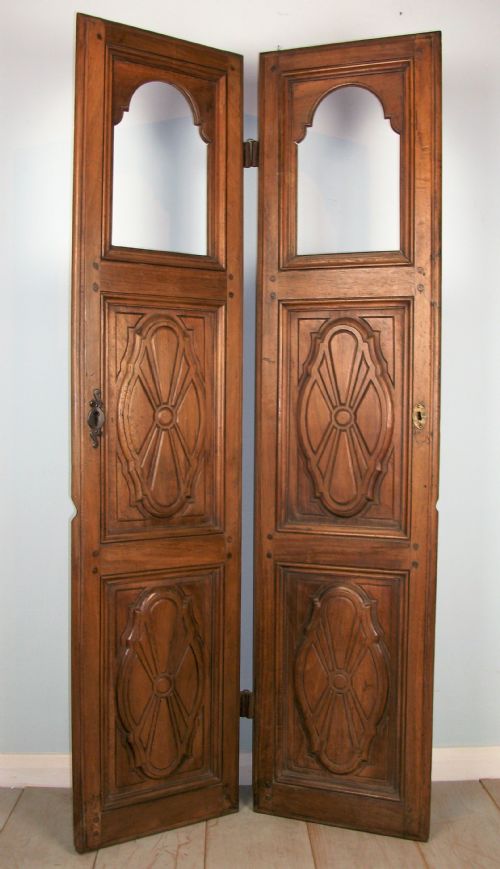
Listings include architectural elements such as standalone cupboard doors, wall panels, and nightstands alongside full-size wardrobes.
Factors that define quality
The depth of figure in the walnut grain and the crispness of any carved decoration separate standard storage from exceptional cabinet work. Superior examples display carefully matched veneers and robust structural joinery.
Original hardware, such as brass escutcheons and iron mounts, preserves the integrity of the piece. The proportion of the panels and the balance of the overall form indicate the skill of the original workshop.
Heals·Whytock & Reid of Edinburgh
The Walnut Panelled Cupboard Glossary
- Burr walnut
- A prized veneer sliced from the gnarled growths on walnut trees, creating swirling, intricate patterns in the grain.
- Compactum wardrobe
- A fitted wardrobe designed with internal compartments, drawers, and hanging space to maximise storage efficiency.
- Tambour front
- A flexible shutter door constructed from narrow slats of wood glued to a canvas backing, sliding in a track.
- Buffet deux corps
- A traditional large two-tier cupboard structure, typically featuring a smaller upper cabinet set upon a deeper base.
- Secrétaire bookcase
- A tall cabinet incorporating a pull-down writing flap concealed behind a drawer or door front.
Walnut Panelled Cupboard: Frequently Asked Questions
How do I clean walnut furniture?
Dust surfaces regularly with a soft, dry cloth to prevent grit accumulation on the timber grain. Avoid silicone polishes, using instead a traditional beeswax to nourish the wood periodically.
Keep the piece away from direct heat sources and strong sunlight to prevent the walnut veneer from drying out or splitting over time.
Where should I place a walnut cupboard?
Position your cupboard against an interior wall away from radiators and damp spots. Stable room temperatures protect the timber structure and historical panels.
Ensure the floor is level so the heavy doors swing true within their frames without dragging or catching on the base.
Are these cupboards suitable for daily use?
Solid construction and durable timbers allow these pieces to function reliably for modern storage needs. Internal configurations vary from open shelving to hanging space depending on the specific model.
Care should be taken not to overload antique shelves beyond their structural capacity, treating historical fixings with appropriate respect.
How can I tell the period?
Examine the construction marks, timber choice, and joinery style visible on the back and interior of the cabinet. 17th and 18th century examples often display hand- cut elements and pegged joints.
Victorian and Edwardian iterations show machine-assisted manufacturing alongside distinct revivalist decorative motifs characteristic of their respective eras.