


Walnut Musical Box
A walnut musical box brings mechanical melody into the parlour, combining rich timber cases with intricate pinned cylinders and tuned steel combs.

Walnut Musical Box
A walnut musical box represents a sophisticated intersection of nineteenth-century cabinetry and precision acoustics. When searching for a walnut musical box, buyers encounter various forms spanning the Victorian and Edwardian eras, from traditional tabletop cylinder boxes to disc-playing polyphons and novelty items like musical chairs or cigar boxes.
Most examples originate from Swiss workshops active during the latter half of the nineteenth century, housed in figured timber cases. These pieces range from simple six-air cylinder players to elaborate multi-air mechanisms by renowned makers, alongside occasional disc systems.
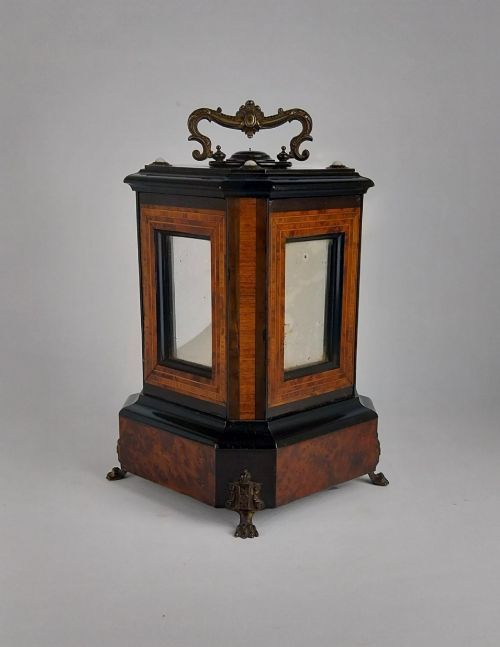
The aesthetic appeal lies in the contrast between warm, grained timber exteriors and complex brass machinery within. Whether taking the form of a standard rectangular case or an inlaid marquetry piece, each object serves as both a musical instrument and a decorative domestic article.
Materials and construction
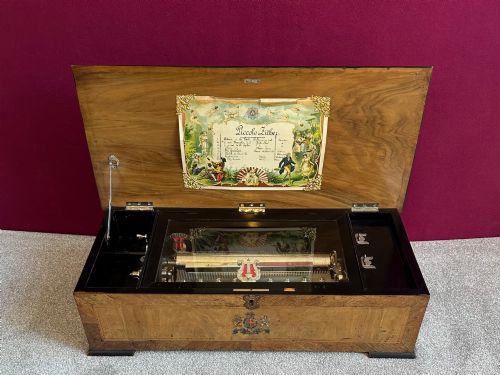
Cases utilise solid timber and veneers, frequently featuring burr walnut and marquetry inlay alongside contrasting details in boxwood, ebonised wood and rosewood. Inside, the acoustic structure relies on a cast brass bedplate supporting a comb of tuned steel teeth and a pinned brass cylinder rotated by a spring-driven clockwork motor.
Gears, levers and regulators of brass and steel govern the movement, while glass panels sometimes protect the internal mechanics from dust while allowing the movement to be observed in operation. Joinery methods of the period ensure robust housing for the heavy metal components.
Some nineteenth-century makers concealed musical movements inside everyday domestic objects, transforming ordinary walnut chairs and cigar boxes into unexpected acoustic performers.
Factors of quality
Quality rests heavily on the execution of the musical arrangement and the maker's reputation, distinguishing standard domestic cylinders from complex multi-air compositions. The precision of the pinned cylinder and the integrity of the tuned steel comb dictate the clarity and depth of the sound produced.
Cabinetwork similarly separates examples, with finely figured burr walnut veneers, intricate marquetry inlay, and robust case construction marking superior pieces. The presence of original working parts and well-preserved internal components further elevates the standing of an individual box.
Langdorff & Fils·Lochmanns·B A Bremond·Nicole Freres
The Walnut Musical Box Glossary
- Cylinder
- A rotating brass tube set with tiny pins that pluck the teeth of a steel comb to produce a tune. Cylinder lengths and pin counts determine the musical repertoire.
- Comb
- A flat piece of tuned steel with multiple teeth that vibrate when struck by the pins on a rotating cylinder or the projections on a metal disc. Each tooth corresponds to a specific musical note.
- Air
- A distinct tune or musical piece played by the mechanism during one rotation of the cylinder. Boxes are frequently categorized by the total number of airs they can perform.
- Marquetry
- Decorative veneer work using various coloured woods to create pictorial designs on the exterior of the case. This technique often adorns the lid of the box.
- Polyphon
- A mechanical instrument that uses flat interchangeable metal discs rather than pinned cylinders to play music. These later devices produce a fuller, louder sound.
Walnut Musical Box: Frequently Asked Questions
How do I operate a cylinder musical box?
Wind the spring motor using the attached crank key, making sure not to overwind the mechanism. Move the internal levers to select play or change settings, then release the brake to let the cylinder turn.
Allow the current tune to finish completely before altering any levers or engaging the repeat function. Keep the glass lid closed during play to protect the delicate pins and comb.
What is the difference between a cylinder and a disc box?
Cylinder boxes use a pinned brass barrel dedicated to a fixed set of tunes, typically ranging from four to twelve airs. Each pin strikes a specific steel tooth as the cylinder rotates.
Disc boxes utilise flat metal sheets punched with holes that engage star wheels, which then pluck the comb. This interchangeable format allows owners to collect multiple discs and expand their musical selection.
How can I date my musical box?
Examine the style of the walnut case, the complexity of the tune sheet pasted inside the lid, and any stamped maker marks on the brass bedplate. Victorian pieces often feature specific brass hardware and decorative marquetry patterns characteristic of the mid to late nineteenth century.
Serial numbers stamped onto the movement can sometimes be cross-referenced with maker records from Swiss workshops. Later Edwardian examples generally display simpler cabinet lines and different mechanical arrangements.
Where should I place a musical box at home?
Position the piece on a stable, level surface away from direct sunlight, radiators, and damp areas to protect the wood veneers and internal steel springs. A sideboard or table in a principal room allows the sound to resonate properly.
Ensure the location experiences minimal temperature fluctuations to prevent the wood from warping and the delicate brass components from shifting out of alignment.