
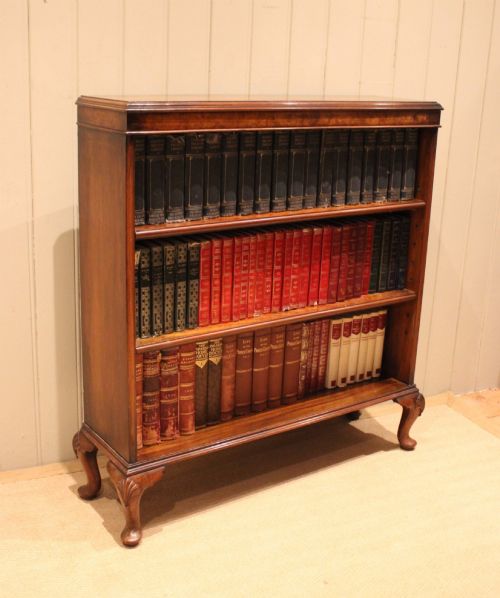
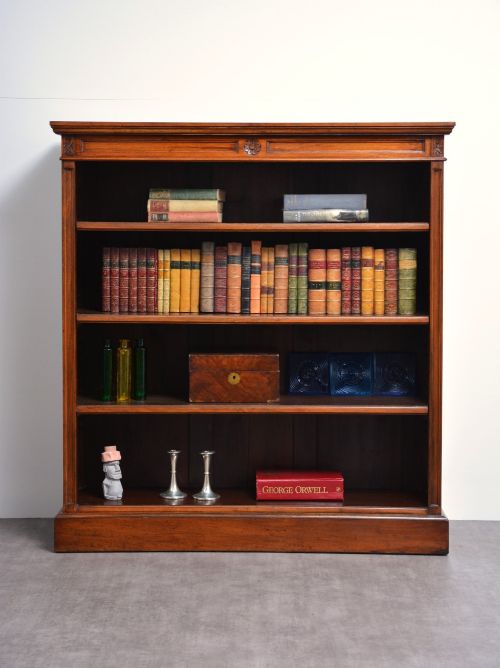
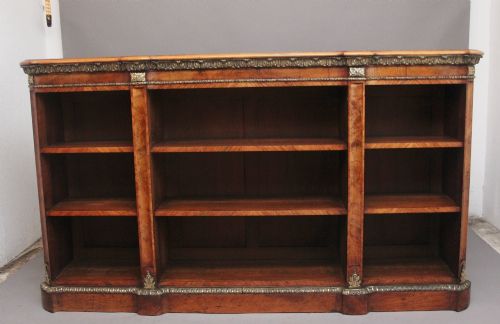
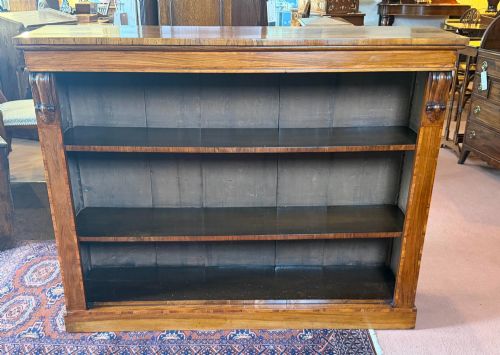
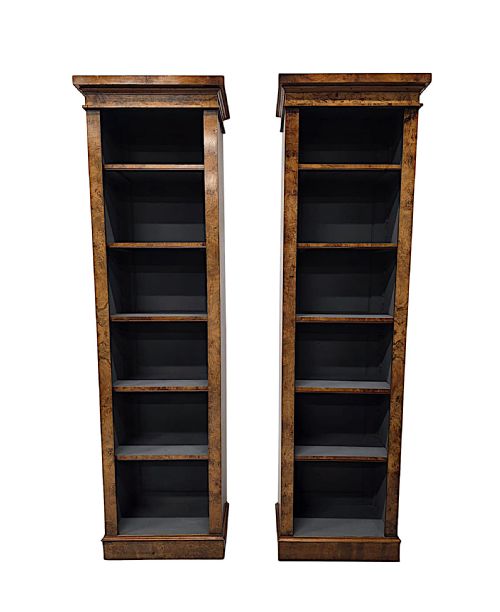
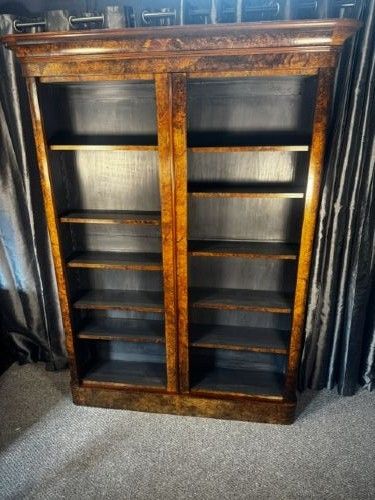
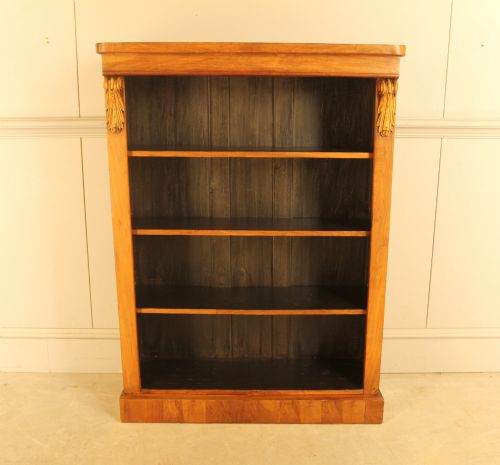
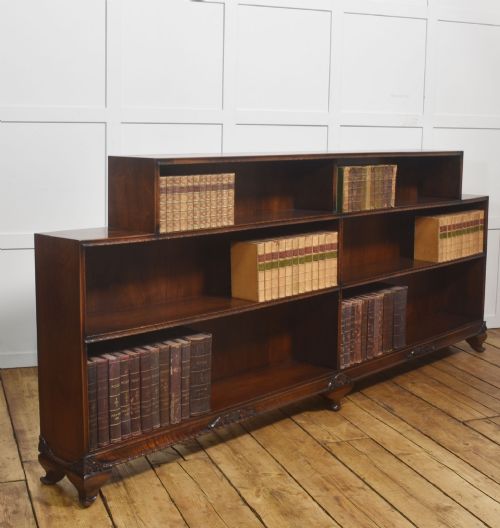
Walnut Library Shelving
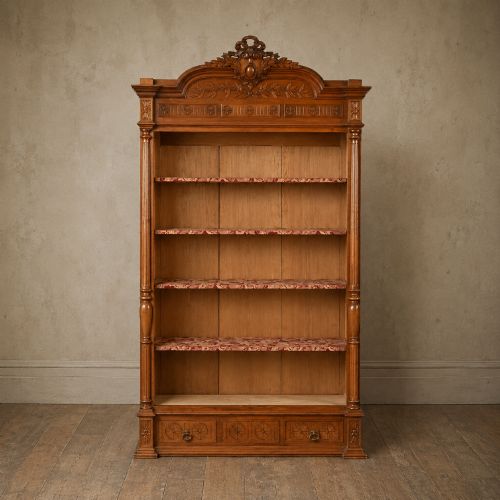
Walnut library shelving brings warmth to a study, offering open access to books through structured rows of timber.
Walnut Library Shelving
Walnut library shelving principally comprises open bookcases and bookcases with adjustable shelves, designed for practical book storage and display. These items date from the nineteenth century, the Victorian era, the Edwardian period, and into the twentieth century, reflecting varied historical tastes.
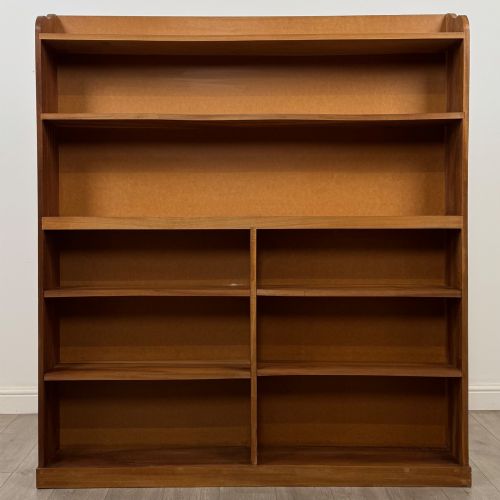
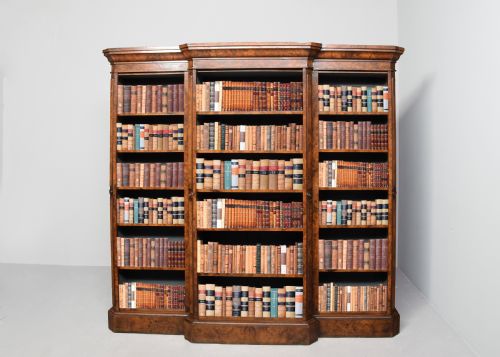
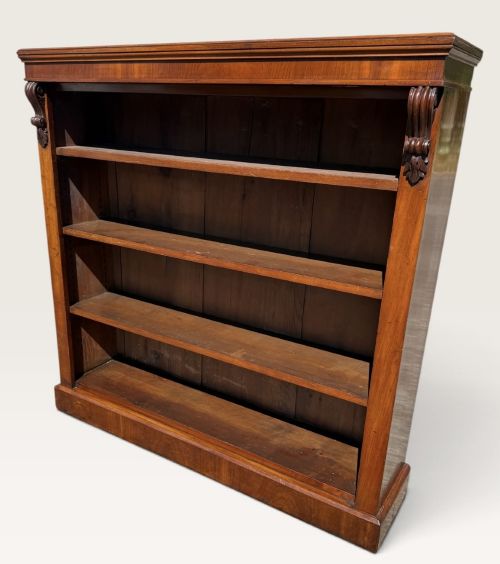
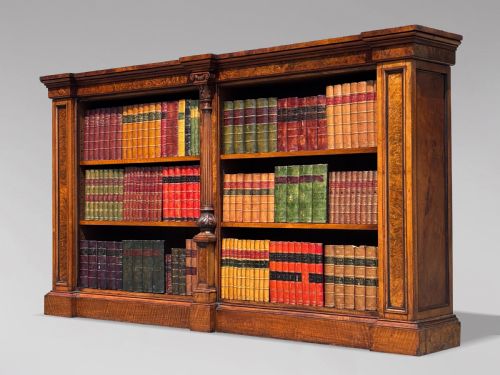
The most common formats on this page are open bookcases, ranging from diminutive etageres to large breakfront configurations with multiple sections. Makers often incorporated adjustable shelving, allowing owners to accommodate volumes of differing heights.
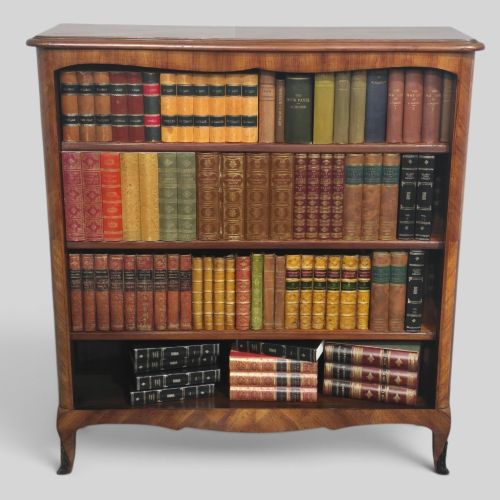
Stylistic influences span traditional periods including William IV, Queen Anne Revival, and Georgian Revival, alongside continental and French Louis XV designs. Pieces utilise solid wood as well as veneers, providing both robust utility and decorative grain patterns.
What varies in quality
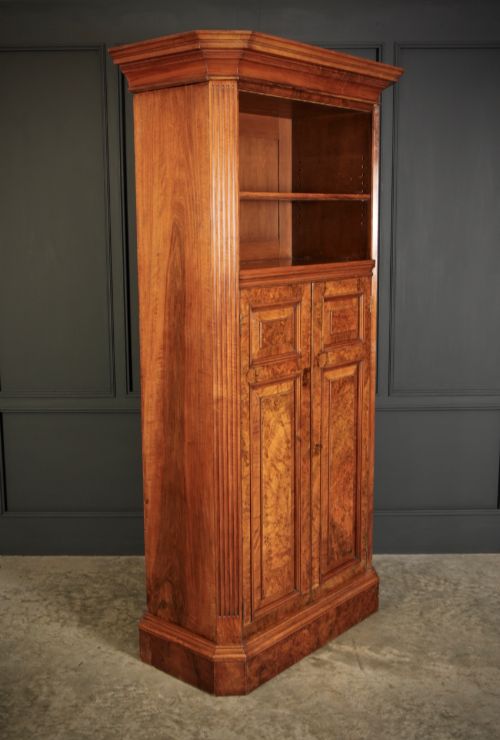
The selection of veneer dictates much of the visual depth, with highly figured burr walnut commanding attention over plain timber surfaces. Uniformity of grain matching across large breakfront surfaces separates standard utilitarian furniture from exceptional cabinet work.
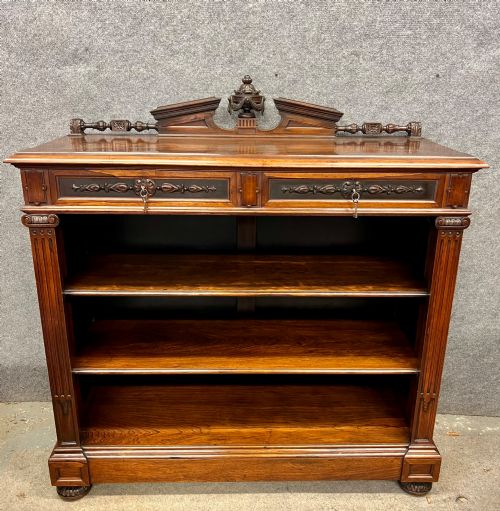
Execution of secondary elements, such as cast ormolu mounts, carved friezes, and smooth adjustment mechanisms for shelves, demonstrates the maker's skill. Proportions also vary, from neat diminutive etageres to imposing multi-section architectural libraries.
Listings feature walnut, burr walnut, pine, brass, and ormolu across nineteenth and twentieth-century periods.
Johnstone and Jeanes·Heal's
The Walnut Library Shelving Glossary
- Breakfront
- A piece of furniture where the central section projects forward from the flanking outer sections. This architectural arrangement creates depth and visual interest across larger library bookcases.
- Burr walnut
- Timber taken from a growth or wart on a walnut tree, yielding intricate, swirling grain patterns. Cabinetmakers sliced this wood into veneers for decorative surfaces.
- Ormolu
- Gilded bronze used for decorative mounts and furniture fittings. It provides metallic contrast against dark walnut timbers.
- Etagere
- A set of open shelves for displaying small objects or books. These freestanding tiers are typically light in scale and refined in proportion.
- Frieze
- The flat or decorated horizontal band running beneath the top cornice of a bookcase. Carved details often ornament this architectural zone.
Walnut Library Shelving: Frequently Asked Questions
What is walnut library shelving?
Walnut library shelving consists of open bookcases and adjustable storage units made primarily from walnut timber. These pieces provide accessible storage for books and display items in domestic or institutional libraries.
They appear in various formats, from compact single units to large breakfront configurations with multiple sections designed to line study walls.
How do I adjust the shelves?
Most period bookcases use traditional wooden or metal support systems set within the interior sides. Shelves simply lift out and relocate to pre-drilled vertical slots.
This adaptability allows the cabinet to accommodate books of varying heights, from pocket editions to large folios.
Are these bookcases open or enclosed?
The majority of pieces listed are open bookcases without doors, designed for immediate access to books. Some examples feature glazed doors or cabinet compartments below the open shelving.
Open shelving prioritises accessibility and visual display over dust protection.
How do I date a walnut bookcase?
Dating relies on stylistic clues such as carved friezes, column details, and the use of burr walnut veneer. Victorian and Edwardian examples often display distinct revival styles or proportions typical of their era of manufacture.
Construction methods and timber preparation also offer guidance on the manufacturing period.