




Walnut Inlaid Ladies Desk
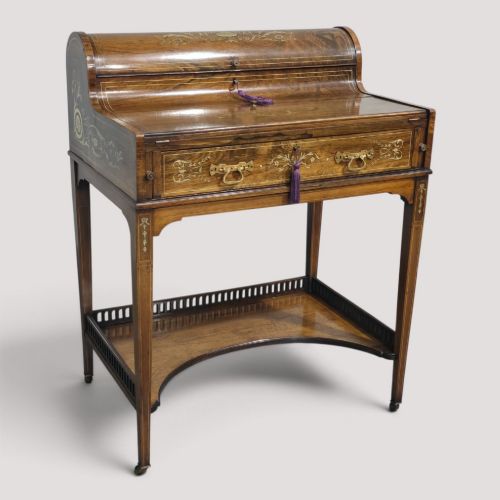
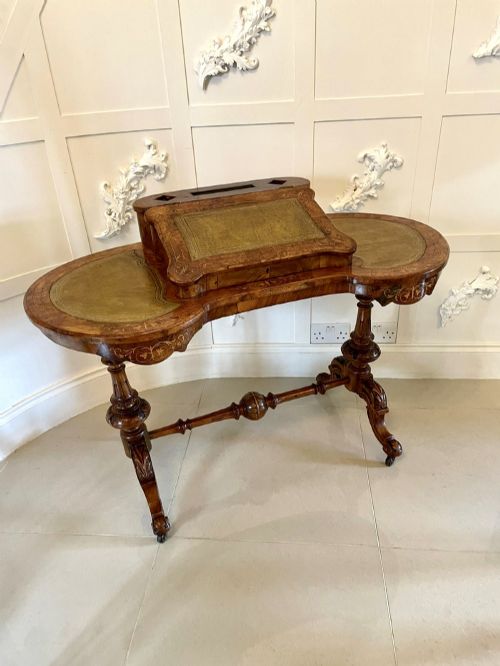
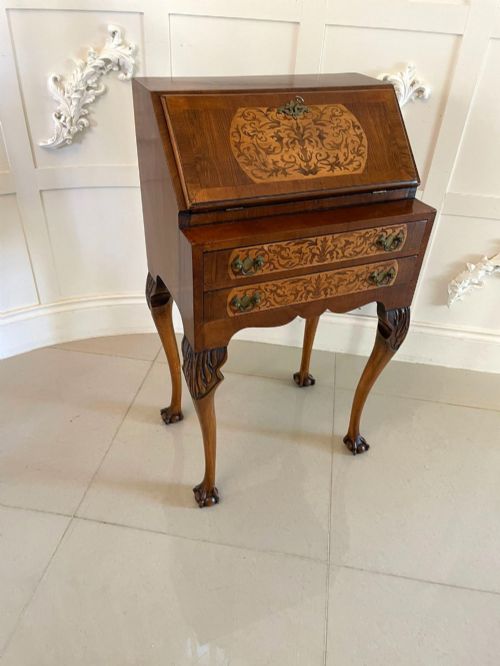
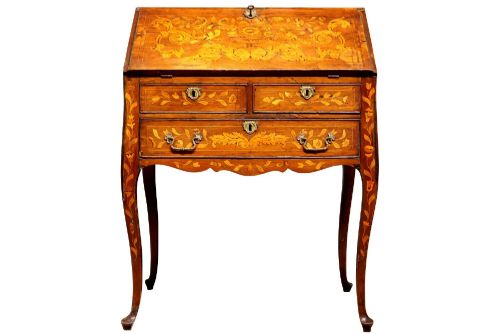
A walnut inlaid ladies desk offers a compact writing surface framed in rich timber and detailed marquetry.
Walnut Inlaid Ladies Desk
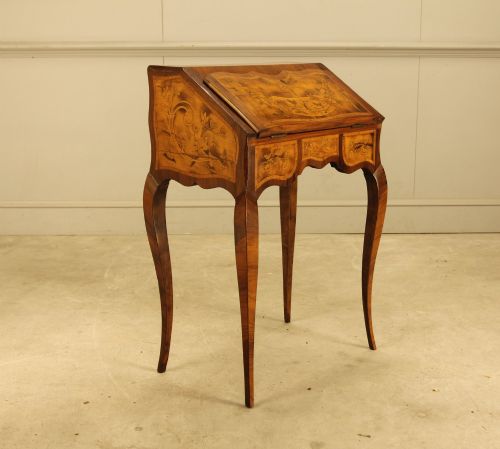
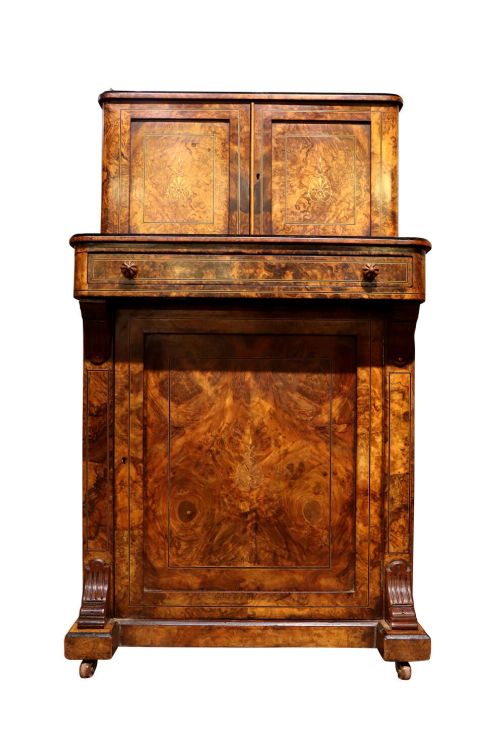
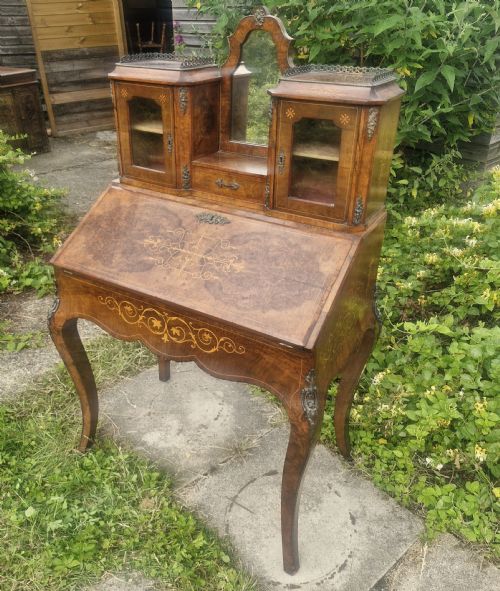
A walnut inlaid ladies desk typically appears as a bonheur du jour, a Davenport or a compact writing table designed for personal correspondence. The evidence shows these pieces span the nineteenth century, with strong representation from the Victorian era and French revival styles.
Makers and cabinetmakers of the period employed burr walnut and figured timber, often shaped into kidney forms or fitted with smalluperior superstructures. These compact writing surfaces served private morning rooms and boudoirs rather than grand libraries.
Materials and Construction
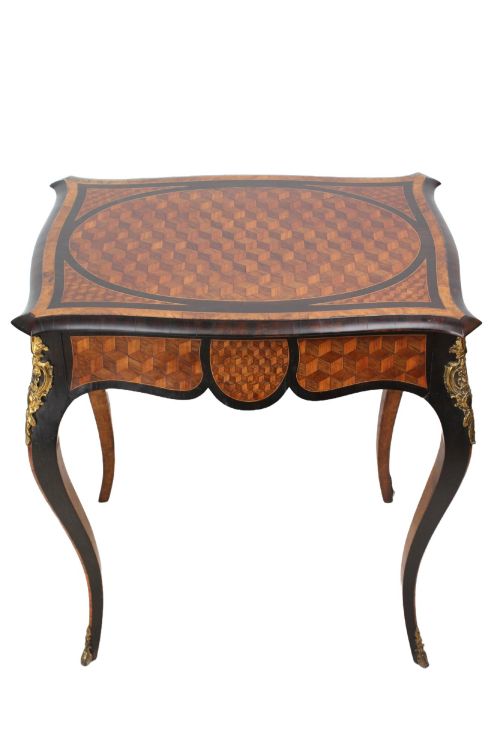
Cabinetmakers built these desks using solid walnut frameworks overlaid with burr walnut veneers to create striking grain patterns on flat surfaces. Marquetry and parquetry in lighter woods provided floral or geometric contrasts across the writing slopes and cabinet doors.
Detailed mounts in ormolu or cast brass frequently edge the galleries, handles and legs, complementing the inlaid decoration. Secondary timbers such as satinwood and kingwood often appear within the internal stationery compartments and drawers.
Walnut Inlaid Ladies Desk Retail Price Guide 2026
Typical asking prices for walnut inlaid ladies desk among the pieces listed under this phrase on Sellingantiques today, from the lower quarter to the upper quarter. They describe what is for sale here now, not the wider market.
Materials recorded across the inventory include solid walnut, burr walnut, brass, ormolu, leather, glass, kingwood and rosewood.
Distinctions in Quality
The sophistication of the marquetry and the choice of Burr walnut veneers dictate the visual weight of the piece. Finer examples display intricate floral patterns cut with precision, whereas simpler variants rely solely on the natural grain of the timber.
Structural refinement shows in the integration of freestanding designs finished on all sides and the inclusion of original ormolu mounts rather than later replacements. The interior arrangement of small drawers and pigeonholes also marks the distinction between standard production and exhibition quality.
JAS Shoolbred·Paul Sormani·Waring & Gillow
The Walnut Inlaid Ladies Desk Glossary
- Bonheur du jour
- A small ladies writing desk featuring a raised superstructure of drawers and pigeonholes above the main writing surface. This form gained popularity in France and Victorian England for personal correspondence.
- Davenport
- A compact desk comprising a box body with a sloping writing lid over a pedestal of drawers. The design originated in the early nineteenth century and frequently incorporates side drawers and stationary wells.
- Marquetry
- Decorative veneer work forming pictorial or geometric patterns using various coloured woods. Craftsmen applied these precise timber pieces to desk lids and cabinet doors.
- Burr walnut
- Timber taken from the warted growths on walnut trees, yielding highly figured and swirling grain patterns. Cabinetmakers prized this material for the principal decorative surfaces of high quality furniture.
- Ormolu
- Gilt bronze mounts applied to furniture for decorative trim and edge protection. This technique added metallic contrast to the dark walnut surfaces.
Walnut Inlaid Ladies Desk: Frequently Asked Questions
What is a bonheur du jour?
A bonheur du jour is a small ladies desk with a light framework and a tiered set of small drawers or compartments on top. It stands on slender legs and was traditionally used for morning correspondence.
The form emerged in eighteenth century France and remained popular through the Victorian period, often featuring elaborate marquetry inlay and burr walnut veneers.
How do Davenport desks function?
Davenport desks provide a sloped writing surface above a pedestal base containing functional drawers. Many examples include a side-opening pen drawer and a small compartment on top for stationery.
Because the pedestal sits beneath the writing slope, these desks occupy minimal floor space while offering substantial enclosed storage for writing materials.
Where were these desks used?
These pieces suited private spaces such as boudoirs, morning rooms and bedrooms rather than formal reception rooms. Their compact proportions allowed them to sit comfortably against walls or freestanding in rooms.
Ladies utilised them for writing letters, managing household accounts and keeping personal journals.
How do I identify French revival styles?
French revival pieces incorporate curved cabriole legs, extensive floral marquetry and ormolu mounts inspired by Louis XV furniture. Makers of the nineteenth century frequently reinterpreted these eighteenth century motifs.
Walnut and kingwood veneers combined with gilt bronze detailing distinguish these revival pieces from simpler English bureau designs.