



Walnut Hanging Wall Shelves
Walnut hanging wall shelves bring warm timber tones and practical display space directly to vertical surfaces.
Walnut Hanging Wall Shelves
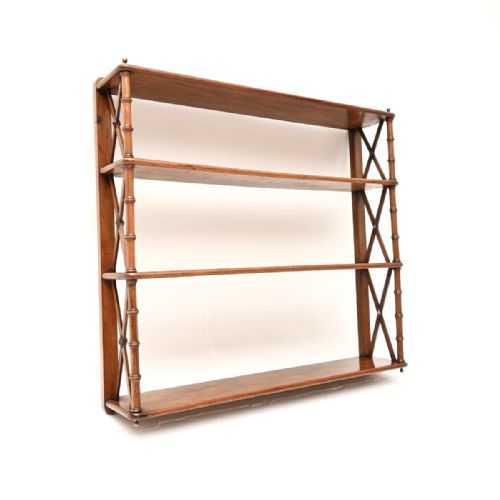
Walnut hanging wall shelves offer compact storage and display space by fixing securely to vertical surfaces in rooms where floor space is limited. When you search for walnut hanging wall shelves, you encounter wall-mounted bookcases, cabinets, brackets, and plate racks designed to lift storage off the floor.
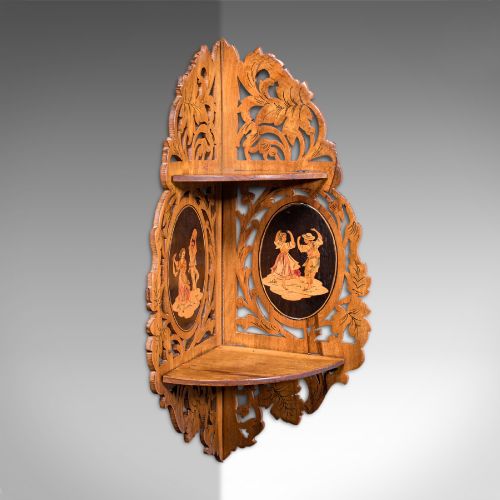
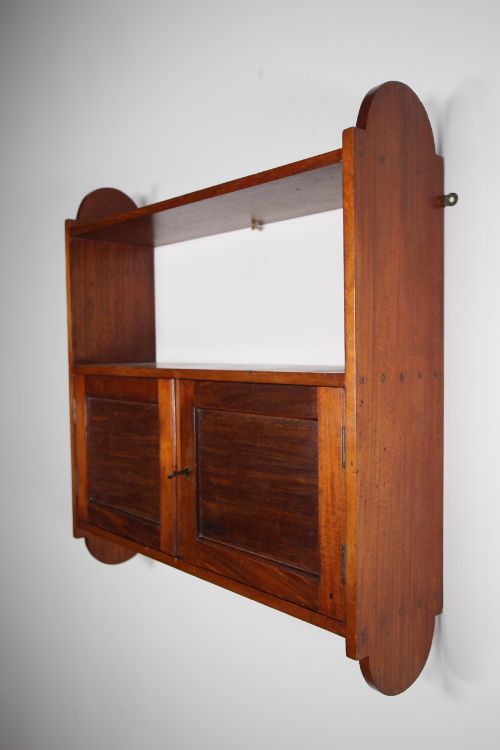
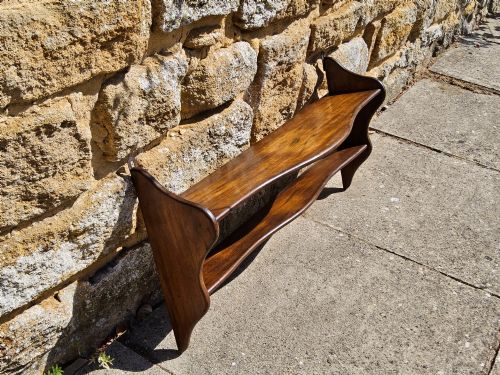
The examples gathered here span several distinct eras, drawing on Victorian, Edwardian, Arts and Crafts, and Georgian aesthetics. Pieces range from simple open shelving boards to enclosed cabinets featuring glass panels, mirrors, and small doors.
You are most likely to meet nineteenth-century and early twentieth-century iterations constructed primarily from walnut timber. These furnishings serve practical roles in hallways, studies, and living spaces, combining timber display surfaces with functional wall mounting.
How they were made
Maker workshops built these shelves predominantly from walnut timber, sometimes incorporating oak or secondary woods for structural backing. Craftsmen utilised traditional joinery methods to assemble sturdy mounting frames and shelving tiers that could bear the weight of books, ceramics, and ornaments.
Surface decoration frequently included fine marquetry inlay and painted accents to enhance the rich grain of the walnut. Metal elements such as brass brackets, hinges, and hanging fixtures provided necessary hardware support for securing the pieces safely to walls.
Walnut Hanging Wall Shelves Retail Price Guide 2026
Typical asking prices for walnut hanging wall shelves among the pieces listed under this phrase on Sellingantiques today, from the lower quarter to the upper quarter. They describe what is for sale here now, not the wider market.
Listings feature walnut hanging wall shelves spanning from the eighteenth century through the Edwardian era, incorporating materials like brass, glass, and marquetry inlay.
What varies in quality
Quality in these wall fittings is determined by the selection of the timber and the crispness of any applied carving or marquetry. Superior examples display carefully matched walnut veneers or solid boards with vibrant grain patterns, whereas simpler items rely on plain, unadorned surfaces.
The refinement of the hanging mechanisms and the integrity of the original joints dictate how well a piece has survived decades of wall mounting. Finer workshops invested greater care in internal shelving adjustments, decorative brass fittings, and structural stability.
Heals·Arthur Simpson
The Walnut Hanging Wall Shelves Glossary
- Marquetry
- A decorative technique where small pieces of veneer are fitted together to form pictorial or geometric patterns on wooden surfaces. It adds visual complexity to cabinet doors and back panels.
- Whatnot
- A piece of furniture consisting of a set of open shelves for displaying small objects. Wall-mounted versions provide elevated tiers for ornaments and books.
- Aesthetic Movement
- A late nineteenth-century design style emphasising visual beauty over narrative subject matter. Cabinets from this movement often feature clean lines and refined artistic details.
- Bracket
- A supporting member projecting from a wall to carry a weight. In wall shelving, pairs of carved or turned wooden brackets often support the upper display tiers.
Walnut Hanging Wall Shelves: Frequently Asked Questions
How do I hang antique wall shelves safely?
Check the original mounting points on the back of the timber frame to understand how the weight distributes against the wall. Secure the piece into solid wall studs or utilise appropriate heavy-duty fixings suited to your specific wall type.
Ensure that the brackets and hanging loops are firmly attached to the wooden structure before placing any books or heavy ceramics onto the shelves. Period hardware can sometimes weaken, so professional installation guarantees the security of older timber.
What rooms suit walnut wall cabinets?
Compact wall cabinets and open shelves function well in hallways for keys and small items, or in studies for holding small reference books. Bathrooms and bedrooms also accommodate smaller mirrored cabinets and display ledges effectively.
Because these pieces mount directly onto vertical surfaces, they make use of empty wall space without crowding floor areas in smaller rooms.
How do I care for walnut timber?
Dust the timber regularly with a soft, dry cloth to prevent dirt from settling into the grain and carved details. Avoid placing walnut furniture in direct sunlight or near strong heat sources to prevent the wood from drying out or warping.
Apply a microcrystalline wax occasionally if the surface appears dry, buffing it gently to maintain the natural sheen of the walnut without building up heavy residues.
How can I tell the period of a wall shelf?
Examine the construction methods, such as dovetail joints, screw types, and the style of the hardware used to attach doors and hanging loops. Machine-cut screws and standardised fixings typically point towards later nineteenth-century or twentieth-century production.
Stylistic cues also offer guidance, as Georgian designs favour architectural proportions, whereas Arts and Crafts pieces showcase simpler, hand-finished construction with honest joinery.