

Walnut Glass Sideboard
A walnut glass sideboard brings together figured timbers and glazed display space, answering the collector's demand for functional Victorian and Art Deco elegance.
Walnut Glass Sideboard
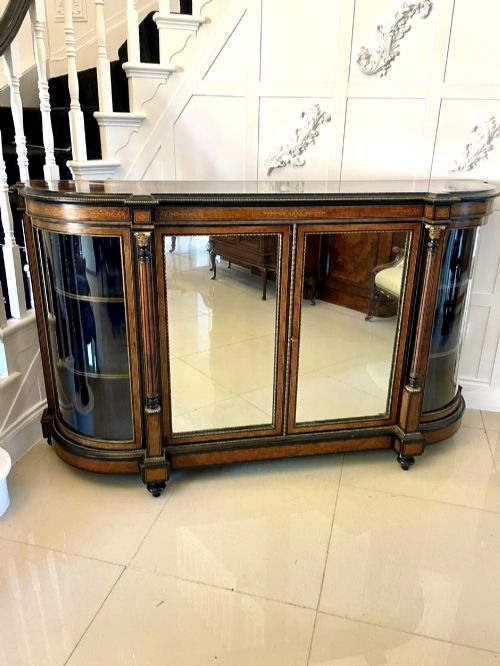
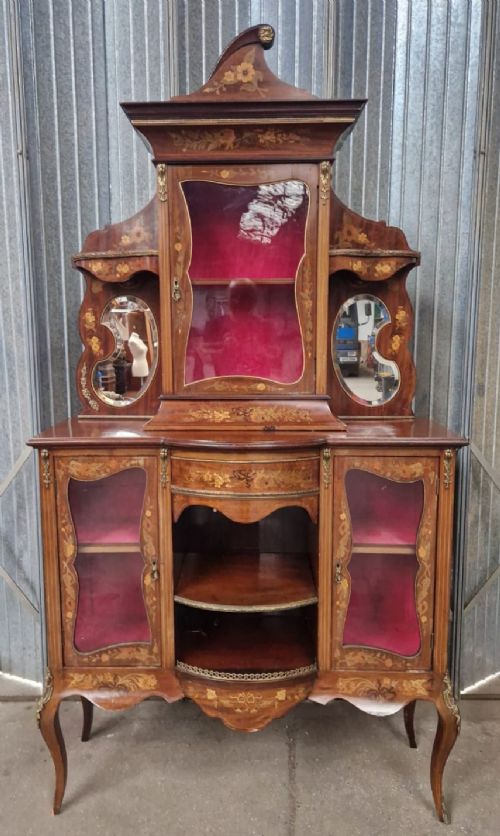
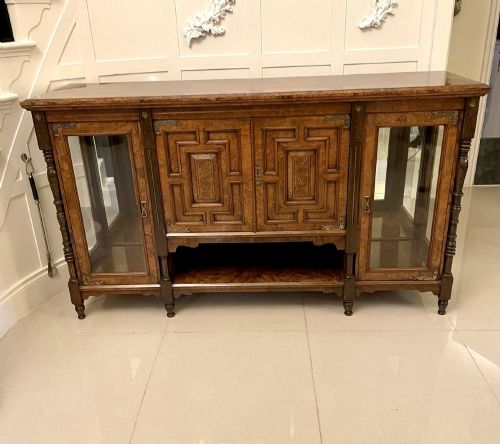
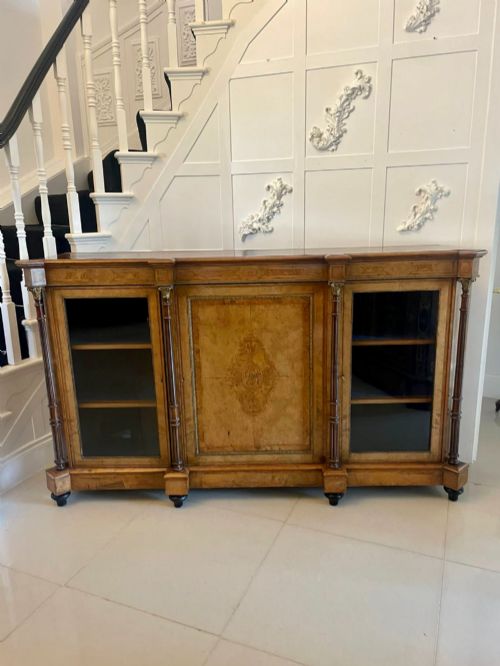
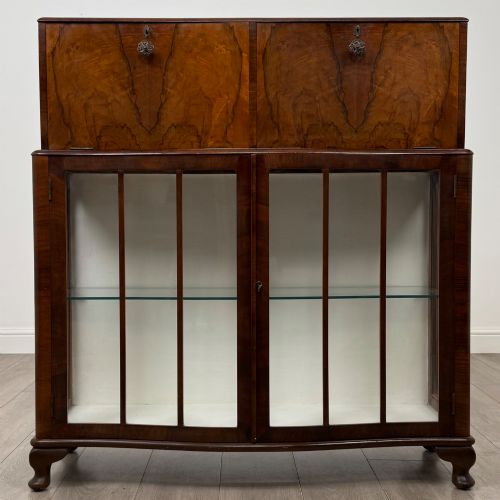
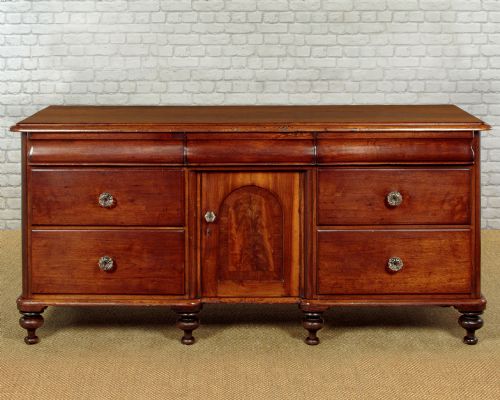
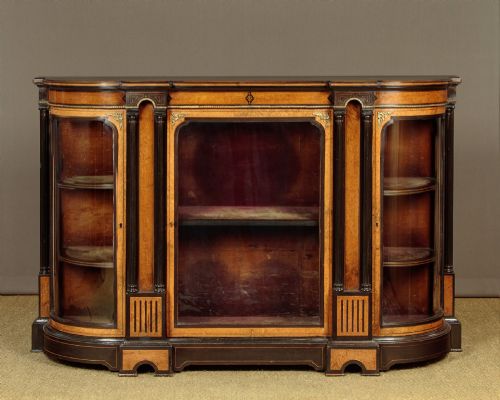
A walnut glass sideboard gathers together credenzas, display cabinets, pier cabinets, and side cabinets produced across the nineteenth and early twentieth centuries. These forms merge enclosed storage with glazed sections designed to display ceramics and decorative objects within a principal room.
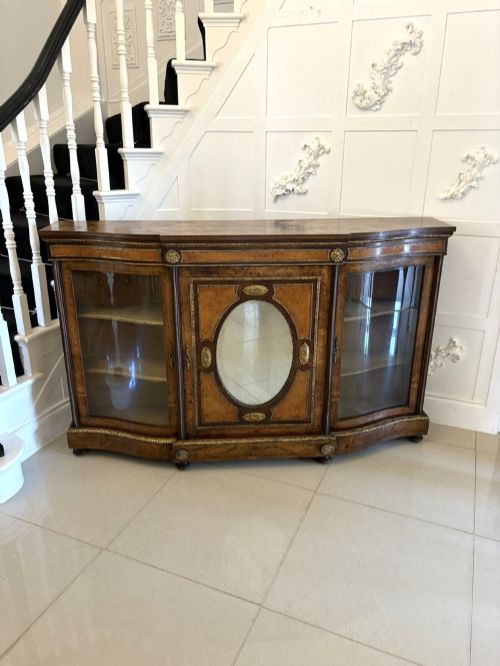
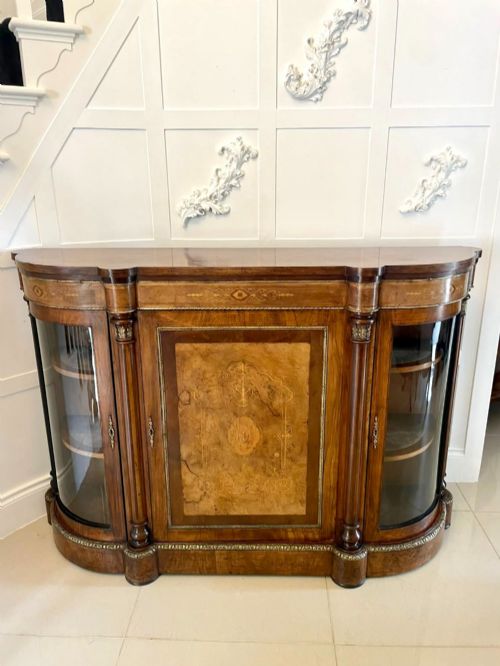
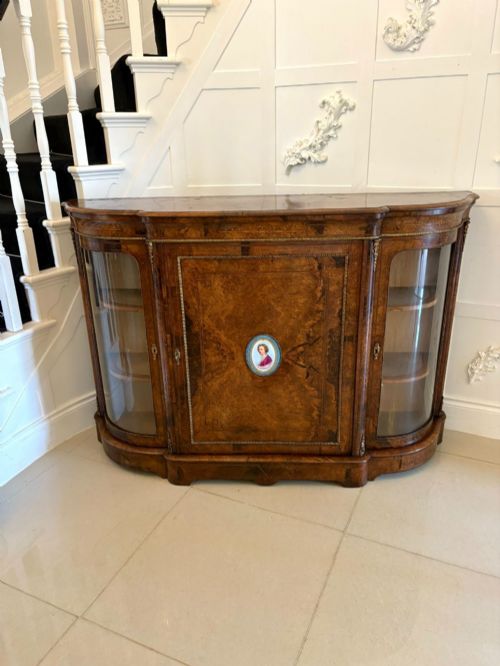
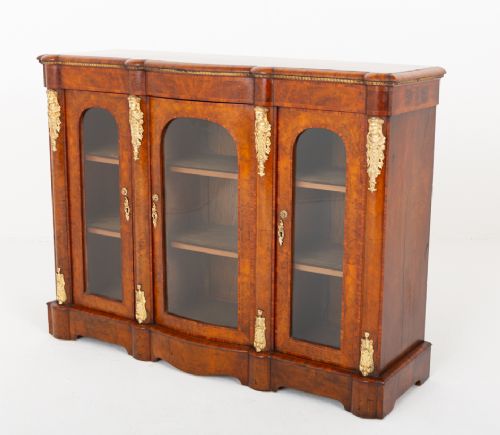
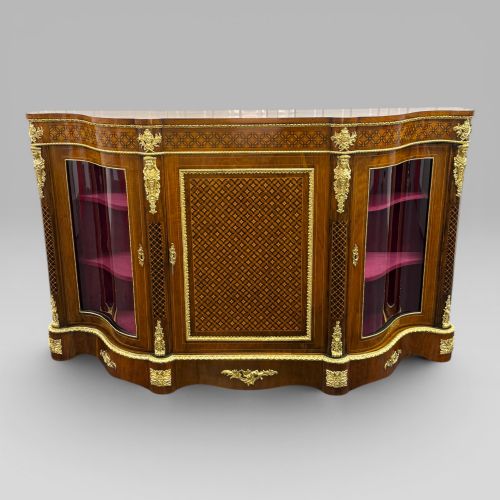
The prevailing version met on this page is the Victorian credenza or side cabinet executed in burr walnut, often featuring glazed curved end doors flanking a central cupboard. Pieces range from mid-nineteenth-century examples with marquetry to later Edwardian and Art Deco interpretations.
Materials and construction methods
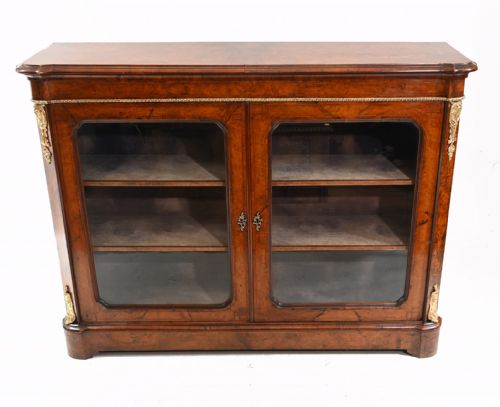
Cabinetmakers utilised figured burr walnut and plain walnut veneers applied to carcases of secondary timber, accented with boxwood and satinwood inlay. Glass panes are set into door frames to protect interior shelving while offering clear visibility.
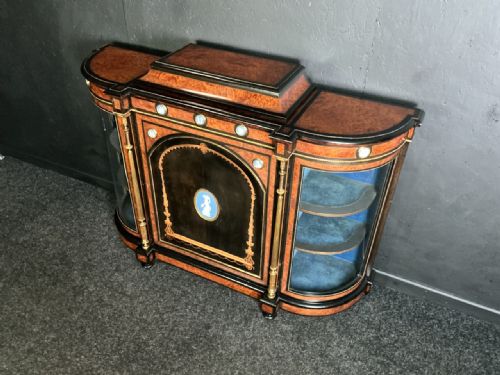
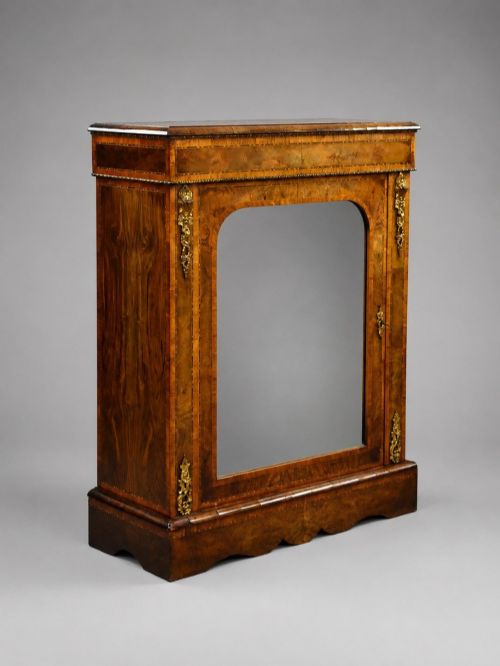
Mounts in cast ormolu and brass decorate corners, friezes, and plinths, while porcelain plaques and marquetry panels punctuate the timber surfaces. Ebonised mouldings and contrasting woods such as rosewood and ebony define structural lines.
The listings span the Victorian, Edwardian, and Art Deco periods, incorporating materials such as burr walnut, ormolu, porcelain, and boxwood inlay.
Judging execution and refinement
The standard of a walnut glass sideboard rests on the selection and matching of the walnut veneers, particularly the swirling patterns of burr timber across the main doors and panels. Finer pieces demonstrate precise marquetry work and well-integrated boxwood or satinwood stringing.
Hardware and secondary enrichments separate standard production from exceptional examples, seen in the weight and chasing of ormolu mounts, the presence of Sevres porcelain plaques, and the quality of the glass panels.
Maison Gagneau
The Walnut Glass Sideboard Glossary
- Burr Walnut
- A figured wood harvested from the wart-like growths on walnut trees, yielding intricate, swirling grain patterns highly prized for cabinet fronts.
- Credenza
- A low dining or reception room cabinet with doors, frequently flanked by curved glazed display compartments.
- Ormolu
- Gilded bronze mounts applied to furniture edges and panels to provide decorative contrast against dark timbers.
- Marquetry
- Decorative patterns formed by fitting together thin veneers of different coloured woods into a prepared surface.
- Pier Cabinet
- A narrow display cabinet designed to fit the wall space between windows.
Walnut Glass Sideboard: Frequently Asked Questions
What is a walnut glass sideboard?
A walnut glass sideboard is a cabinet category encompassing Victorian credenzas, pier cabinets, and sideboards built with walnut timbers and glazed doors. These items combine enclosed cupboard storage with glass-fronted display areas.
They appear primarily in nineteenth-century and early twentieth-century formats, utilising materials like burr walnut veneer, ormolu mounts, and marquetry inlay.
How do I date a walnut glass sideboard?
Dating relies on stylistic markers and construction methods associated with periods from the mid-nineteenth century through the Edwardian era and the Art Deco period. Victorian examples often incorporate serpentine fronts, porcelain plaques, and ormolu.
Later pieces from the twentieth century lean towards simplified architectural lines or French revival forms while retaining walnut veneers and glass panels.
Where were these cabinets used?
These pieces served in principal reception rooms, dining rooms, and parlours of period homes to store fine china, glass, and books. The glazed sections allowed hosts to display decorative items while keeping them protected from dust.
Lower surfaces provided space for lamps, ornaments, or serving items during gatherings, making them versatile furniture for formal interiors.
How do I care for walnut furniture?
Maintain walnut surfaces by keeping cabinets away from direct sunlight and steady heat sources to prevent veneer lifting and timber drying. Regular dusting with a soft, dry cloth preserves the polished finish of the burr walnut.
Avoid silicone-based polishes and excessive moisture, treating the ormolu mounts and glass panels with gentle, non-abrasive cleaning methods.