

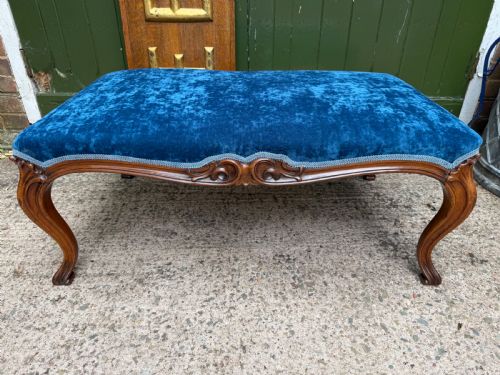


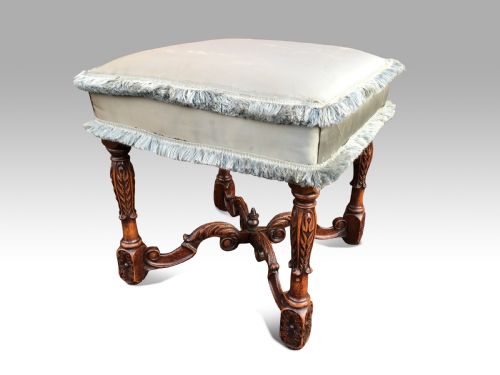


Walnut Framed Ottoman
These walnut framed ottoman pieces bring substantial nineteenth-century presence and rich textile surfaces into a room.
Walnut Framed Ottoman
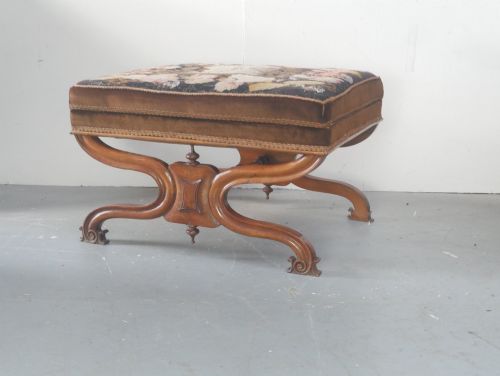
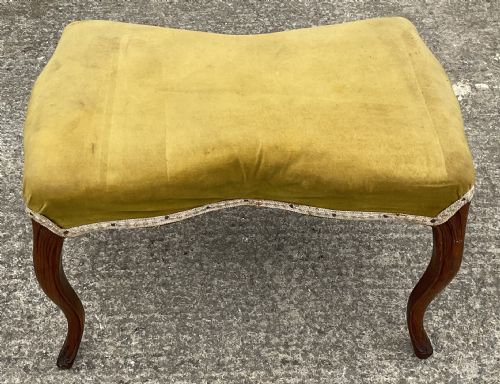
When you search for walnut framed ottoman, you encounter a selection of nineteenth-century stools, window seats, and X-frame chairs constructed from walnut and upholstered in velvet, tapestry, or fabric. These seating forms range from low dressing stools to generous window seats designed for Victorian interiors.
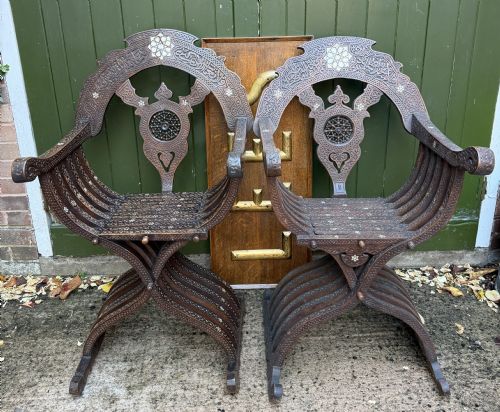
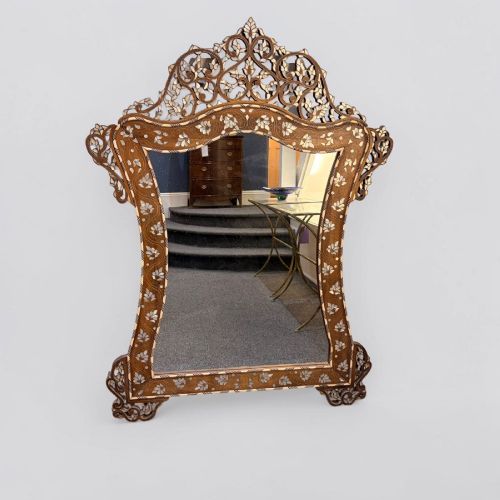
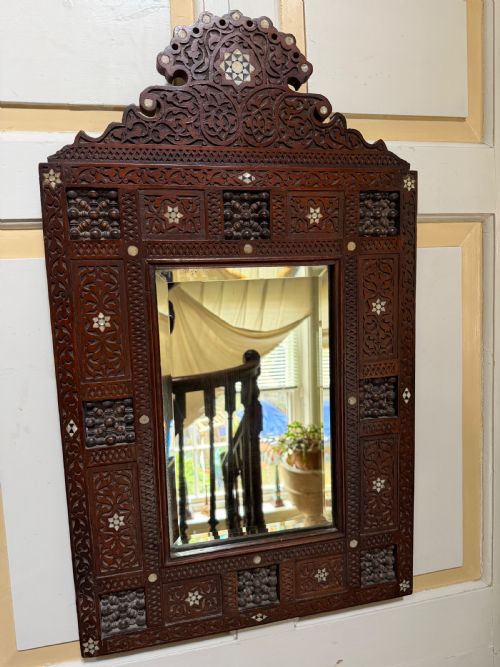
The most common examples on this page date from the Victorian period, including pieces with carved frames and specific regional styles such as Scottish Baronial or Syrian inlay work. Alongside these traditional stools, the selection includes related items like framed mirrors utilising the same timbers.
Materials and construction methods
Makers utilised solid walnut for the structural framework, often shaping the timber through carving, spiral turning, or X-frame geometry to provide both strength and decorative appeal. Frame ornamentation sometimes incorporates mother-of-pearl or nacre-shell inlay set into the wood.
Upholstery relies on traditional textile coverings including velvet, tapestry, and woven fabric fastened over internal padding. Secondary materials such as brass and glass appear in specific decorative components and associated mirror pieces.
Walnut Framed Ottoman Retail Price Guide 2026
Typical asking prices for walnut framed ottoman among the pieces listed under this phrase on Sellingantiques today, from the lower quarter to the upper quarter. They describe what is for sale here now, not the wider market.
Listings combine nineteenth-century Victorian pieces with revival designs spanning from William and Mary styles to Scottish Baronial forms.
Distinguishing quality across the range
The standard of a walnut framed ottoman is defined by the precision of the timber carving and the sophistication of the frame joinery. Pieces displaying intricate detailing, such as carved animal heads or complex revival styling, represent more ambitious craftsmanship.
Material selection also dictates distinction, particularly the depth of the walnut grain and the complexity of any inlaid nacre-shell work. The integrity of the original frame structure and the quality of the textile upholstery complete the distinction between standard production and finer examples.
The Walnut Framed Ottoman Glossary
- Walnut
- A dense, dark hardwood valued for its rich grain and suitability for detailed carving. It forms the primary structural material for these frames.
- X-frame
- A seating construction where intersecting diagonal legs form a folding or cross-braced support. This architectural form underpins many of the stools and chairs listed.
- Nacre
- An iridescent inner layer of mollusc shell, commonly known as mother-of-pearl. Craftsmen embedded this material into the timber for ornamental contrast.
- Window seat
- A long, upholstered stool designed to sit beneath a window. These forms provide secondary seating with low profiles.
- Scottish Baronial
- A nineteenth-century revival style drawing on medieval Scottish architecture. It influences the heavier, more robust carved stools in the collection.
Walnut Framed Ottoman: Frequently Asked Questions
What periods do these pieces come from?
The listings span the nineteenth and early twentieth centuries, with a strong concentration of Victorian examples.
Additional items reflect revival styles referencing earlier eras such as William and Mary design or eighteenth-century aesthetics.
How were these ottomans used originally?
These pieces served multiple seating functions in period homes, functioning as dressing stools, footstools, and window seats.
Their sturdy walnut construction and upholstered tops allowed them to be placed in drawing rooms, bedrooms, and long galleries.
Are all these items actually ottomans?
While the search term groups them together, the physical objects include stools, X-frame folding chairs, window seats, and occasional armchairs.
Many share the low profile and upholstered surface characteristic of nineteenth-century ottoman seating.
What decorative styles appear most often?
Victorian styling dominates the selection, accompanied by specific regional expressions including Middle Eastern, Syrian, and Moorish revival influences.
These pieces frequently feature elaborate frame carving, spiral turning, or intricate shell inlay.
How do I identify a Syrian influence?
Syrian and Middle Eastern pieces are typically distinguished by extensive geometric nacre-shell or mother-of-pearl inlay across the walnut frame.
These items often utilise the folding X-frame structure alongside Islamic-inspired design motifs.