
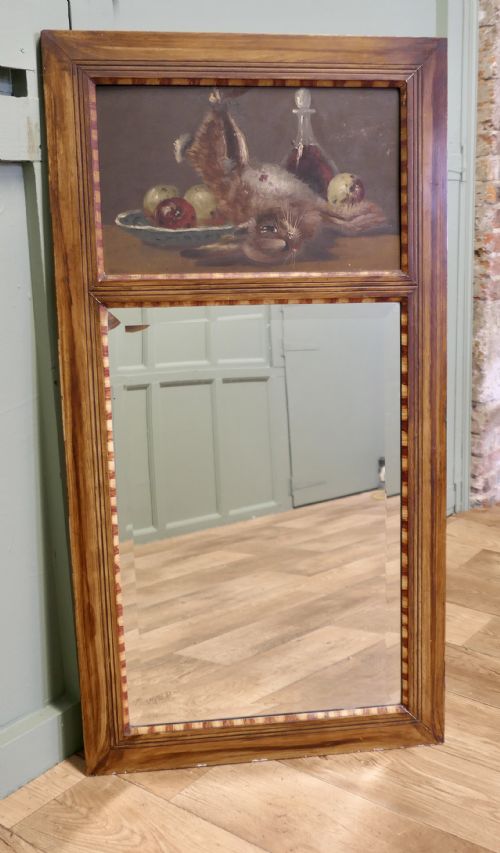



Walnut Framed Oil Painting
A walnut framed oil painting brings rich warmth and historic depth to a wall, combining deep timber grain with painterly pigment.
Walnut Framed Oil Painting
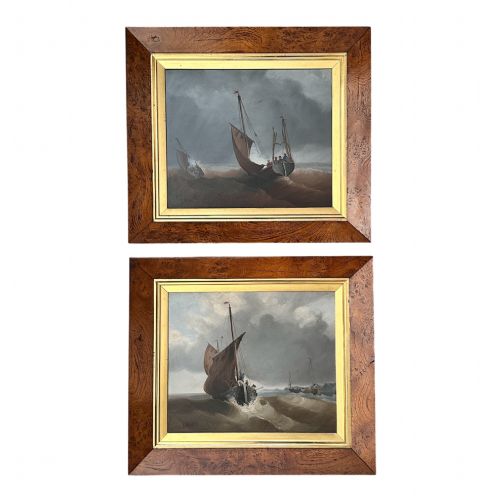
When searching for a walnut framed oil painting, collectors encounter a diverse range of works spanning several centuries, from early Dutch canvases to later nineteenth-century maritime scenes and still life compositions. These pieces combine traditional oil paint on canvas or wood panels with rich timber surrounds that frame the artwork.
The examples met most frequently on this page date from the nineteenth century, alongside Edwardian portraits, Regency townscapes, and pieces reflecting the Queen Anne revival style. These objects unite fine art with cabinetmaking, presenting framed pictures where the timber mount is as integral to the aesthetic as the pigment itself.
How they were made
Makers constructed these frames using solid walnut or applied burr walnut veneer over a wooden carcass, sometimes incorporating gilt wood or painted details to accentuate the profile. The paintings within utilise traditional oil paint mediums applied to prepared canvas or wooden panels.
Joinery techniques varied by period, employing mitred corners and moulded profiles that ranged from simple restrained borders to elaborate gilded ornaments designed to complement the tonal qualities of the oil painting.
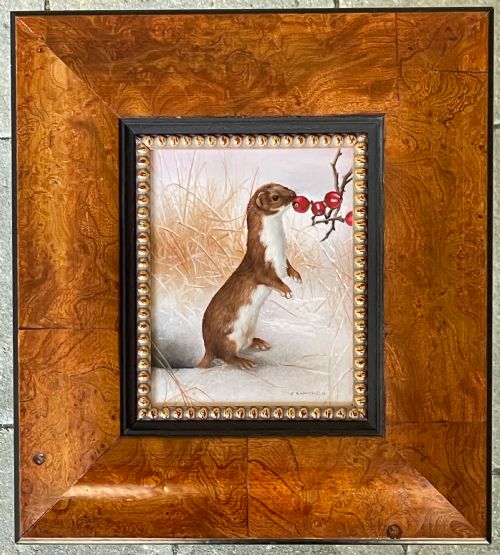
One persistent nineteenth-century artist clearly loved local fauna so much he dedicated an entire oil painting to a surprisingly alert weasel.
What varies in quality
Quality in these works rests upon the fidelity of the timber selection, such as the lively figuring found in burr walnut veneer, and the artistic capability demonstrated in the brushwork of the oil painting. Finer pieces display harmonious proportions between the width of the wooden frame and the scale of the canvas.
The integration of frame and artwork also dictates the tier of the piece, where original matching mounts demonstrate a higher level of historical integrity than later assembled combinations.
Carl Whitfield·John Moore of Ipswich·E. Cremer
The Walnut Framed Oil Painting Glossary
- Burr walnut veneer
- A thin slice of decorative timber cut from the abnormal growth knots of a walnut tree. This material produces intricate, swirling grain patterns highly prized by cabinetmakers.
- Trumeau
- A decorative wall mirror or painted panel designed to fit into the architectural space between windows. These tall pieces frequently incorporate oil paintings within their wooden framework.
- Gilt wood
- Carved timber coated with a thin layer of gold leaf or metallic powder. This finish adds reflective brilliance around the perimeter of an oil painting.
- Stretched canvas
- Woven fabric pulled tight and secured across a wooden support frame before receiving layers of oil paint. It forms the primary substrate for many historical paintings.
Walnut Framed Oil Painting: Frequently Asked Questions
How do I clean a walnut frame?
Dust the timber gently with a dry, soft cloth to remove surface particles without disturbing the grain or any aged finish. Avoid using modern chemical polishes or excessive water, which can damage both the wood and adjacent canvas.
For stubborn marks, consult a professional conservator rather than applying domestic cleaning solutions. Preserving the natural patina ensures the historic character of the walnut remains intact.
Are these frames original to the paintings?
Many periods saw frames and paintings paired together over generations, while others retain their initial factory or workshop combination. Examining the fit at the rabbet helps determine if the canvas rests comfortably within its original housing.
Signatures of age, such as oxidised fixings and matching wear patterns, often indicate a long association between the artwork and the wooden surround.
What lighting suits these oil paintings?
Display these works away from direct, harsh sunlight to prevent the oil pigments from fading and the walnut timber from drying out. Balanced ambient lighting or a dedicated picture light set at a low wattage reveals the depth of the brushwork.
Consider the reflection of glass if the piece incorporates a protective front pane, positioning the hanging angle to minimise glare from windows.
How do I date a walnut frame?
Dating relies on stylistic clues such as moulding profiles, timber thickness, and the presence of burr veneers typical of specific revivals like the Queen Anne period. The construction methods visible on the reverse of the frame offer further chronological evidence.
Comparing the timber characteristics with documented examples from eras like the nineteenth century or Edwardian epoch helps narrow down the decade of manufacture.