

Walnut Frame Armchairs
Walnut frame armchairs combine structural timber with rich upholstery across periods from the nineteenth century into the twentieth.
Walnut Frame Armchairs
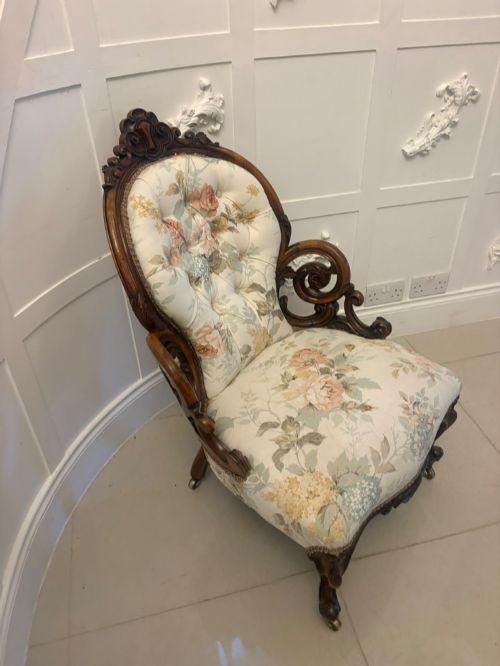
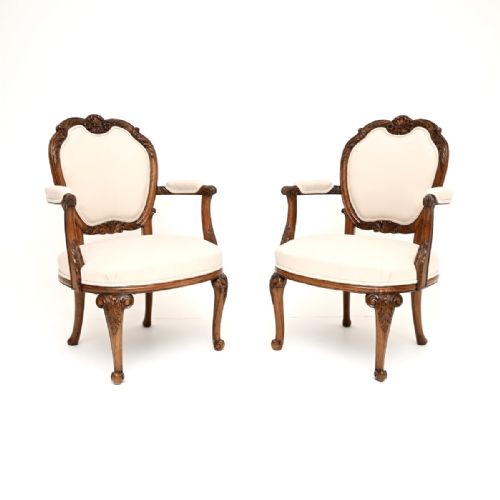
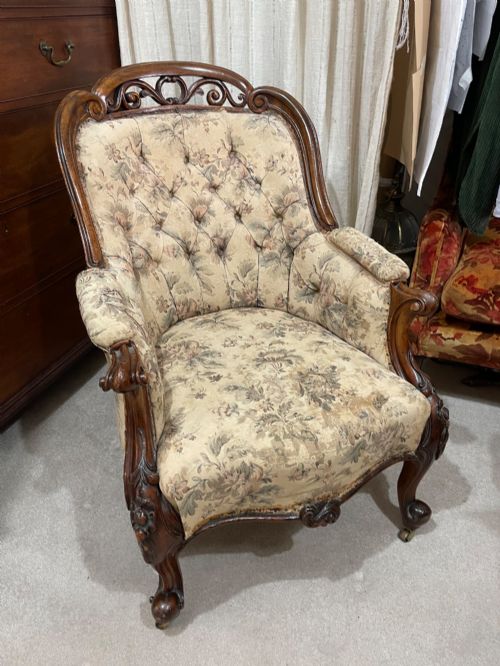
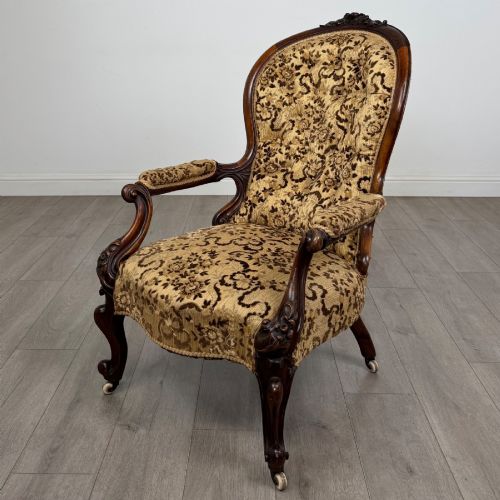
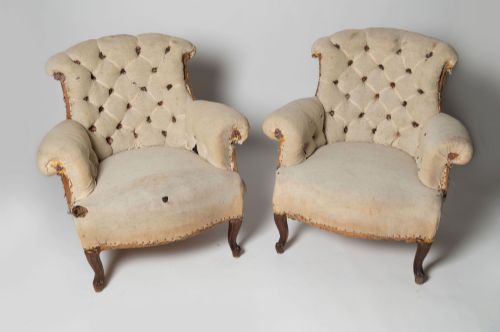
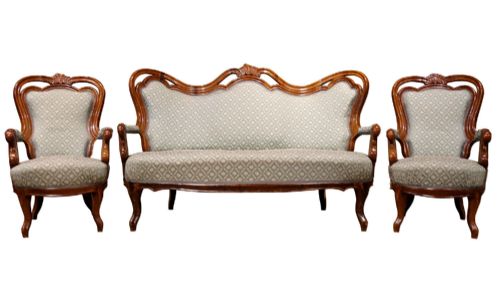
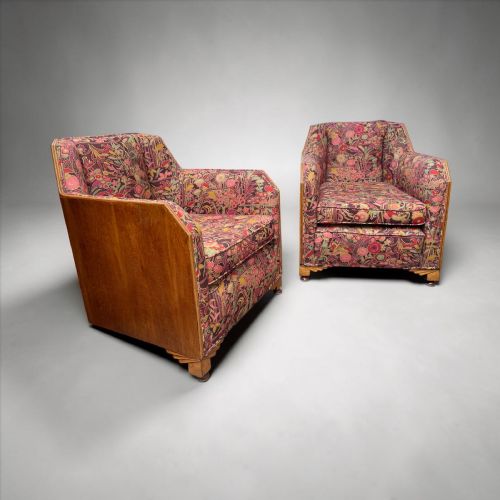
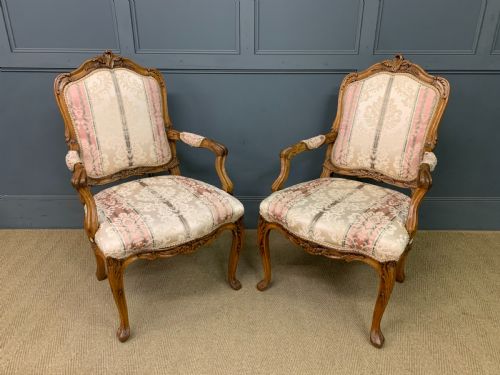
Walnut frame armchairs encompass seating designed for salons, libraries, and bedrooms, appearing frequently in pairs or larger suites. The selection includes Victorian, Edwardian, and Art Deco iterations alongside continental revival styles such as Louis XV and French Rococo.
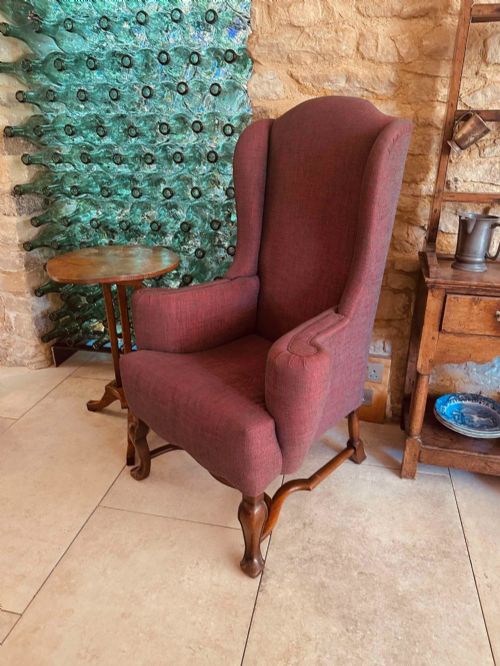
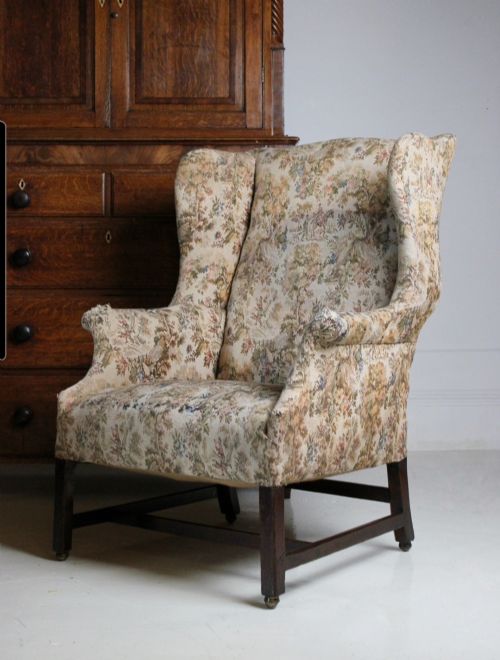
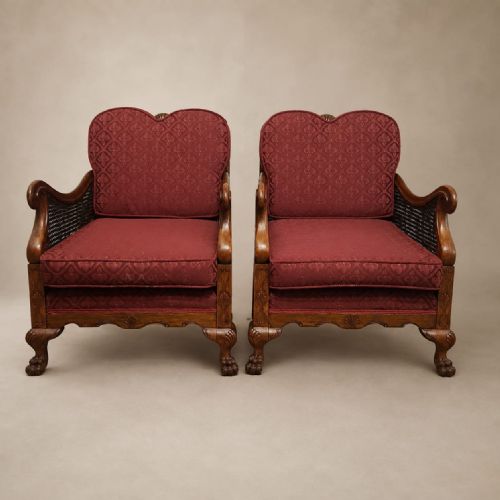
Buyers encounter open armchairs, bergere chairs with cane panels, and deep-seated library chairs built from wood and textile. These pieces originate from English workshops and French ateliers, utilising timber frames to support varied coverings from leather to silk.
How they were made
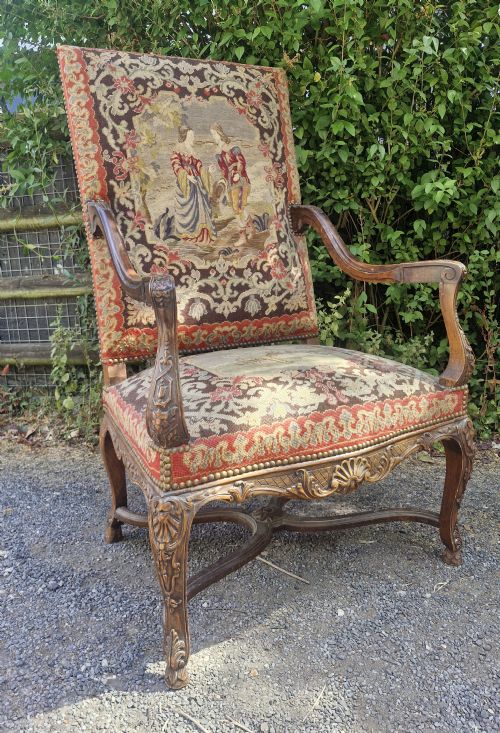
Cabinetmakers shaped the structural components from solid timber, often applying carved details or gilt highlights to the visible woodwork. Frames incorporated brass hardware, split cane panels, and traditional joinery to support the seating loads.
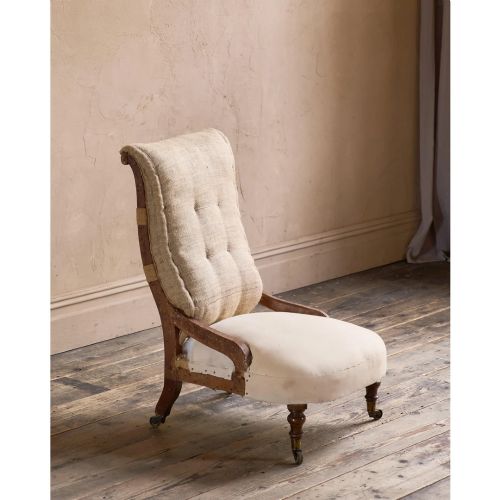
Upholstery techniques combined hessian, cotton, and stuffing materials beneath outer textiles such as velvet, needlework, and leather. Interior foundations relied on coil springs or webbing secured directly to the wooden rails.
Walnut Frame Armchairs Retail Price Guide 2026
Typical asking prices for walnut frame armchairs among the pieces listed under this phrase on Sellingantiques today, from the lower quarter to the upper quarter. They describe what is for sale here now, not the wider market.
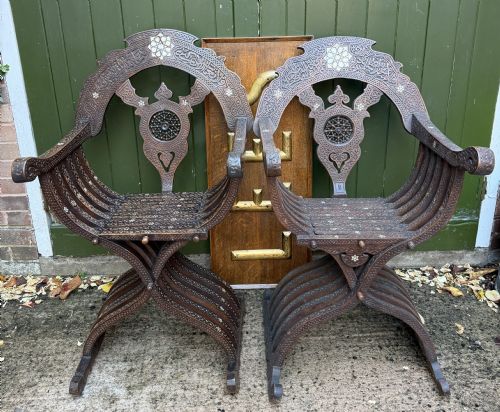
Several armchairs incorporate twisting barley sugar wooden turnings that recall seventeenth-century joinery revived by Victorian craftsmen.
What varies in quality
The refinement of the timber carving and the symmetry of the frame distinguish standard production from exhibition quality examples. Superior pieces display crisp mouldings and dense walnut grain selected for visual depth.
Integrity depends on the preservation of the original joinery and the quality of the textile coverings. Pieces retaining period upholstery or high-grade replacement fabric demonstrate greater adherence to historical specifications.
Howard and Sons
The Walnut Frame Armchairs Glossary
- Bergere
- An enclosed or open armchair with cane work panels set into the wooden frame. This French seating form gained popularity in various nineteenth-century revivals.
- Fauteuil
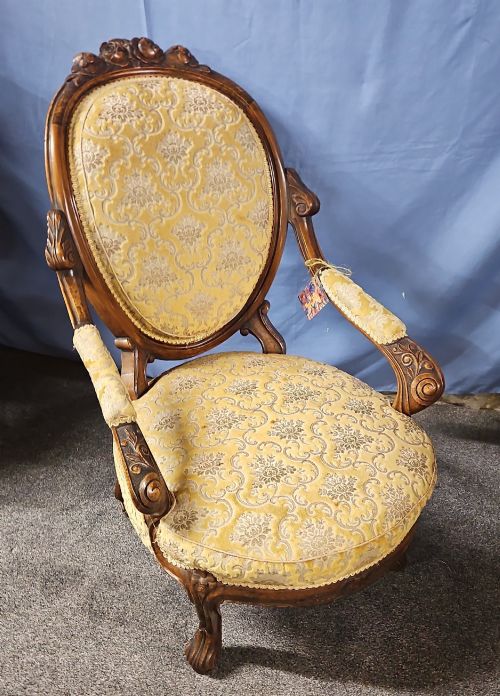
- An open-arm armchair with an exposed wooden frame, typically upholstered on the seat and back. These French chairs often feature carved cabriole legs.
- Salon suite
- A matching set of seating furniture designed for formal reception rooms. The grouping usually comprises a settee alongside several armchairs.
- Gilt wood
- Timber treated with a thin layer of gold leaf or gilt preparation to enhance the decorative surface. It appears on revival frames from the nineteenth century.
- Needlework
- Hand-stitched textile used for upholstery, often executed in wool or silk threads. Such coverings frequently feature floral or geometric patterns.
Walnut Frame Armchairs: Frequently Asked Questions
How do I identify a Victorian walnut armchair?
Victorian walnut armchairs display characteristic timber grain and stylistic revivals associated with the nineteenth century, including carved scrollwork and button-tufted upholstery.
Examination of the structural frame reveals nineteenth-century assembly methods, frequently paired with ceramic castors or heavy sprung seat foundations.
What is a bergere armchair?
A bergere armchair incorporates woven cane panels along the sides and back, creating a lighter visual profile than fully upholstered seating. These frames often use walnut timber combined with loose squab cushions.
Originating in France, the style was widely adopted by British makers during the nineteenth and early twentieth centuries for domestic drawing rooms.
How are walnut frames cared for?
Walnut frames require maintenance with mild, non-abrasive polishes to preserve the natural grain and finish of the timber. Avoiding direct sunlight prevents the wood from fading over time.
Upholstery benefits from regular gentle vacuuming using a soft brush attachment to remove dust from the textile fibres without disturbing the underlying padding.
Are these armchairs comfortable for daily use?
Many of these armchairs were built with deep seats and sprung interiors designed for sustained reading or relaxation in libraries and parlours. The ergonomic support varies depending on whether the model is a rigid-backed salon chair or a padded library armchair.
Evaluating the internal springing and cushion fill determines how suitable a specific period chair is for modern daily seating.