
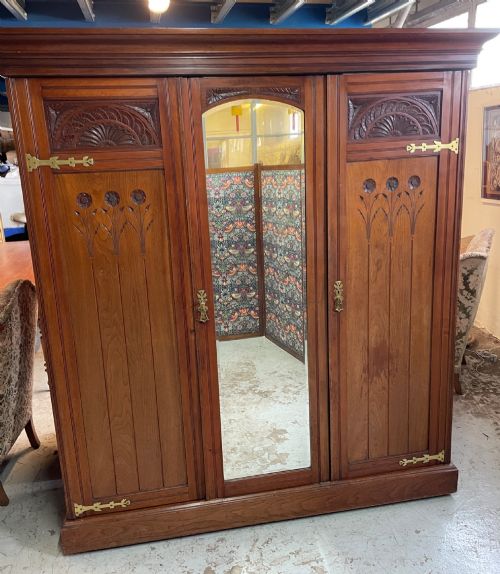
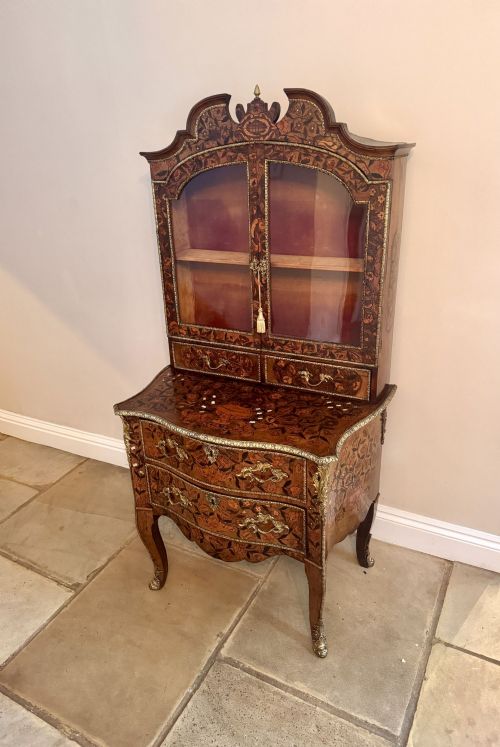
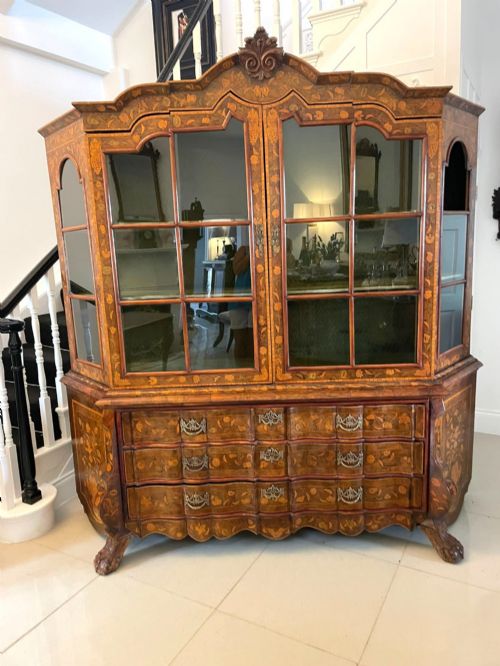
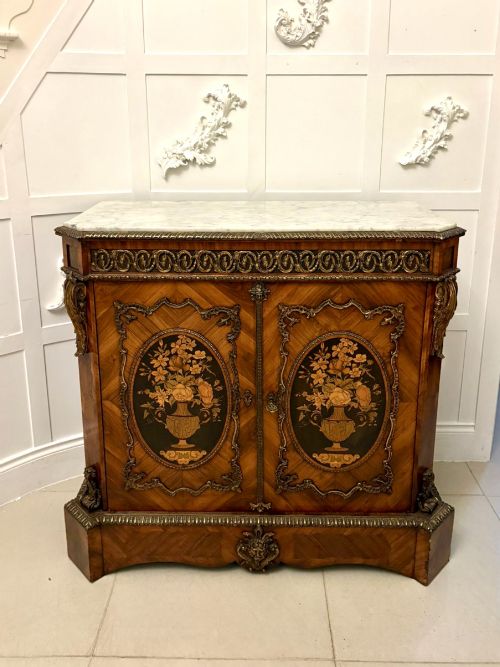

Walnut Floral Cupboard
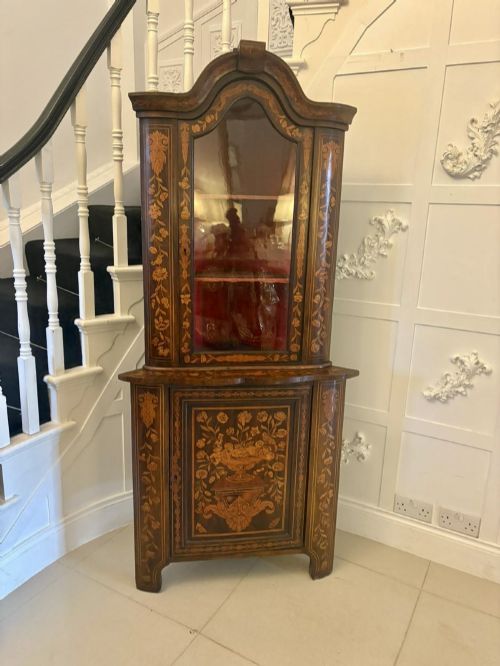
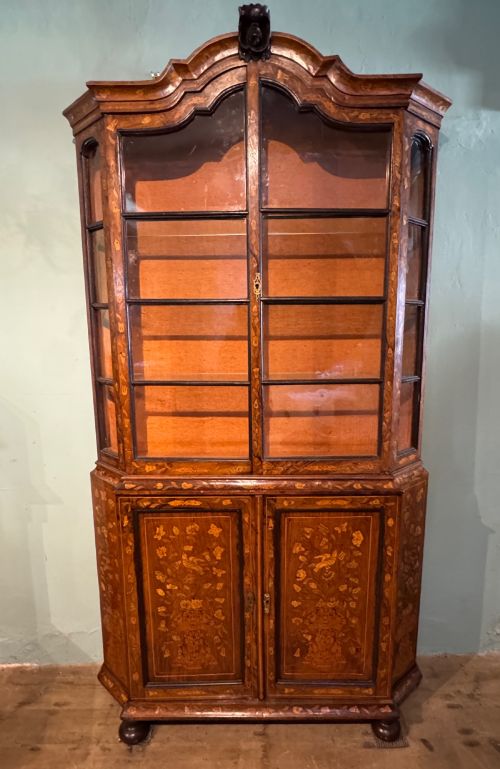
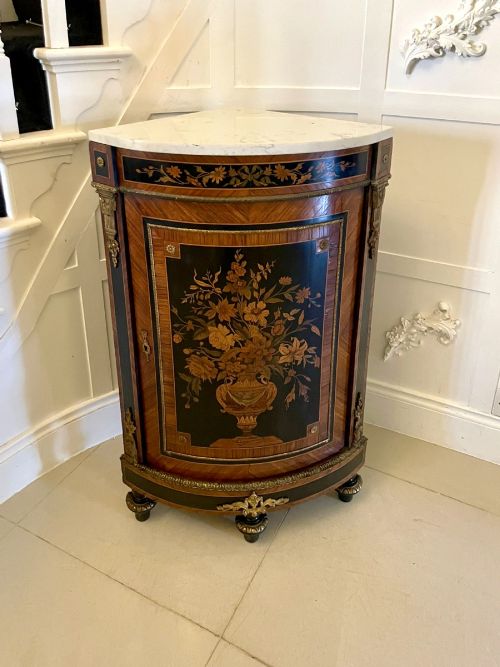
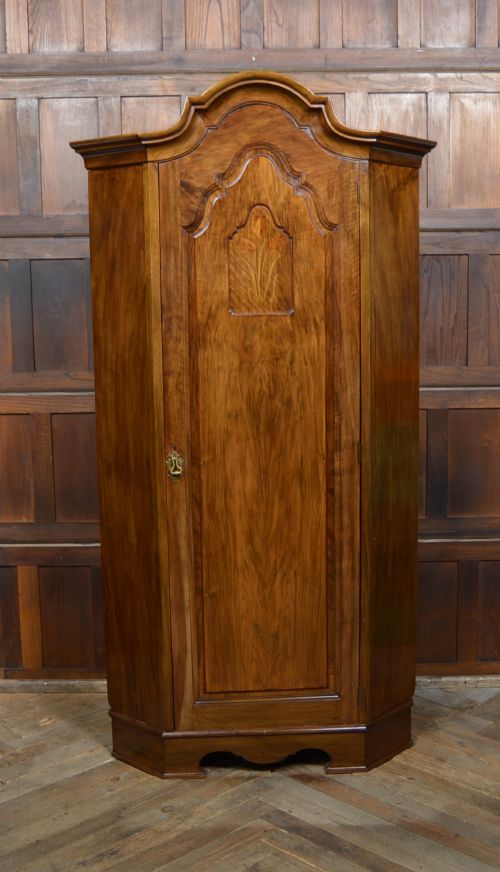
A walnut floral cupboard brings intricate botanical marquetry and rich timber tones into a room.
Walnut Floral Cupboard
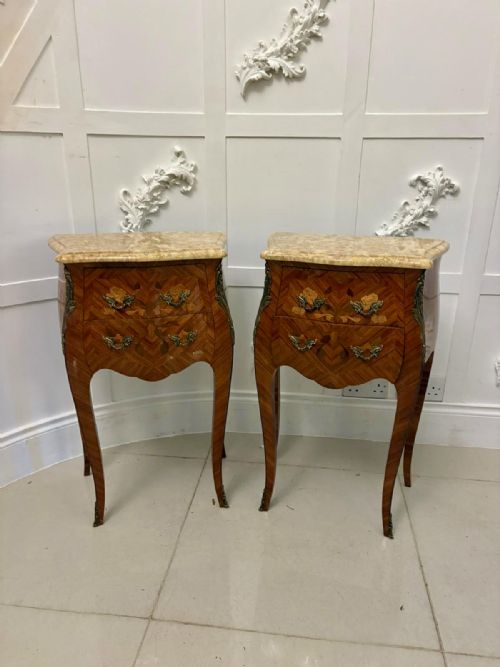
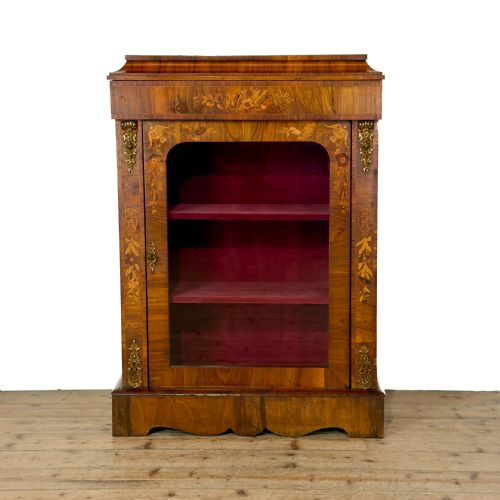
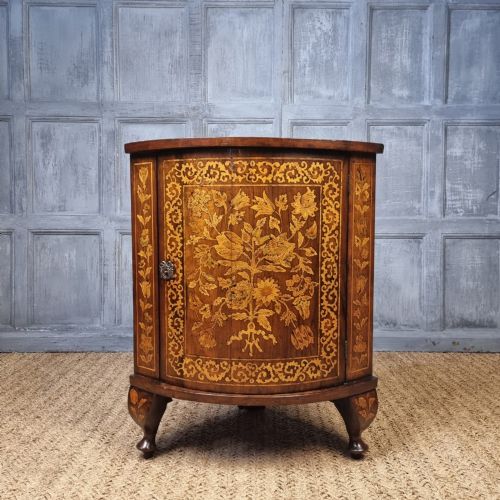
A walnut floral cupboard encompasses various forms such as bedside cabinets, corner units, display cases and linen presses.
The pieces on this page originate predominantly from the eighteenth and nineteenth centuries, alongside twentieth-century examples.
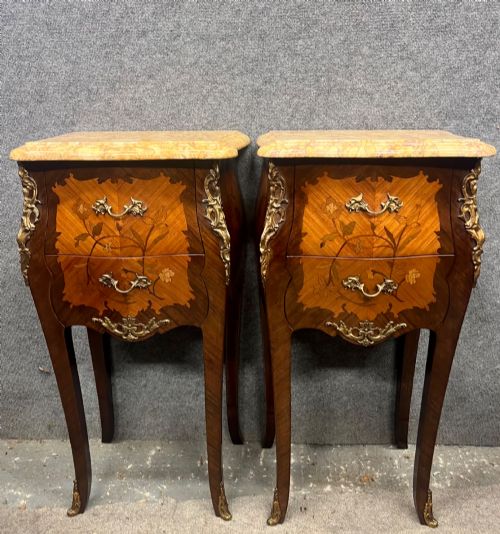
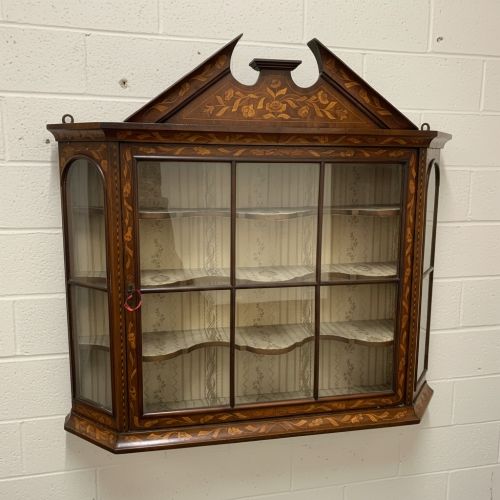
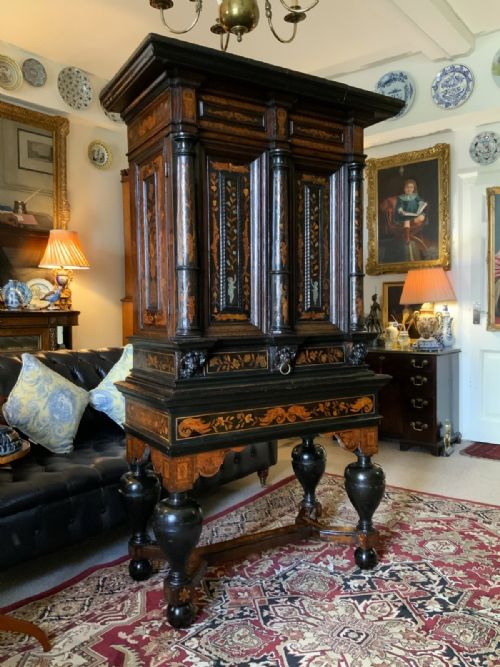
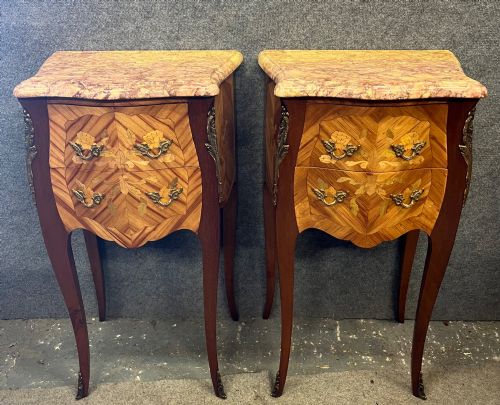
Dutch Baroque and French revival styles dominate the selection, bringing distinct continental proportions and detailed floral decoration to each cabinet.
How they were made
Cabinet makers utilised walnut timber as the primary ground, often selecting burr walnut or incorporating fruitwood and kingwood for contrasting tones.
Marquetry techniques involved cutting intricate floral motifs from various veneers and setting them flush into the wooden surface.
Mounts in brass or ormolu appear alongside marble tops and glass panels on specific French and Victorian variants.
The listings span from the seventeenth century through to the 1930s, incorporating oak, fruitwood, marble, and brass.
What varies in quality
The precision and complexity of the floral marquetry dictate the upper tiers of craftsmanship, where multi-toned woods form convincing petal and stem details.
The selection of timber, such as highly figured burr walnut, separates standard utility pieces from more ambitious cabinet work.
Structural harmony, including the crispness of carved details and the integration of secondary woods like oak, marks the difference in execution across periods.
The Walnut Floral Cupboard Glossary
- Marquetry
- A decorative technique where small pieces of veneer are assembled into pictorial designs on a wooden ground. It differs from inlay by covering the entire surface rather than resting in carved recesses.
- Burr walnut
- A prized timber cut from the abnormal growths on walnut trees, yielding swirling grain patterns. Cabinet makers selected it for prominent surfaces to create rich visual movement.
- Ormolu
- Gilded bronze used for decorative mounts and feet on French-influenced furniture. It provides a metallic contrast to the dark walnut and floral veneers.
- Demi-lune
- A half-moon shape characteristic of console tables and side cabinets designed to sit flat against a wall. This profile became popular in eighteenth and nineteenth-century French designs.
Walnut Floral Cupboard: Frequently Asked Questions
Where should I place a corner cabinet?
A corner cabinet fits neatly into unused angles of a dining room or hallway, making effective use of difficult spatial layouts.
These pieces provide enclosed storage while drawing the eye upward with their height and detailed woodwork.
How do I clean walnut furniture?
Dust the timber regularly with a soft, dry cloth to prevent particles from settling into the intricate floral marquetry recesses.
Avoid chemical polishes and excess moisture, applying a gentle beeswax occasionally to nourish the walnut grain.
What is the difference between a pier cabinet and a side cabinet?
A pier cabinet stands narrow and tall, designed specifically to sit against the wall space between windows.
Side cabinets offer broader proportions with greater surface area and lower internal storage capacity.
How can I tell Dutch pieces from French ones?
Dutch pieces typically display dense floral marquetry covering entire surfaces, often featuring bulbous feet or serpentine fronts rooted in Baroque traditions.
French items more commonly incorporate marble tops, ormolu mounts, and lighter Louis-style framing around the veneered panels.