




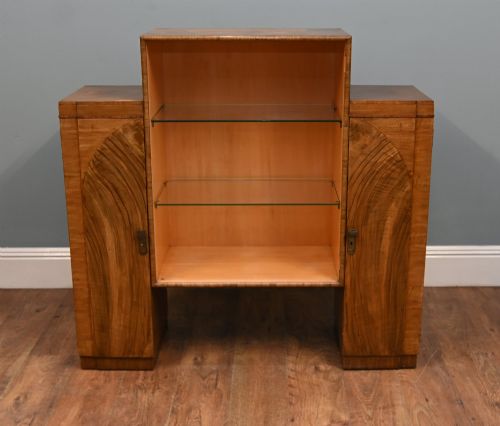
Walnut Display Furniture
These walnut display furniture pieces combine rich timber grains with glass and brass to showcase treasured objects inside any room.
Walnut Display Furniture
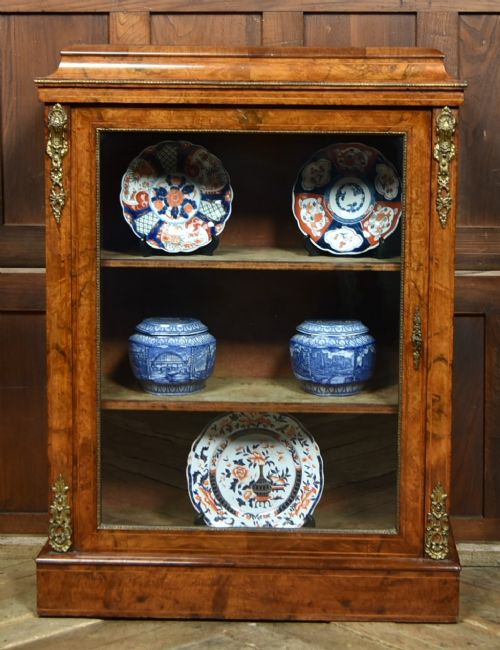
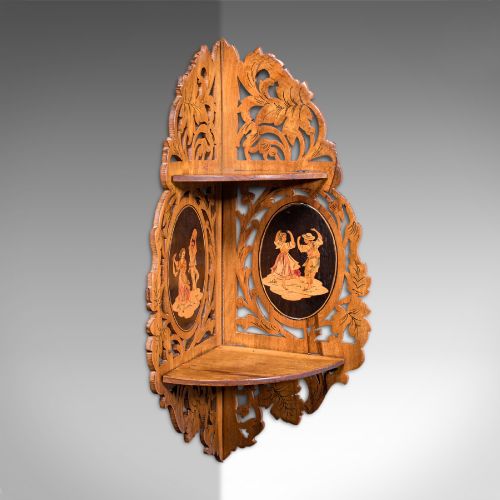
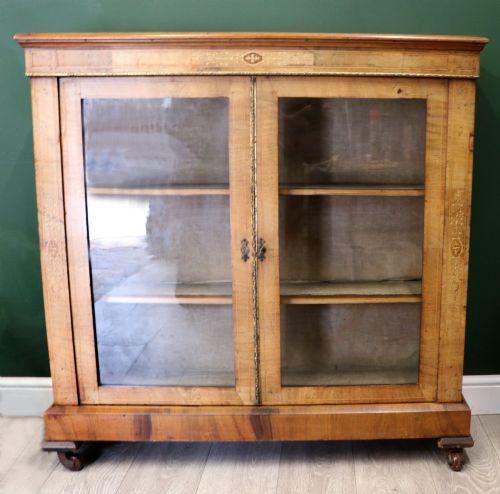
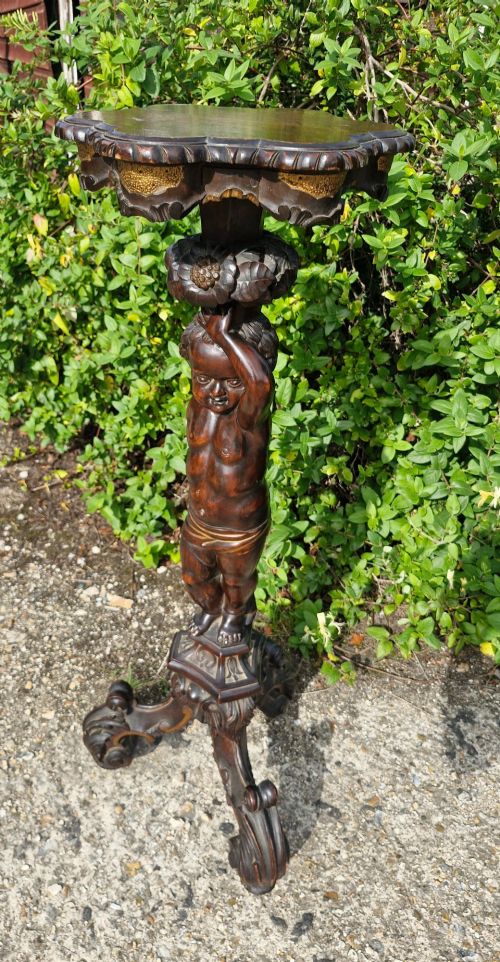
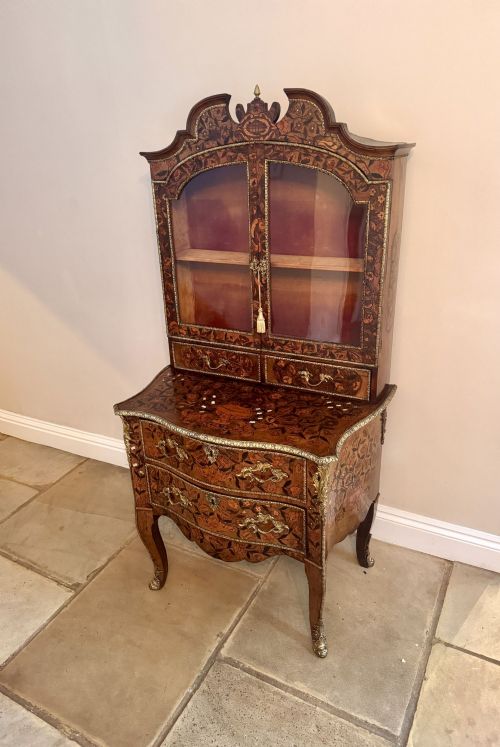
Walnut display furniture encompasses everything from Victorian burr walnut whatnots and glazed pier cabinets to grand 18th-century Dutch marquetry cabinets on chests. These pieces are designed primarily to exhibit precious items while introducing deep, figured wood tones into an interior.
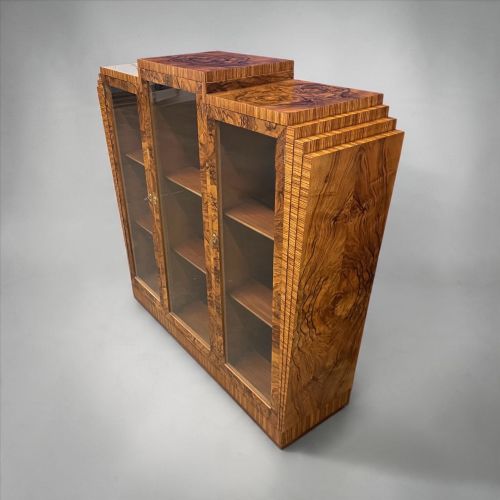
The selection on this page leans heavily towards Victorian and 19th-century examples, alongside earlier Dutch Baroque forms and later Art Deco cabinets. Buyers frequently encounter open bookcases, tiered etageres, and glazed corner cabinets originating from British, French, and Dutch workshops.
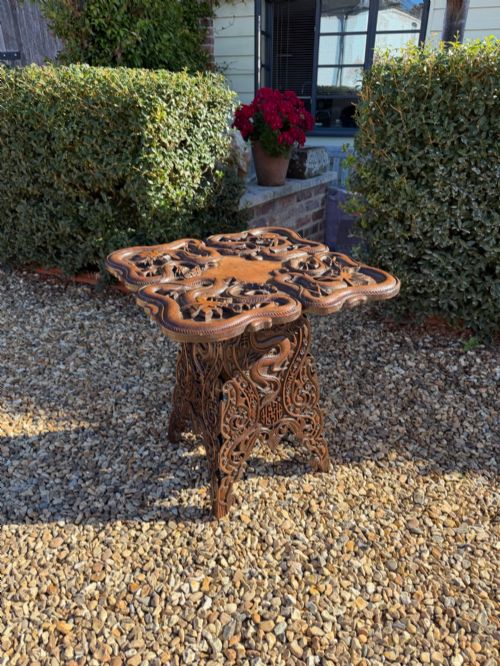
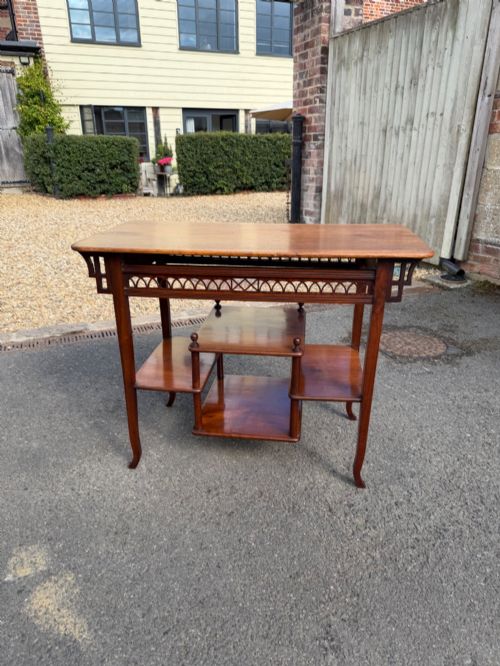
The overriding purpose of these items remains the presentation and protection of collections, whether through delicate fretwork shelves or heavy glass doors. Each form adapts the dense grain of walnut to specific domestic spaces, from tall wall units to low occasional tables.
Materials and construction methods
Cabinetmakers relied heavily on walnut and highly figured burr walnut veneers applied over secondary timbers like oak and fruitwood. This technique allowed craftsmen to create striking symmetrical patterns across large cabinet doors and tabletops.
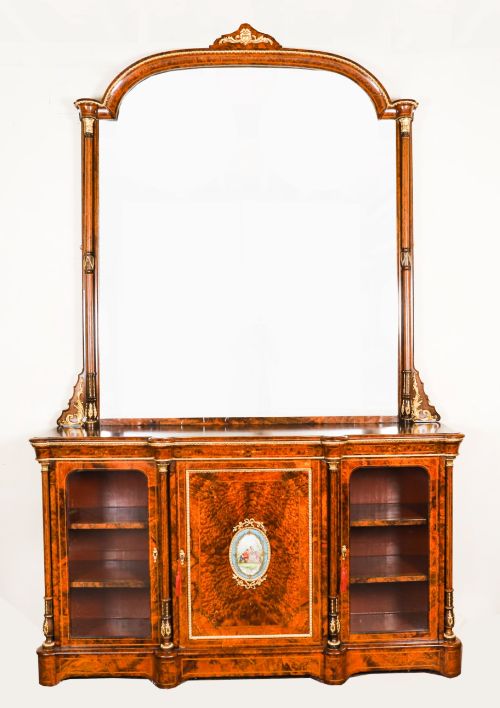
Brass mounts, ormolu, and pewter inlay frequently complement the wood, alongside intricate floral marquetry executed in contrasting lighter timbers. Glazed panels and hand-carved details finished the construction of these cabinets and etageres.
Walnut Display Furniture Retail Price Guide 2026
Typical asking prices for walnut display furniture among the pieces listed under this phrase on Sellingantiques today, from the lower quarter to the upper quarter. They describe what is for sale here now, not the wider market.
Music cabinets included internal partitions designed purely to stop sheet music from slumping into disorderly piles.
Judging the quality of manufacture
Quality rests in the selection of the timber veneer and the precision of the marquetry inlay. Superior examples display continuous, matched grain patterns across the entire front of a cabinet rather than piecemeal patching.
The crispness of carved wooden elements and the integration of cast brass or ormolu mounts separate standard production from exceptional pieces. Structural integrity in tiered whatnots and the smooth operation of glazed doors reveal the original maker's standard of work.
Gillows·Gabriel Viardot·Lamb of Manchester·August Ungethüm·Maple & Co.
The Walnut Display Furniture Glossary
- Burr walnut
- A timber harvested from the warted growths on walnut trees, yielding highly swirling and turbulent grain patterns prized by cabinetmakers. It is almost exclusively used as a decorative veneer on prominent surfaces.
- Whatnot
- A multi-tiered piece of open shelving designed for displaying ornaments, books, or small objects. These pieces often feature turned uprights and delicate fretwork galleries.
- Marquetry
- The art of applying thin pieces of wood veneer and other materials like pewter to a structure to form decorative patterns and pictures. Dutch examples frequently utilise floral motifs.
- Ormolu
- Gilded bronze mounts applied to the corners, feet, and friezes of fine furniture. This technique adds metallic contrast to dark walnut surfaces.
- Pier cabinet
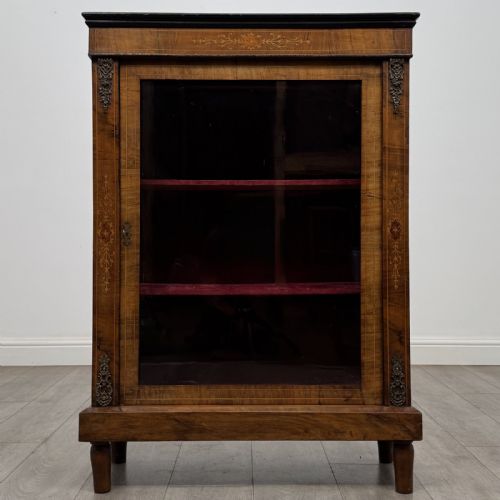
- A low cabinet specifically built to stand against the wall space between windows. They typically feature a glazed single door and inlaid details.
Walnut Display Furniture: Frequently Asked Questions
What is a whatnot?
A whatnot is a piece of furniture featuring multiple open shelves supported by small columns or turned uprights. It was designed to hold and exhibit small ornamental items.
These pieces range from simple Victorian walnut models to elaborate carved and inlaid multi-tiered stands intended for prominent display in a drawing room.
How do I care for walnut veneer?
Walnut furniture with delicate veneers requires stable indoor humidity and protection from direct sunlight to prevent the timber from drying out or fading. Gentle dusting with a dry cloth is generally sufficient for daily upkeep.
Avoid placing these items near heat sources or damp areas, as rapid environmental changes can cause the veneer to lift or crack over time.
How do I date a display cabinet?
Dating relies on observing the prevailing style, construction techniques, and secondary woods used inside the carcase. For instance, Dutch marquetry often points to 18th-century origins, while glazed pier cabinets frequently suggest the Victorian era.
Hardware, hinge types, and the method of glass manufacture also provide reliable clues to the exact period of production.
Where should I place a display cabinet?
These cabinets suit living rooms, studies, and hallways where their glass doors and open shelves can safely house collections. Corner cabinets and wall shelves make efficient use of smaller or awkward spaces.
Positioning them away from heavy foot traffic ensures that delicate fretwork and antique glass remain undisturbed.