


Walnut Cylinder Roll Desk
A walnut cylinder roll desk offers clever concealed workspace behind a curved sliding shutter, combining refined cabinetry with practical daily storage.
Walnut Cylinder Roll Desk
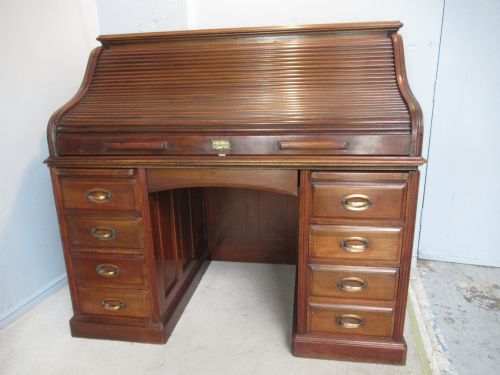
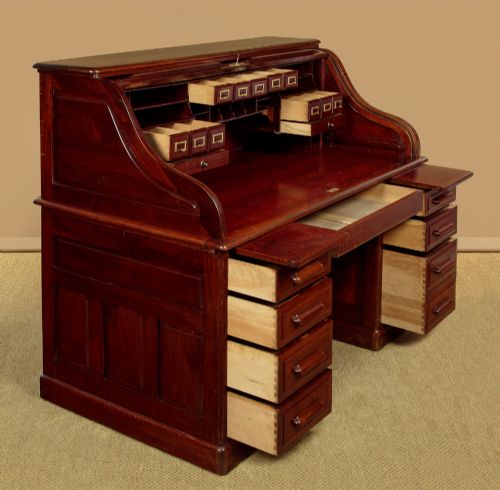
A walnut cylinder roll desk provides a curved wooden tambour or solid roll that conceals writing surfaces and pigeonholes. These pieces span periods from the Georgian era through the Victorian period and into the early twentieth century.
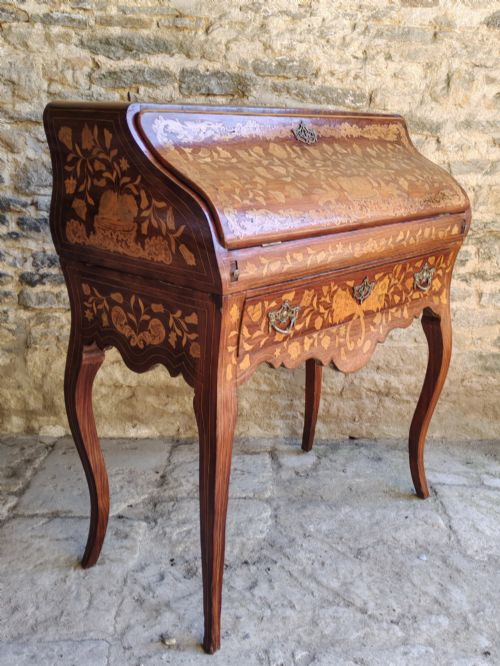
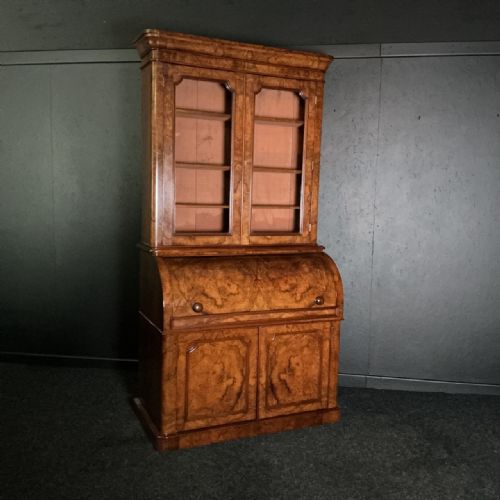
The forms vary widely in scale and proportion, ranging from compact miniature desks to large bureau bookcases with glazed upper sections. Continental examples often display elaborate Dutch marquetry or bombe fronts.
Makers utilised rich timbers and distinctive decorative styles, including Baroque, Louis XV and Edwardian designs. Buyers encounter both monumental American factory pieces and finely detailed European marquetry work on this page.
Materials and construction methods
Cabinetmakers constructed the main carcase and rolling cylinder using solid walnut and burr walnut veneers, often enhanced with fruitwood inlay or parquetry. Secondary timbers such as maple, oak and mahogany appear in internal drawer linings and structural framing.
The cylinder mechanism relies on precise parallel slats glued to a flexible canvas backing, allowing the curved shutter to glide smoothly within hidden tracks. Marquetry pieces feature hand-cut floral and pictorial veneers inlaid into the primary walnut ground.
Materials recorded on this page include solid walnut, burr walnut, fruitwood inlay, maple, oak, glass and brass.
Distinctions in craftsmanship and design
Quality separates simple utilitarian storage from masterwork cabinetry through the precision of the rolling mechanism and the tightness of the veneer joints. Superior examples feature seamless cylinder movement and finely figured burr walnut selected for balanced grain patterns.
The complexity of the exterior decoration marks the upper tier of production, particularly on Dutch marquetry and bombe forms where floral inlay covers all visible surfaces. Interior arrangement also dictates value, with well-appointed compartments, secret drawers and quality brass hardware distinguishing the best pieces.
Boston Chair Company·Wiggers
The Walnut Cylinder Roll Desk Glossary
- Cylinder
- A curved wooden shutter that slides back to reveal the writing surface and interior fittings. It operates on vertical tracks cut into the sides of the desk.
- Marquetry
- The art of forming decorative patterns by fitting together thin veneers of different woods and botanical materials. Craftsmen used fruitwood inlay to create floral motifs across the walnut surfaces.
- Bombe
- A swollen or bulging contour characteristic of continental furniture styles, particularly seen on Dutch baroque and rococo furniture. This curved profile requires advanced woodworking skill.
- Bureau bookcase
- A writing desk combined with a shelving unit enclosed by glass doors above. These tall hybrid forms maximise storage capacity in a single piece of furniture.
- Parquetry
- A geometric mosaic of wood pieces used for surface decoration on floors and furniture. Miniature desks often employ this technique alongside traditional marquetry.
Walnut Cylinder Roll Desk: Frequently Asked Questions
How does a cylinder roll desk work?
The curved wooden shutter slides smoothly along recessed tracks to cover or expose the writing surface and interior pigeonholes. Pulling the writing slide forward often retracts the cylinder automatically.
This mechanical action keeps active correspondence concealed while protecting the desktop from dust when closed.
What is the difference between a roll top and a cylinder desk?
A cylinder desk uses a solid curved wooden shutter made of fitted slats glued to a fabric backing. Roll top desks typically use narrower tambour slats designed for industrial or mass-produced office furniture.
Cylinder fronts generally appear on finer antique cabinetwork, while traditional roll tops belong to later commercial periods.
Where were Dutch marquetry desks placed?
These decorative pieces stood in principal reception rooms and parlours where guests could admire the intricate floral veneers. They served as status symbols for wealthy merchants and homeowners.
The elaborate inlay meant they functioned as display objects as much as practical writing furniture.
How should I care for antique walnut furniture?
Keep walnut pieces away from direct sunlight and heat sources to prevent the burr veneers from drying and cracking. Maintain a stable room temperature and apply traditional beeswax periodically to nourish the wood.
Avoid excessive moisture and lift the desk rather than dragging it when rearranging a room.