



Walnut Credenza Pair
A walnut credenza pair brings balanced grandeur to a grand room, matching symmetrical design with rich timber figures.
Walnut Credenza Pair
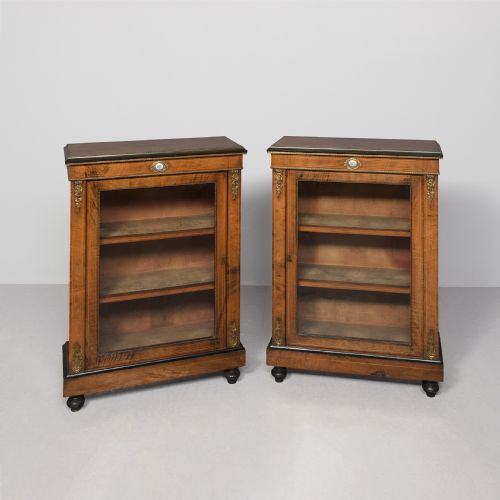
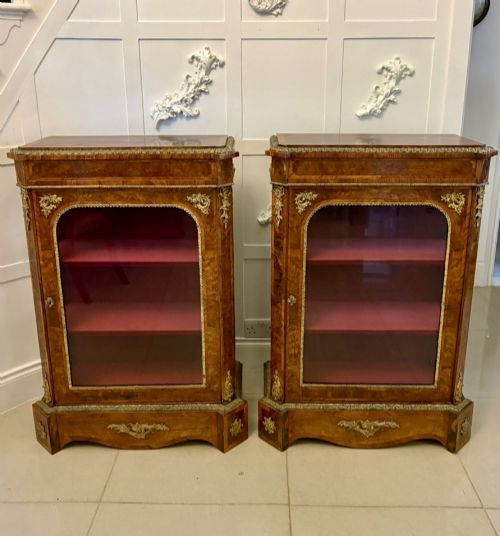
A walnut credenza pair consists of matching symmetrical cabinets designed for formal display and storage in nineteenth-century interiors. These items range from Victorian pier cabinets and display units to French side cabinets and serving tables.
Buyers meeting this search phrase will most frequently encounter nineteenth-century Victorian examples featuring burr walnut timbers and detailed marquetry. These pieces often incorporate glazed doors and polished surfaces intended to reflect candlelight and daylight alike.
The selection extends from mid-nineteenth-century English production to Continental examples including seventeenth-century French Renaissance serving tables and twentieth-century Italian Neoclassical cabinets. Each pair shares a matching dual format designed to anchor opposite walls or flank a central hearth.
How they were made
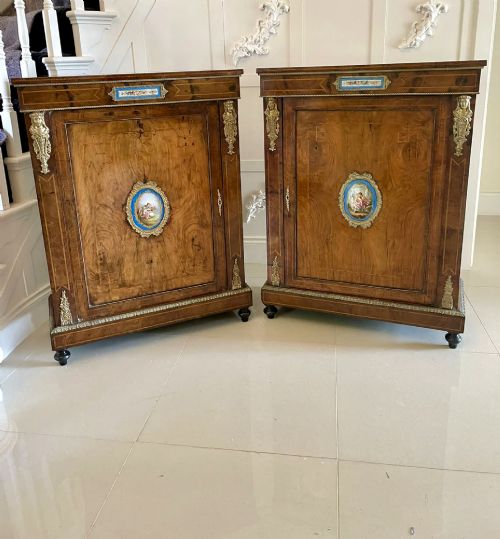
Cabinet makers utilised figured burr walnut veneers applied over solid carcases to create rich, swirling grain patterns across the primary surfaces. These timber faces were frequently enhanced with intricate marquetry inlay using contrasting woods and ebonised detailing.
Structural embellishments relied on cast or gilt ormolu mounts fixed to corners, friezes, and feet to accentuate the architectural lines. Hand-painted porcelain plaques and glass panels were routinely integrated into doors and mounts to provide colour contrast against the dark wood.
Walnut Credenza Pair Retail Price Guide 2026
Typical asking prices for walnut credenza pair among the pieces listed under this phrase on Sellingantiques today, from the lower quarter to the upper quarter. They describe what is for sale here now, not the wider market.
Listings span multiple centuries, ranging from seventeenth-century French Renaissance serving tables to twentieth-century Italian Neoclassical side cabinets.
What varies in quality
The choice of timber veneer dictates much of the initial visual impact, with tightly curled burr walnut commanding greater visual depth than plain grain. Master workshops selected veneers with precise symmetry so that grain patterns mirrored across the centre split of each cabinet.
The refinement of the gilt bronze mounts and the execution of the marquetry distinguish standard production from exhibition-grade work. High-tier pieces feature crisply chased ormolu and hand-painted porcelain plaques rather than generic press-moulded ornamentation.
Pietro Ferrario
The Walnut Credenza Pair Glossary
- Burr walnut
- A highly figured wood veneer harvested from the irregular growths of walnut trees, prized for its swirling patterns. Cabinet makers prized this timber for central panel displays.
- Ormolu
- Gilt bronze ornamentation applied to furniture for decorative contrast and edge protection. These cast mounts define the transition between different revival styles.
- Marquetry inlay
- Decorative patterns formed by fitting contrasting veneers into prepared recesses on the cabinet surface. This technique creates geometric or floral motifs across the doors and friezes.
- Pier cabinet
- A narrow display cabinet designed specifically to stand against the wall space between windows. These tall glazed units show off porcelain and glassware.
- Ebonised wood
- Timber treated to imitate the deep, dark finish of ebony. Makers utilised this dark staining to frame lighter burr walnut panels.
Walnut Credenza Pair: Frequently Asked Questions
What rooms suit a walnut credenza pair?
These matched cabinets suit formal dining rooms, large drawing rooms, or wide hallways where symmetry creates a balanced focal point. Their dual format allows them to anchor opposing walls or flank a fireplace.
Because they provide both surface display space and enclosed storage, they function well in reception spaces requiring both decoration and practical utility.
How do I identify Victorian pieces?
Victorian examples typically display rich burr walnut veneers combined with glazed doors, brass hardware, and occasional porcelain plaques. Construction methods from this era often incorporate mahogany or pine secondary timbers inside the carcase.
Stylistic markers lean heavily toward French Revival and Neoclassical influences, distinguishing mid-nineteenth-century production from earlier seventeenth-century serving tables or later twentieth-century Neoclassical designs.
Were these always made as pairs?
The pieces listed under this designation were constructed as matching dual items intended to furnish grand reception rooms symmetrically. Each cabinet complements its counterpart through identical dimensions, timber selection, and decorative mount placement.
This deliberate pairing makes them suitable for balancing architectural layouts in period interiors.
How do I care for walnut surfaces?
Maintenance requires keeping the timber away from direct sunlight and steady heat sources to prevent veneer lifting or drying out. Gentle dusting with a dry, soft cloth preserves the polished finish.
Avoid silicone-based polishes, opting instead for traditional wax applications sparingly applied to maintain the natural lustre of the burr walnut.