
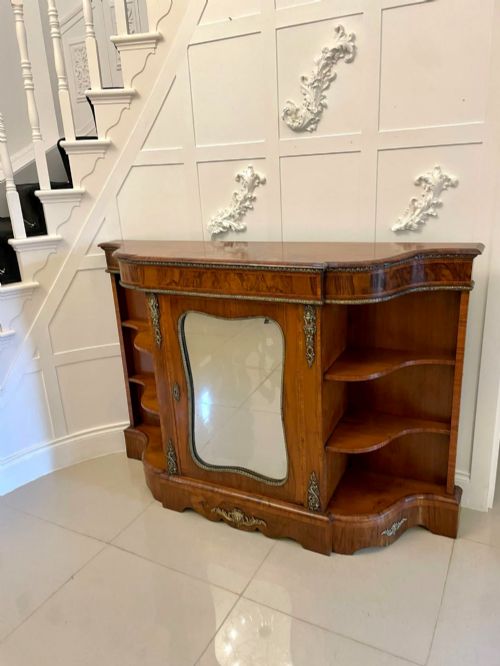
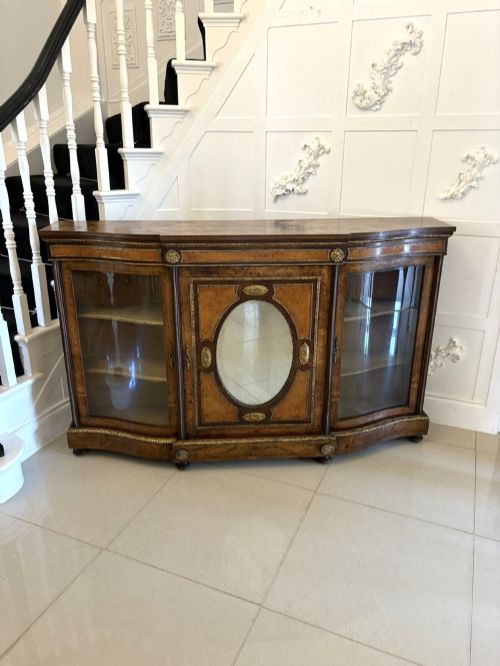
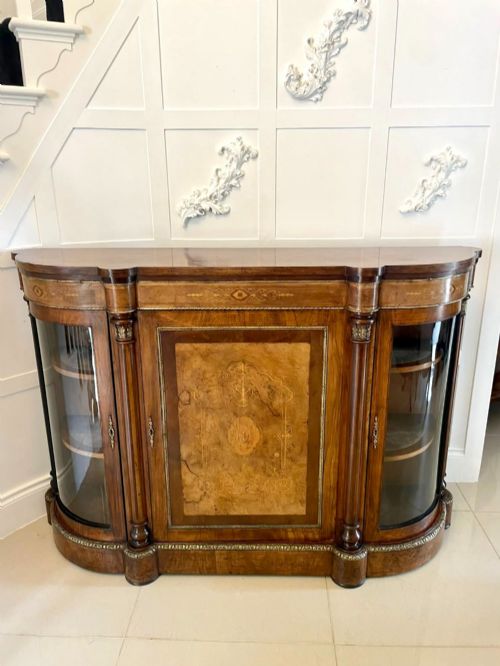
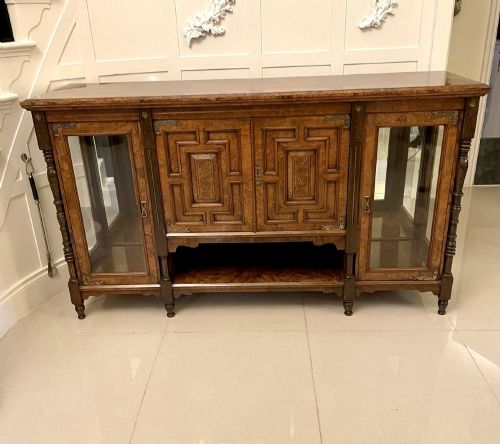


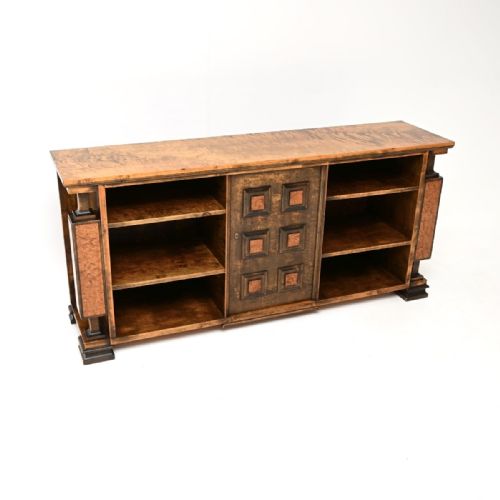
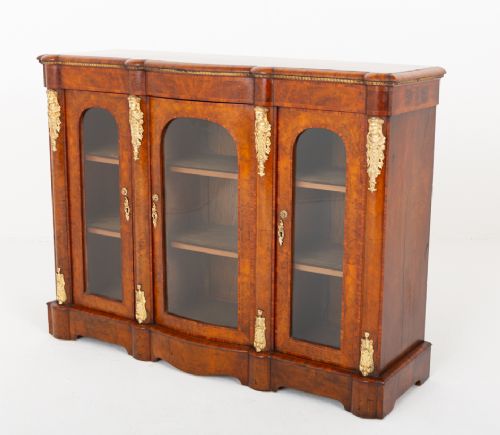
Walnut Credenza Display Sideboard
A walnut credenza display sideboard brings rich timber grain, mirrored glass and gilded metalwork together to anchor a formal interior.
Walnut Credenza Display Sideboard
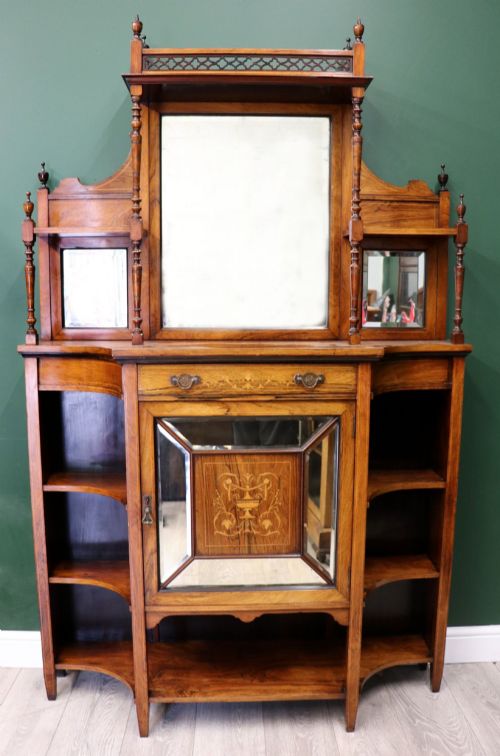
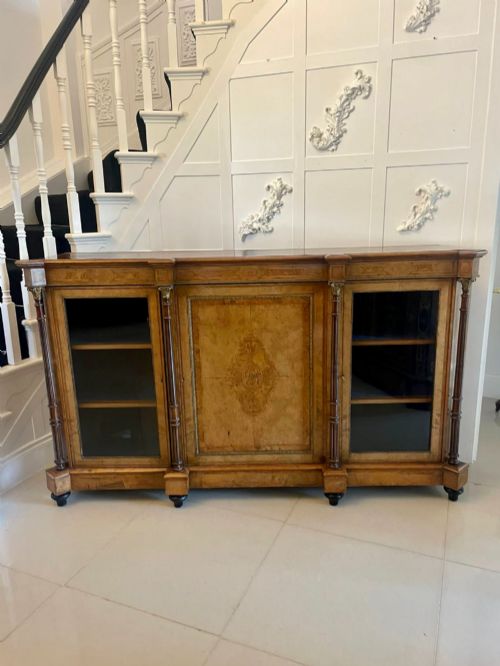
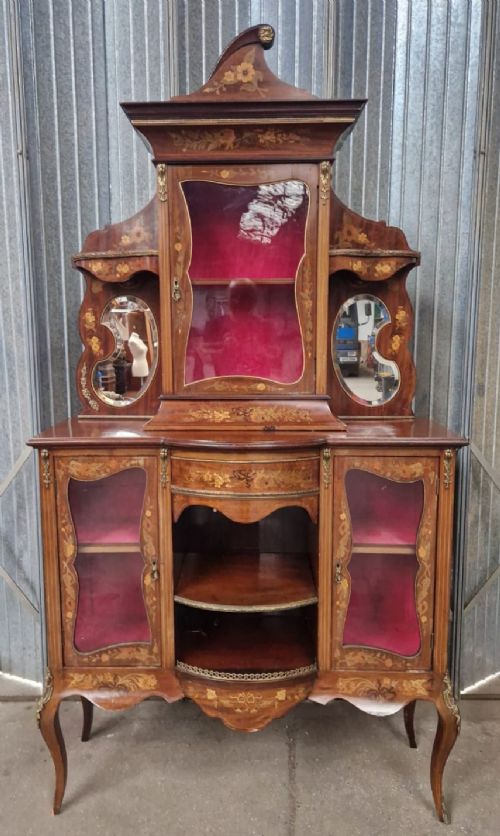
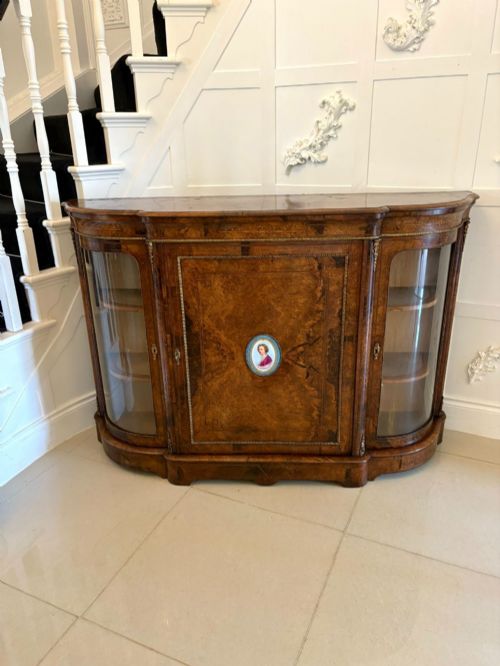
When you search for a walnut credenza display sideboard, you encounter low profile timber cabinets designed for storage and display in Victorian and nineteenth century interiors. These forms merge the low enclosed capacity of a sideboard with the glazed or mirrored presentation of a display cabinet. The nineteenth century and Victorian periods dominate the selection, bringing substantial timber presence into a room.
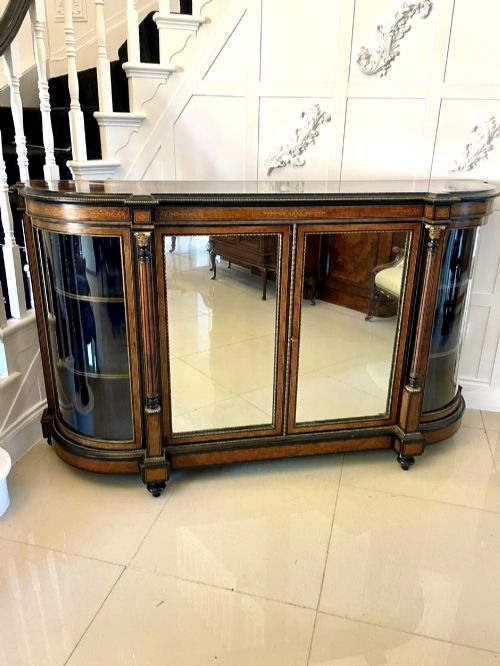
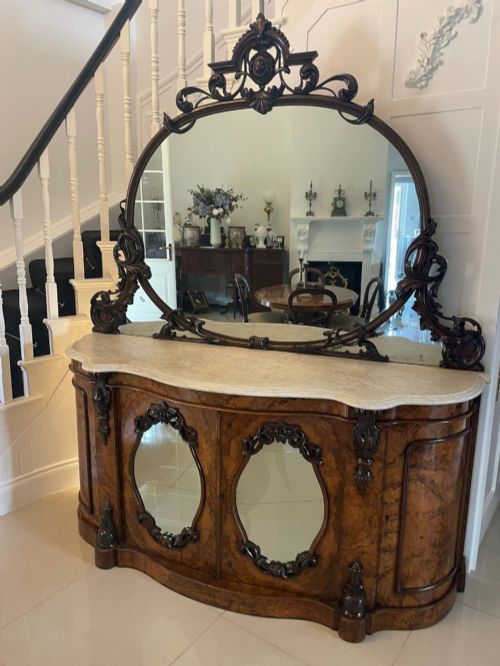
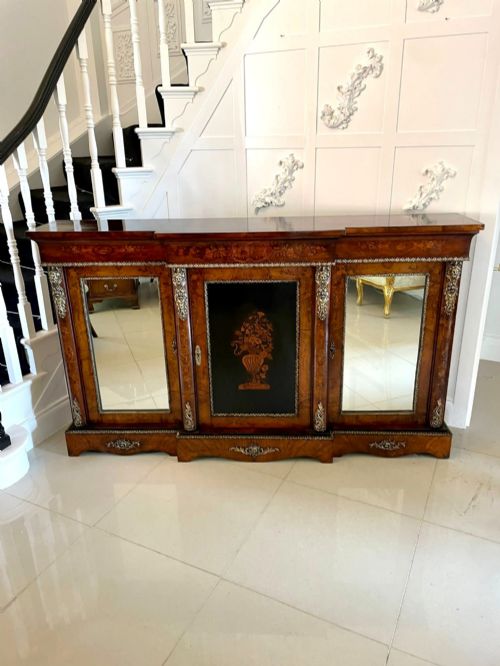
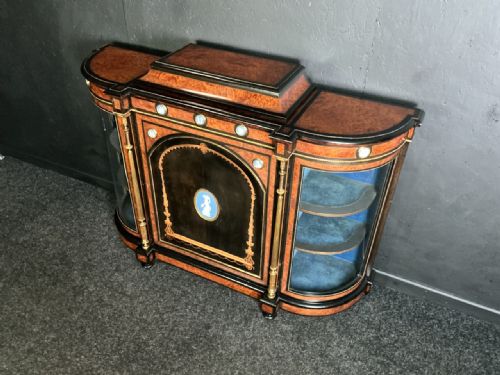
You meet variations spanning from serpentine fronted pieces with central doors flanked by curved glass cabinets to straight pier cabinets and mirror backed chiffoniers. The typical item relies on figured veneers arranged symmetrically across the facade, accompanied by glazed side compartments intended for china or small ornaments. Workshops across the nineteenth century also produced later revivals and twentieth century interpretations that follow these established architectural lines.
Materials and construction
Cabinet makers utilised burr walnut veneers to achieve complex, swirling grain patterns across flat panels and curved doors, laying them over secondary carcase timbers. This technique requires expert timber selection to ensure the intricate figuring remains stable and visually balanced across the front elevation. Craftsmen then applied boxwood inlay, floral marquetry and ebonised detailing to define borders and panels.
Gilded bronze ormolu mounts punctuate the timber surfaces, reinforcing corners and framing door panels with cast decorative enrichment. Glass doors and mirrored backs introduce reflection, while internal shelving provides dedicated space for display objects. Traditional hand joining methods secure the carcase, supporting the weight of heavy timber tops and metal mounts.
Listings demonstrate that nineteenth century burr walnut forms frequently incorporate mirrored doors, ormolu mounts, and delicate boxwood floral marquetry.
Distinguishing quality tiers
Quality rests upon the selection and matching of the burr walnut veneer, where superior examples exhibit continuous, highly figured grain patterns across all doors and drawers. Finer execution shows in the precision of the boxwood inlay and the crispness of the cast ormolu mounts rather than plain brass castings. Workshop capability reveals itself in the fluency of serpentine curves and the tight integration of glazed doors.
Exhibition grade pieces demonstrate exceptional carving, superior marquetry detail, and documented workshop attribution, distinguishing them from standard commercial production. The depth of the timber finishing and the weight of the bronze mounts separate high end items from simpler nineteenth century utility pieces.
Gillows·Maison Gagneau
The Walnut Credenza Display Sideboard Glossary
- Credenza
- A low cabinet originating as a side table for food, later evolving in the nineteenth century into an enclosed display piece with doors and shelving.
- Ormolu
- Gilded bronze mounts applied to furniture edges and panels for decorative contrast.
- Marquetry
- The art of applying thin slices of wood veneer to form pictorial or geometric patterns on a furniture surface.
- Serpentine
- A furniture front curved in a gentle wave, turning outward in the centre and inward at the ends.
- Pier Cabinet
- A narrow display cabinet designed to fit the wall space between windows.
Walnut Credenza Display Sideboard: Frequently Asked Questions
What is the difference between a credenza and a sideboard?
A credenza typically incorporates glazed display sections and lower proportions suited for decorative presentation alongside storage. Sideboards focus more heavily on enclosed cupboards and drawers for dining room utility.
Nineteenth century makers blurred these distinctions by combining both functions into hybrid forms that served dining and entertaining spaces equally well.
How do you date a walnut credenza?
Dating relies on combining timber characteristics, construction methods, and stylistic cues such as ormolu mounts and marquetry motifs. Mid nineteenth century pieces often display rich burr walnut veneers paired with classical revival details.
Later Victorian and aesthetic movement examples introduce ebonised elements and geometric inlay, while twentieth century items reflect cleaner lines and lighter satin birch combinations.
Where should a display sideboard be placed?
These cabinets suit principal reception rooms, dining rooms or hallways where their reflective glass and figured timber can catch natural light. Their low height makes them effective beneath large mirrors or artwork without overwhelming the wall.
Allowing sufficient clearance around curved serpentine fronts ensures the architectural lines remain visible in the room.
How should walnut furniture be maintained?
Walnut requires stable room humidity and protection from direct sunlight to prevent the timber veneers from drying or fading. Regular dusting with a soft, dry cloth preserves the polished finish without the need for heavy chemical polishes.
Periodic application of appropriate wax nourishes the grain and maintains the subtle sheen on the timber surface.