

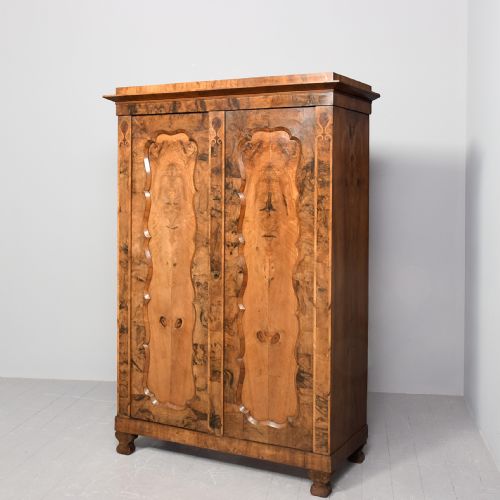


Walnut Clothing Cupboard
A walnut clothing cupboard brings substantial timber and deep grain into a bedroom, offering a sturdy home for garments that flat-pack furniture cannot match.
Walnut Clothing Cupboard
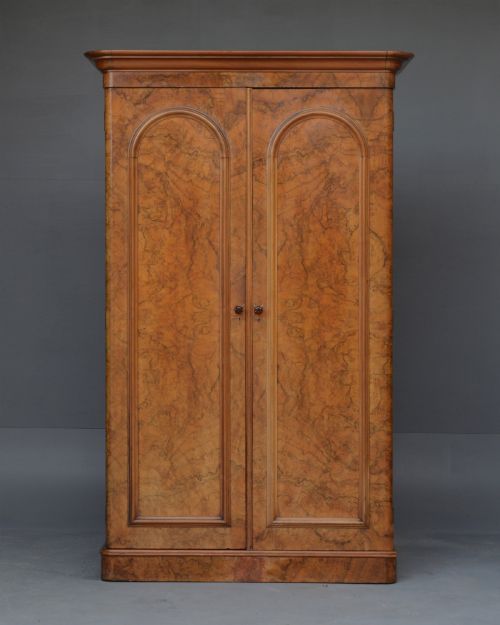
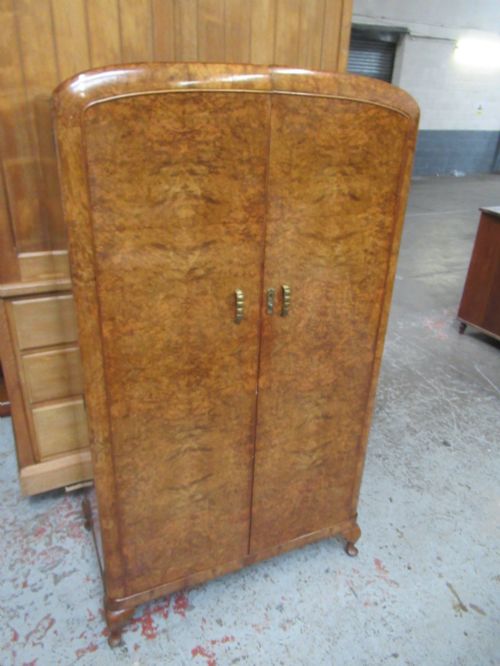
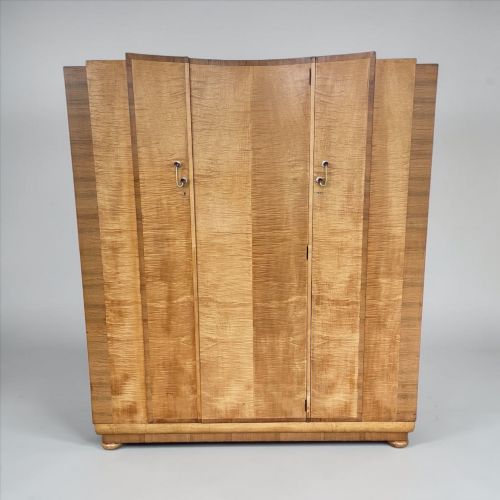
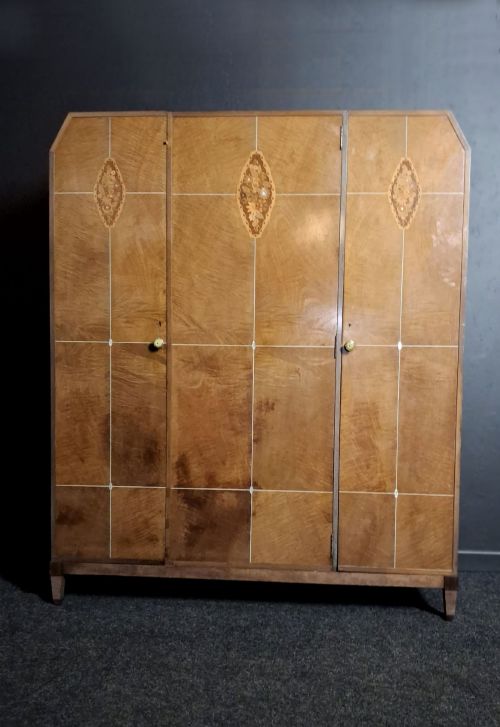
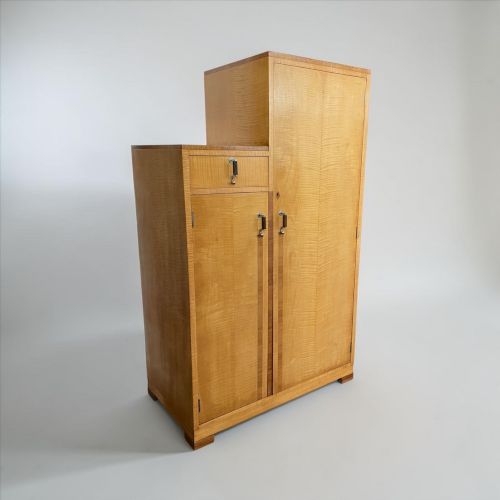
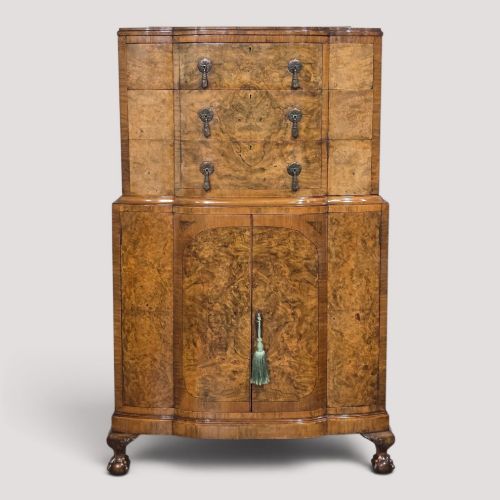
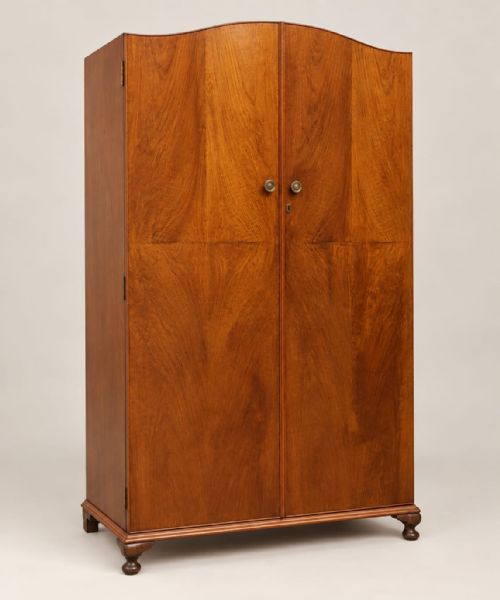
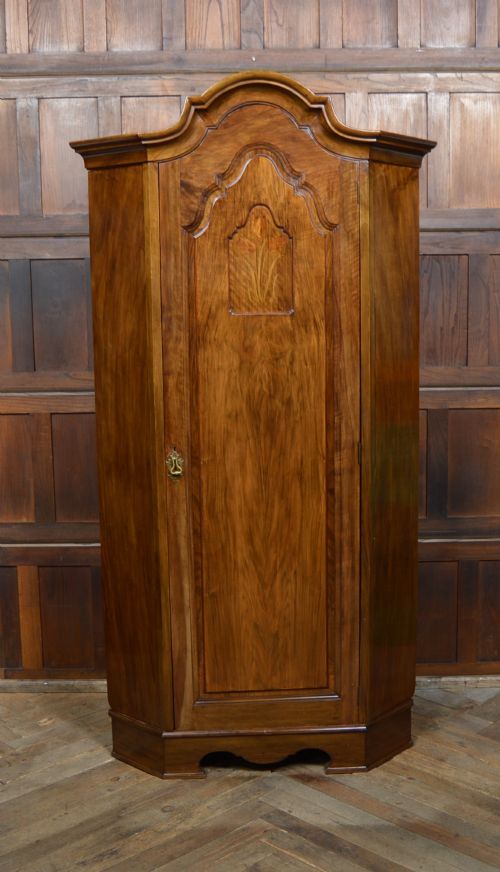
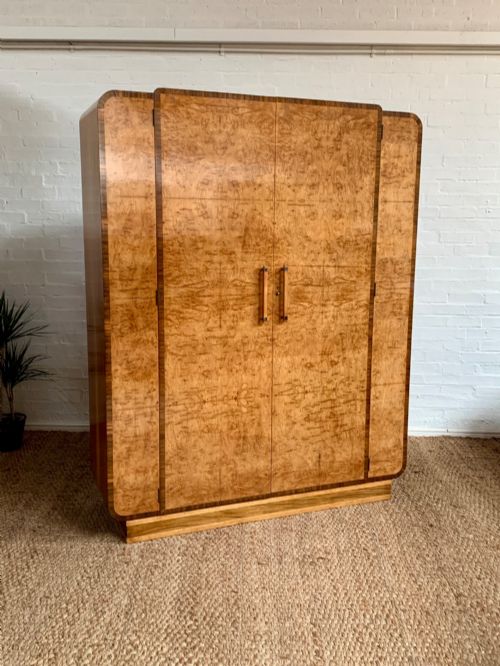
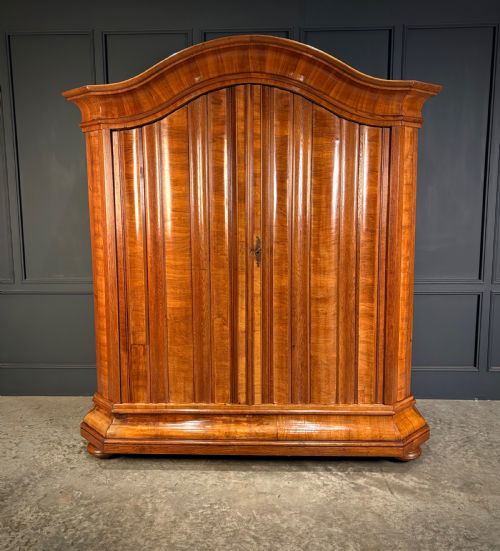
A walnut clothing cupboard is a large storage piece designed to hold garments, appearing in forms ranging from tall wardrobes and armoires to compactums and linen presses. When searching for a walnut clothing cupboard, buyers encounter everything from early eighteenth-century press cupboards to streamline Art Deco cabinets from the nineteen-thirties.
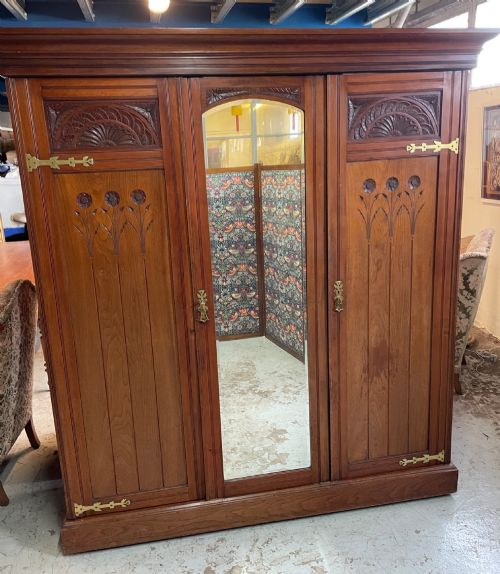
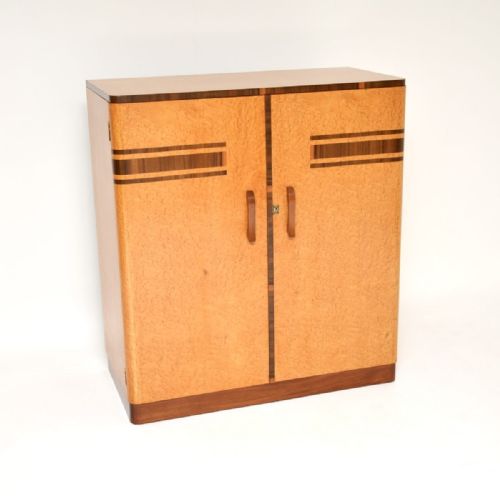
The most common examples on this page date from the early twentieth century, particularly the nineteen-twenties and thirties, alongside substantial Victorian and Edwardian iterations. Makers deployed these pieces in bedrooms and dressing rooms to house hanging garments, folded linens, and smaller accessories within fitted interior compartments.
How they were made
Cabinet makers built these pieces using solid timbers and applied veneers, often selecting burr walnut, figured walnut, and standard walnut for their rich, swirling grain patterns. Structural carcases frequently incorporate secondary woods like oak, while decorative elements rely on brass hardware, glass mirror doors, bakelite handles, and occasionally ormolu mounts.
Surface decoration ranges from geometric Art Deco veneers and Dutch marquetry to carved French provincial details and Queen Anne style proportions. Interiors frequently feature clever partitioning, sliding trays, and drawers characteristic of compactum designs and linen presses.
Walnut Clothing Cupboard Retail Price Guide 2026
Typical asking prices for walnut clothing cupboard among the pieces listed under this phrase on Sellingantiques today, from the lower quarter to the upper quarter. They describe what is for sale here now, not the wider market.
Materials recorded across current inventory include solid walnut, burr walnut veneer, oak, glass, brass, iron, and bakelite.
What varies in quality
The distinction between ordinary and exceptional examples rests upon the selection of timber and the precision of the cabinetwork. Pieces utilising highly figured burr walnut veneers across large expanses demand superior skill in matching and laying grain patterns.
Structural integrity also separates the range, visible in the weight of the doors, the snugness of fitted internal compartments, and the execution of carved mouldings or applied marquetry. Maker attribution, such as work originating from Waring & Gillow or Maple & Co, shifts a piece into a higher tier of design and execution.
Maple & co·Waring & Gillow·Harry and Lou Epstein
The Walnut Clothing Cupboard Glossary
- Burr walnut
- Timber taken from a tree growth where grain has swirled into intricate knot formations, sliced into veneer for decorative surfaces.
- Compactum
- A multi-functional wardrobe featuring a combination of hanging space, drawers, and internal shelving arranged within a single footprint.
- Linen press
- A tall storage cabinet traditionally used for flat textiles, combining upper cupboard doors enclosing sliding trays with lower chest drawers.
- Armoire
- A large freestanding cupboard or wardrobe of continental European origin, typically featuring double doors and deep internal capacity.
- Marquetry
- The art of applying pieces of veneer to a structure to form decorative patterns and pictorial designs.
Walnut Clothing Cupboard: Frequently Asked Questions
What is a compactum wardrobe?
A compactum is a specialised storage unit designed to hold a wide variety of clothing within a single footprint. It typically divides the interior into dedicated sections for hanging garments, folded shirts, and small drawers.
Buyers often select these when floor space is limited but maximum internal organisation is required. They gained particular popularity during the Art Deco period.
How do I care for walnut veneer?
Walnut veneer requires stable room temperatures and protection from direct sunlight to prevent the wood from fading or lifting. Dust the surface regularly with a soft cloth and apply quality furniture wax sparingly.
Avoid placing these cupboards near direct heat sources or in damp environments. Proper humidity control keeps the timber stable and prevents the veneer from cracking.
Are these cupboards easy to dismantle?
Many larger wardrobes and armoires from the nineteenth and twentieth centuries were built to be taken apart for transport. Pegs, screws, and knockdown bolts often hold the cornices, sides, and bases together.
Buyers should examine how the carcase is assembled before attempting to move it between rooms. Some smaller compactums and Art Deco pieces, however, feature solid glued frames that do not dismantle.
How do I distinguish Queen Anne style from Art Deco?
Queen Anne style pieces, including revival items from the early twentieth century, feature cabriole legs, pad feet, and warm figured walnut veneers. They emphasise traditional proportions and subtle curved outlines inspired by early eighteenth-century design.
Art Deco examples rely on geometric symmetry, waterfall edges, and dramatic burr walnut or cloud walnut veneers. They prioritize streamlined silhouettes with minimal ornamentation, reflecting modern tastes of the nineteen-thirties.