





Walnut Card Box
A walnut card box is a compact repository for gaming paraphernalia, crafted to keep cards and counters secure in style.
Walnut Card Box
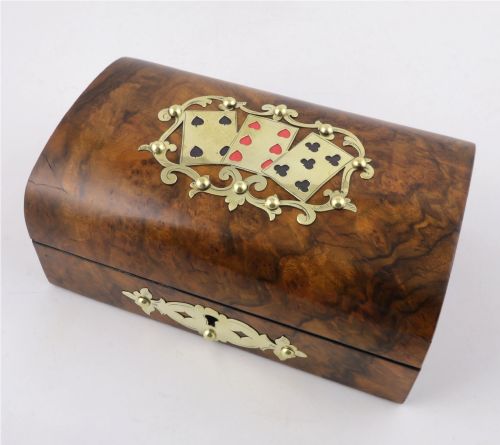
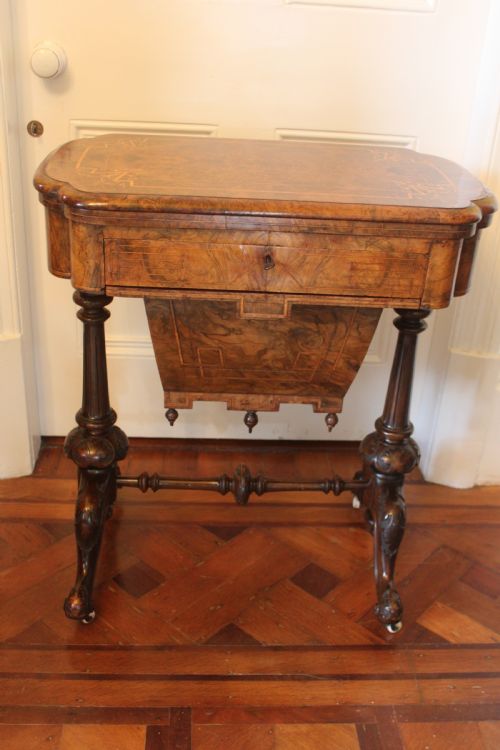
A walnut card box is an enclosed wooden receptacle designed specifically to house playing cards, markers, and dice for parlour games. These pieces appear in forms ranging from small tabletop caskets to larger games and work tables that combine storage with a surface for play.
The specimens seen here predominantly date from the nineteenth century, including Victorian and Regency examples. Buyers most frequently encounter burr walnut and figured walnut boxes, often enhanced with brass mounts or marquetry and fruitwood inlay.
How they were made
Cabinetmakers utilised timber veneers such as burr walnut and figured walnut over solid carcases to create rich, patterned exterior surfaces. Marquetry, fruitwood inlay, and brass bindings were applied to accentuate the geometric forms and structural edges.
Interiors often featured partitioned compartments lined with fabric or silk to protect the cards and counters from damage. Carved details occasionally appeared on pieces originating from specific regional workshops like the Black Forest.
Walnut Card Box Retail Price Guide 2026
Typical asking prices for walnut card box among the pieces listed under this phrase on Sellingantiques today, from the lower quarter to the upper quarter. They describe what is for sale here now, not the wider market.
Listings for walnut card boxes span the Victorian era, 1900, the Regency period, and the wider nineteenth century.
What varies in quality
The standard of a walnut card box is defined by the selection of the timber veneer and the precision of its marquetry or parquetry inlay. Highly figured burr walnut and intricate fruitwood patterns indicate superior craftsmanship and greater material cost.
Hardware execution and internal appointments, such as silk or fabric linings and fitted partitions, further distinguish finer caskets and tables from simpler utility boxes. Maker attribution, such as signed brass work, elevates an example above unmarked pieces.
George Betjemann
The Walnut Card Box Glossary
- Burr walnut
- A highly prized wood figure formed from tree growths, producing swirling, intricate grain patterns on the box exterior. It was frequently selected by cabinetmakers for formal parlour pieces.
- Marquetry
- The art of applying pieces of veneer to a structure to form decorative patterns and pictures. Fruitwood was often utilised alongside walnut to create contrasting tones.
- Parquetry
- A geometric mosaic of wood pieces used for surface decoration, commonly seen on the lids of gaming boxes. This technique creates a structured, tessellated visual effect.
- Casket
- A small ornamental box or chest used for storing valuables or cards. These items typically feature secure lids and fitted internal compartments.
Walnut Card Box: Frequently Asked Questions
What fits inside a walnut card box?
These boxes were constructed to hold packs of playing cards, poker dice, and counters used in nineteenth-century parlour games. Internal partitions kept the items separated and organised.
Some larger formats combine card storage with sewing compartments or folding surfaces for broader tabletop use.
How do I date a walnut card box?
Dating relies on stylistic markers, construction methods, and materials recorded in the nineteenth century, such as Victorian brass bindings and Regency parquetry. Reference to periods like the Regency or mid-Victorian era provides a reliable chronological framework.
Maker signatures and specific inlay techniques also assist in narrowing the decade of manufacture.
Where should I place it?
A card box sits comfortably on a side table, desk, or cabinet in a living space where its wood grain and inlay can be appreciated. Direct sunlight and excessive heat fluctuations should be avoided to protect the walnut veneer and internal fabric.
Smaller caskets require minimal surface area, making them versatile for various room layouts.
How do I care for walnut wood?
Maintain the finish by dusting with a soft, dry cloth and avoiding harsh chemical polishes that can degrade historical surfaces. Natural beeswax applied sparingly helps preserve the moisture and lustre of the timber.
Keep the interior silk or fabric clean by avoiding moisture and keeping the box closed when not in use.