


Walnut Book Display
A walnut book display brings together figured timber and curated volumes, offering a practical centrepiece for any study or library.
Walnut Book Display
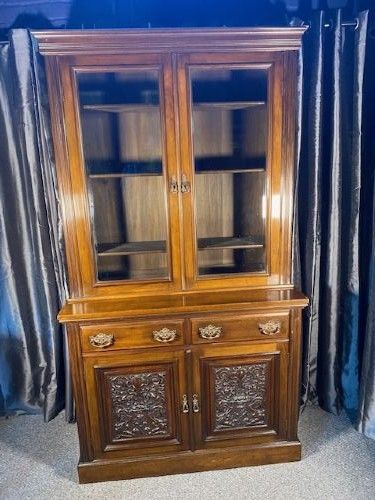
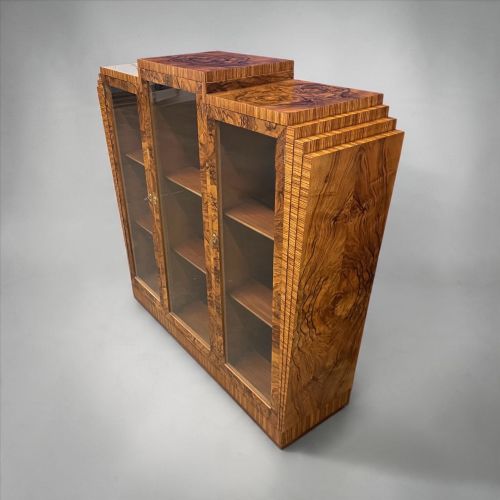
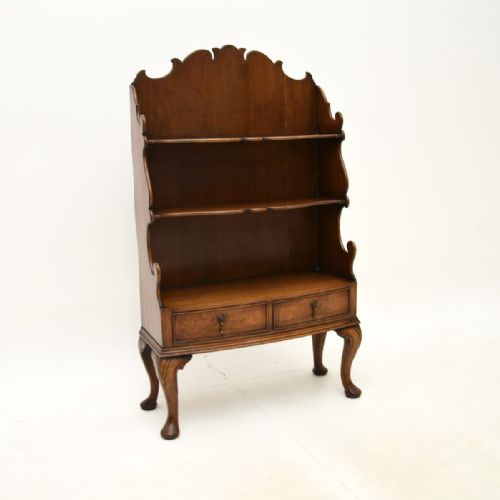
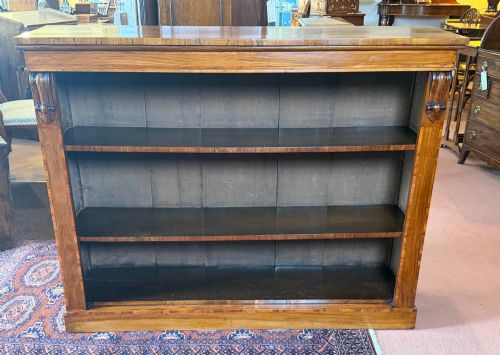
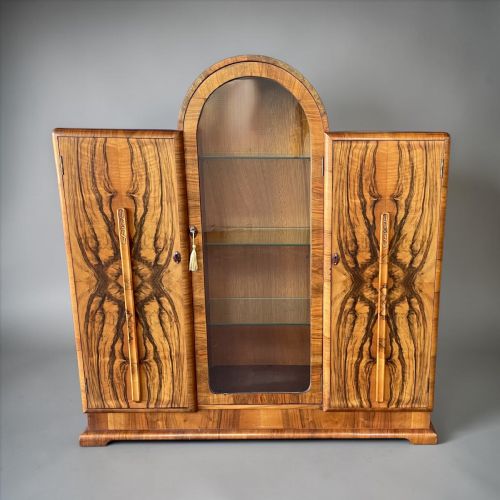
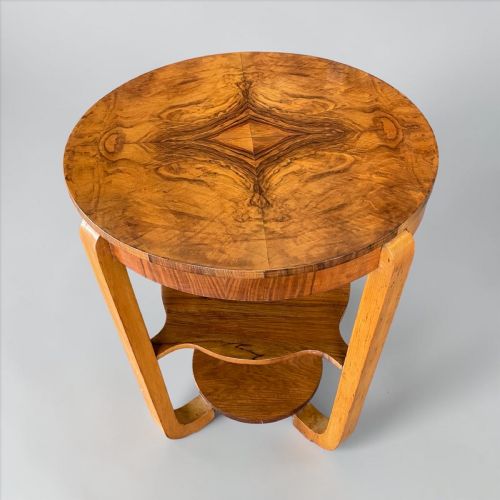
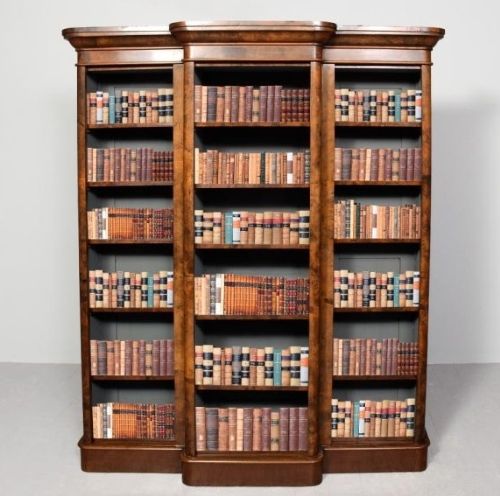
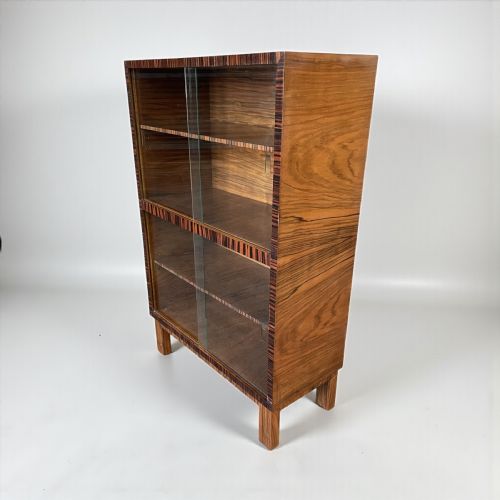
A walnut book display encompasses bookcases, breakfront cabinets, and open shelving units designed to hold and exhibit books. These items span from the early nineteenth century through the Victorian and Edwardian periods, concluding with Art Deco examples from nineteen thirty.
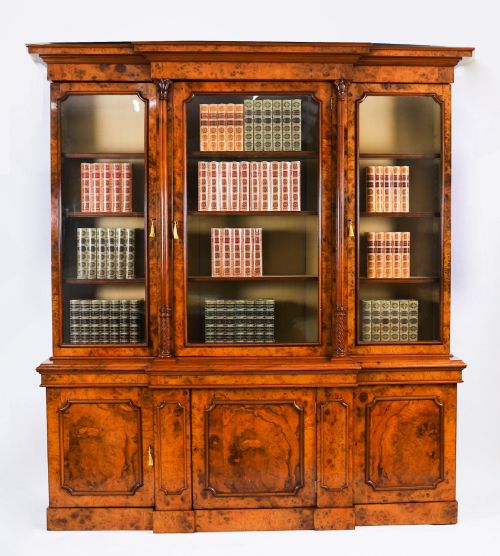
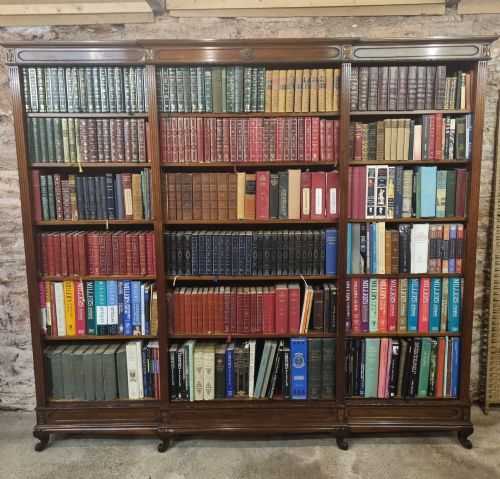
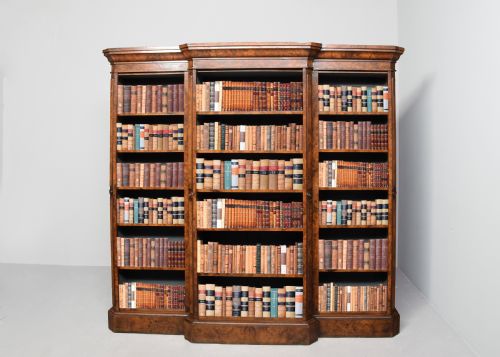
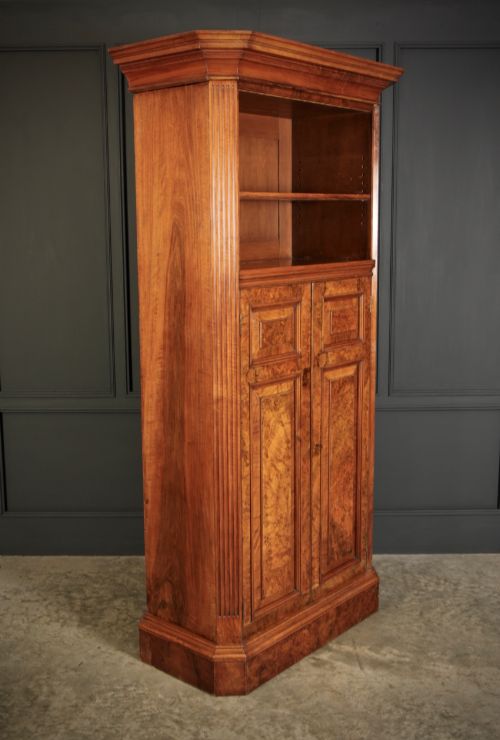
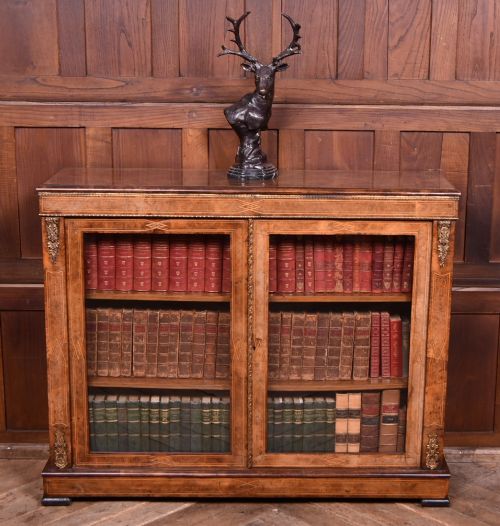
The pieces on this page range from compact open bookcases and cascading tiers to large three-section breakfront cabinets with adjustable shelves. Alongside standard bookcases, related forms such as display cabinets, occasional tables, and whatnots appear across the inventory.
How they were made
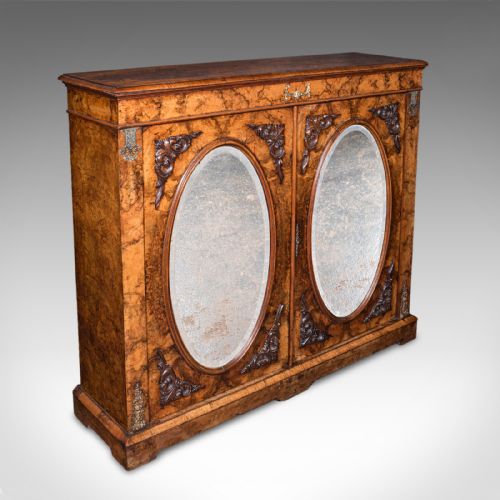
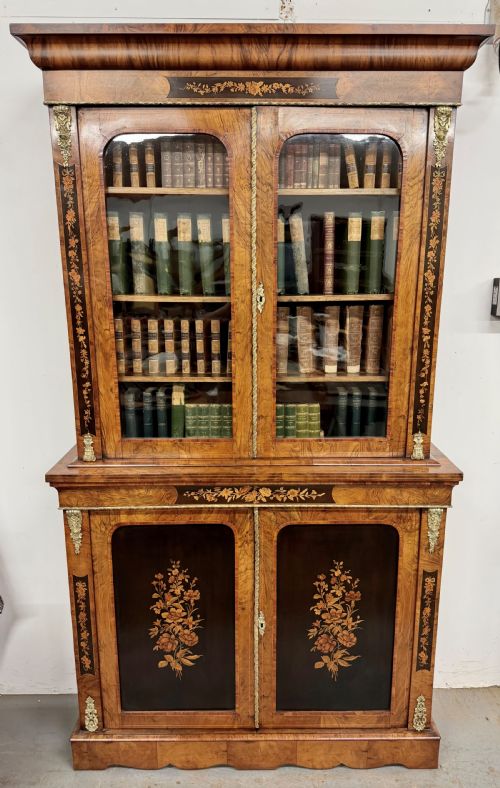
Cabinet makers utilised solid timber, burr walnut, and walnut veneer applied over secondary woods to create rich surface patterns. Marquetry inlay, brass fittings, ormolu mounts, and gilt metal details frequently decorate the primary structure of Victorian and Edwardian examples.
Glass doors protect enclosed shelving units, while open bookcases feature adjustable wooden shelves supported by timber or metal mechanisms. Construction methods vary from simple two-part carcasses to complex multi-section breakfront designs.
Walnut Book Display Retail Price Guide 2026
Typical asking prices for walnut book display among the pieces listed under this phrase on Sellingantiques today, from the lower quarter to the upper quarter. They describe what is for sale here now, not the wider market.
One unexpected Victorian piece functions simultaneously as a fully adjustable music stand and a lectern.
What varies in quality
The choice of timber creates a primary distinction, as highly figured burr walnut and intricate marquetry inlay elevate the visual impact above plain timber surfaces. Finer pieces demonstrate superior grain matching across large breakfront doors and panels.
Construction complexity also dictates quality, distinguishing standard single-section shelving from large three-section breakfront bookcases with fully adjustable internal shelving. The inclusion of bespoke hardware, such as brass mounts and gilt metal framing, separates standard utility items from workshop-attributed works.
Holland and Sons·Waring and Gillow·Gillows
The Walnut Book Display Glossary
- Burr walnut
- Timber taken from the wart or burl growth on a walnut tree, yielding a swirling, highly decorative grain pattern. Cabinet makers frequently utilised this veneer on prominent door panels and drawer fronts.
- Breakfront
- A piece of furniture where the central section projects forward from the flanking outer sections. This architectural arrangement creates depth and shadow across large bookcases.
- Whatnot
- A set of open shelves supported by slender pillars, utilised for displaying books and ornamental objects. These multitiered pieces originated in the early nineteenth century.
- Marquetry
- Decorative woodwork where small pieces of veneer are fitted together to form pictorial patterns on a timber surface. Victorian makers employed this technique alongside inlaid banding.
- Ormolu
- Gilt bronze ornamentation mounted onto the exterior of wooden cabinets and display pieces. This metalwork provides metallic contrast against dark walnut surfaces.
Walnut Book Display: Frequently Asked Questions
What periods do these walnut bookcases cover?
The selection spans from the early nineteenth century through the Victorian, Edwardian, and Art Deco eras. Pieces range from nineteenth-century Regency and William IV designs up to nineteen-thirty geometric forms.
Victorian and Edwardian items dominate the selection, showing shifts from heavy architectural proportions to lighter glazed cabinets and open shelving.
How do open bookcases differ from display cabinets?
Open bookcases provide direct access to shelves without doors, suiting daily reading materials and frequently featuring adjustable wooden boards. Display cabinets incorporate glass panels to protect delicate volumes and decorative objects from dust.
Some hybrid forms combine enclosed lower cupboards with glazed upper sections or open display tiers.
Are the shelves adjustable in these bookcases?
Many of the larger Victorian breakfront and Edwardian glazed bookcases feature adjustable shelves supported by internal rack-and-pinion systems or traditional wooden fillets. This mechanism allowed owners to alter shelf heights for varying book sizes.
Sourcing notes indicate whether individual pieces retain their original adjustable shelf supports.
What distinguishes burr walnut from standard walnut?
Standard walnut exhibits a straight or gently figured grain pattern derived from the main trunk of the tree. Burr walnut comes from the deformed growth of a burl, creating dense, swirling patterns that catch the light.
Cabinet makers reserved burr walnut veneer for the primary display surfaces of high-status Victorian and Edwardian furniture.