

Walnut Bedroom Wardrobe
A walnut bedroom wardrobe brings rich grain and substantial storage into a room, spanning periods from the Victorian era to Art Deco.
Walnut Bedroom Wardrobe
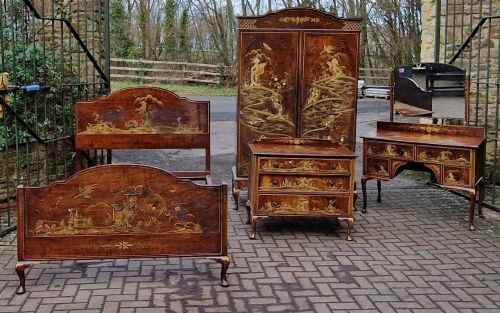
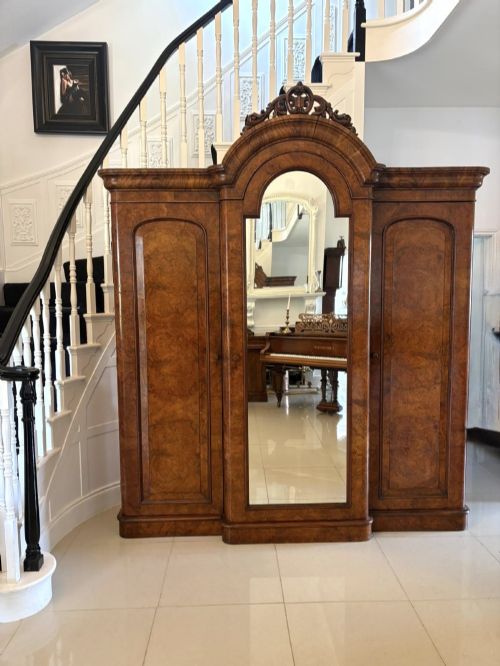
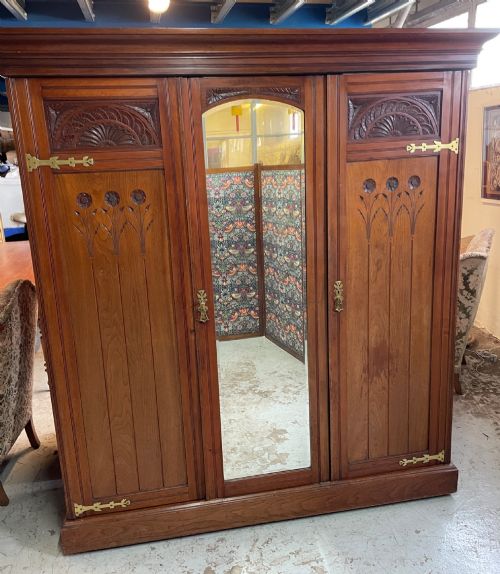
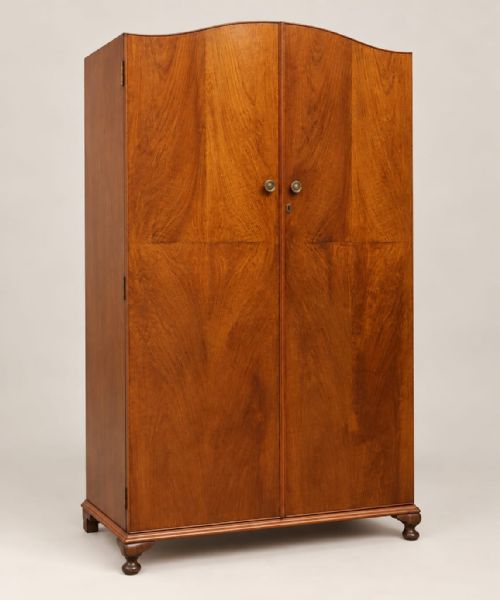
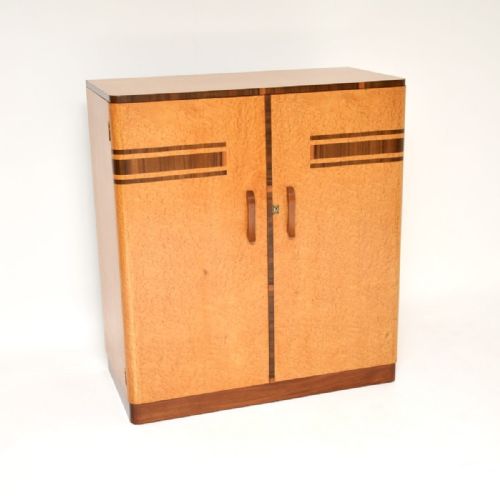
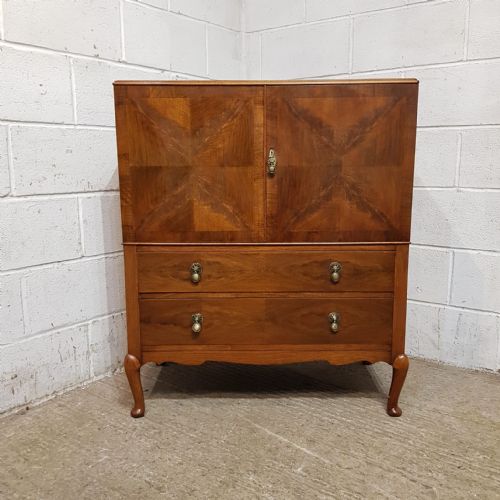
A walnut bedroom wardrobe is a large storage piece designed for hanging garments, often incorporating internal drawers, shelves, and compartments. These items appear across multiple eras, including Victorian, Edwardian, and Art Deco periods, each bringing distinct architectural proportions.
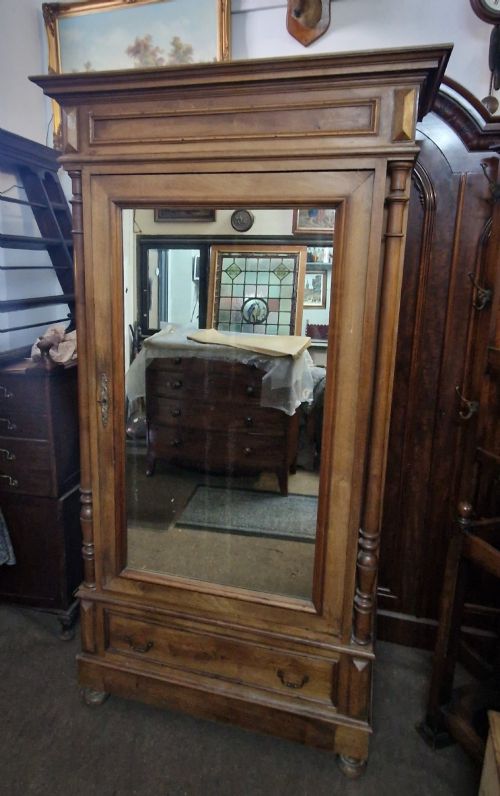
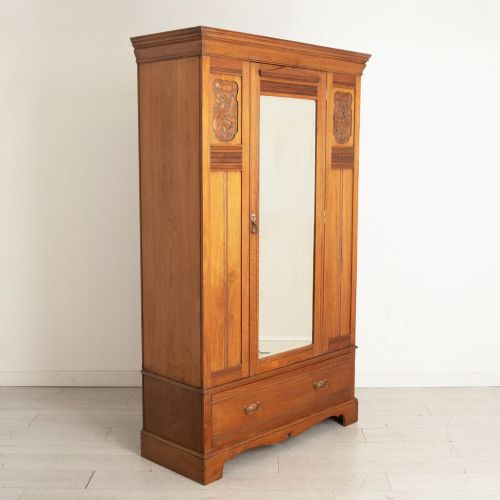
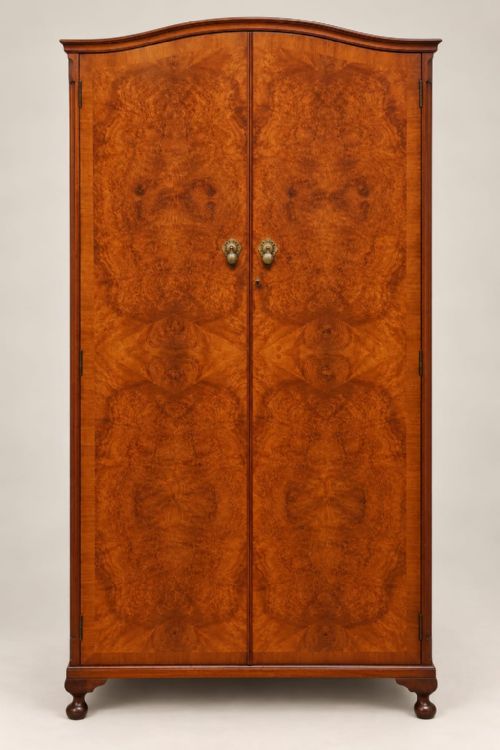
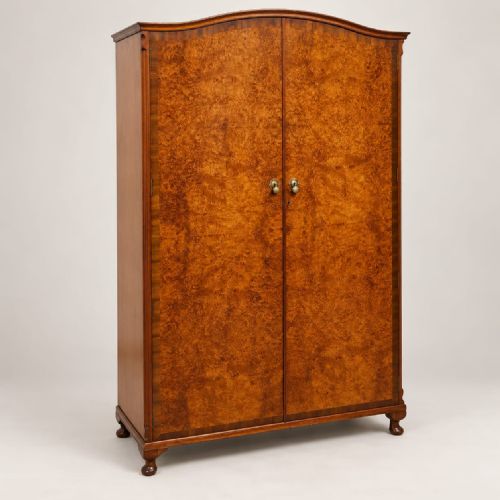
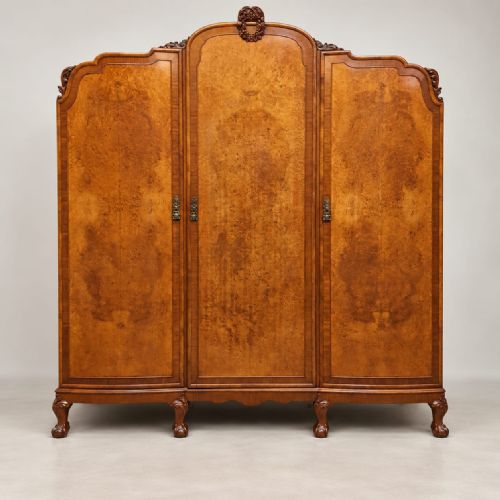
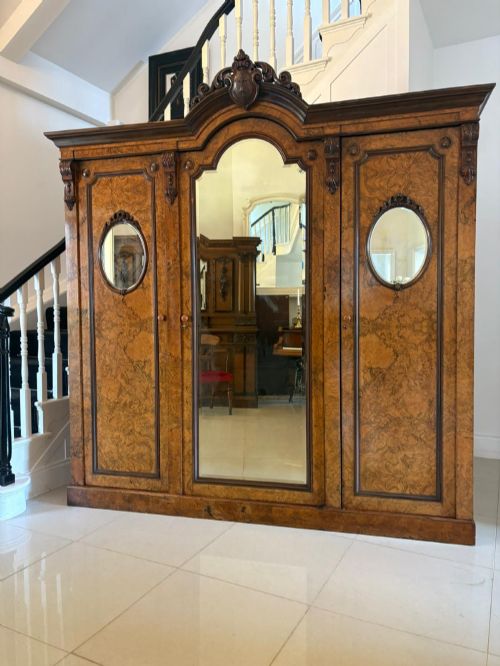
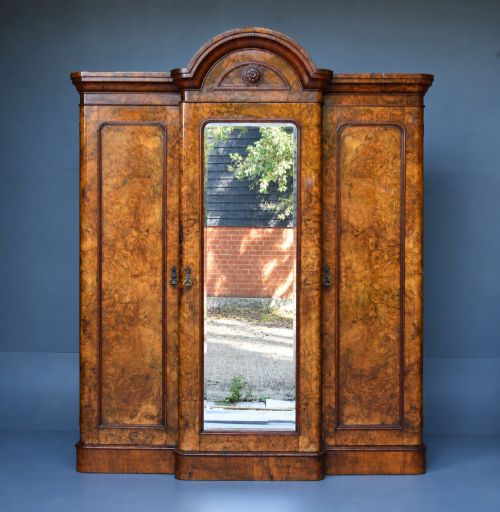
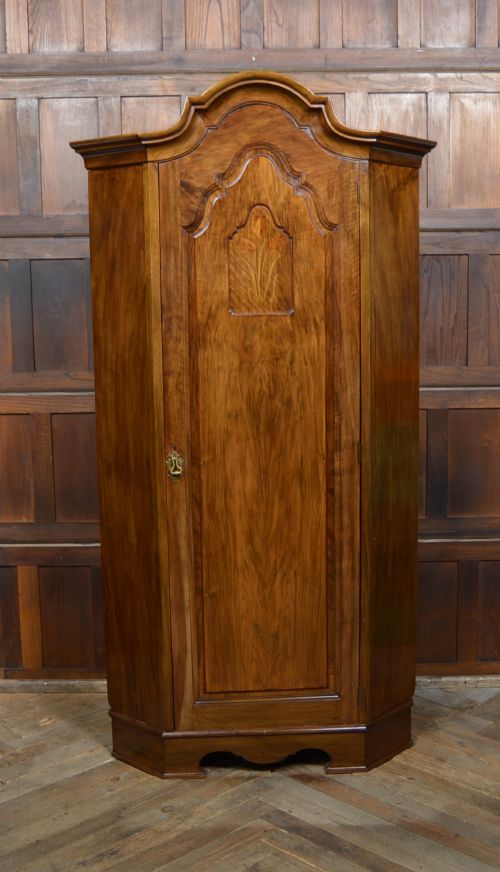
The most common formats met here are double and triple wardrobes, alongside compactum styles that integrate hanging space with drawers and shelving. Pieces range from straightforward Edwardian single doors to elaborate breakfront designs and serpentine fronts.
Origins span British workshops of the nineteenth and twentieth centuries, alongside French regional examples. Makers and designers utilised varied timber selections to create pieces intended for substantial domestic interiors.
Materials and construction
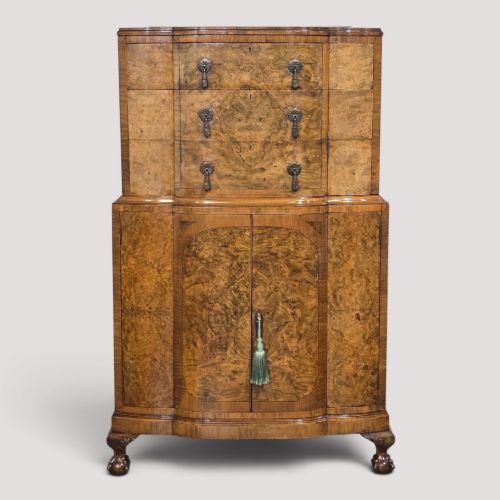
Makers utilised solid walnut and decorative walnut veneer, frequently selecting burr walnut for its complex, swirling grain patterns on primary surfaces. Secondary timbers like ash and satin birch appear in internal drawer construction and framing.
Surface ornamentation relies on carved details, contrasting crossbanding, and figured grain arrangement rather than applied metalwork. Functional elements incorporate brass hardware, bevelled mirror glass doors, and fitted internal trays or hanging rails.
Walnut Bedroom Wardrobe Retail Price Guide 2026
Typical asking prices for walnut bedroom wardrobe among the pieces listed under this phrase on Sellingantiques today, from the lower quarter to the upper quarter. They describe what is for sale here now, not the wider market.
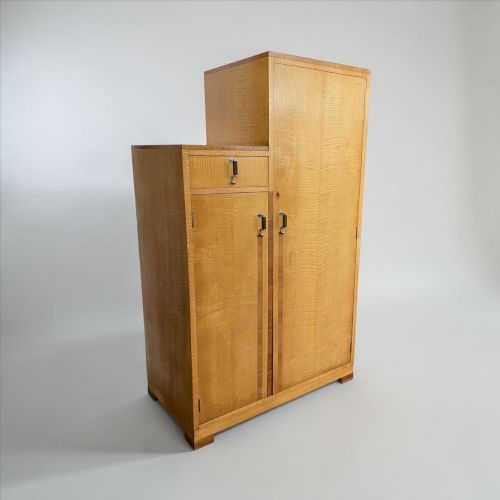
Some Art Deco compactums conceal entire social calendars behind mirrored doors, pairing hanging space with neatly stacked compartments for bygone linens.
Assessing quality and execution
Quality separates through the selection and matching of burr walnut veneers across large door panels, where symmetrical grain alignment requires high skill. Secondary timber choice and the weight of internal fittings also mark the standard of construction.
Carving depth and crispness define pieces from the Victorian and Edwardian periods, distinguishing workshop production from mass manufacturing. Proportions remain balanced even in massive triple and compactum formats, maintaining structural harmony.
Waring and Gillow·Frank Taylor and Co·Holland and Sons·Lamb of Manchester
The Walnut Bedroom Wardrobe Glossary
- Burr walnut
- A veneer taken from the growth wart of a walnut tree, producing swirling, highly decorative patterns. Cabinet makers prized this timber for central door panels and drawer fronts.
- Compactum
- A multi-functional wardrobe that combines hanging space with internal drawers, linen presses, and small shelving compartments. This format provides comprehensive bedroom storage in a single footprint.
- Breakfront
- A piece of furniture where the central section projects forward from the flanking outer sections. This architectural form creates depth and visual interest on large triple wardrobes.
- Serpentine front
- A furniture front shaped with a central convex curve flanked by concave curves. Makers employed this flowing line on mid-century and revival pieces.
- Linen press
- An enclosed cabinet featuring upper sliding trays or shelves above lower storage drawers. These units pre-date modern hanging wardrobes and served to store folded textiles.
Walnut Bedroom Wardrobe: Frequently Asked Questions
How do I fit a large triple wardrobe?
Many large wardrobes from the Victorian and Edwardian periods are designed to dismantle into modular sections for transport and installation.
Ensure you check ceiling height clearances and floor levelness before positioning these substantial items in a bedroom.
What is a compactum wardrobe?
A compactum integrates hanging space, drawers, and linen shelves into one unified cabinet.
This form emerged to maximise bedroom storage efficiency without requiring separate chests of drawers.
How do I care for walnut veneer?
Keep walnut furniture away from direct sunlight and steady heat sources to prevent the veneer from drying and lifting.
Apply gentle beeswax periodically to maintain the lustre of the timber surface.
How do I distinguish Art Deco from Victorian styles?
Art Deco wardrobes favour streamlined geometry, straight-grained veneers, and minimal carving, often reflecting 1930s modernism.
Victorian pieces display heavier proportions, elaborate hand-carved mouldings, and deep panelled doors.