



Wake Dining Table
A wake dining table brings people together around generous timber leaves, offering plenty of elbow room for feasts and gatherings.
Wake Dining Table
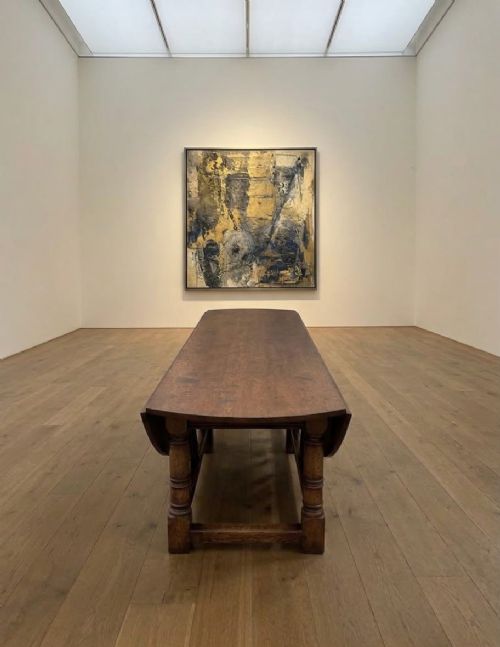
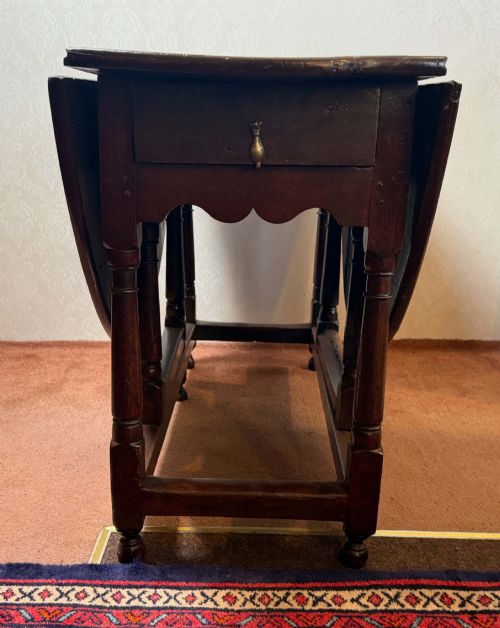
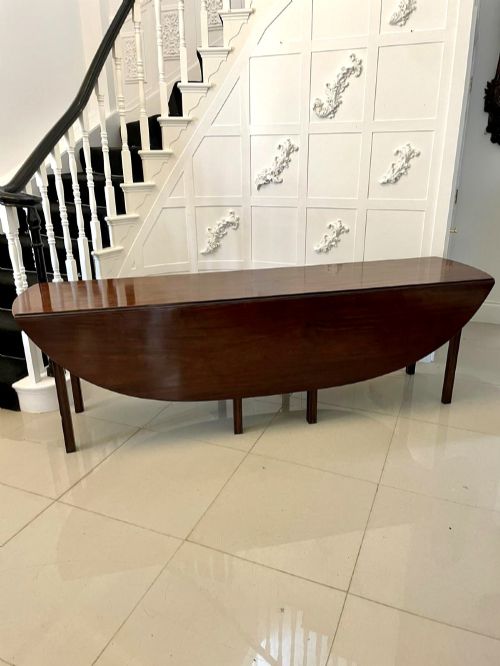
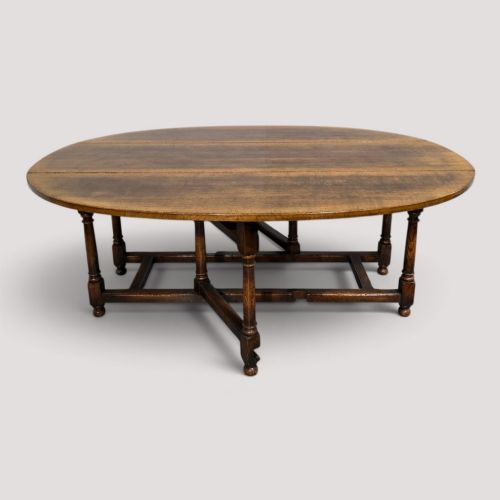
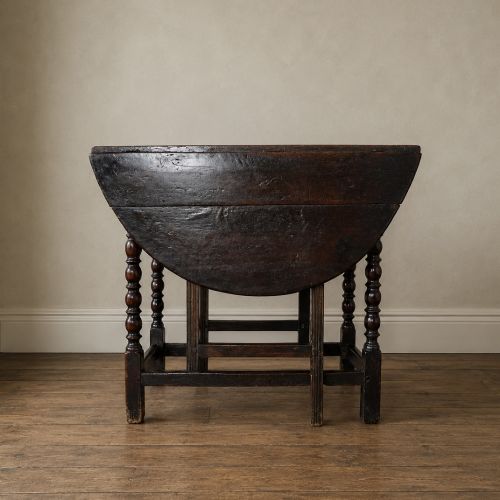
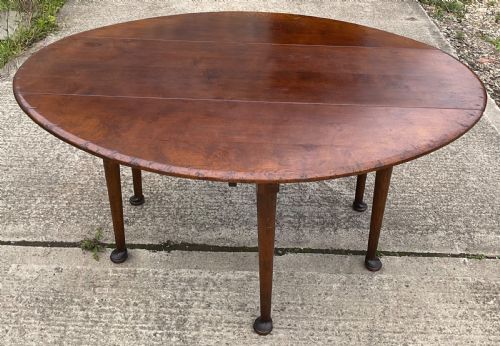
A wake dining table provides an expansive surface designed to seat large numbers of guests comfortably for meals and assemblies. These pieces often take the form of gateleg tables or drop-leaf tables that fold down when space is needed elsewhere.
The versions met most frequently span the seventeenth century, the eighteenth century, and the Georgian period, alongside early twentieth century revivals. Oak and mahogany dominate the forms, yielding substantial tables with oval or rectangular tops supported by multiple turned or carved legs.
Makers built these large boards to accommodate whole households and communities in vernacular English and Irish settings. Buyers encounter robust gateleg constructions and hunt table variants that prioritize functional dining space over delicate ornament.
How they were made
Craftsmen shaped these items from solid timber stocks, selecting heavy oak for seventeenth century examples and rich mahogany or Cuban mahogany for eighteenth century pieces. Frames rely on sturdy joinery, utilising pegged mortise and tenon joints to bear the weight of extended leaves.
Structural support comes from numerous legs, often six or more, connected by stretchers to stabilize the expanding drop leaves. Iron and brass fittings appear in hinges and structural bracing, while carved cabriole legs with pad feet finish the finer mahogany specimens.
Wake Dining Table Retail Price Guide 2026
Typical asking prices for wake dining table among the pieces listed under this phrase on Sellingantiques today, from the lower quarter to the upper quarter. They describe what is for sale here now, not the wider market.
Listings feature oak and mahogany tables spanning the seventeenth century through the early twentieth century, including Georgian and Jacobean styles.
What varies in quality
The grade of timber and the depth of the initial selection dictate the baseline standard of each board. Dense, well-figured mahogany and thick, quarter-sawn oak distinguish superior examples from plain utility timber.
Execution of turning and carving marks the boundary between standard workshop production and master joinery. Crisp turning on the legs, elegant pad feet, and smooth action in the drop-leaf gate mechanisms reveal superior construction.
The Wake Dining Table Glossary
- Wake table
- A large communal dining table, traditionally featuring drop leaves and numerous legs to seat many people.
- Gateleg table
- A table with hinged leaves supported by legs that swing outward like a gate to hold the flaps horizontal.
- Drop-leaf table
- A table with a fixed centre section and hinged flaps that fold down at the sides.
- Cabriole leg
- A furniture leg that bends outward in a convex curve and tapers inward in a concave curve below.
- Pad foot
- A simple foot shape where the leg terminates in a flattened disc or pad resting directly on the floor.
Wake Dining Table: Frequently Asked Questions
How do I use a wake table daily?
Keep the leaves dropped against the wall for everyday dining, then swing out the extra legs to open the full surface when guests arrive.
Protect the timber top from moisture and heat using appropriate mats while enjoying meals together.
What is the difference between oak and mahogany wake tables?
Oak tables generally represent the seventeenth and early eighteenth centuries, displaying a heavier vernacular style with robust turned supports.
Mahogany examples often date to the Georgian era, offering richer grain patterns, finer carving, and more refined leg treatments.
How many people can sit at a wake table?
These large boards easily accommodate six to ten diners or more depending on the length of the leaves and the placement of the extra gatelegs.
Additional supporting legs provide the necessary stability for large groups gathered around the perimeter.
Where were hunt tables used?
Hunt tables served dining rooms and country houses during social gatherings, often featuring curved or horseshoe shapes designed for serving drinks.
They functioned as central pieces for hospitality before guests sat down to formal meals.