



Visiting Card Holder
A visiting card holder is a pocket case or small desk tray used to hold calling cards during formal social calls.
Visiting Card Holder
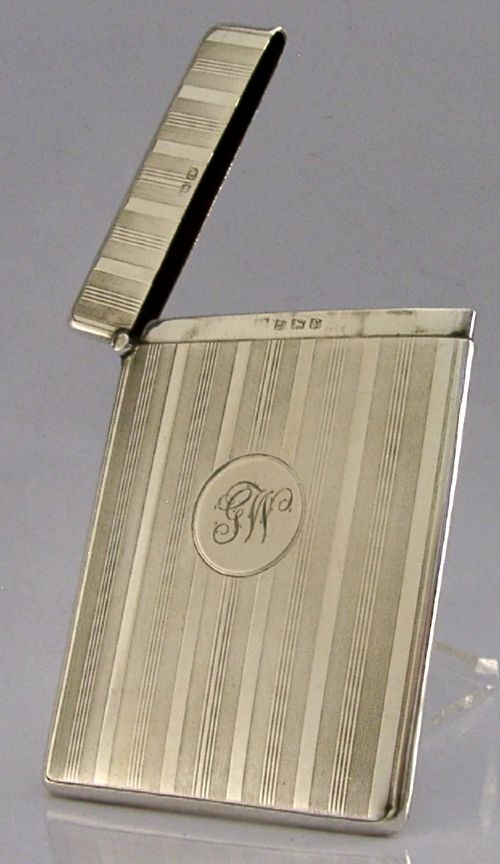
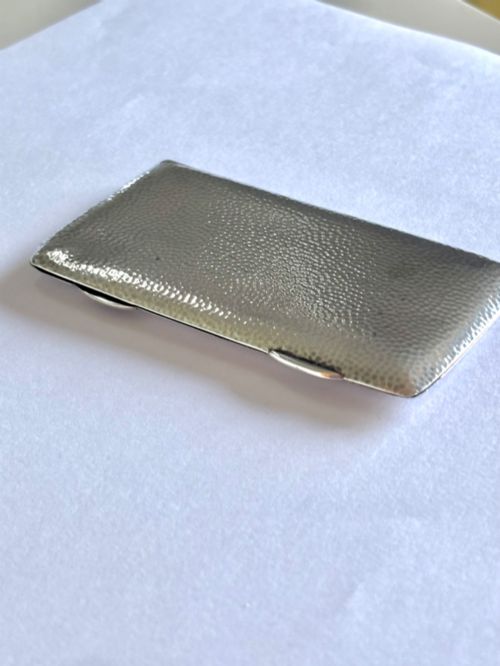
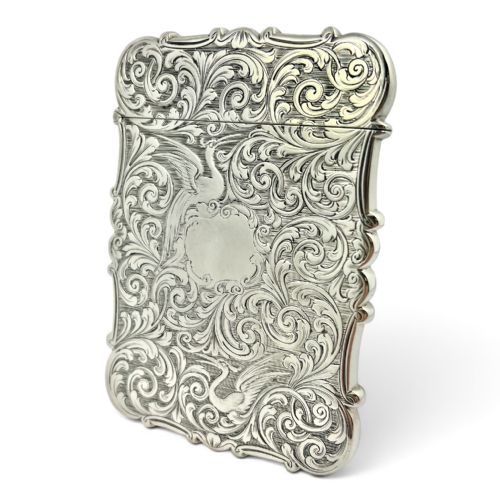
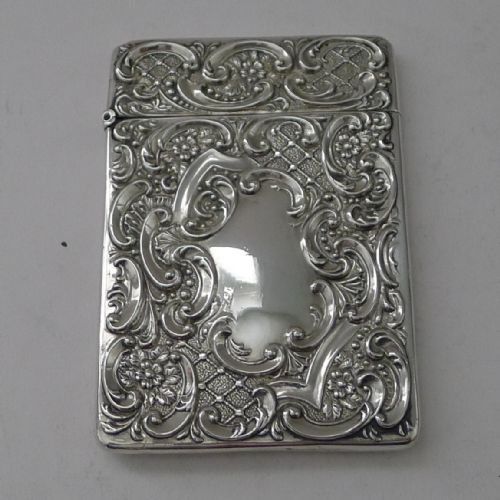
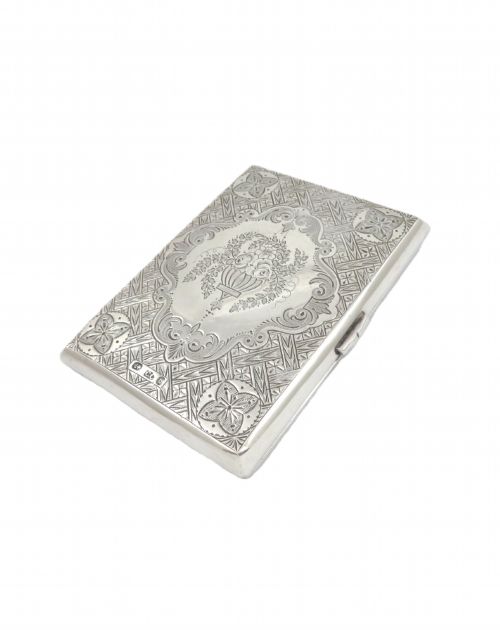
A visiting card holder serves to carry and present calling cards neatly during social visits. The pieces met most often on this page are pocket-sized cases in silver, alongside occasional carved wooden and tortoiseshell examples.
The selection spans periods from the mid-nineteenth century through the Edwardian era, with Victorian and Edwardian examples forming the majority of the current choices. Forms include slim card cases, hinged card boxes, and aide-mémoires.
Makers and origins range from English silversmiths in Birmingham and London to Cantonese export workshops and Anglo-Indian makers. Collectors also encounter desk receivers and novelty figural trays from the Victorian period.
Materials and Technique
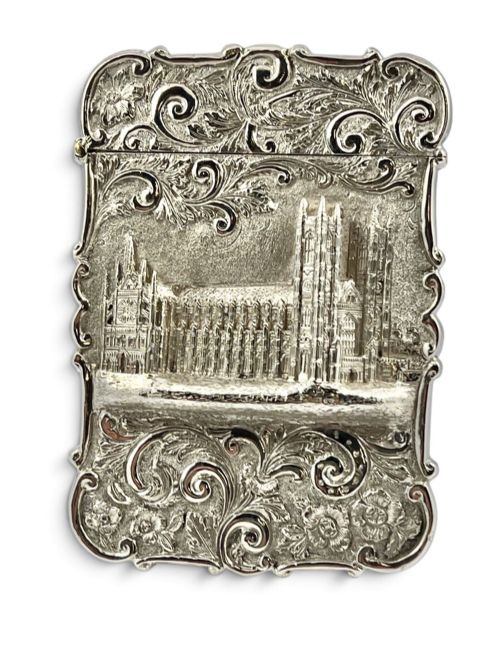
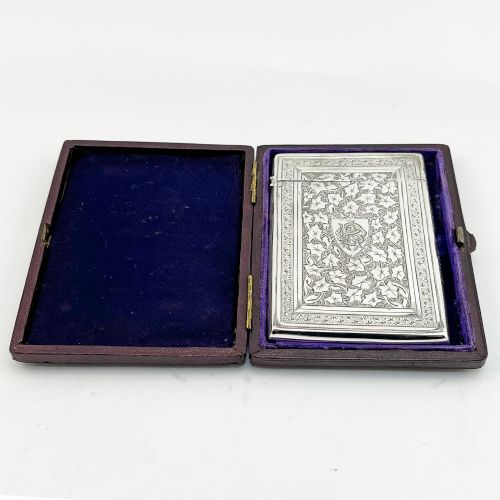
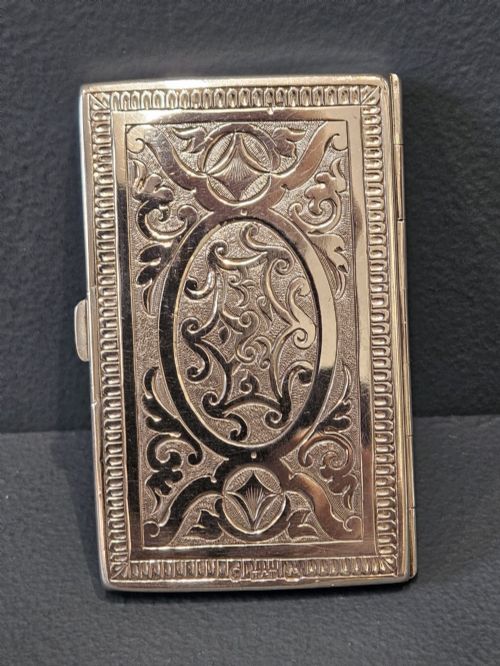
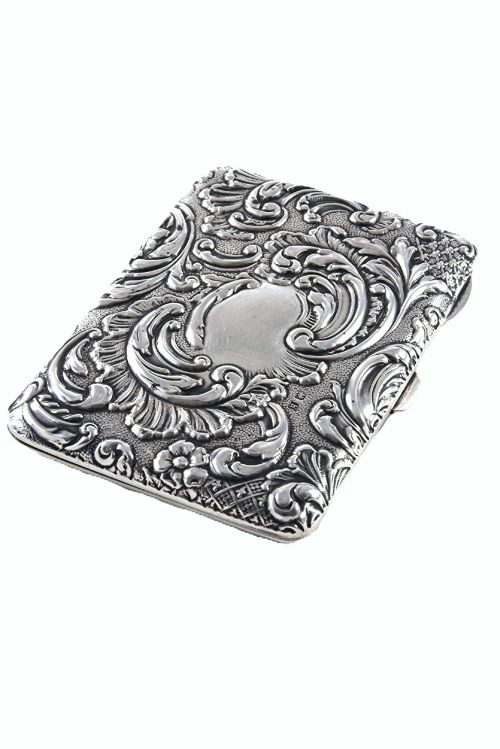
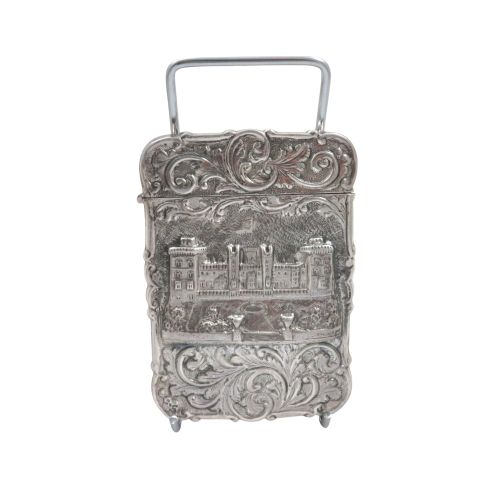
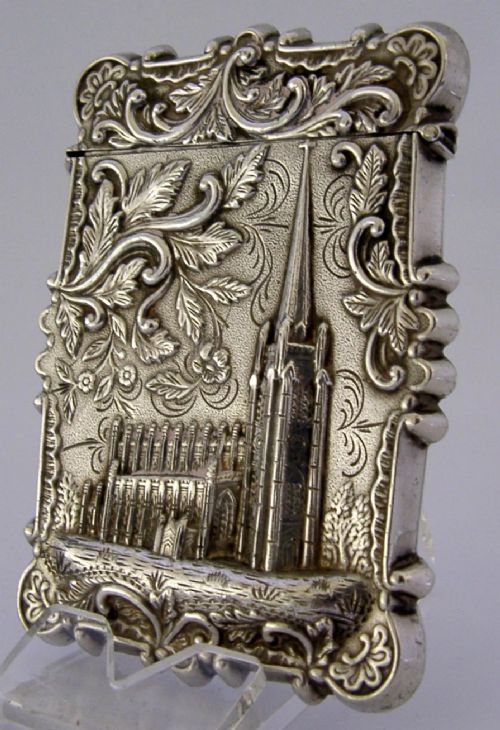
Silversmiths shaped sterling silver and silver gilt through stamping, engraving, and repoussé work, frequently producing architectural castle top scenes or foliate scrolls. Birmingham and London punch marks appear across many of the metal pieces.
Organic materials such as sandalwood, tortoiseshell, mother-of-pearl, and bone received intricate hand carving. Cantonese export artisans carved dense garden figures into wood, while other makers combined tortoiseshell with mother-of-pearl inlay.
Visiting Card Holder Retail Price Guide 2026
Typical asking prices for visiting card holder among the pieces listed under this phrase on Sellingantiques today, from the lower quarter to the upper quarter. They describe what is for sale here now, not the wider market.
Listings feature sterling silver, sandalwood, tortoiseshell, mother-of-pearl, bone, silver gilt, and Connemara marble across Victorian and Edwardian periods.
Quality Variations
The crispness of detail separates standard work from exceptional pieces, particularly in castle top engravings and deeply carved wooden garden scenes. Sharp architectural lines and well-defined figures indicate skilled hand craftsmanship.
Material selection and weight also distinguish the range, from heavy sterling silver boxes with original gilt interiors to lighter novelty folding designs. The depth and clarity of repoussé work dictate the visual success of Indian and English silver.
Nathaniel Mills·George Unite·Willian Aitken·Foxall and Co·Minton
The Visiting Card Holder Glossary
- Castle Top
- A silver card case featuring an engraved or embossed depiction of a famous building or landmark on the cover. These architectural views often show English cathedrals or castles.
- Aide-Mémoire
- A small pocket notebook or case equipped with leaves and a writing implement for recording engagements. Edwardian examples combine this function with a card holder.
- Repoussé
- A metalworking technique where the artisan hammers the design from the reverse side to form a raised relief on the front. This method decorates heavier Indian silver pieces.
- Silver Gilt
- Sterling silver that has been coated with a thin layer of gold on the interior or exterior. Handsome Edwardian card boxes frequently utilise this gilded treatment inside.
- Cantonese Export
- Items produced in Canton specifically for Western buyers during the nineteenth century. These pieces include deeply carved sandalwood and ivory-related materials.
Visiting Card Holder: Frequently Asked Questions
What is a visiting card holder?
A visiting card holder is a small case or tray designed to hold paper calling cards. Victorians used them during social visits to present their names upon arrival at a residence.
They evolved into pocket-sized silver cases, wooden boxes, and small desk trays. Their primary function was keeping delicate paper cards crisp and clean.
How were calling cards used?
Calling cards were left at a home to signal a social visit or to pay respects when the host was absent. Etiquette dictated specific corner folds to convey different messages.
Carrying them in a dedicated case protected the paper from pocket wear. A silver or tortoiseshell holder added propriety to the exchange.
How do I date an antique silver card case?
Dating relies on hallmarks stamped on the metal, which record the assay office, date letter, and maker's mark. Birmingham and London marks are common on these pieces.
Stylistic cues also help, as Victorian examples often feature detailed architectural castle tops, while Edwardian pieces lean toward lighter floral engravings or novelty designs.