





Virgin and Child Canvas
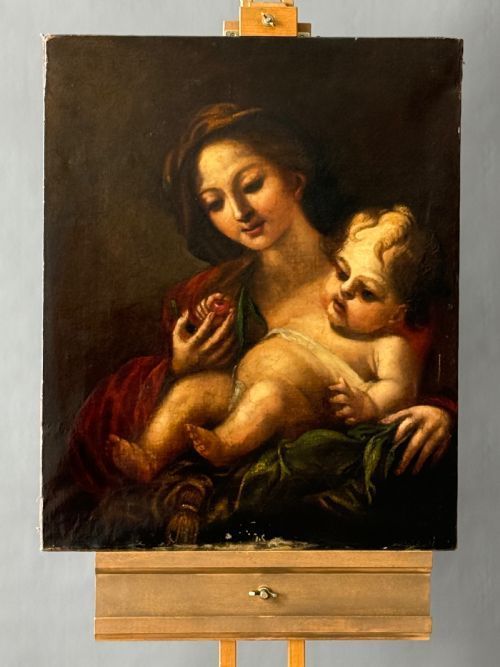
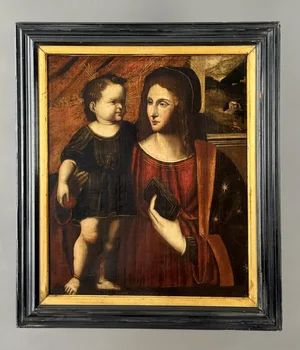
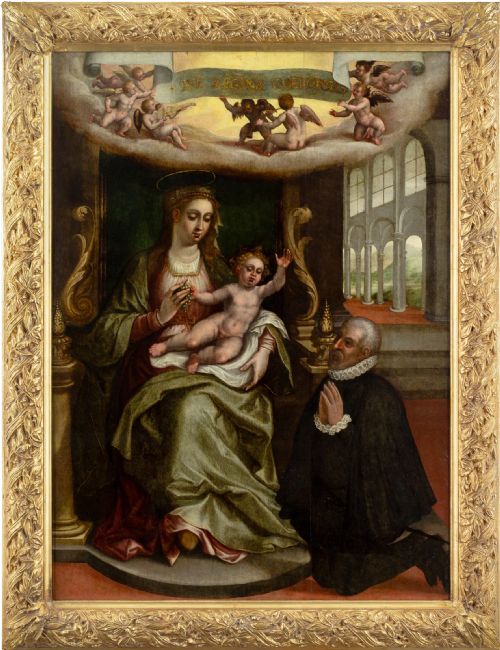
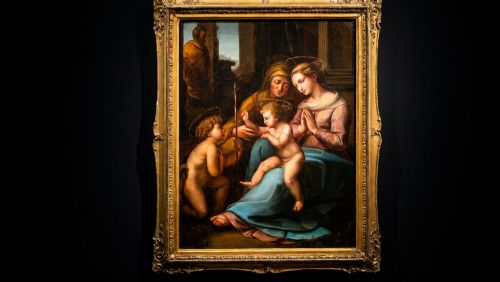
These virgin and child canvas works are traditional devotional paintings depicting the Madonna and infant Jesus, sought after for their rich religious history and classical portraiture.
Virgin and Child Canvas
A virgin and child canvas piece brings centuries of religious iconography and traditional portraiture into a collection, spanning several distinct centuries of European artistry. Buyers examining this page encounter works ranging from sixteenth-century Italian Renaissance depictions to later nineteenth-century interpretations and revivals.
The most common formats on this page include oil paintings on canvas, often framed in giltwood or gesso, representing sacred subjects derived from master compositions. Many items reflect the influence or work of Italian and Spanish schools, including circles and followers of renowned painters such as Raphael.
These devotional works vary greatly in scale, from intimate portrayals to large religious portraits of substantial proportion. Each piece captures the enduring theological theme of the Madonna and infant Jesus through traditional painting techniques.
Materials and construction methods
The foundation of these works is oil on canvas, utilising traditional pigments applied to woven textile supports stretched over wooden frames. This technique allowed artists to build rich layers of colour and depth for sacred subjects.
Many of these paintings are housed within elaborate giltwood, gesso, and gold leaf frames that complement the religious portraiture. The combination of oil paint and gilded wooden elements defines the physical structure of these historical artworks.
Materials recorded across the inventory include oil paint, canvas, wood, gold leaf, giltwood, and gesso.
Assessing quality in historical religious paintings
Quality in a virgin and child canvas piece rests upon the finesse of the brushwork and the expressive depth given to the figures of the Madonna and child. Superior examples demonstrate confident handling of anatomy, drapery, and facial expression.
The integrity of the canvas support and the preservation of the original oil layers significantly influence the standing of a painting. Additionally, the craftsmanship of the accompanying giltwood or gesso frame contributes to the overall merit of the piece.
Miguel Barroso·Francesco Solimena·Reynard Le Vieux
The Virgin and Child Canvas Glossary
- Oil on Canvas
- A painting medium where pigments bound in oil are applied to a woven fabric support. This technique became standard in European art for its durability and blending capabilities.
- Giltwood
- Wood that has been coated with a thin layer of gold leaf or gold paint. It frequently appears on the elaborate frames enclosing these historical paintings.
- Gesso
- A plaster-like mixture used as a base for painting or applied beneath gold leaf on wooden frames. It provides a smooth surface for gilding and ornamentation.
- Renaissance Revival
- An artistic movement reviving the styles and forms of the fifteenth and sixteenth-century Renaissance. Works in this style emulate the classical composition of earlier periods.
- Circle of
- A term used in art history to indicate an artist working closely alongside a master, sharing a similar style and workshop environment.
Virgin and Child Canvas: Frequently Asked Questions
How do I date a virgin and child canvas?
Dating relies upon examining the canvas preparation, the style of the oil painting, and the construction of the wooden stretcher frame. Clues also emerge from the framing materials such as gesso and gold leaf.
Comparison with documented periods like the sixteenth or eighteenth century helps narrow the origin. Expert analysis of pigment composition further supports accurate dating.
What is an after Raphael painting?
An after Raphael painting is a work created in the style of, or directly copying, a composition by the Renaissance master Raphael. These pieces allowed later artists and owners to possess versions of famous religious iconography.
Such works range from period student pieces to later nineteenth-century interpretations. They remain valued for their adherence to classical Renaissance composition.
Where were these religious paintings displayed?
Historically, virgin and child canvas works served as focal points for private devotion in domestic chapels and homes. They were commissioned by patrons or religious institutions to inspire contemplation.
Larger formats often hung in churches or formal portrait galleries. Today, collectors display them as significant works of fine art.
How should I care for an oil painting on canvas?
Protect the canvas from direct sunlight and maintain stable room humidity to prevent the oil paint and wood from cracking. Avoid touching the painted surface directly to preserve the delicate layers of pigment.
Dust the frame and canvas gently with a soft, dry brush. Professional conservation should be sought for any cleaning or structural repairs.