




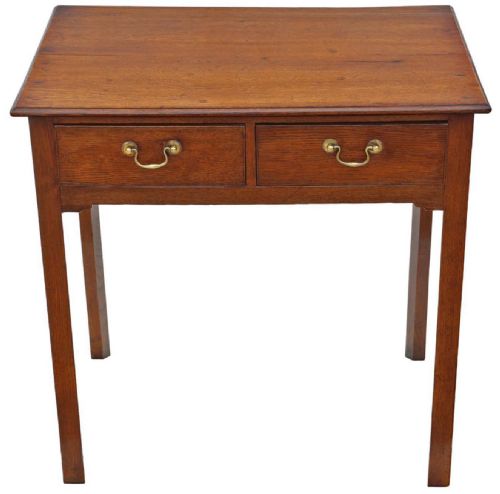

Vintage Work Table Brass
These vintage work table brass pieces combine brass elements with wood or metal frameworks to create functional furniture from various historical periods.
Vintage Work Table Brass
When you search for vintage work table brass, you encounter items predominantly stemming from the 19th Century, Edwardian era, and the 1920s. These pieces encompass various forms including side tables, occasional tables, writing tables, and specific work tables.
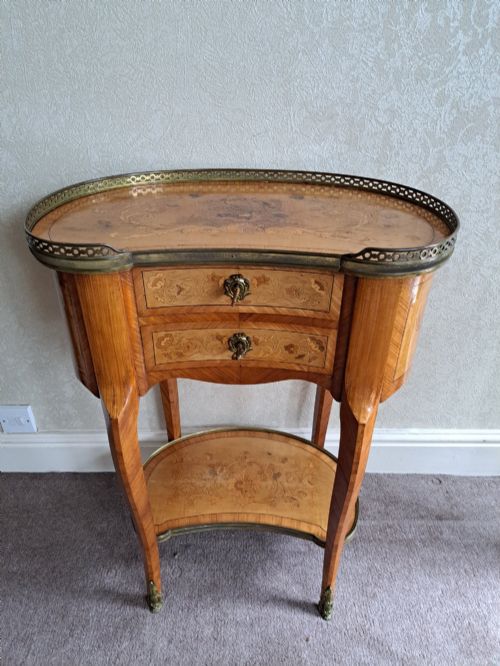
The materials and styles span multiple origins, featuring Regency, Victorian, and French influences such as Louis XVI and Baroque. The brass component often integrates with rosewood, mahogany, oak, iron, and glass to form the structure or decorative inlay.
What varies in quality
Quality differences emerge in the selection of primary timbers like rosewood or mahogany compared to simpler pine or oak frames. The precision of brass inlay and the fineness of the metalwork distinguish superior examples from standard ones.
The integrity of the structural joinery and the preservation of original materials heavily influence the overall standard of the piece. Tables featuring sophisticated French styling or detailed metal fabrication demonstrate higher levels of artisanal skill.
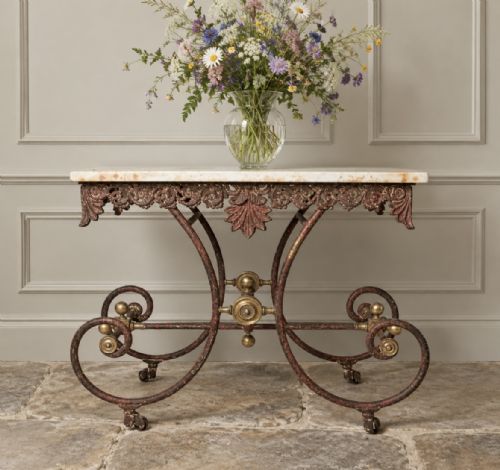
One table arrives with a distinctly curvy green iron frame that refuses to take itself too seriously.
Jenners·Wilkinson Leicester·Payne London
The Vintage Work Table Brass Glossary
- Brass
- An alloy of copper and zinc used extensively for structural framing, decorative mounts, and inlay work across these periods. It provides a bright metallic finish that patinates over time.
- Ormolu
- Gilded bronze or brass applied to furniture and decorative objects, particularly prominent in French styles. This technique adds rich golden highlights to the metal components.
- Rosewood
- A dense, heavily figured timber utilised in fine cabinet-making for tables and desks. Its dark grain offers a strong contrast to brass mounts and inlay.
- Pembroke table
- A small table with hinged drop leaves on either side, often containing drawers. It gained popularity during the 18th and 19th centuries for versatile domestic use.
- Regency
- A style period spanning the early 19th century, characterised by classical motifs and refined proportions. Furniture from this era often incorporates sophisticated brass detailing.
Vintage Work Table Brass: Frequently Asked Questions
What is a vintage work table brass used for?
These tables served various practical functions in domestic settings, from sewing and needlework to general writing and bedside use.
Today, they function well as decorative occasional tables or functional desks in living spaces and studies.
How do I identify the period of a brass work table?
Dating relies on examining the timber species, construction techniques, and stylistic markers such as Regency curves or Edwardian proportions.
Matching the specific brass mounting style and hardware to documented periods helps confirm the age of the piece.
How should I care for brass and wood furniture?
Maintenance involves dusting the timber regularly with a soft cloth and avoiding excessive moisture or direct sunlight.
Brass elements can be cleaned gently with appropriate metal polish, taking care not to stain the surrounding wood surfaces.
Are these tables sturdy enough for daily use?
Most pieces constructed from solid hardwoods like mahogany or rosewood offer robust structural integrity for everyday tasks.
Tables featuring intricate metalwork or delicate inlay require more careful handling to preserve their decorative components.