
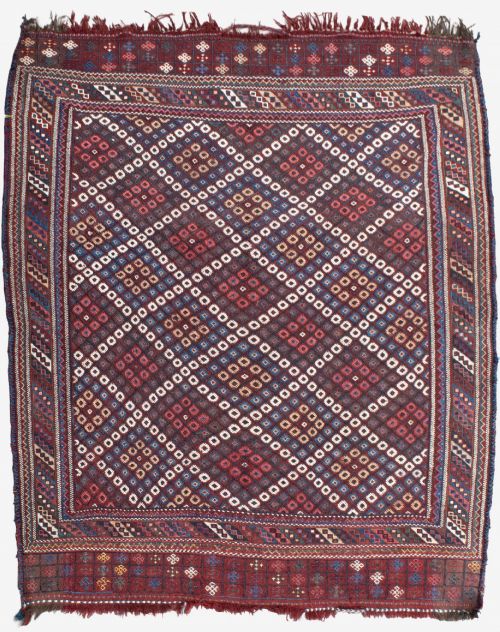


Vintage Wool Kelim
These vintage wool kelim rugs are flat-woven textiles carrying tribal designs from Anatolia, Persia, Central Asia, and Eastern Europe.
Vintage Wool Kelim
When you search for a vintage wool kelim, you are looking at flat-woven rugs and carpets created by nomadic and tribal groups across regions such as Anatolia, Persia, Central Asia, and Eastern Europe. The pieces seen here span from the late nineteenth century through to the early decades of the twentieth century, specifically covering the years eighteen ninety to nineteen thirty. You will frequently encounter Turkish, Afghan, Persian, and Central Asian examples, including specific regional types like Afshar, Qashqai, Uzbek, and Bessarabian flat weaves.
The forms range from compact runner rugs and square kelim kelim rugs to large carpets, occasionally woven in two distinct parts and joined together. These flat weaves function primarily as floor coverings, wall hangings, or utility cloths within nomadic tents and village homes, possessing no pile and relying entirely on the interplay of warp and weft threads. Their enduring appeal lies in the bold graphic designs, geometric patterns, and rich textures that reflect the distinct cultural heritage of their makers.
How vintage wool kelim items were made
The construction of these textiles relies on wool for the structural warp and visible weft threads, frequently supported by cotton in specific structural areas. Weavers interlace coloured weft yarns tightly through the warp threads to create flat surfaces without pile, employing slit-weave techniques where colour blocks meet to produce sharp geometric boundaries.
Natural materials and traditional hand-dyeing methods yield the characteristic palette found across these tribal carpets. The resulting flat weaves display a durable structure built for practical daily use.
Current listings feature pieces originating from nineteenth and twentieth-century Anatolian, Persian, and Central Asian tribal traditions.
What varies in quality
The standard of a vintage wool kelim is determined by the tightness of the weave, the precision of the geometric design, and the integrity of the wool fibres. Tightly packed wefts create a firmer, more durable textile that holds its shape and pattern over decades of use.
Artistic expression also dictates distinction, where bold graphic compositions and balanced colour distribution elevate certain tribal rugs above standard production. The condition of the edges and ends, along with the purity of the wool, further separates exceptional pieces from simpler utilitarian examples.
The Vintage Wool Kelim Glossary
- Kelim
- A flat-woven carpet or rug produced without pile across Anatolia, Persia, and Central Asia. These textiles are known for their geometric motifs and lightweight structure.
- Warp
- The stationary vertical threads stretched across a loom upon which the weft is woven. They form the foundational skeleton of the rug.
- Weft
- The horizontal threads passed through the warp to build the visible pattern and colour of the textile. Tight beating of these threads creates a durable flat weave.
- Sofreh
- A woven spread or cloth traditionally used for eating meals or processing flour within nomadic households. These items often feature distinctive tribal iconography.
- Soumak
- A brocade-like flat-weaving technique where weft threads are wrapped over and under the warp threads. This method adds structural thickness and texture to the reverse of the textile.
- Slit weave
- A tapestry technique where the weft yarns return at the edge of a colour area without interlocking, creating a small vertical slit. This method produces the sharp diagonal lines seen in tribal designs.
Vintage Wool Kelim: Frequently Asked Questions
How do I use a kelim in my home?
These flat-woven textiles suit placement in hallways, living rooms, and bedrooms where low-profile floor coverings are practical. Their graphic patterns also allow them to be hung securely on walls as decorative art.
Because they lack a pile, they fit easily beneath furniture and doors without causing obstruction, adding warmth and colour to wooden or stone floors.
How are different regional styles told apart?
Regional attribution relies on specific geometric motifs, colour palettes, and weaving structures characteristic of particular tribes or towns. Anatolian and Turkish pieces often display bold geometric field patterns, while Persian tribal rugs like Afshar and Qashqai utilise distinct medallion and diagonal arrangements.
Uzbek and Central Asian flat weaves incorporate striking graphic layouts, whereas Bessarabian examples from Eastern Europe tend to display floral influences within a flat-woven format.
Are these rugs durable for daily walking?
The sturdy wool construction and tight flat weave of these historical textiles make them resilient for everyday use in domestic spaces. Their lack of pile means there are no fibres to crush, allowing them to withstand moderate foot traffic when placed over a secure underlay.
Regular rotation and gentle care ensure the wool structure remains intact across generations of daily living.
What periods do these pieces come from?
The available selection spans the late nineteenth century and the early decades of the twentieth century, specifically encompassing the eighteen nineties up to nineteen thirty. These dates reflect traditional hand-weaving practices executed before mass-produced synthetic dyes and modern looms altered indigenous textile production.
Each piece carries the stylistic markers typical of its specific decade of origin within Anatolia, Persia, or Central Asia.