

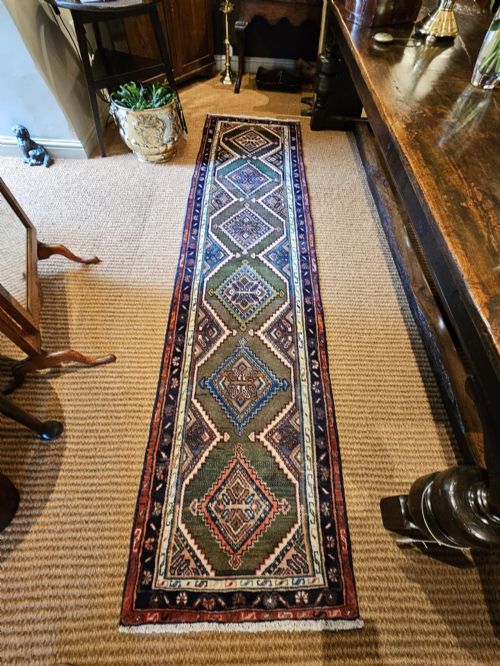
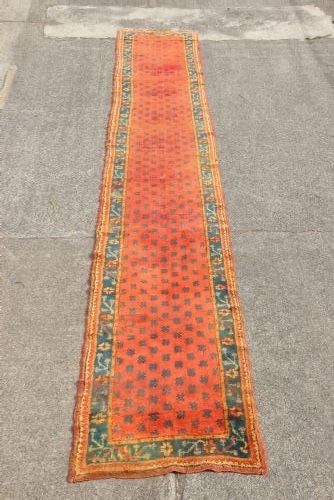

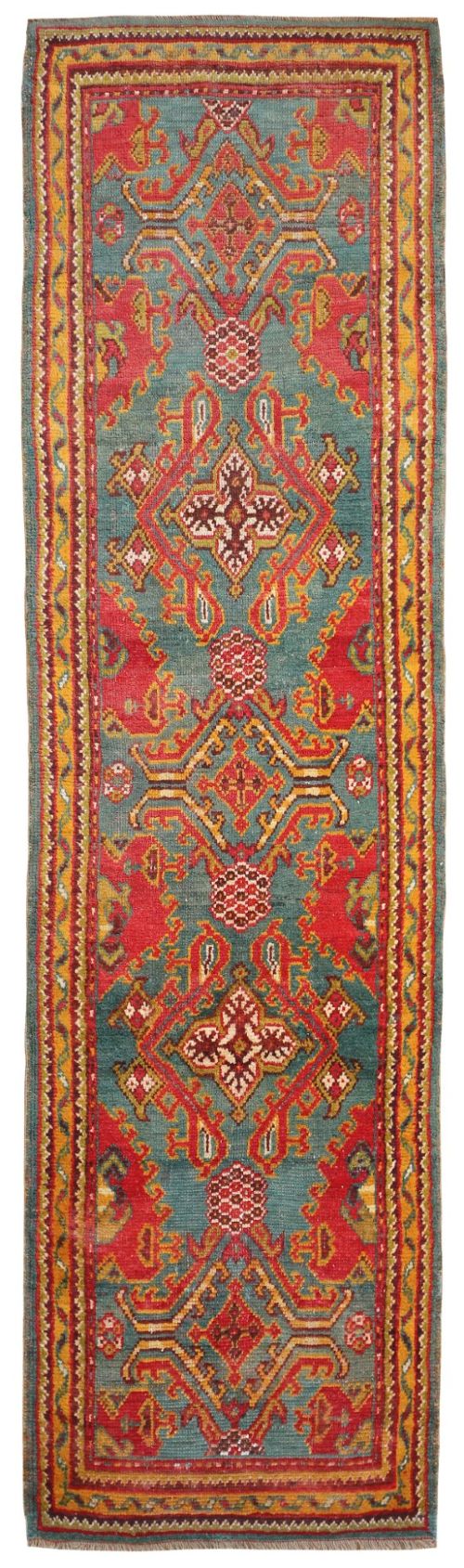
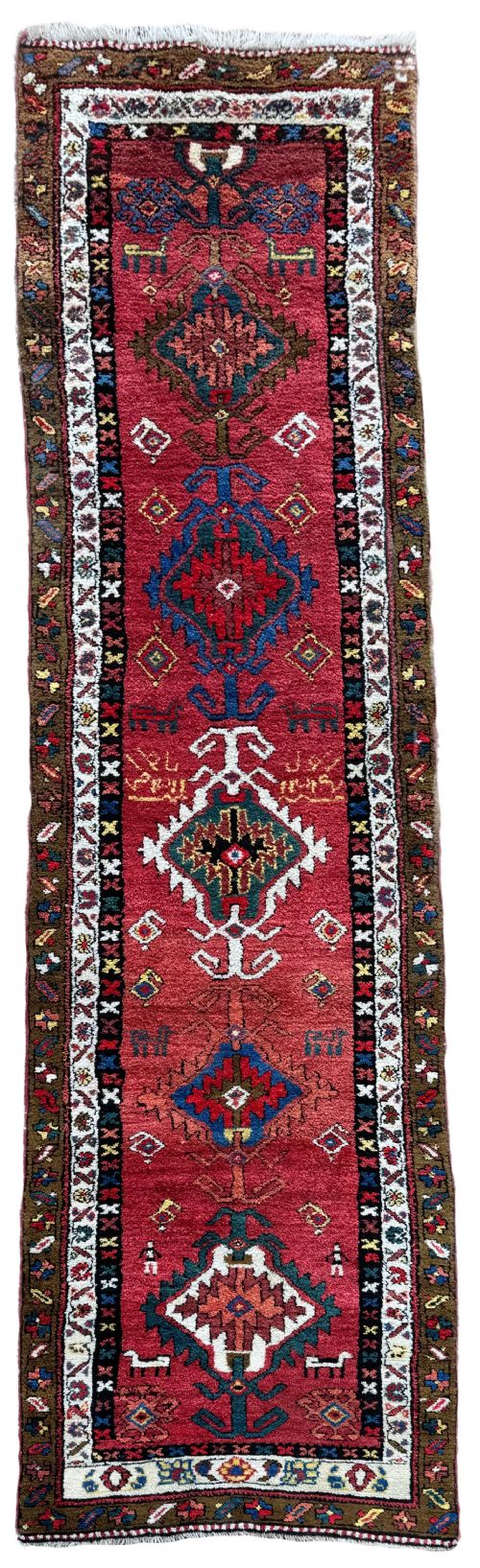
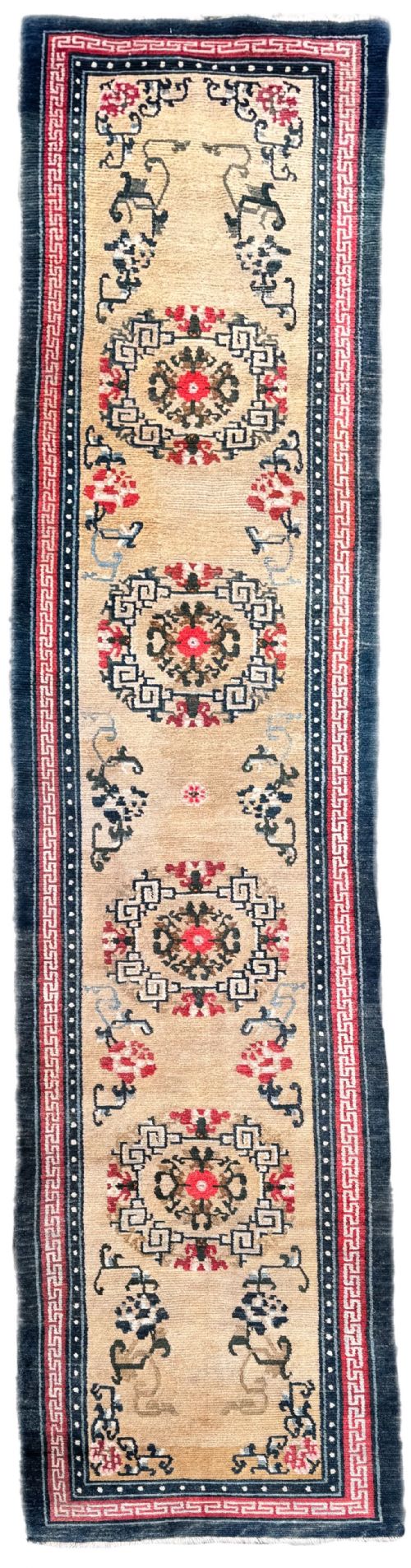

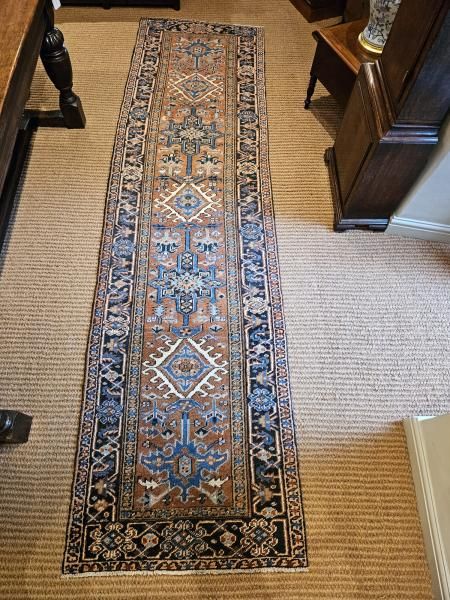
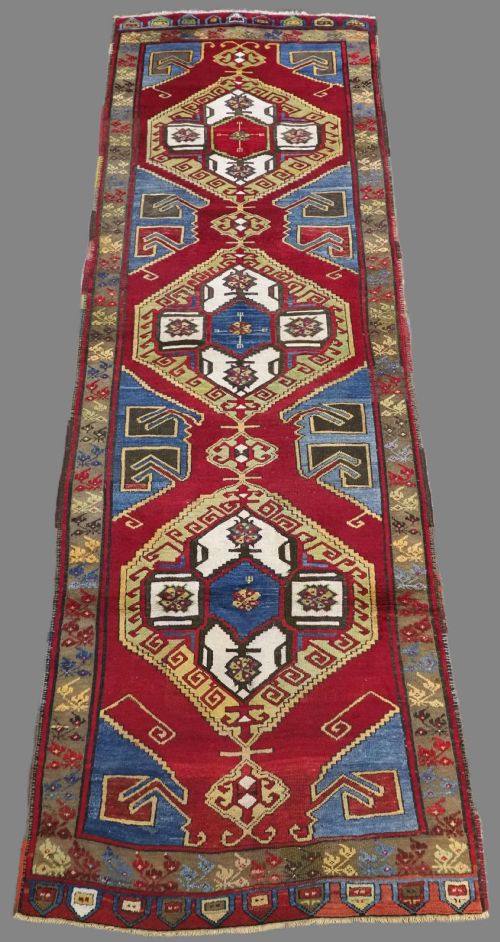
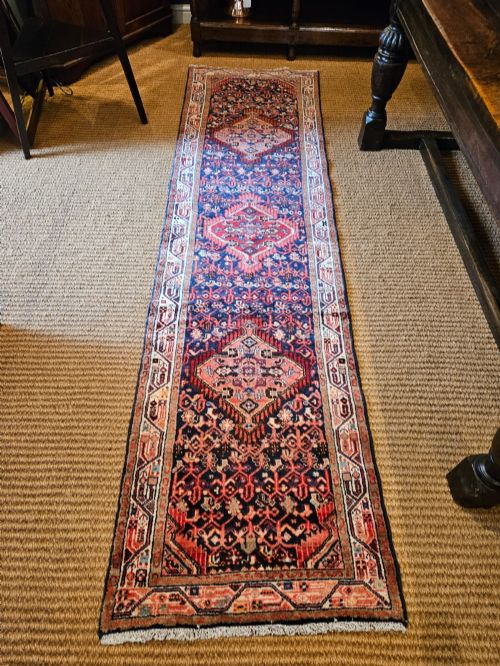

Vintage Wool Corridor Carpet
A vintage wool corridor carpet brings warmth and colour to a narrow space through enduring textile traditions.
Vintage Wool Corridor Carpet
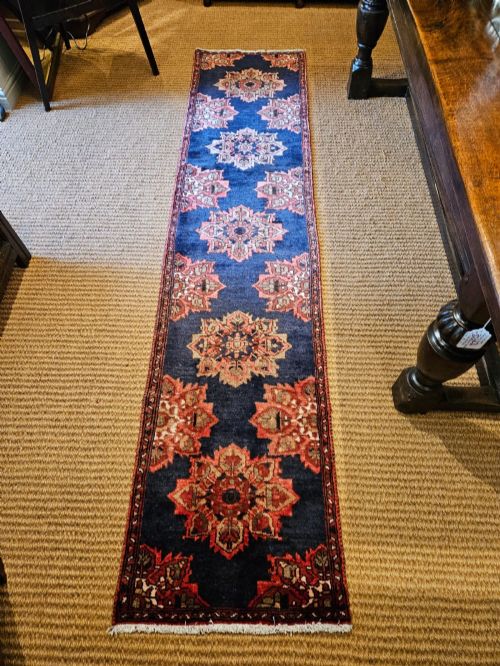
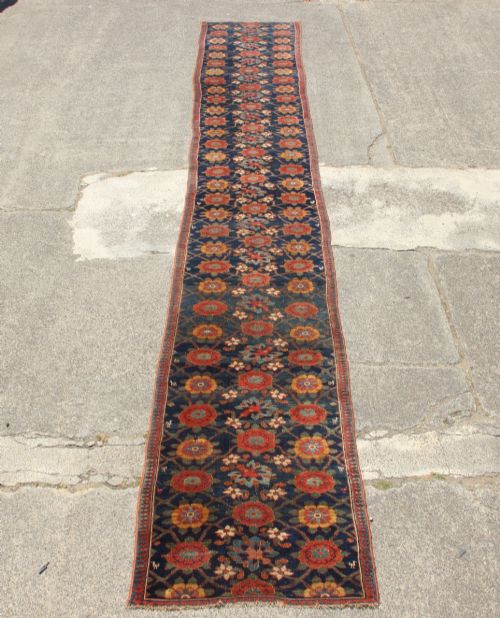
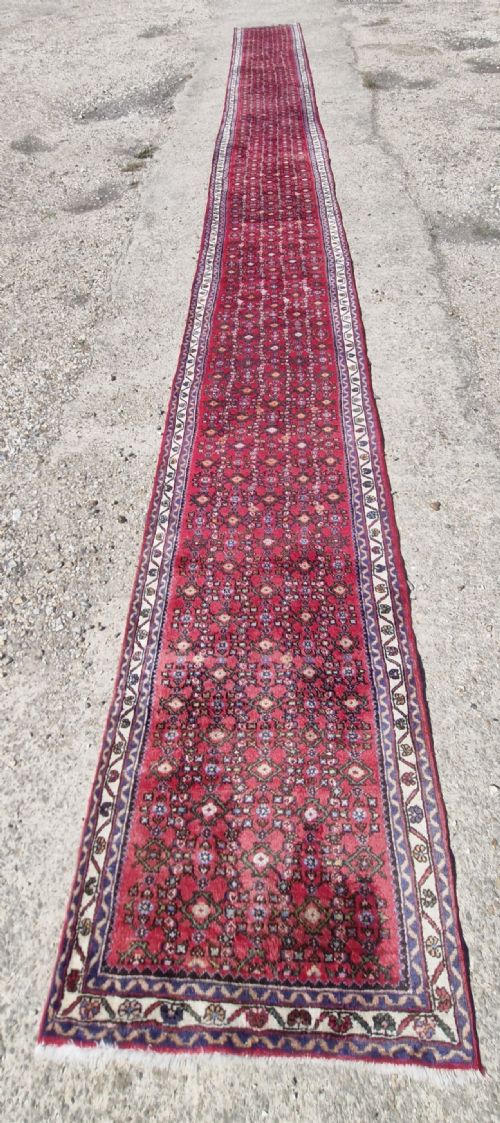
A vintage wool corridor carpet, often encountered as a runner or long rug, spans narrow domestic spaces such as hallways and landings. These textiles originate from diverse regions, including Persian, Caucasian, Turkish, Kurdish, and Anatolian traditions.
The pieces available here date across the nineteenth and twentieth centuries, reflecting regional weaving practices from periods such as 1890, 1900, and 1910. Forms range from compact lengths to expansive corridors exceeding five metres, designed specifically for heavy foot traffic in passages.
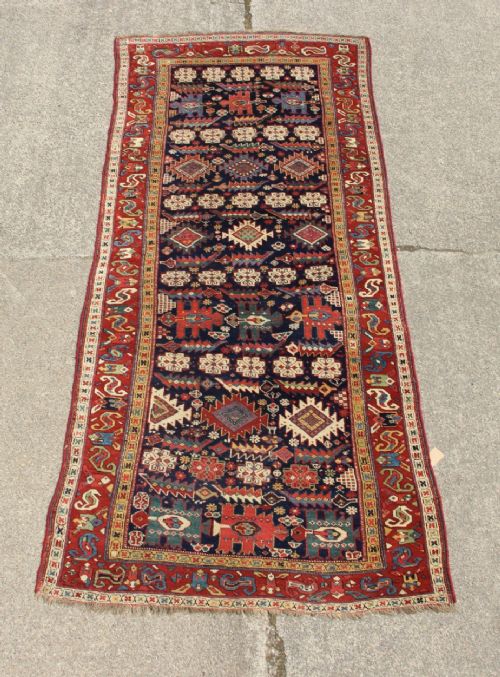
Makers utilised traditional formats like the kelleh and long runner to fit architectural dimensions. Buyers frequently meet Persian Heriz, Kurdish, and Turkish Oushak or Ushak examples on this page.
Materials and construction
Weavers constructed these carpets using wool and hand-spun wool, often combined with cotton foundations for stability in long formats. Natural fibres provide the durability required for hallway placement.
Regional workshops and tribal weavers employed hand-knotting techniques to produce dense piles that endure decades of use. The interaction of wool pile and cotton warps creates the characteristic flexibility and weight of these corridor textiles.
Listings span periods from the mid-nineteenth century through the 1960s, featuring wool, cotton, and hand-spun wool materials.
Distinctions in quality
Quality rests on the precision of the knotting and the integrity of the wool. Finely spun wool maintains its structure and pile depth far better than coarser alternatives.
Design execution and dye stability distinguish finer examples from standard pieces. Harmonious regional palettes and balanced geometric or floral motifs indicate superior atelier or tribal work.
The Vintage Wool Corridor Carpet Glossary
- Runner
- A long, narrow carpet designed for corridors, hallways, and staircases. These pieces measure significantly longer than they are wide.
- Kelleh
- A large rectangular carpet format, often longer than a standard rug but broader than a traditional corridor runner.
- Kilim
- A flatwoven carpet or runner produced without a pile, relying on interlocking warp and weft threads to form geometric patterns.
- Warp
- The vertical threads stretched tightly on a loom that form the foundational skeleton of the carpet.
- Weft
- The horizontal threads passed through the warps to bind the knots and secure the structure of the weave.
Vintage Wool Corridor Carpet: Frequently Asked Questions
How do I measure for a hallway runner?
Measure the length and width of your corridor while leaving an equal margin of exposed flooring around the edges. Account for door clearance to ensure the door swings freely over the pile.
Keep in mind that older corridor carpets often feature non-standard dimensions due to hand-weaving tolerances, so check specific length and width listings carefully.
Are these carpets suitable for heavy foot traffic?
Wool possesses natural resilience and lanolin content that repels dirt and resists crushing under regular footsteps. This makes period wool runners well-suited for busy hallways and landings.
Placing a quality underlay beneath the carpet prevents slipping and absorbs impact, further protecting the vintage fibres from premature wear.
How do I tell Persian and Caucasian runners apart?
Persian runners often display curved floral motifs, intricate medallion layouts, and sophisticated palette blending typical of Heriz or Hamadan workshops. They tend to have softer, more fluid drawing.
Caucasian runners, such as Shirvan or Kazak pieces, favour sharp geometric polygons, primary saturated colours, and bold, rectilinear tribal patterns.
How should I clean a vintage wool runner?
Vacuum gently using suction attachment without the rotating brush roll to protect the aged wool pile and fringes. Address spills immediately by blotting with a damp cloth rather than scrubbing.
Professional specialist cleaning is recommended every few years to remove embedded grit without damaging the natural dyes and hand-spun fibres.