


Vintage Wooden Wall Barometer
A vintage wooden wall barometer tells the atmospheric pressure while anchoring a room with rich timber and crisp dialwork.
Vintage Wooden Wall Barometer
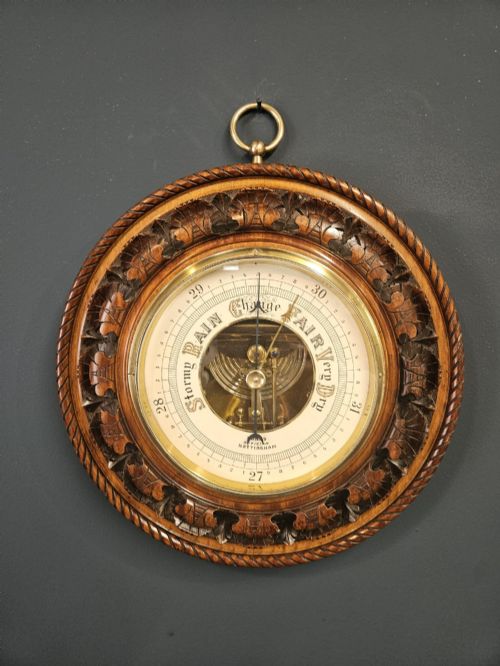
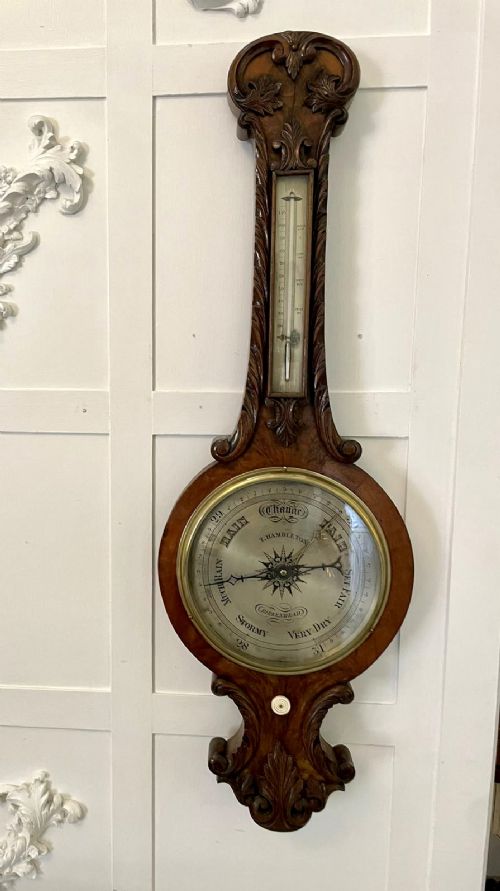
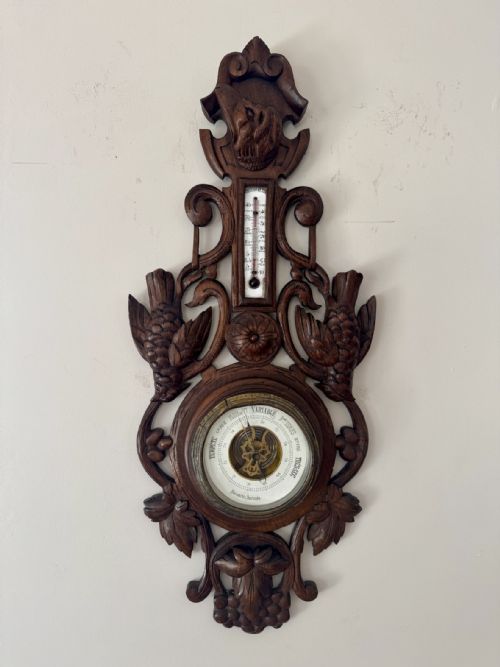
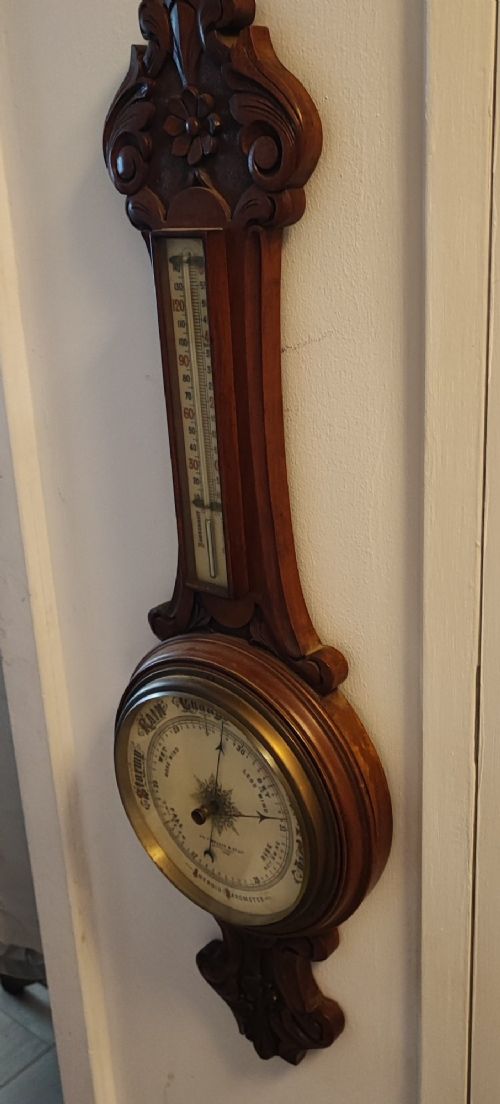
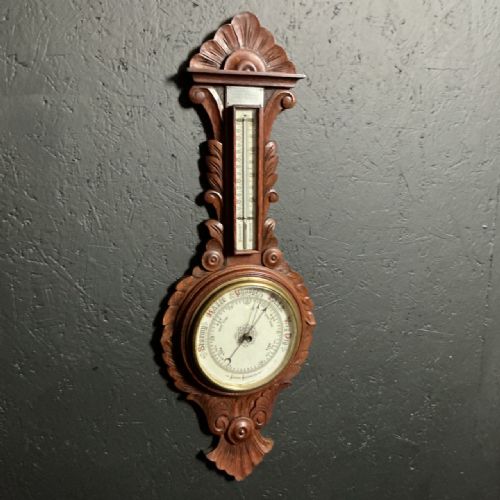
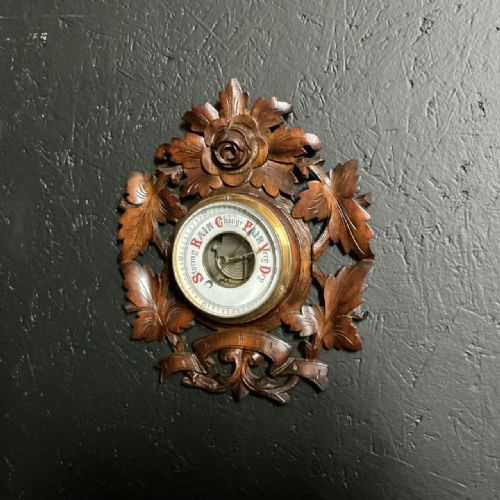
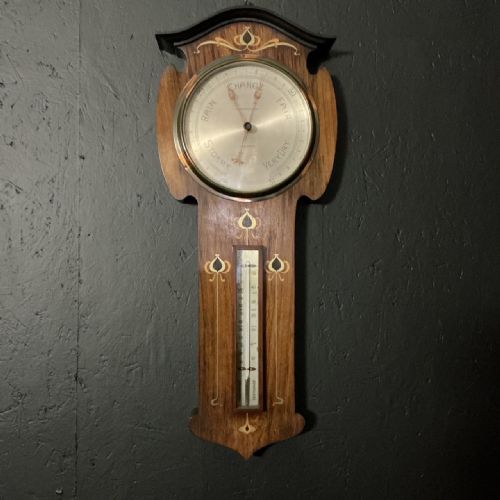
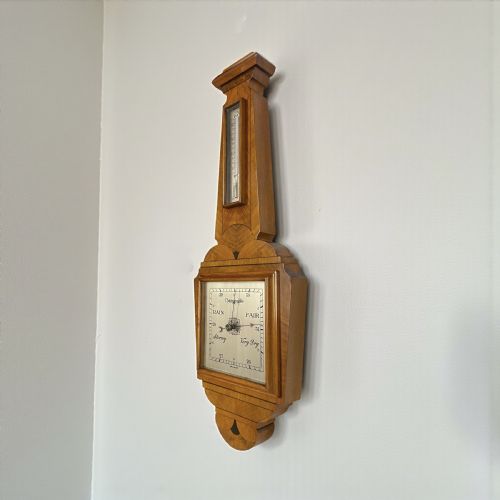
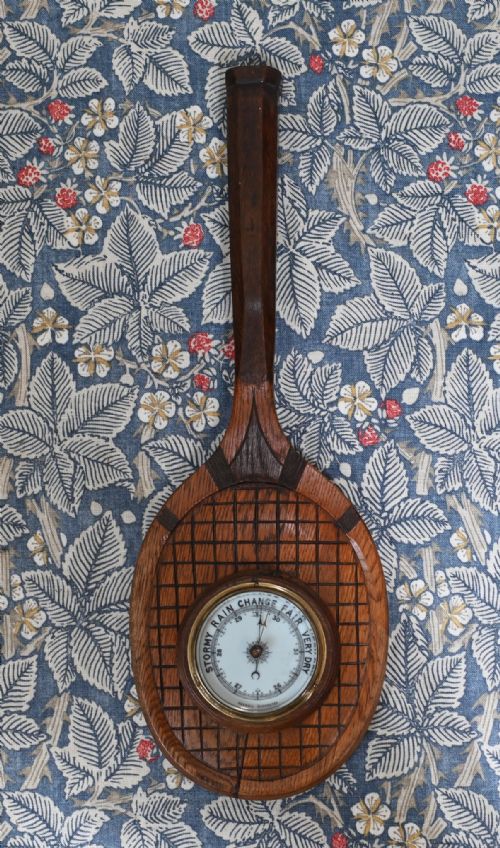
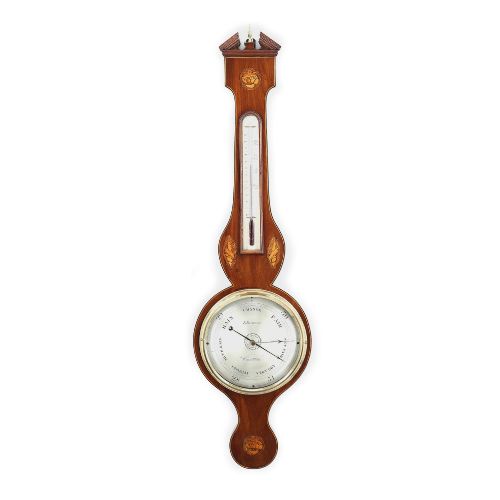
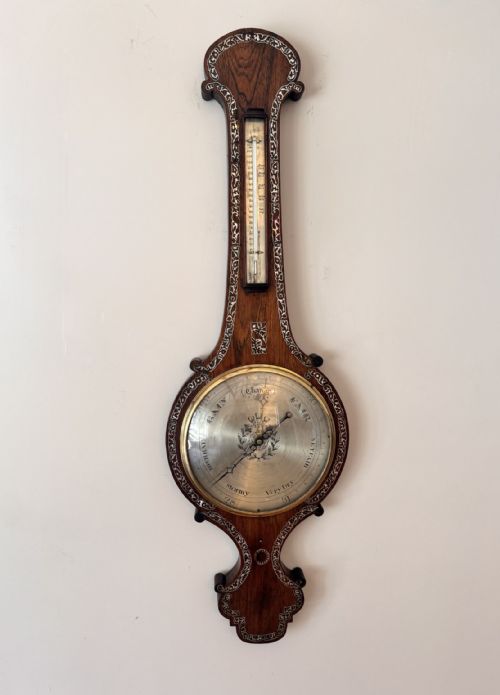
When you search for a vintage wooden wall barometer, you encounter instruments housed in timbers like mahogany, oak, walnut, and rosewood. These pieces range from Victorian banjo styles and Black Forest carvings to Regency wheel barometers and Art Deco wall designs.
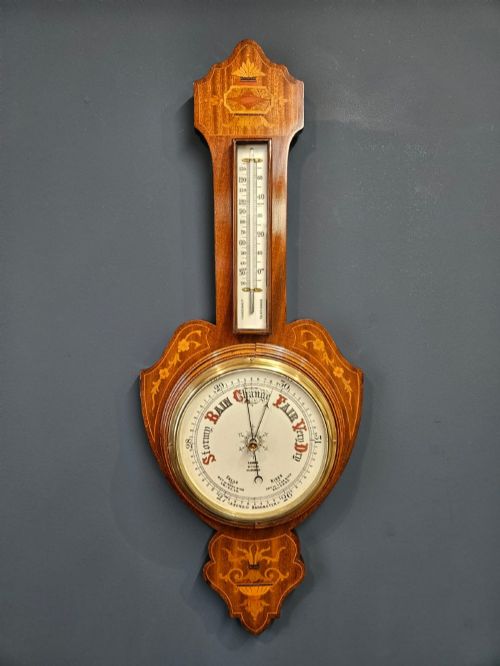
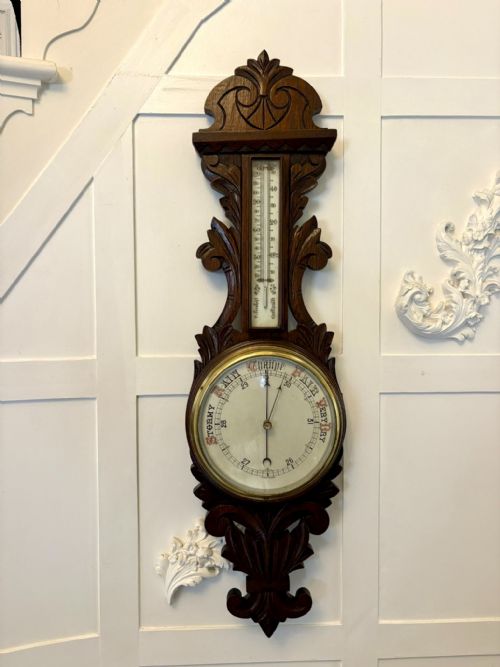
The most common examples on this page date from the Victorian and Edwardian periods, frequently taking the banjo shape or featuring carved wooden cases with thermometers.
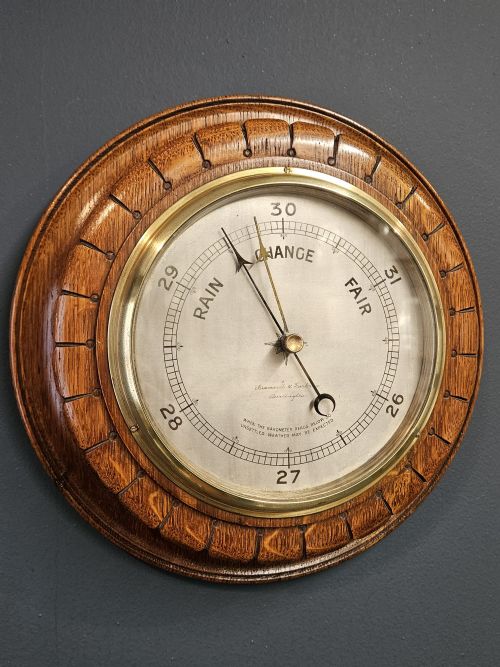
Makers and retailers such as B. Besozzi of Weymouth, Bramwell & Harbron of Darlington, and W.E. Pain of Cambridge often signed the silvered metal dials housed within these wooden frames.
Quality Variations
The depth and crispness of the hand-carving distinguish standard production from superior examples, particularly evident in Black Forest walnut and Victorian oak cases.
The legibility and ornamentation of the silvered metal dial, alongside the presence of signed maker plaques, elevate the standing of an instrument.
The choice of dense cabinet timbers like burr walnut or figured mahogany, combined with intact marquetry or mother-of-pearl inlay, marks superior workmanship.
Periods represented span from the Regency era through Victorian, Edwardian, and Arts and Crafts styles up to Art Deco designs.
B. Besozzi of Weymouth·Bramwell & Harbron of Darlington·W Watson & Sons·Molton of Norwich·W.E. Pain of Cambridge·Vecchio & Co of Shaftsbury·Jenkins Of Old Swindon
The Vintage Wooden Wall Barometer Glossary
- Banjo barometer
- A tall, tapering wall barometer shaped loosely like a banjo, typically housing a hygrometer, thermometer, and large dial.
- Aneroid barometer
- An instrument that measures air pressure using a flexible metal box rather than liquid mercury.
- Wheel barometer
- A round-faced dial barometer connected to a pulley system that responds to mercury movement in a concealed tube.
- Silvered metal
- A brass or copper dial plate treated to achieve a brushed silver finish, usually engraved with weather descriptors and maker details.
- Bezelskirt
- The brass or metal ring that holds the protective glass face securely over the dial.
Vintage Wooden Wall Barometer: Frequently Asked Questions
How do I hang a heavy wooden barometer?
These wall instruments require a secure fixing directly into a wall stud or the use of heavy-duty wall anchors suitable for the weight of dense timbers like oak and mahogany.
Ensure the hanging bracket or eyelet on the reverse of the wooden case is firmly attached before mounting the piece at eye level.
Did all vintage barometers include thermometers?
Many banjo and wheel barometers feature a secondary thermometer mounted on the trunk above or below the main dial, though simpler wall models display only the pressure gauge.
Instruments combining a clock, barometer, and thermometer also appear across the Victorian and Edwardian selections.
How do I tell an aneroid from a mercury barometer?
Aneroid models rely on an internal sealed metal vacuum capsule to indicate pressure changes on a mechanical dial, requiring no liquid columns.
Mercury versions use an exposed or glass-covered vertical tube where liquid rises and falls in direct response to atmospheric pressure.
How should I clean a wooden barometer case?
Dust the carved walnut, oak, or mahogany surfaces gently with a dry, soft cloth, avoiding commercial furniture polishes that build up residue.
Preserve the antique timber finish by keeping the instrument away from direct sunlight and sudden temperature shifts.