


Carved Wood Aneroid Barometer
A carved wood aneroid barometer brings mechanical barometric science into a domestic interior through sculptural timber framing.
Carved Wood Aneroid Barometer
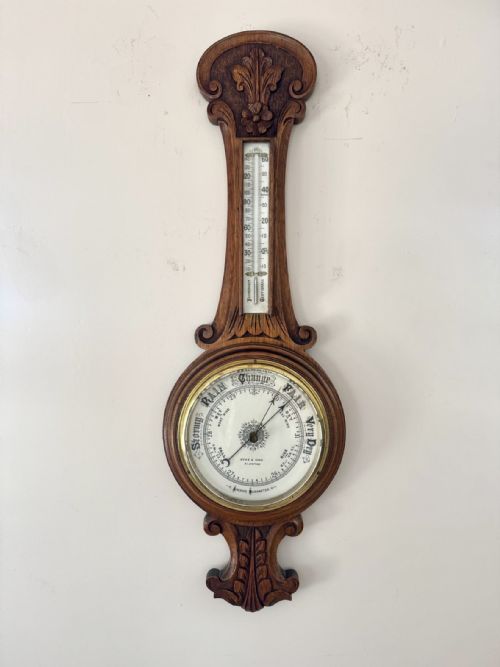
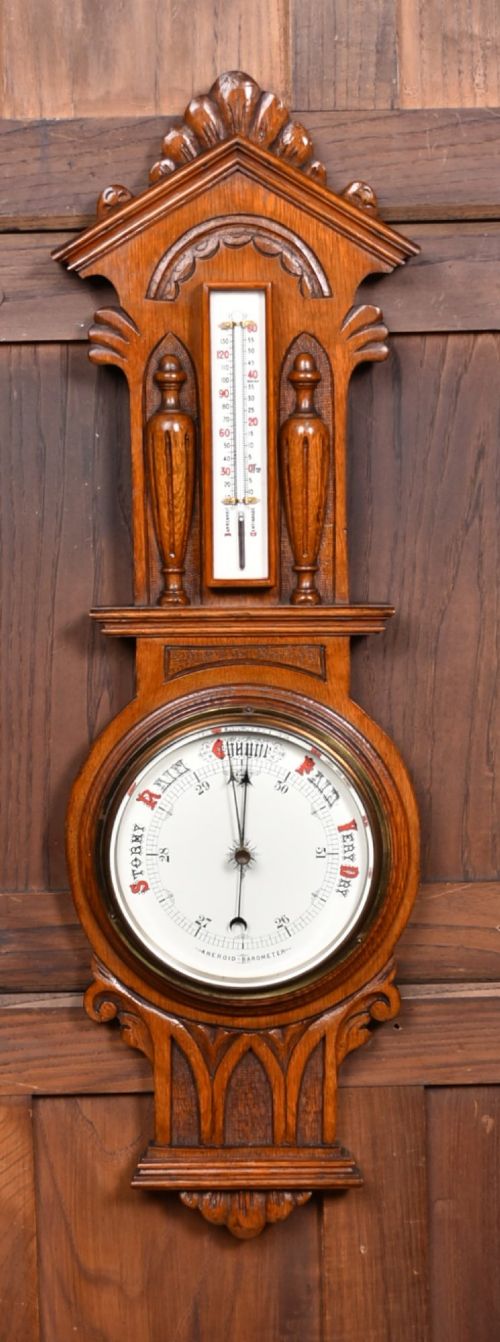
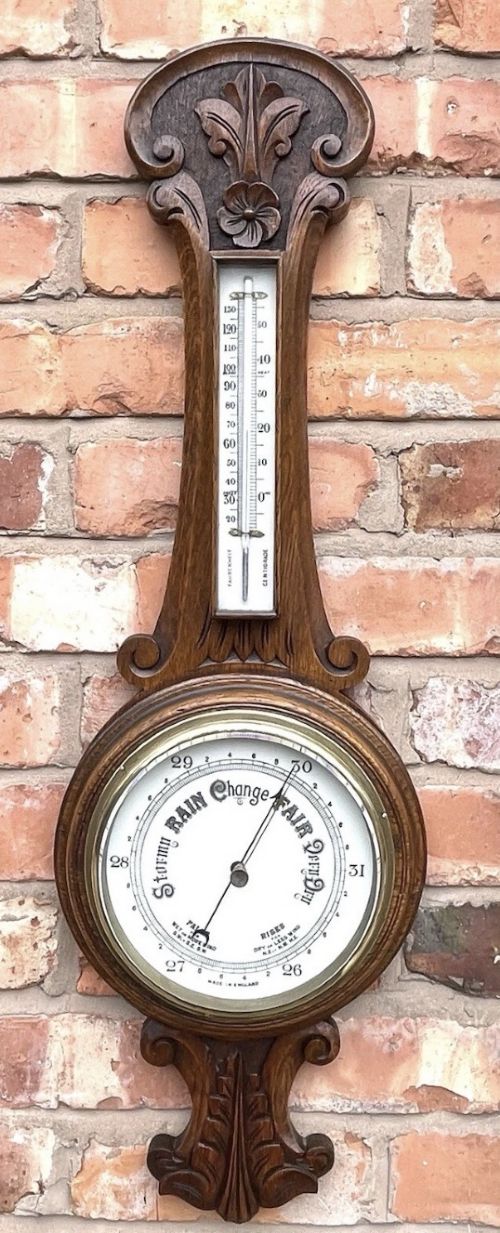
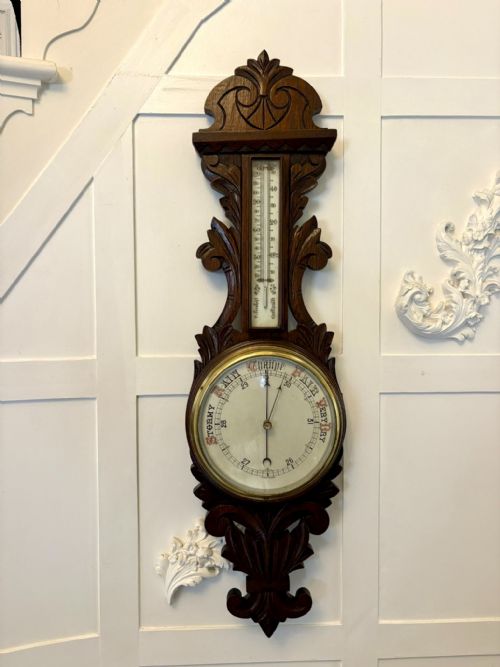
When you search for a carved wood aneroid barometer, you look at instruments designed to measure atmospheric pressure without liquid mercury, housed within decorative timber frames. These pieces typically display circular or banjo formats intended for wall hanging in domestic interiors.
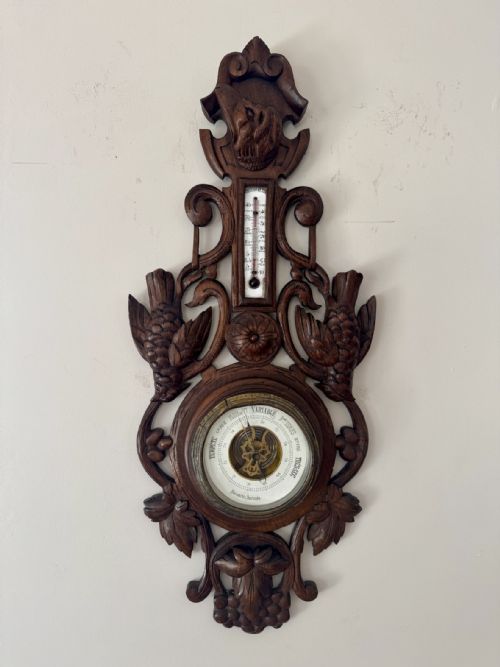
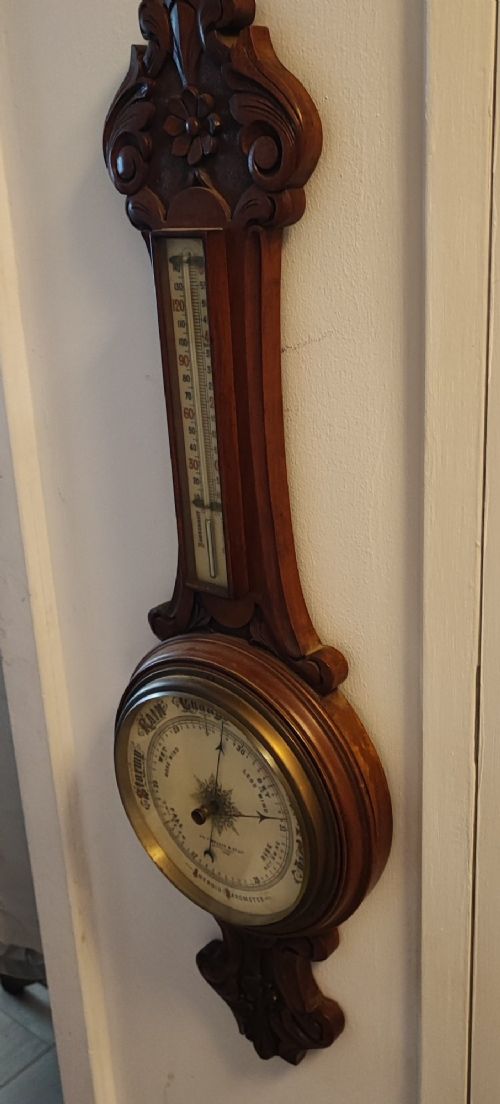
The versions most frequently met on this page date from the Victorian and Edwardian eras, spanning the nineteenth and early twentieth centuries. Oak, walnut, and beechwood dominate the construction, often shaped in Black Forest or banjo configurations that combine barometric dials with thermometers.
Materials and Construction
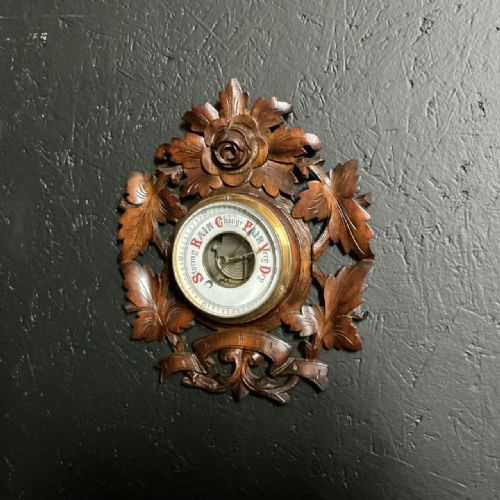
Maker workshops utilised dense hardwoods such as oak, walnut, mahogany, and beechwood to build robust frames capable of supporting internal mechanical brass movements and glass dial covers. Carvers shaped foliage, animals, and classical motifs directly into the timber surrounds.
The aneroid mechanism inside relies on a sealed corrugated metal capsule that expands and contracts with air pressure changes, linked to a pointer via levers. Ceramic or porcelain dials often display the pressure readings, protected behind bevelled or plain glass.
Several barometers feature carved animals keeping a watchful glass eye on the weather.
Judging Quality
Quality separates through the depth and crispness of the timber carving, distinguishing master craftsmanship from mechanical repetition. Deeply undercut foliage and sculptural animal figures on Black Forest examples indicate superior artisan output.
The integration of secondary functions, such as working thermometers, matching clock dials, or marquetry inlay, elevates an instrument. Precision maker signatures on the dial or movement further set exceptional pieces apart from standard production.
Hyde & Sons Sleaford·Negretti & Zambra·W Watson & Sons·Maple & Co·James Pitkin London
The Carved Wood Aneroid Barometer Glossary
- Aneroid barometer
- An instrument measuring air pressure by the expansion and contraction of a flexible metal capsule inside. It requires no liquid mercury to function.
- Banjo barometer
- A domestic wall barometer shaped like a traditional stringed instrument, featuring a large circular dial at the base and a long vertical stem above. This stem frequently houses a thermometer.
- Black Forest style
- A carving style originating from Central Europe, characterised by deeply modelled naturalistic foliage, game birds, and animals rendered in dark wood. These pieces often frame barometers and clocks.
- Marquetry
- The art of applying decorative veneer pieces to a timber structure to form geometric or pictorial patterns. It appears on refined neoclassical barometer frames.
Carved Wood Aneroid Barometer: Frequently Asked Questions
How do aneroid barometers work?
An internal sealed metal box expands or contracts as atmospheric pressure rises and falls. Springs and levers connect this movement directly to the dial pointer.
This design removes the need for hanging glass tubes filled with liquid mercury, making the instrument safer for domestic walls.
Where should I hang a barometer?
Choose a stable interior wall away from direct sunlight, central heating radiators, and damp spaces. Sudden temperature shifts can affect the delicate metal components inside the wooden case.
Most wall barometers feature a secure hanging bracket on the reverse designed to support the weight of the timber frame.
How do I read the dial?
Tap the glass lightly before reading to settle the internal mechanical linkage. The primary hand points to current pressure, while the set hand is adjusted manually to track weather movement.
Rising pressure points towards fair weather, whereas falling pressure indicates approaching rain or storm conditions.
How do I date these pieces?
Examine the timber species, dial materials, and carving style alongside any inscribed maker names. Victorian examples often favour heavy carved oak or detailed Black Forest fauna.
Edwardian pieces tend to show lighter oak banjo frames with simpler lines, while nineteenth-century beechwood models display distinct turned bezels.