
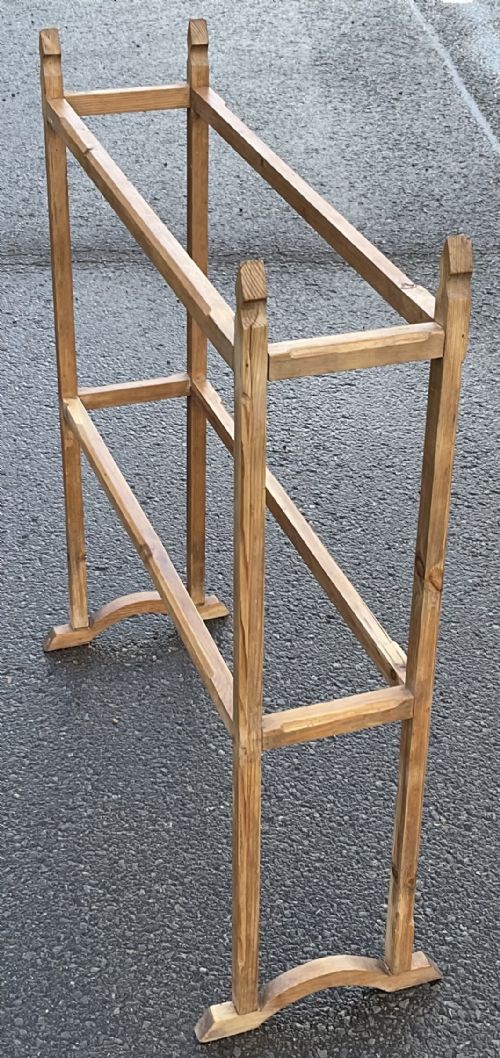


Vintage Wooden Towel Stand
A vintage wooden towel stand brings practical warmth and handsome timber grain to a bathroom or bedroom.
Vintage Wooden Towel Stand
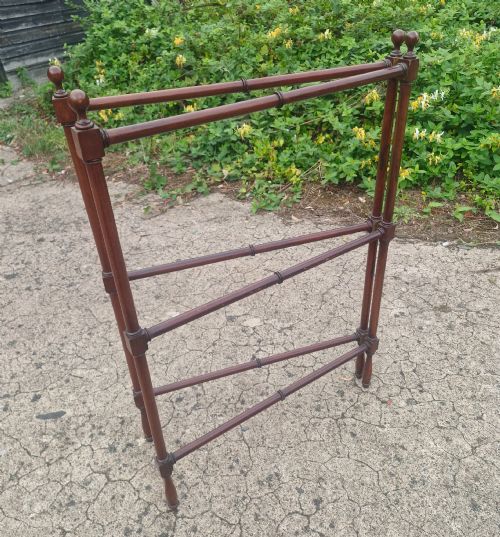
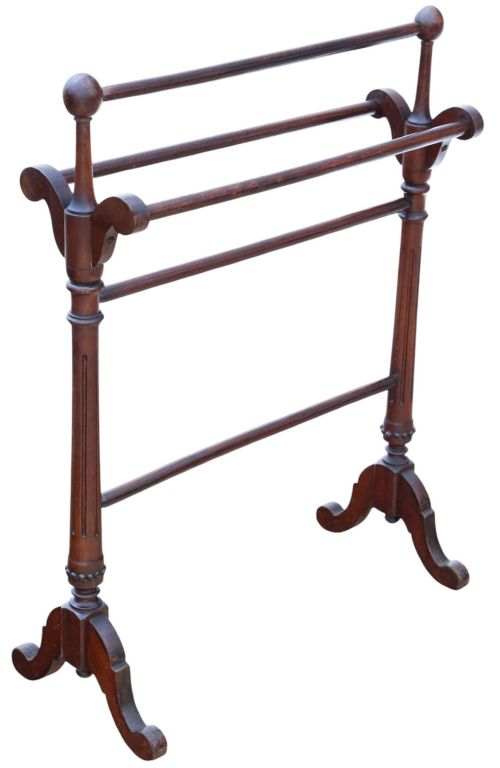
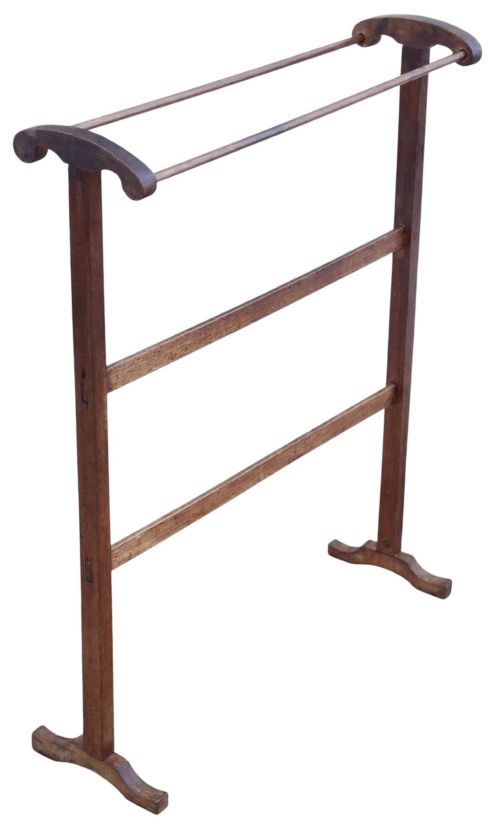
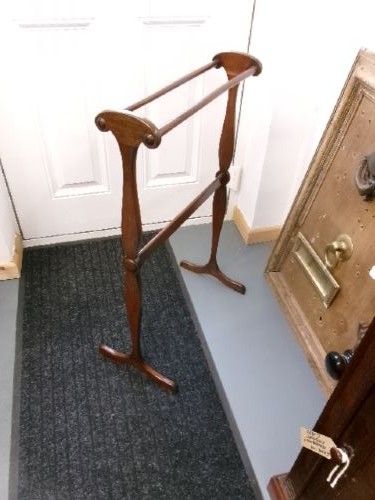
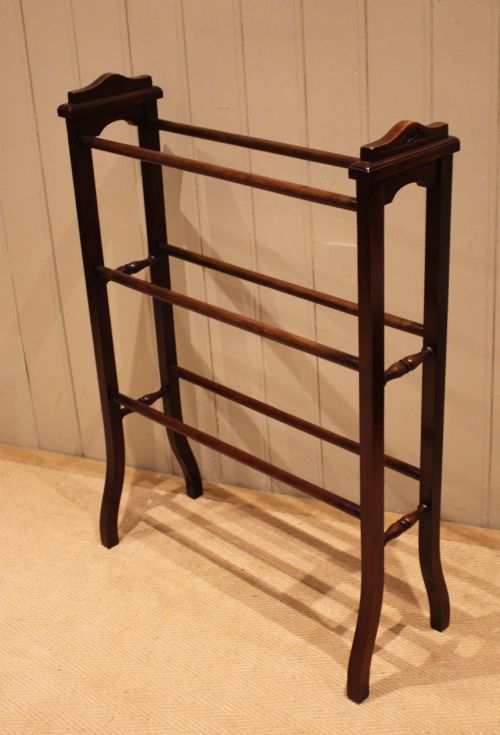
When you search for a vintage wooden towel stand, you encounter sturdy pieces designed to hold linens and garments in domestic spaces. The selection ranges from compact Edwardian folding rails to large Victorian pieces with multiple bars.
Mahogany and oak dominate the forms seen here, often appearing alongside pine, walnut, and elm. Many examples date from the nineteenth century and the Edwardian era, offering freestanding utility for daily use.
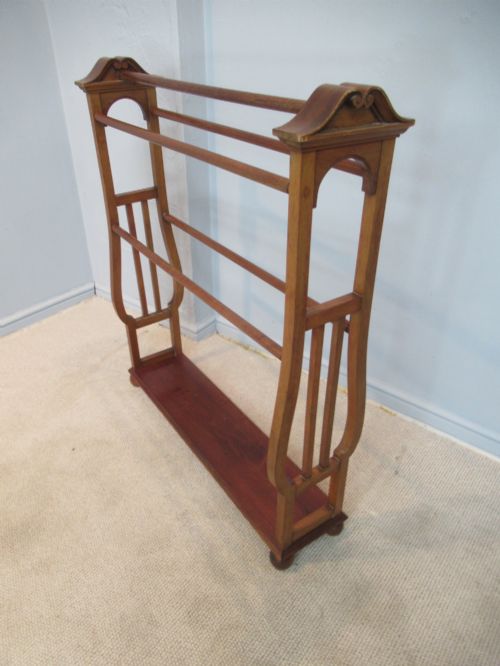
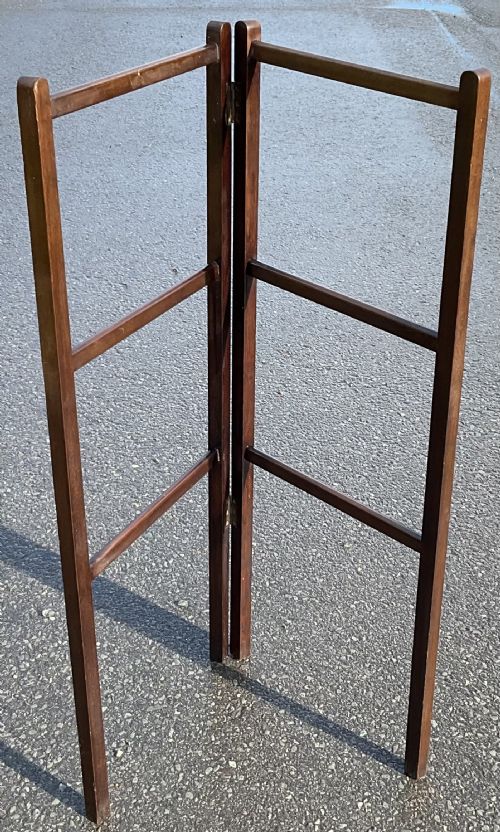
The objects take various shapes, including three-fold frames, five-bar rails, and taller standing formats. Alongside standard towel rails, the inventory includes related items such as clothes racks and hall stands.
How they were made
Cabinetmakers constructed these stands using solid timbers like mahogany, oak, and walnut, frequently selecting pine for utility pieces. Joinery relied on traditional framing methods to ensure the rails could support damp linens without warping.
Decoration remained restrained, though finer examples incorporate satinwood inlay, brass fittings, or carved details. Ebonised finishes and lacquered surfaces also appear, reflecting the stylistic preferences of the Victorian and Chinese Qing Dynasty periods.
A silhouette towel rail offers a clever visual twist, reminding us that Victorian laundry could double as silhouette art.
What varies in quality
The calibre of a vintage wooden towel stand rests primarily on the choice of timber and the crispness of its construction. Dense hardwoods like mahogany and walnut provide superior weight and presence compared to simpler pine alternatives.
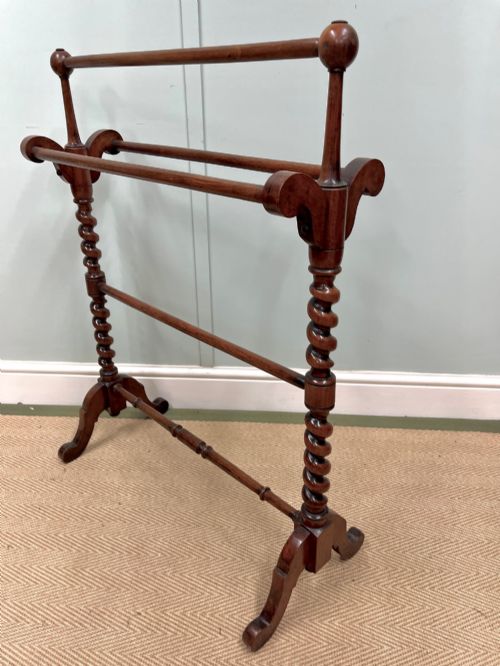
Refinement in detail elevates certain pieces above standard utility items. Subtle additions such as satinwood inlay, brass elements, or carefully turned uprights distinguish a workshop production from a plain country house piece.
The Vintage Wooden Towel Stand Glossary
- Mahogany
- A durable, reddish-brown tropical hardwood favoured for fine cabinetmaking throughout the nineteenth century.
- Edwardian
- Pertaining to the period from nineteen hundred to nineteen ten, noted for lighter furniture forms.
- Victorian Gothic Revival
- A nineteenth-century design style drawing inspiration from medieval architectural motifs and dark woods.
- Satinwood inlay
- A contrasting decorative wood veneer inserted into the primary timber surface to create linear patterns.
Vintage Wooden Towel Stand: Frequently Asked Questions
How were towel stands used originally?
These pieces stood in bedrooms and dressing rooms to air and display towels or garments before central heating existed.
Servants moved them near fireplaces to warm textiles for the household before use.
Can I use an antique rail in a modern bathroom?
Yes, they serve as excellent freestanding storage for spare towels without requiring wall fixings.
Keep them away from direct water splashes to protect the historic timber and polished finish.
What is the difference between an Edwardian and a Victorian rail?
Victorian examples tend to feature heavier timbers, darker finishes, and more ornate turnings or Gothic revival details.
Edwardian pieces often present lighter proportions, sometimes incorporating satinwood inlay or simpler pine frames.
Do folding towel rails lack stability?
Multi-fold designs distribute weight across hinged sections, providing reliable balance when loaded with linens.
Their modular construction allows them to fold flat when floor space is needed.