




Vintage Wooden Mantle Clock
A vintage wooden mantle clock brings solid craftsmanship and architectural presence to a room, holding the time with weight and character.
Vintage Wooden Mantle Clock
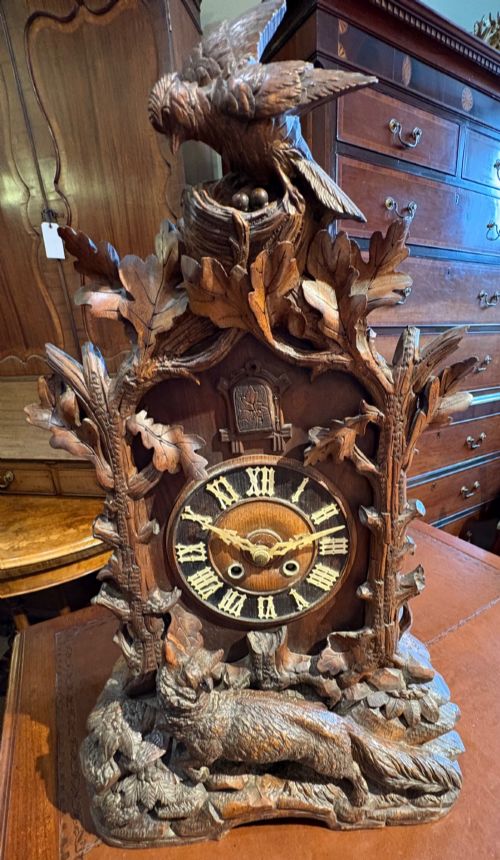
A vintage wooden mantle clock combines practical timekeeping with domestic architecture, sitting squarely on a shelf, sideboard or bracket. These timepieces range from small bedside miniatures to large chiming cases meant for a principal room.
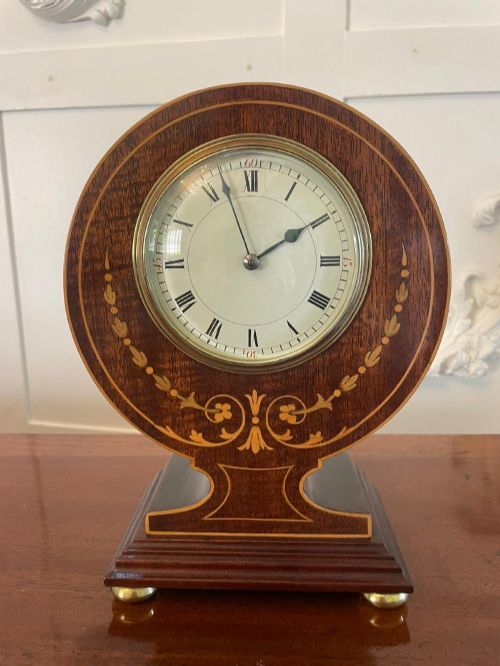
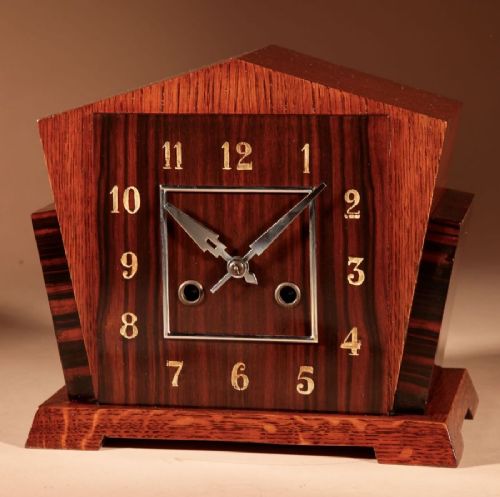
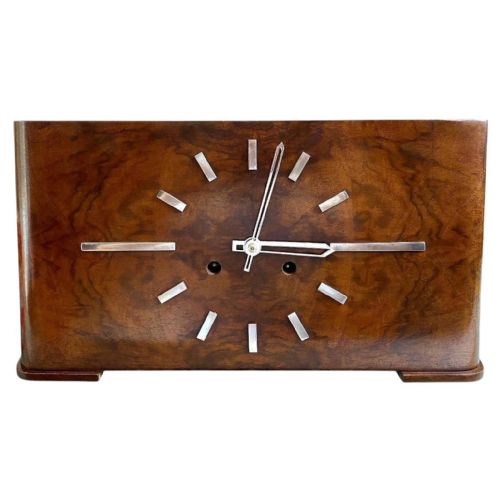
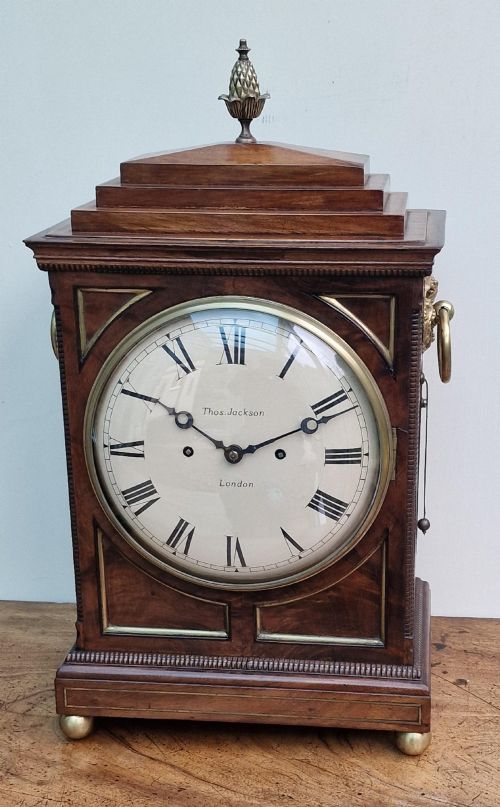
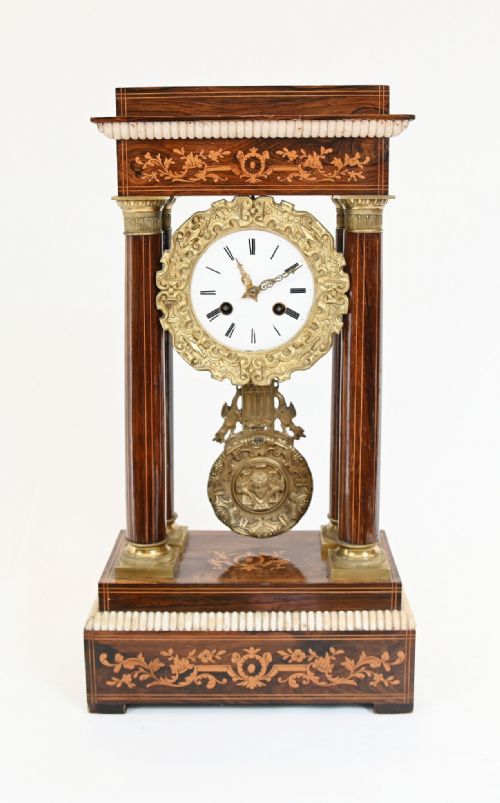
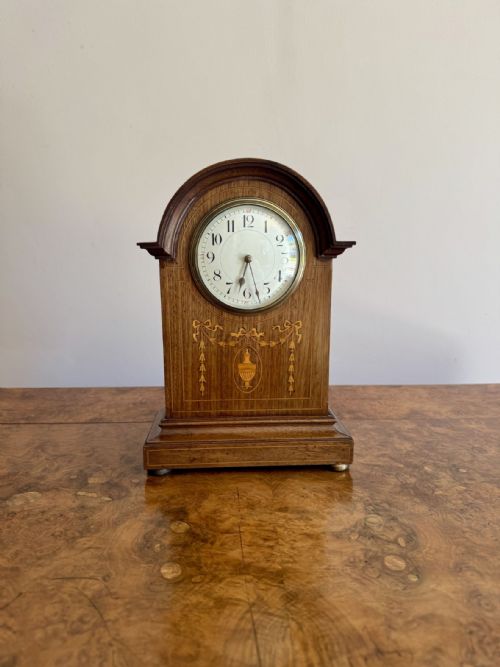
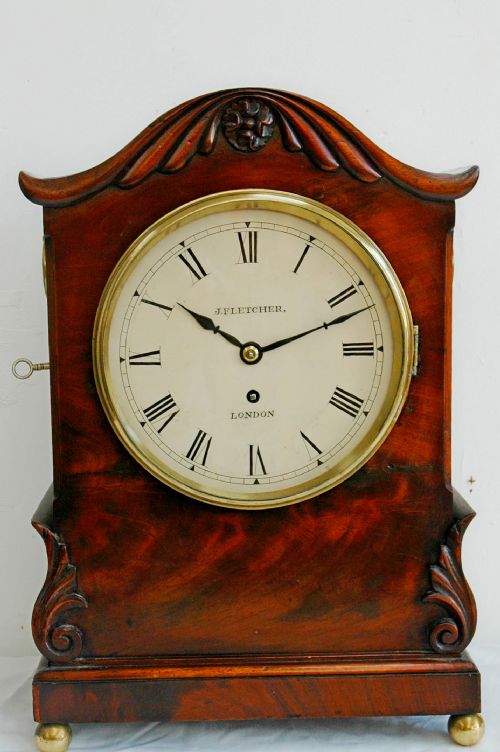
The version most commonly met on this page is the Edwardian mahogany inlaid mantel clock, often featuring delicate stringing or balloon-shaped woodwork. Alongside these, buyers find walnut Art Deco designs from the 1930s and earlier nineteenth-century bracket clocks in dark hardwoods.
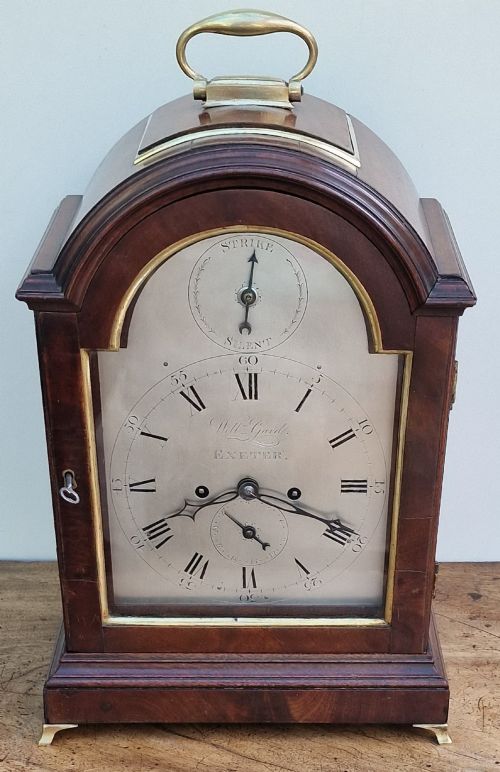
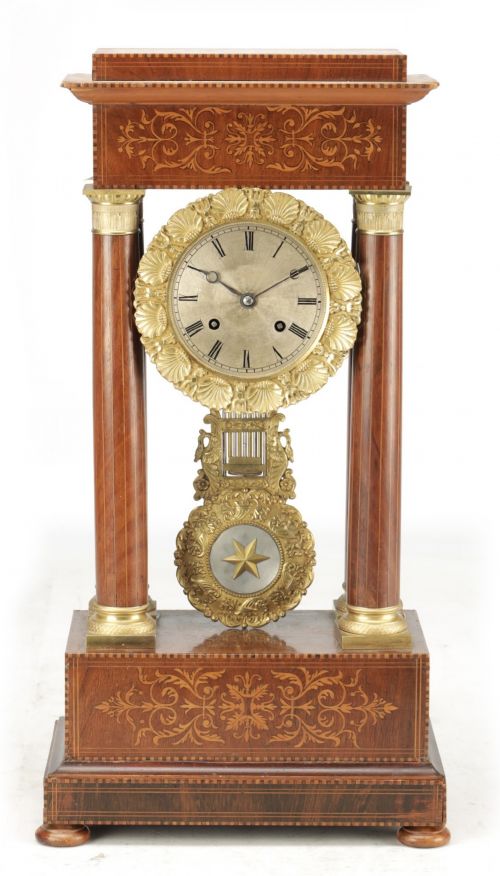
Makers and makers' marks appear across several pieces, linking domestic English workshops with continental makers and high-street jewellers. The forms stretch from simple arched wooden cases to elaborate portico and bracket designs housing mechanical movements.
Materials and construction
Cases rely on seasoned hardwoods such as mahogany, walnut, and oak, chosen for stability and finished with polished surfaces or inlaid details in contrasting timber. Brass dials, bezels and swinging pendulums provide metallic contrast to the warm grain of the wood.
Movements span eight-day striking mechanisms, fusee drives, and pendulum timepieces, often protected behind glass doors with enamel chapter rings. Cabinets utilise careful joinery and boxwood stringing to create structural rigidity without heavy fastenings.
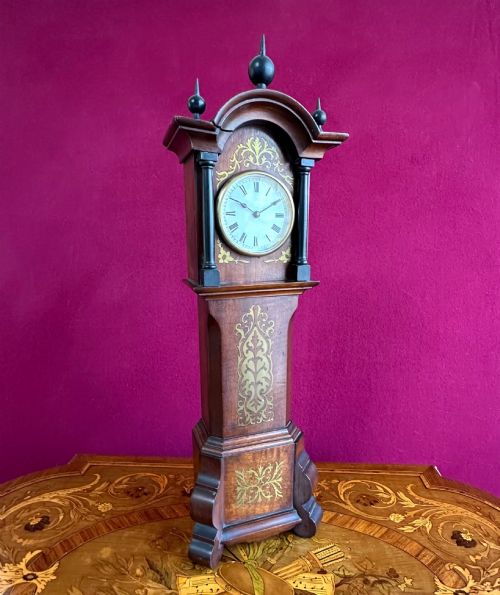
Among the timers waiting on the shelf, a Dutch girl inlaid model keeps watch over the passing hours with quiet charm.
Judging quality and finish
Quality rests in the selection of figured wood veneers, such as burr walnut or rich mahogany, and the precision of inlaid brass or lighter timber stringing. Heavy brass fittings, well-cast bezels, and clean enamel dials separate standard mass-produced items from finer workshop pieces.
The sophistication of the internal movement dictates the tier of the clock, with multi-train chiming systems and fusee-driven mechanisms representing higher mechanical ambition. Proportion and balance in the woodwork shape the overall visual authority of the piece.
Mappin and Webb·Thomas Jackson·Elliott of London·Winterhalder and Hofmeier·Walker and Hall
The Vintage Wooden Mantle Clock Glossary
- Bracket clock
- A portable table or mantle clock originally designed to sit on a wall bracket. They often feature robust brass movements and detailed wooden cases.
- Fusee
- A conical pulley used in mechanical clocks to maintain an even pull on the gear train as the mainspring unwinds. This mechanism improves timekeeping accuracy across the power reserve.
- Enamel dial
- A metal face covered with fused powdered glass, providing a durable and crisp surface for painted numerals. These faces require careful handling to avoid chipping.
- Stringing
- Thin lines of contrasting wood inlay used to decorate the edges of furniture and clock cases. It creates a subtle geometric border on mahogany and walnut surfaces.
Vintage Wooden Mantle Clock: Frequently Asked Questions
How do I wind a mechanical mantle clock?
Use the provided key to turn the arbour slowly until you feel firm resistance, taking care not to overwind the mainspring.
Most eight-day movements require a weekly turn, keeping the clock running reliably without straining the internal gears.
Where should I place my clock?
Select a stable, level surface away from direct sunlight, dampness, and sudden temperature shifts that can affect the wooden case and internal oils.
Mantle clocks perform best on heavy furniture where vibrations from daily foot traffic will not disturb the pendulum.
How do I tell Edwardian from Victorian styles?
Edwardian cases tend to display lighter mahogany timbers with delicate inlaid stringing, often taking symmetrical balloon or arched shapes.
Victorian pieces lean towards darker, heavier woods and stricter geometric proportions, reflecting mid-nineteenth-century taste.
What maintenance do these clocks need?
Occasional dusting with a dry cloth keeps the wooden exterior clean, while the brass bezel and glass front benefit from standard glass cleaner.
Internal mechanical movements require professional cleaning and lubrication every few years to preserve the gear trains.