
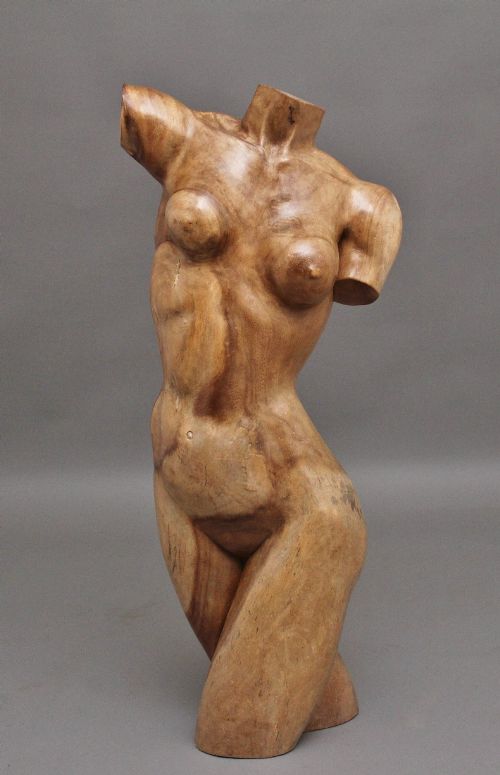


Vintage Wooden Mannequin Sculpture
These vintage wooden mannequin sculpture pieces are expressive artist models and trade figures that bring striking presence and sculptural depth to an interior.
Vintage Wooden Mannequin Sculpture
Buyers seeking a vintage wooden mannequin sculpture encounter a diverse selection of artist models, shop trade signs, and processional figures spanning the nineteenth and early twentieth centuries. The current offerings include articulated lay figures, milliner's heads, life-size torsos, and advertising figures carved from wood alongside plaster and metal examples.
Originating from British, European, American, Nigerian, and Japanese traditions, these sculptures range from Folk Art and Early Twentieth Century Modernism to Victorian and Edwardian aesthetics. The most frequent encounters on this page are carved wooden figures and busts produced by makers and artisans for studio use or commercial display during the Victorian and Edwardian eras.
How they were made
Makers primarily utilised wood, carving the forms by hand and occasionally applying gesso, paint, or plaster to build up surfaces. Metal elements appear in structural joints and fittings, particularly within articulated pieces designed for movement.
The construction techniques reflect both utilitarian workshop practices and regional folk art traditions, resulting in surfaces that show tool marks, layered pigments, and the distinct patination of age and handling.
Some nineteenth-century mannequins possess remarkably flexible wooden fingers that still eagerly grasp imaginary artist brushes after more than a hundred years.
What varies in quality
Quality rests upon the strength of the carving, the expressiveness of the form, and the integrity of the original surface finish. Pieces displaying skilled anatomical rendering or bold folk art character stand apart from simpler commercial examples.
The survival of original painted surfaces, gesso layers, and functional articulation mechanisms heavily influences the desirability of a piece. Greater integrity in the materials and more sophisticated sculptural execution elevate the status of an object within the range.
The Vintage Wooden Mannequin Sculpture Glossary
- Lay figure
- An articulated wooden mannequin used by artists to study drapery and pose. These figures feature movable joints secured with pegs or metal pins.
- Gesso
- A plaster-like mixture applied to wood surfaces to create a smooth base for painting or gilding. It provides a crisp ground for polychrome decoration.
- Santos
- A carved figure representing a saint or religious figure used in processions or domestic devotion. Italian examples often display carved wooden construction with hand-painted details.
- Trade sign
- A sculptural object displayed outside or inside a shop to advertise a specific trade or commodity. Figures such as cigar store figures served this commercial purpose.
Vintage Wooden Mannequin Sculpture: Frequently Asked Questions
What is a lay figure?
A lay figure is an articulated wooden mannequin that artists used to arrange clothing and study drapery. These pieces allowed painters and sculptors to maintain consistent lighting and posture during long studies.
They feature jointed limbs that move at the shoulders, elbows, hips, and knees. Surviving examples reflect the practical needs of nineteenth-century and early twentieth-century art studios.
How were trade figures used?
Trade figures acted as three-dimensional advertisements outside or inside nineteenth-century shops. They communicated the nature of the business to a largely literate or bustling street public.
Carved wooden figures representing specific trades, such as tobacconists or milliners, stood as prominent markers of commerce. Their robust construction was designed to withstand the rigours of daily public display.
How do I date these sculptures?
Dating relies on stylistic markers, tool marks, and the ageing of materials like wood, paint, and gesso. Victorian and Edwardian pieces often exhibit specific regional carving styles and characteristic surface patination.
Comparing the construction methods against documented workshop practices helps narrow down the period of manufacture. The integration of metal pins or specific paint layers also provides clear chronological clues.
Where should I place a mannequin?
These sculptures suit tabletops, pedestals, or open shelves where their three-dimensional form can be appreciated from multiple angles. They pair well with both minimalist modern interiors and traditional period rooms.
Placing them away from direct heat sources and strong sunlight protects the historic wood and painted surfaces. Allowing adequate space around the piece highlights its sculptural presence.