




Vintage Wooden Book Ends
These vintage wooden book ends hold upright volumes on library shelves, desk surfaces and side tables through the weight of carved timber and brass.
Vintage Wooden Book Ends
Vintage wooden book ends serve to keep bound volumes upright on desks, side tables and library shelves. When searching for vintage wooden book ends, buyers encounter pairs formed from carved timbers, extendable slides and mixed media designs.
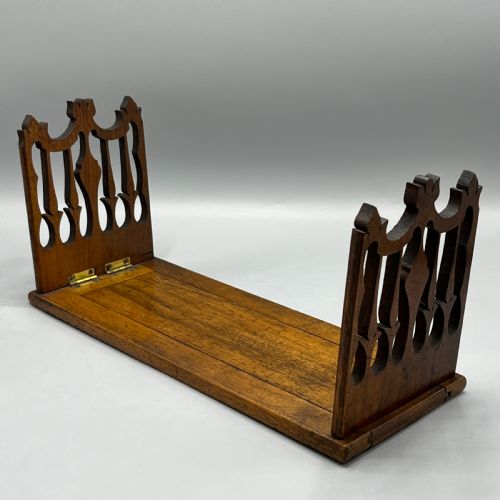
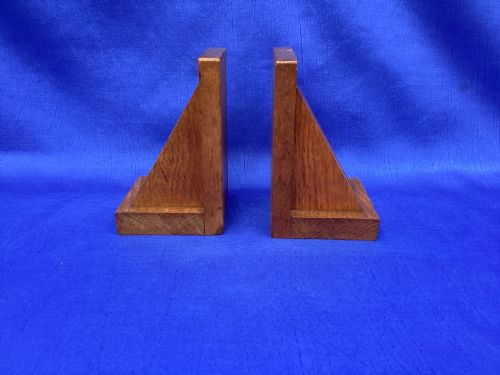
The pieces on this page span from the nineteenth century through the 1930s, encompassing styles such as Black Forest animal carvings, Arts and Crafts oak, and Anglo-Indian teak. Alongside dedicated book ends, the selection includes extending book slides that adapt to the width of a row of books.
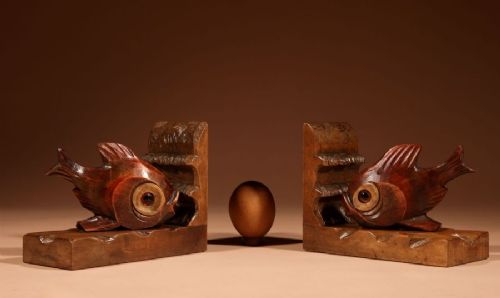
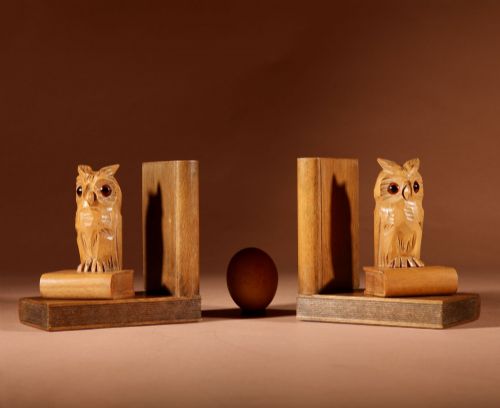
Origins range from English workshops to Kashmiri and continental centres. Animal subjects appear frequently, including carved owls, goldfish, bats, balls, elephants and Scottish terriers mounted with brass.
How they were made
Makers utilised solid timbers such as oak, yew, maple, walnut, teak and linden wood to construct these supports. Woodcarving techniques define many pieces, particularly the detailed animal figures produced in the Black Forest and Kashmiri workshops.
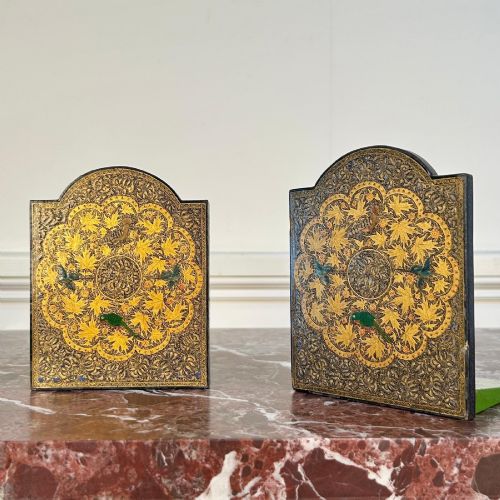
Metal components integrate into the wooden structures, with brass mounts, figures and hinges providing structural strength and contrast. Ebonisation and lacquer finishes also appear on surfaces, altering the appearance of the underlying timber.
Vintage Wooden Book Ends Retail Price Guide 2026
Typical asking prices for vintage wooden book ends among the pieces listed under this phrase on Sellingantiques today, from the lower quarter to the upper quarter. They describe what is for sale here now, not the wider market.
Periods represented span from 1800 through the Victorian era up to the 1930s.
What varies in quality
The refinement of the carving dictates the distinction between standard items and superior examples. Deep, expressive hand-carving on pieces like animal figures demonstrates greater skill than simplified production.
The choice and preservation of timber affect the integrity of each piece. Solid hardwoods like yew and oak, combined with intact brass elements and stable joints, represent higher standards of period manufacture.
Gordon Russell·Thornton Smith Co
The Vintage Wooden Book Ends Glossary
- Book slide
- An extending wooden desktop accessory designed to hold a row of books between two sliding ends.
- Black Forest
- A style of woodcarving originating from central Europe, noted for naturalistic animal and foliage motifs.
- Anglo-Indian
- Furniture and decorative objects made in India during the British period, frequently featuring intricate carved teak.
- Ebonisation
- A chemical treatment applied to timber to darken the grain and imitate the appearance of ebony.
- Linden wood
- A pale, fine-grained timber frequently utilised for detailed nineteenth-century woodcarving.
Vintage Wooden Book Ends: Frequently Asked Questions
How do I date vintage book ends?
Dating relies upon timber selection, construction methods, and stylistic markers such as Arts and Crafts simplicity or Art Deco geometry. Reference materials and period details help narrow the decade of manufacture.
Makers' marks, brass components, and the specific wear patterns on the wood also provide indications of age, distinguishing nineteenth-century examples from 1930s production.
Are extending book slides practical?
Extending book slides function well on desks and tables by adjusting their length to accommodate varying quantities of books. The mechanism allows the side supports to slide outward or inward.
They serve both as desktop storage and as decorative accessories, though the sliding tracks require gentle handling to preserve the antique wood.
How do I care for carved wood?
Carved wooden book ends require placement away from direct heat sources and strong sunlight to prevent the timber from drying and splitting. Dusting with a soft, dry cloth maintains the surface.
Occasional application of appropriate furniture wax preserves the finish on hardwoods like oak and walnut without building up sticky residues in carved recesses.
What is Black Forest carving?
Black Forest carving refers to nineteenth and early twentieth-century decorative woodwork originating from Switzerland and Germany. These pieces depict natural subjects with detailed execution.
Animals such as owls, bears, and dogs appear frequently in this tradition, carved from linden wood or walnut with glass eyes frequently inserted into the figures.
Can book ends hold heavy books?
Solid timber and weighted wooden book ends provide sufficient mass to support standard hardback volumes on shelves and desks. Heavier folios require larger pairs with substantial bases.
Using book ends on flat, level surfaces ensures the stability of the arrangement and prevents the base from tipping under the pressure of leaning texts.