




Vintage Wooden Bar Stool
A vintage wooden bar stool brings utilitarian character to a modern kitchen, offering sturdy height and honest construction.
Vintage Wooden Bar Stool
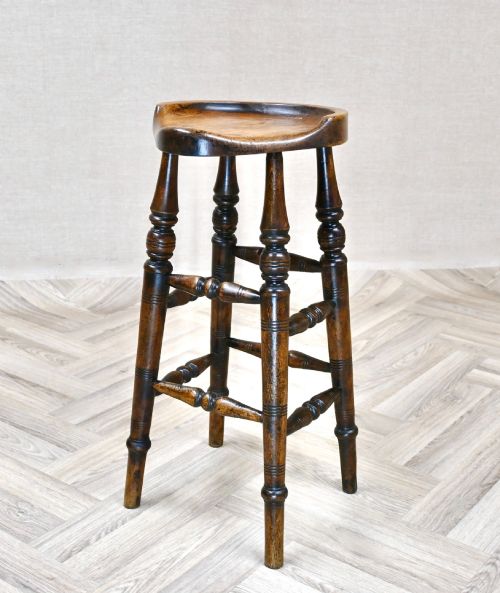
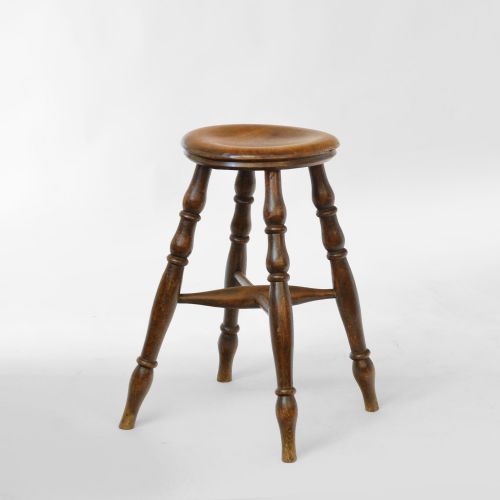
A vintage wooden bar stool is a high seating form designed originally for taverns, pubs, laboratories, and clerks rather than domestic dining. The search phrase encompasses tall utilitarian seating intended for elevated counters and work surfaces.
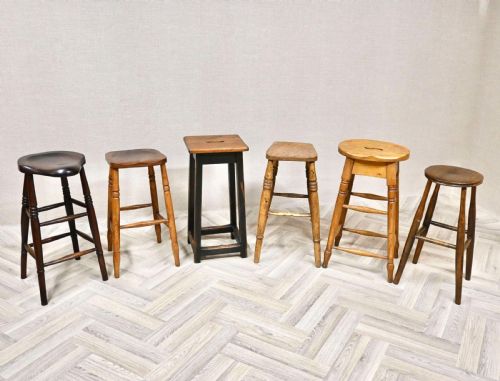
The pieces on this page span several distinct eras, with nineteenth-century tavern and pub stools appearing frequently alongside early twentieth-century workshop, laboratory, and kitchen examples.
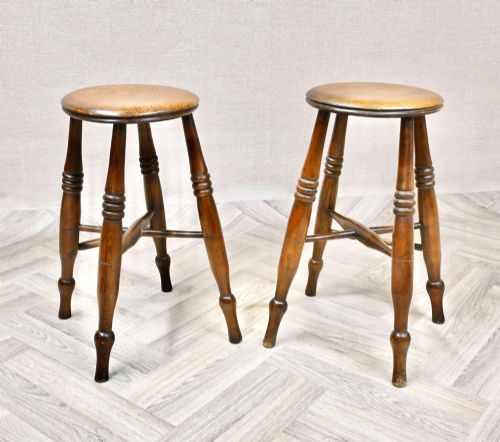
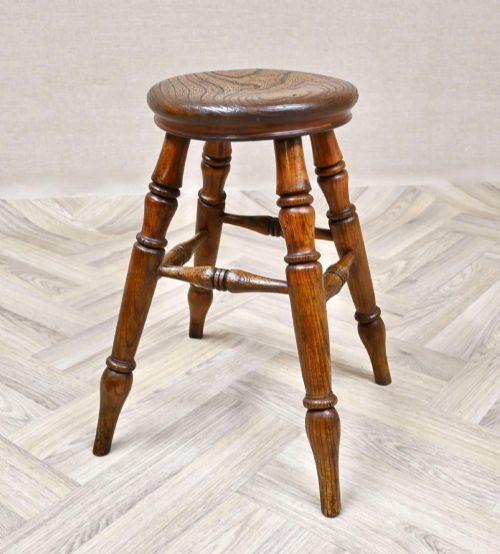
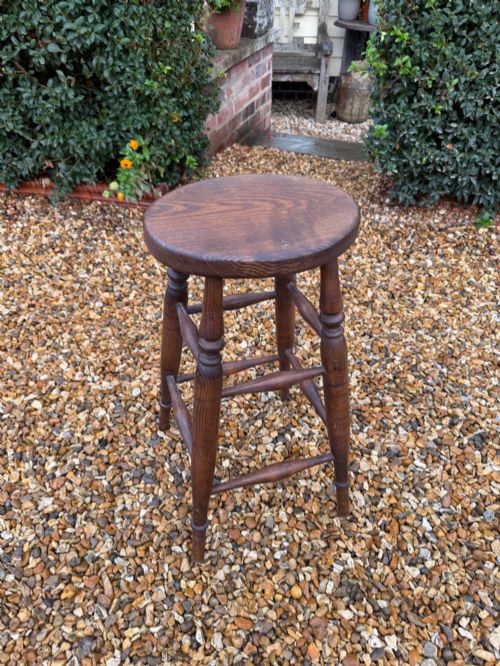
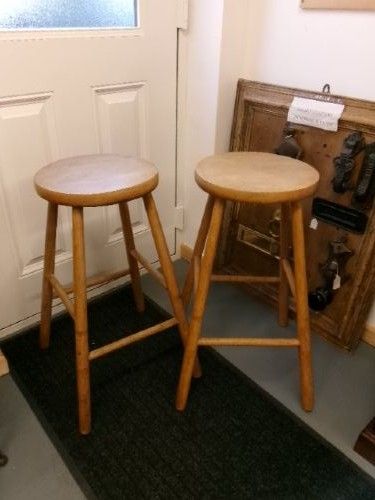
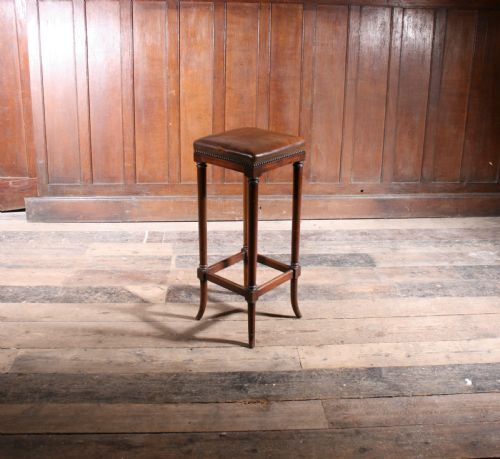
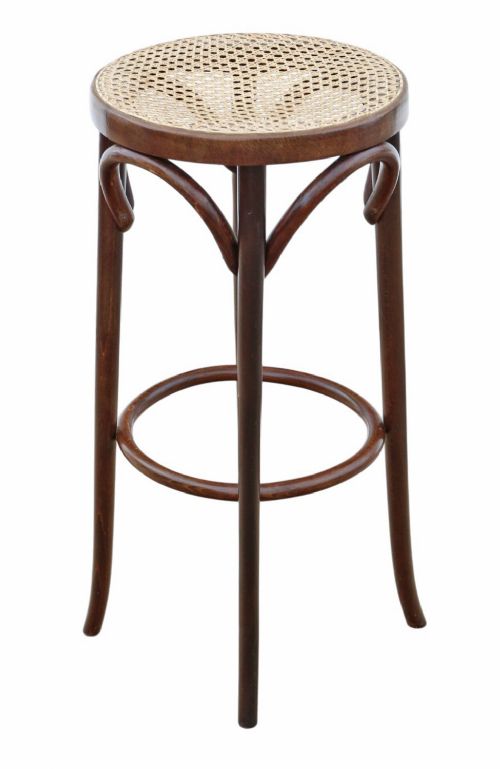
Forms vary from simple round dished timber tops on turned legs to bentwood designs and upholstered leather seats, reflecting the diverse practical demands of nineteenth-century and early twentieth-century commerce.
Materials and construction
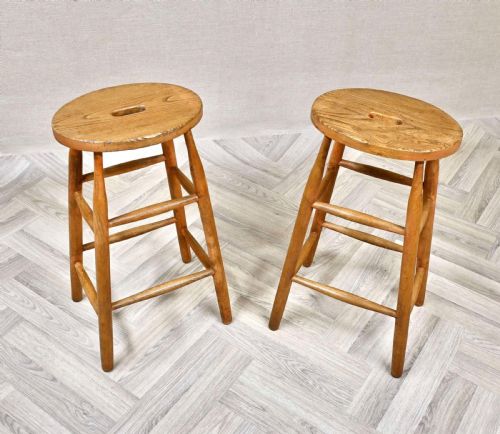
Makers relied heavily on domestic hardwoods such as beech, elm, sycamore, and oak, chosen for their toughness under heavy daily use. Birch and pine also appear, particularly in utilitarian contexts where durability mattered more than display.
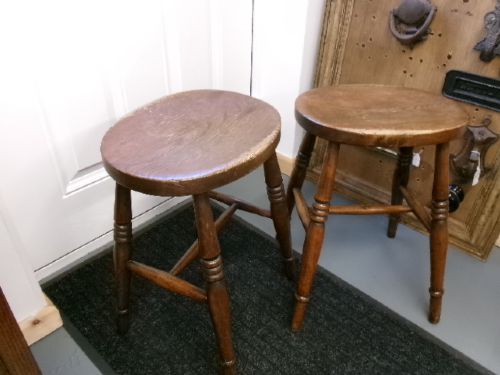
Turned legs and jointed frames provide structural stability for tall seating, frequently utilising traditional joinery methods like mortise and tenon. Seats are often shaped with an oval dished top to improve comfort on rigid timber.
Vintage Wooden Bar Stool Retail Price Guide 2026
Typical asking prices for vintage wooden bar stool among the pieces listed under this phrase on Sellingantiques today, from the lower quarter to the upper quarter. They describe what is for sale here now, not the wider market.
The listings span from the nineteenth century through the 1940s, featuring materials such as beech, elm, oak, mahogany, birch, and leather.
Evaluating construction and material quality
Quality in these high stools rests upon the choice of timber and the integrity of the original joints. Dense hardwoods like elm and beech endure decades of commercial use far better than softer alternatives.
The sophistication of the turning on the legs and the presence of a well-dished seat separate standard utilitarian seating from finer workshop production. Original patination and uncompromised structural frames distinguish better surviving examples.
The Vintage Wooden Bar Stool Glossary
- Bentwood
- Wood softened by steam and bent into curved shapes. This technique created lightweight yet resilient frames for tall stools in the early twentieth century.
- Dished top
- A seat carved with a shallow concave depression. This shaping provides ergonomic comfort on unpadded wooden surfaces.
- Clerk stool
- A tall utilitarian seat designed for high desks in offices and counting houses. These typically feature slender turned legs and foot rails.
- Pub stool
- A robust high stool intended for tavern counters. They were constructed to withstand heavy commercial use in nineteenth-century establishments.
- Turned
- Shaped on a lathe while rotating. This method produced the decorative and structural legs characteristic of traditional wooden seating.
Vintage Wooden Bar Stool: Frequently Asked Questions
Are these stools suitable for modern kitchen islands?
Many tall antique stools match the height requirements of contemporary kitchen islands and breakfast bars. Their raised stature makes them practical for modern casual dining spaces.
Buyers should verify the exact seat height against their counter dimensions before purchase, as nineteenth-century tavern heights vary.
How do I care for wooden bar stools?
Regular dusting and occasional application of natural wax preserve the finish of vintage timber. Avoid placing them near direct heat sources to prevent the wood from splitting.
Leather-upholstered seats benefit from suitable conditioning balms to keep the hide supple over time.
What is the difference between pub and lab stools?
Pub stools generally feature heavier turned wooden frames and dished timber seats designed for public houses. Laboratory stools often originate from institutional or industrial settings of the early twentieth century.
Both serve high seating functions but reflect different utilitarian environments.
How can I tell the age of a wooden stool?
Dating relies on timber selection, tool marks left by manufacture, and the style of the turning. Nineteenth-century examples often display hand-turned components and heavy hardwood construction.
Twentieth-century pieces introduce bentwood techniques and standardised industrial components.