




Vintage Wood Whatnot
A vintage wood whatnot offers tiered open display for books and ornaments, bringing practical British shelving of varied periods into your home.
Vintage Wood Whatnot
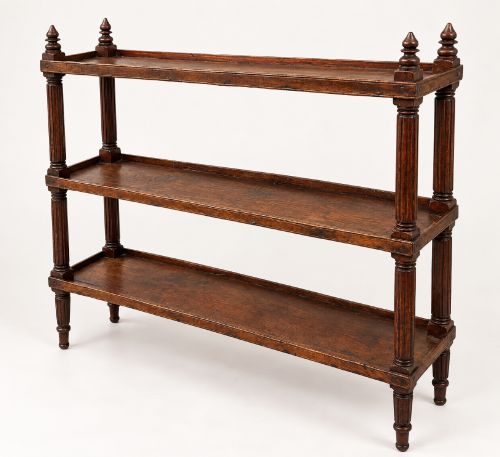
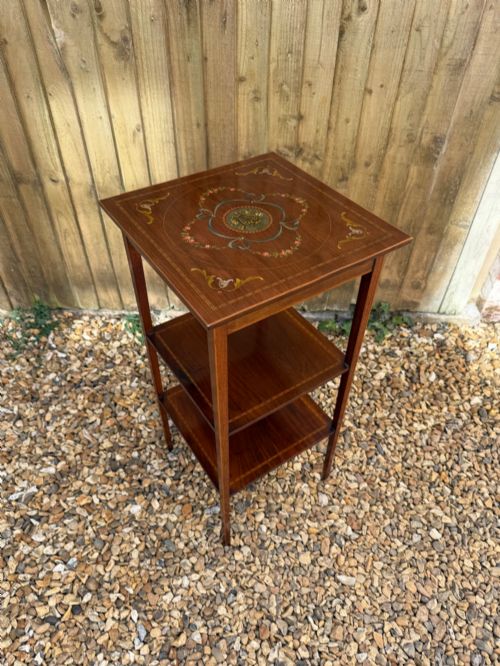
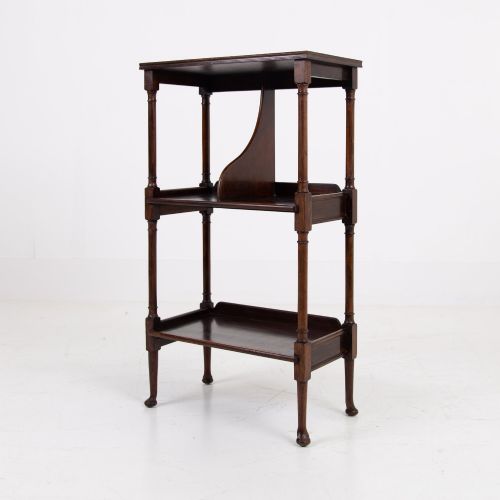
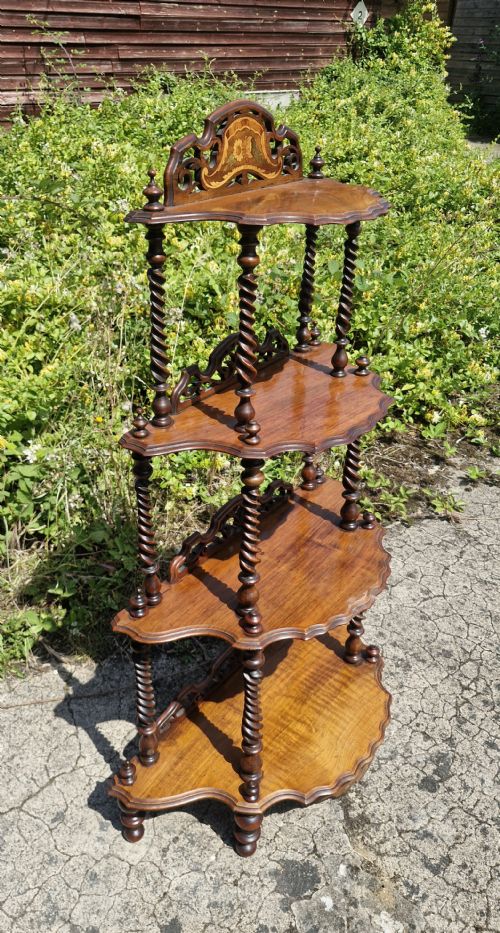
A vintage wood whatnot is a tiered shelving unit designed for displaying and holding books, ornaments or small household items across multiple levels. When you search for a vintage wood whatnot, you encounter open display stands and étagères built to stand against walls or fit neatly into corners.
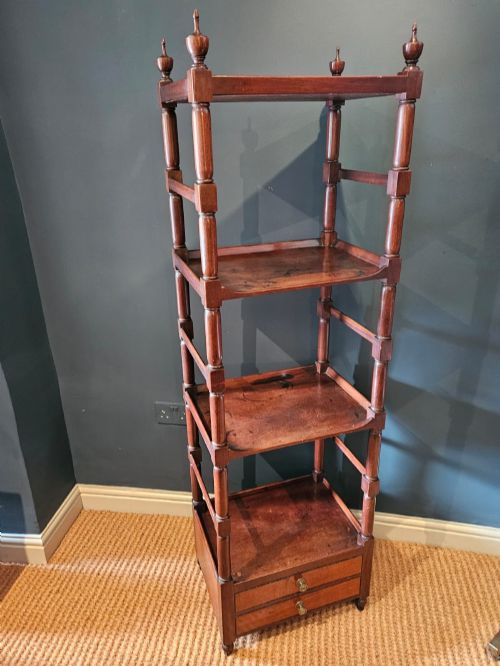
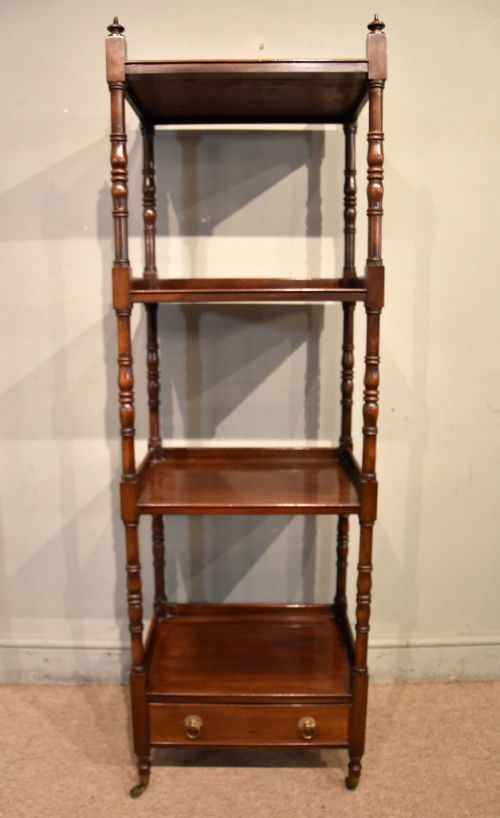
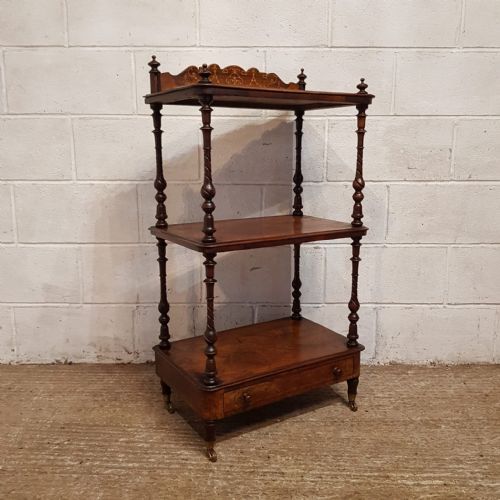
The pieces listed on this page span several centuries of British furniture making, with Victorian and 19th Century examples appearing most frequently alongside Regency and Georgian formats. You will find items ranging from simple three-tier open shelves to taller four and five-tier variants, sometimes featuring lower cupboards or turned supports.
Makers and cabinet makers of the 19th and early 20th centuries constructed these units in diverse configurations, including A-frame profiles and specialised corner units. Whether rendered as a straightforward mahogany bookcase or an elaborate rosewood display piece, each whatnot serves to elevate collections off the floor while utilising vertical space.
How they were made
Cabinet makers relied heavily on rich timbers such as mahogany, walnut, burr walnut and rosewood to construct the tiers and vertical supports of these stands. Inlays in boxwood and structural elements in brass also appear, adding fine linear detail to the polished wood surfaces.
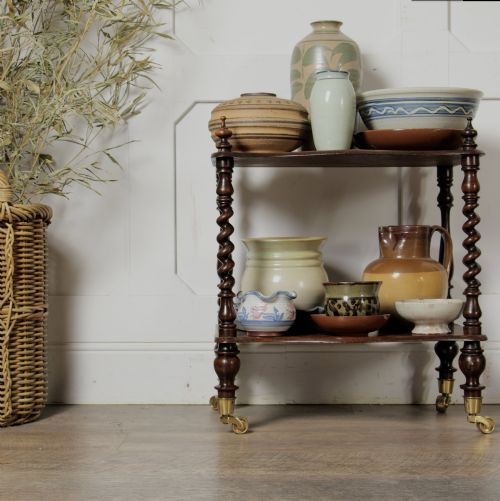
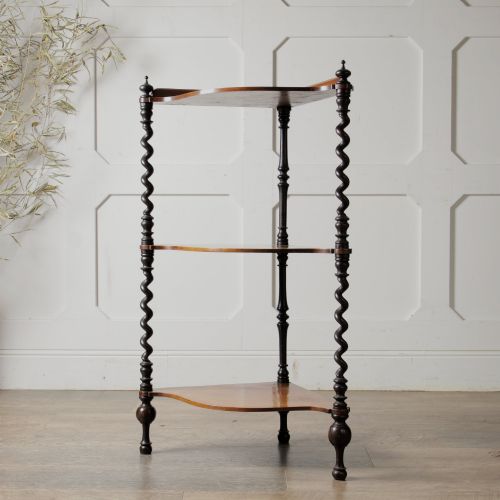
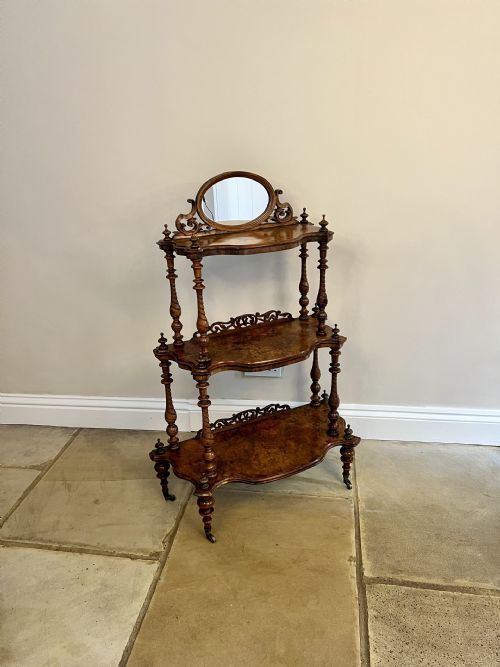
Construction techniques involve tiered platforms held by turned supports, barley twist columns or upright corner posts that distribute weight across multiple levels. Ebonised finishes and painted treatments also occur among the listings, alongside pierced fretwork panels that lighten the visual mass of the shelving.
Vintage Wood Whatnot Retail Price Guide 2026
Typical asking prices for vintage wood whatnot among the pieces listed under this phrase on Sellingantiques today, from the lower quarter to the upper quarter. They describe what is for sale here now, not the wider market.
Listings feature mahogany, walnut, rosewood and burr walnut across Victorian, Regency, Georgian and Edwardian periods.
What varies in quality
The caliber of a whatnot rests upon the choice of timber figure, such as highly figured burr walnut or select cuts of rosewood, which dictate the visual richness of the tiers. Superior examples display refined turning on their upright supports and precise joinery where the shelves meet the vertical framing.
Detailing distinguishes finer pieces from utilitarian shelving, particularly through the inclusion of delicate boxwood inlay, pierced fretwork galleries or integrated lower cupboards with paneled doors. The overall proportion and the harmony between the turned columns and the graduated shelves determine the visual balance of the piece.
Samson and Son London
The Vintage Wood Whatnot Glossary
- Whatnot
- A piece of furniture with shelves for small objects, books or ornaments, typically standing on legs or upright supports. Originating in the late 18th century, these multi-tiered stands became staple display items in Victorian parlours.
- Etagere
- A piece of furniture consisting of a number of open shelves for displaying ornaments, closely related in form to the whatnot. These French-inspired tiered stands emphasise open display over enclosed storage.
- Barley twist
- A type of turning resembling the spiral form of a barleycorn grain, used on the vertical supports of tables and stands. This decorative woodwork technique is particularly common on 19th-century supports.
- Fretwork
- Ornamental work consisting of interlaced or perforated patterns cut into wood, often seen on the gallery rails of display stands. Pierced fretwork lightens the heavy appearance of larger shelving units.
- Canterbury
- A low stand with partitions for sheet music, books or newspapers, sometimes combined with lower drawer storage or shelf elements. These functional stands share materials and manufacturing periods with traditional multi-tiered shelving.
Vintage Wood Whatnot: Frequently Asked Questions
What is a whatnot used for?
A whatnot is primarily used for the open display and storage of small decorative objects, books and household collections. The tiered shelving format allows items to be arranged vertically while remaining easily visible from across a room.
Historically, these stands placed ornaments within reach in sitting rooms and parlours. Today, they serve a similar function in modern interiors as practical display furniture for books and collected pieces.
Where should I place a corner whatnot?
A corner whatnot fits into unused room angles, utilising vertical space without obstructing main walkways. These specific triangular or angled units are designed to sit flush against two intersecting walls.
Placing a corner stand in a study, hallway or drawing room draws the eye upward while housing books or ceramics in an otherwise empty area. They offer an efficient way to display collections in smaller rooms.
Are all whatnots tiered?
Most whatnots feature multiple tiers of open shelving supported by vertical columns or upright posts. These tiers typically graduate in size from top to bottom, though uniform shelving units also exist.
Some variations incorporate a closed cupboard base beneath the open upper shelves, combining display space with concealed storage. The defining characteristic remains the vertical stacking of surfaces.