



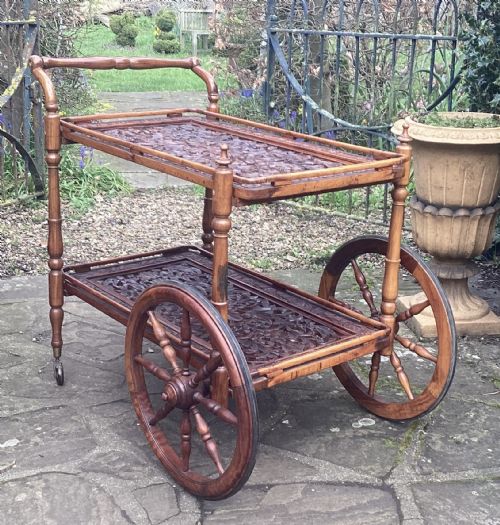


Vintage Wood Serving Cart
A vintage wood serving cart brings portable hospitality into your home, offering tiered shelving and folding trays for effortless entertaining.
Vintage Wood Serving Cart
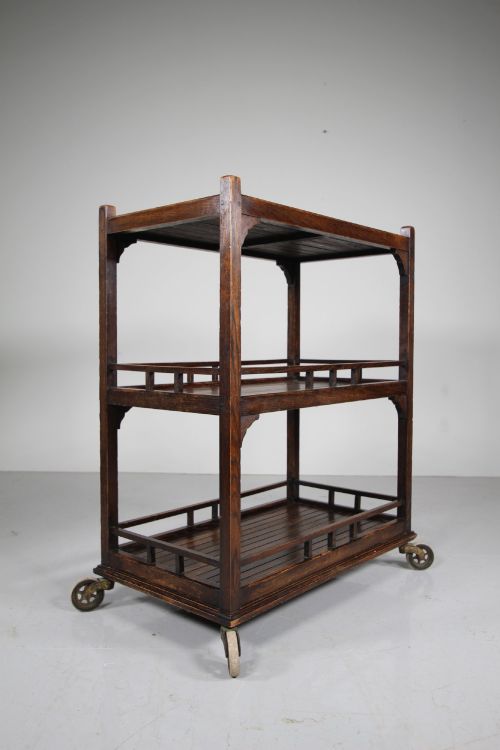
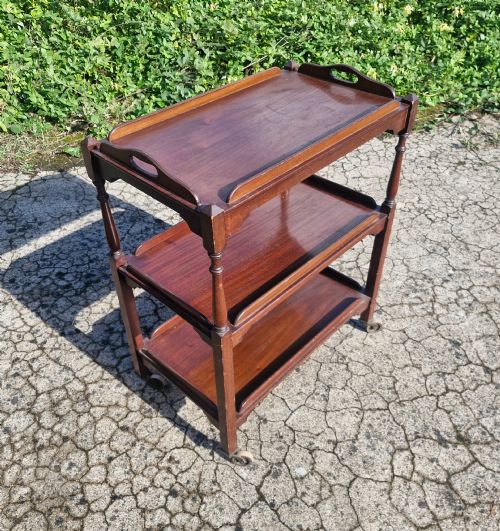
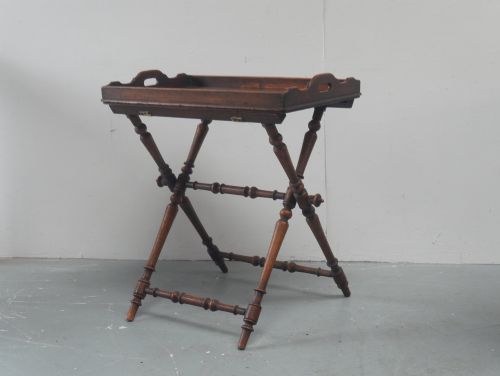
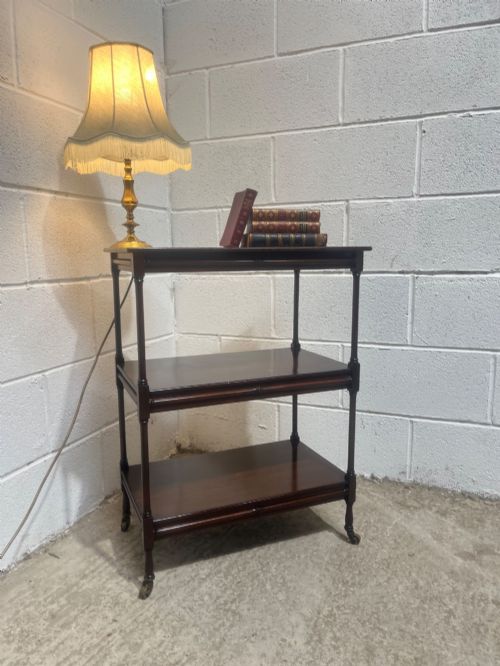
A vintage wood serving cart is primarily found in forms such as tea trolleys, drinks trolleys, bar carts, and butler trays on stands. These pieces span periods from the late Victorian era through the Edwardian period and into the 1930s Art Deco movement.
Origins range from English country workshops and London makers to Chinese export and Anglo-Indian workshops. Each regional style brings distinct carving or geometric shaping to the domestic serving trolley.
How they were made
Construction relies heavily on traditional cabinet timbers such as mahogany, oak, and walnut, often enhanced with figured veneer or ebonised wood finishes. Metal accents like brass fixtures and silver plate galleries frequently support the wooden tiers and handles.
Joinery and surface ornamentation define the manufacturing process, incorporating carved Chinese hardwood, turned supports, and folding mechanisms. Trays are frequently designed to lift off the main stand for independent use during afternoon tea or cocktail hour.
Vintage Wood Serving Cart Retail Price Guide 2026
Typical asking prices for vintage wood serving cart among the pieces listed under this phrase on Sellingantiques today, from the lower quarter to the upper quarter. They describe what is for sale here now, not the wider market.
Materials recorded across the inventory include oak, walnut, mahogany, hardwood, veneer, and brass.
What varies in quality
Quality is distinguished by the choice of cabinet timber and the sophistication of the woodwork, such as figured walnut veneers versus plain secondary woods. The integration of functional elements like smooth folding tops, removable trays, and secure castor wheels also elevates a piece.
Design ambition separates standard utility items from distinctive stylistic examples, particularly in how Art Deco circular forms or intricate Asian carved hardwood details are executed. Finer pieces demonstrate superior proportion, balanced tiers, and refined metal mounts.
Heals of London
The Vintage Wood Serving Cart Glossary
- Tea trolley
- A movable piece of furniture designed to transport tea services, cups, and pots between rooms. These usually feature two or three horizontal levels and rolling castors.
- Butler tray
- A shallow wooden tray with hinged or fixed sides, traditionally lifted off its folding stand for serving. In these listings, they appear paired with wooden support frames.
- Gallery tray
- A serving tray fitted with an elevated pierced metal or wooden rim around its edge to prevent items from sliding off. They often incorporate scalloped shaping.
- Ebonised wood
- Timber that has been chemically or artificially treated to imitate solid ebony, providing a deep black, polished surface finish.
- Veneer
- A thin layer of finely figured wood applied over a sturdier secondary timber base to create decorative grain patterns on surfaces like trolley tiers.
Vintage Wood Serving Cart: Frequently Asked Questions
How were tea trolleys used originally?
These pieces served households by transporting afternoon tea or dinnerware from the kitchen to the drawing room without multiple trips. The removable top tray allowed hosts to set down refreshments quickly.
Over time, their function expanded to include holding cocktail equipment and glassware during evening gatherings in the early twentieth century.
How do I distinguish Edwardian trolleys from 1930s designs?
Edwardian examples tend to utilise traditional oak or mahogany with turned supports and understated trims, reflecting late nineteenth-century domestic habits. They often emphasise practical folding tops for tea service.
By contrast, 1930s pieces frequently embrace Art Deco geometry, circular walnut shelves, and streamlined forms that suit modern interior layouts.
Can I use a vintage trolley as a bar cart?
Many multi-tiered wooden trolleys from the 1920s and 1930s adapt naturally to holding bottles, decanters, and glassware. Their rolling castors make them practical for moving drinks between rooms during parties.
Circular walnut models and those with silver plate galleries offer a particularly fitting surface for cocktail preparation.
How do I care for wooden serving cart surfaces?
Maintenance involves dusting regularly with a soft cloth and occasionally applying appropriate wood wax to nourish the grain of oak, walnut, or mahogany. Avoiding excess moisture protects veneered surfaces and ebonised finishes.
Promptly wiping up spills prevents water rings from forming on the polished serving tiers.