

Vintage Wood Drop Leaf
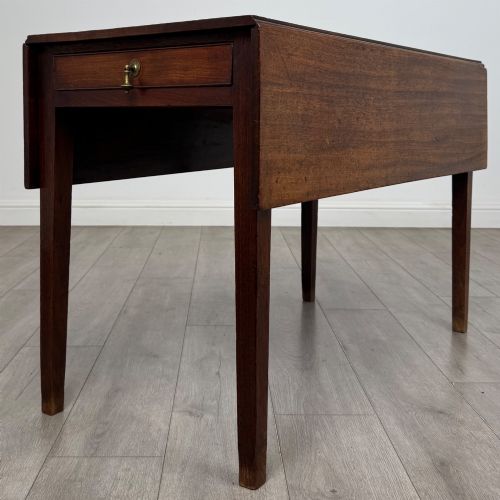
A vintage wood drop leaf table offers folding flaps that extend its surface when needed, serving practical living spaces with historical timber and clever mechanics.
Vintage Wood Drop Leaf
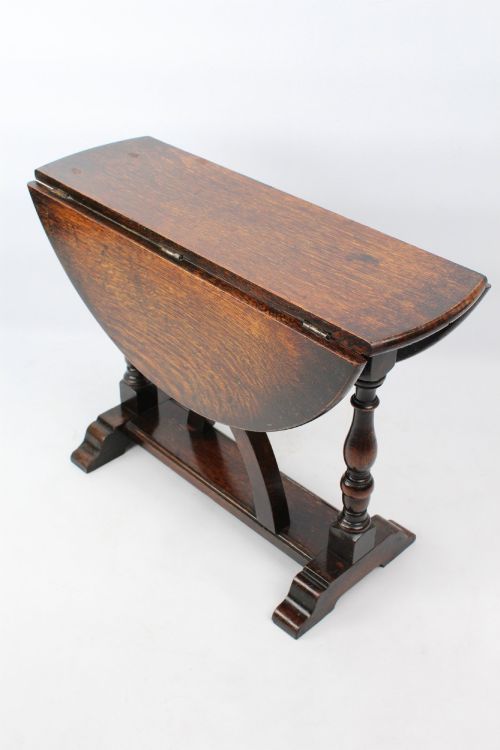
A vintage wood drop leaf table serves as a flexible surface, featuring hinged flaps that drop down to save space or lift up to accommodate dining and writing. The selection spans several centuries and regional workshops, bringing traditional folding furniture into modern domestic settings.
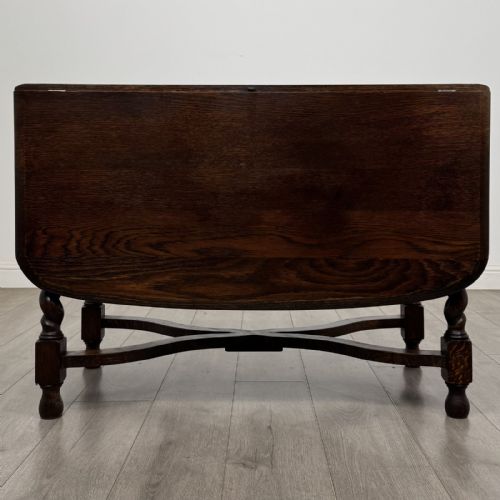
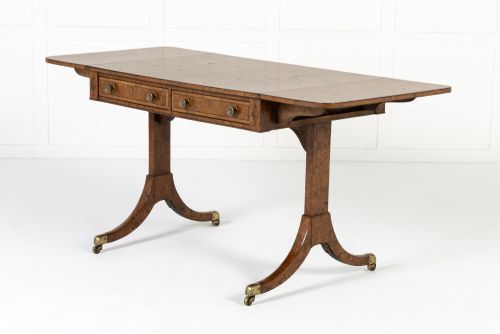
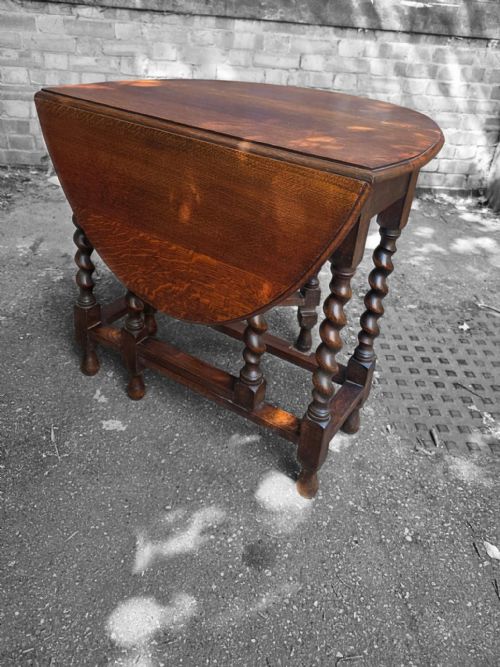
The assortment includes compact coffee tables, occasional tables, narrow sofa tables, and larger dining formats like gateleg and Pembroke tables. Buyers regularly encounter oak and mahogany examples from the Georgian, Victorian, and Edwardian periods alongside sturdy 1920s oak tables with barley twist legs.
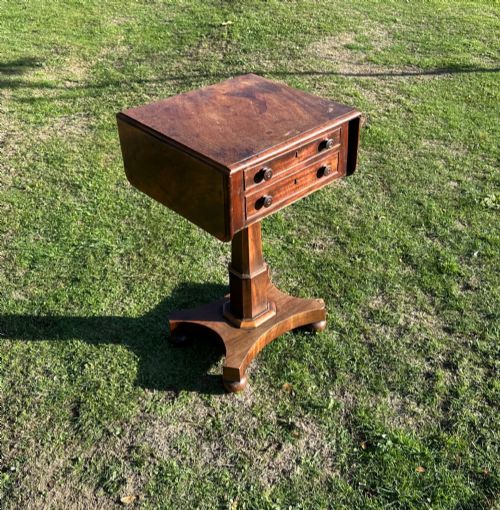
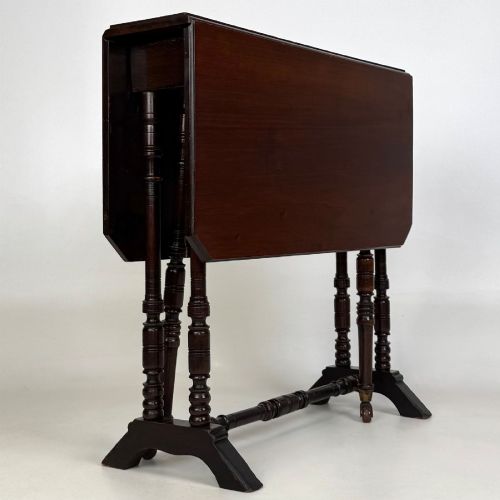
Smaller variants such as Sutherland tables and work tables offer specialised storage and drop leaves, while larger forms provide extendable dining options. Each piece utilises hinged leaves to alter its footprint, balancing compact storage with expanded utility.
Materials and construction methods
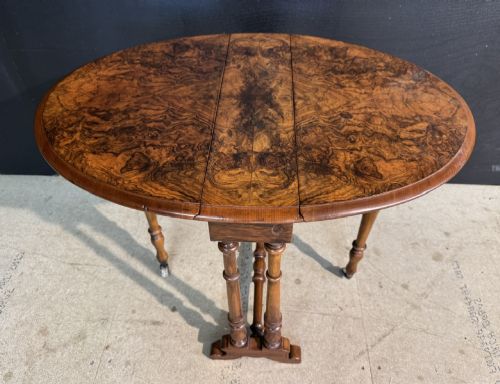
Cabinet makers utilised dense hardwoods such as mahogany, oak, walnut, and elm to build sturdy frames capable of supporting folding flaps. Timber selection dictated the weight and colour of each piece, ranging from deep brown mahogany to pale oak and figured burr walnut.
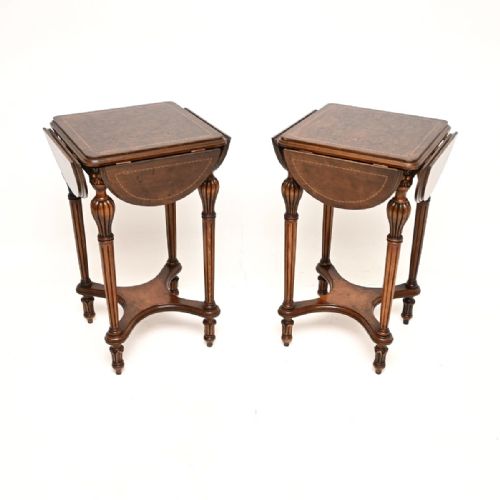
Joinery techniques included mortise and tenon joints for structural stability, alongside brass hinges and swing brackets designed to bear the repetitive weight of dropping and lifting side leaves. Turned legs, such as barley twist designs, and inlaid satinwood or marquetry details added decorative distinction to structural frames.
Vintage Wood Drop Leaf Retail Price Guide 2026
Typical asking prices for vintage wood drop leaf among the pieces listed under this phrase on Sellingantiques today, from the lower quarter to the upper quarter. They describe what is for sale here now, not the wider market.
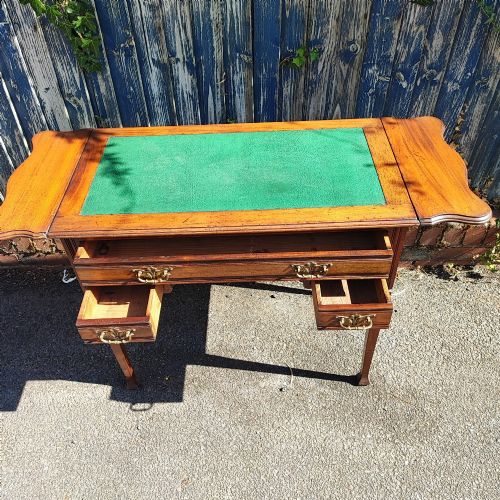
Some antique tables incorporate secret drawers and built-in gaming boards beneath their folding leaves.
Factors determining quality
The caliber of a piece rests upon the selection of timber, such as figured mahogany or burr walnut, and the precision of the cabinet work in the hinges and joints. Finer examples display harmonious grain patterns across both the fixed centre and the folding flaps.
Structural integrity of the drop leaf mechanism separates robust tables from weaker ones, as the brackets and hinges must hold the leaves flat without sagging under weight. Original brass hardware, crisp turning on the legs, and intact marquetry or inlay elevate the standing of a table.
The Vintage Wood Drop Leaf Glossary
- Drop leaf
- A table featuring a fixed central section and one or two hinged flaps that fold down to reduce the overall footprint.
- Gateleg table
- A table with hinged legs that swing out like a gate to support the dropped leaves when raised.
- Pembroke table
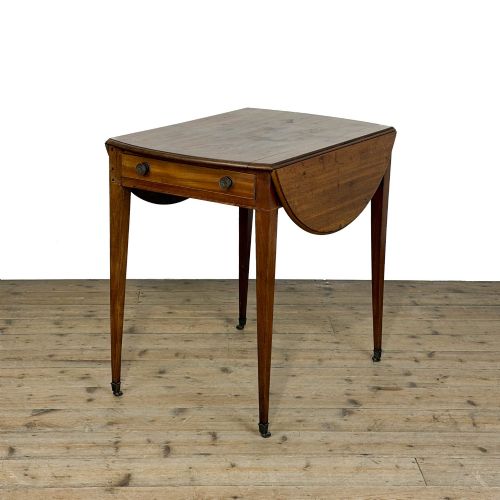
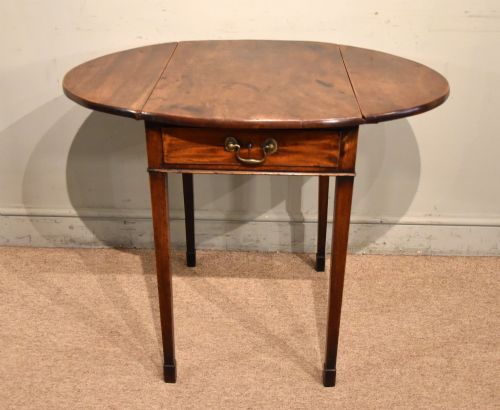
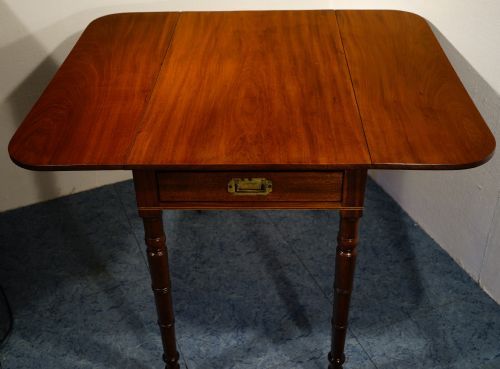
- A small rectangular or oval table with two hinged side leaves and usually one or two drawers.
- Sutherland table
- A narrow table with exceptionally slender drop leaves that hang almost vertically when lowered.
- Marquetry
- Decorative patterns formed by inserting pieces of contrasting wood and other materials into a veneer surface.
Vintage Wood Drop Leaf: Frequently Asked Questions
What is a drop leaf table?
A drop leaf table is a piece of furniture with a fixed top and hinged flaps on the sides that can be raised or lowered to change the surface area.
These tables were designed to save floor space in smaller rooms while providing an expanded surface for dining or writing when needed.
How do gateleg tables work?
Gateleg tables use pivoting wooden legs that swing outward from the central frame to hold the folding flaps in a horizontal position.
This hinged leg structure provides sturdy, physical support underneath the extended leaves during use.
What is a Pembroke table?
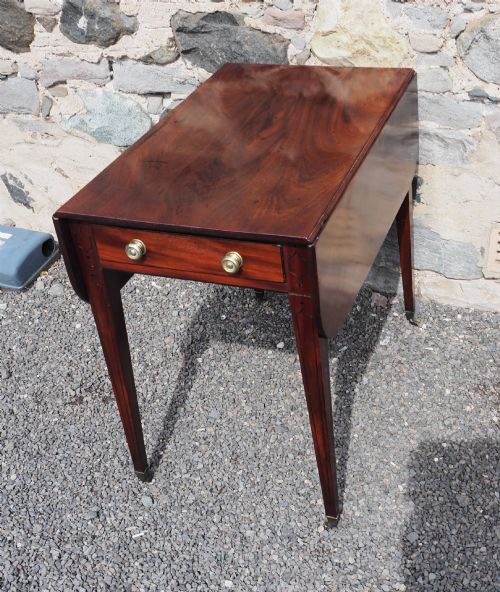
A Pembroke table is a compact occasional table featuring two short drop leaves and typically one or two small drawers built into the apron.
Originating in the 18th century, these versatile pieces were easily moved around a room for sewing, writing, or serving tea.
How do I identify a Sutherland table?
A Sutherland table is distinguished by its extremely narrow central top and exceptionally wide drop leaves that hang down almost vertically when folded.
They sit on twin sets of gatelegs and were frequently used as tea or occasional tables in Victorian and Edwardian parlours.