



Vintage Wood Cutlery
These vintage wood cutlery pieces offer practical storage and timeless style, prized for their rich timber tones and period craftsmanship.
Vintage Wood Cutlery
When you search for vintage wood cutlery, you are looking at containers and furniture designed to organise and preserve flatware. The selection ranges from tabletop storage boxes and trays to large mahogany cabinets and sideboards.
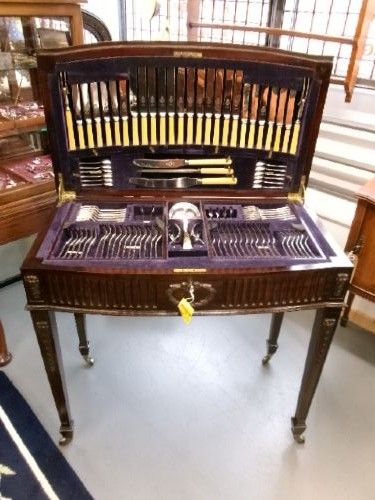
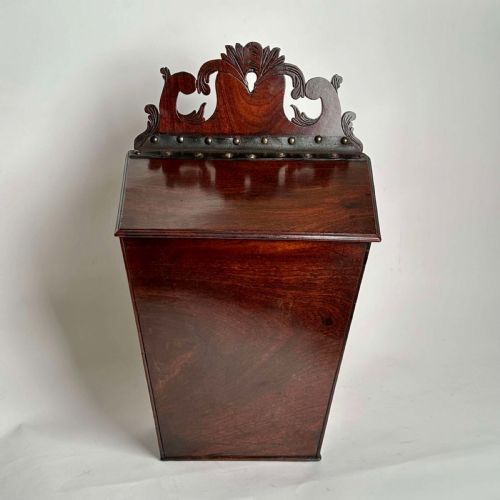
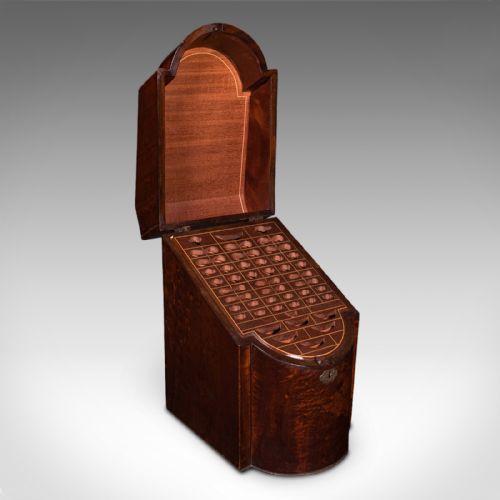
You are most likely to meet mahogany cutlery boxes and chests originating from the Georgian, Victorian, and early twentieth century periods. These pieces frequently feature fitted interiors and brass fittings designed for domestic utility.
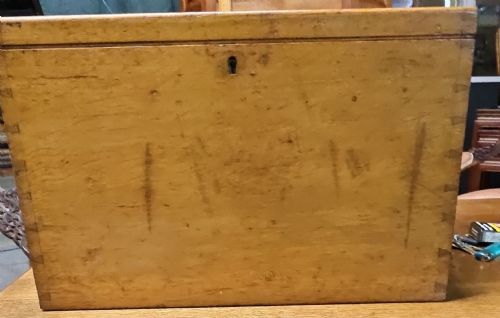
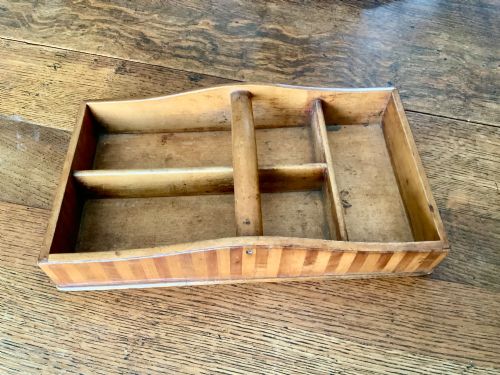
Originating from English, Scottish, and Scandinavian workshops, these items span utilitarian pine caddys to formal storage pieces. Each object reflects the domestic requirements of its specific period, whether for a grand dining room or a modest kitchen.
Materials and construction
Makers utilised dense hardwoods such as mahogany and oak to construct durable storage boxes that could withstand daily use. Pine and other local timbers appear in rustic country pieces, often showing straightforward pegged or nailed joints.
Metals played an essential functional role in construction, with brass hinges, handles, and locks fitted to secure the contents. Linings of velvet or similar textiles protected the silver and steel implements stored within.
Vintage Wood Cutlery Retail Price Guide 2026
Typical asking prices for vintage wood cutlery among the pieces listed under this phrase on Sellingantiques today, from the lower quarter to the upper quarter. They describe what is for sale here now, not the wider market.
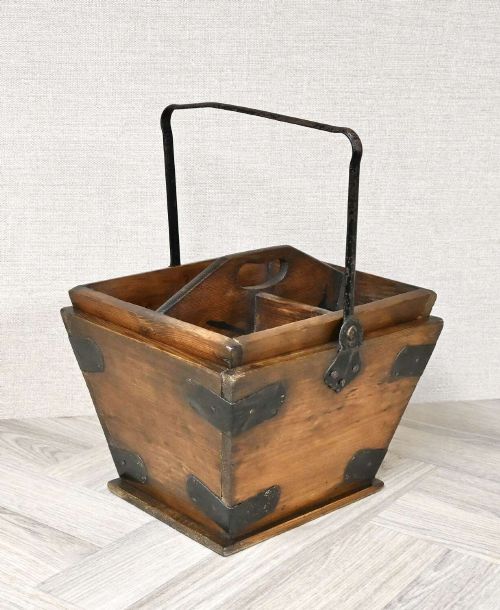
A housekeeper's bucket from nineteen twenty sits among the formal mahogany chests, ready for heavy chores.
Distinctions in quality
The standard of timber selection and cabinetmaking distinguishes finer examples from everyday domestic storage. Finely figured mahogany veneers, dovetail joinery, and substantial brass hardware set the upper tier apart.
Proportion and decorative restraint indicate the skill of the maker, with serpentine fronts and careful inlay work demonstrating superior craftsmanship. Simpler pine and oak pieces rely on honest construction rather than ornamental detail.
Gillows of Lancaster·Walker and Hall
The Vintage Wood Cutlery Glossary
- Caddy
- A small box or container originally used for storing tea or cutlery. These portable wooden pieces often feature internal compartments.
- Serpentine front
- A furniture design featuring a gently undulating curved front line. This shape appears on premium Georgian boxes.
- Dovetail
- A joint formed by interlocking wedge-shaped fingers of wood. It provides strong and enduring corner construction in antique boxes.
- Escutcheon
- A protective plate surrounding a keyhole, usually cast in brass on quality wooden boxes. It serves both a decorative and practical function.
Vintage Wood Cutlery: Frequently Asked Questions
What are these boxes used for?
These wooden containers were originally manufactured to house, organise, and protect flatware sets from tarnish and damage in large households. They kept knives, forks, and spoons clean and readily accessible for dining rooms.
Today, collectors utilise them not only for original purposes but also for storing letters, jewellery, and small household items. Their divided interiors make them practical modern organisers.
How do I date a mahogany cutlery box?
Dating relies heavily on construction methods, timber choice, and hardware styles. Georgian examples often feature figured mahogany and refined dovetailing, while later Victorian and Edwardian pieces show machine-cut precision.
Examining the brass fittings, locks, and internal lining remnants provides further clues to the decade of manufacture. Hand-cut joints generally indicate an origin prior to the industrial era.
Are these pieces made of solid wood?
Many fine storage boxes utilise solid mahogany or oak throughout the primary structure and lid. However, cabinetmakers frequently applied choice mahogany veneers over secondary timbers for flat surfaces.
Veneering allowed workshops to display striking grain patterns while maintaining structural stability. Inspecting the edges and interior helps reveal the underlying construction.
How should I care for vintage wood?
Maintenance requires keeping wooden pieces away from direct sunlight and dramatic humidity changes to prevent timber warping or cracking. Regular dusting with a soft, dry cloth preserves the finish.
Applying a traditional beeswax polish occasionally helps nourish the wood and maintain its natural lustre. Avoid synthetic sprays and harsh chemical cleaners.