
Vintage Wood Console
These vintage wood console options offer practical surface space and period character, bringing traditional craftsmanship directly into modern hallways and living rooms.
Vintage Wood Console
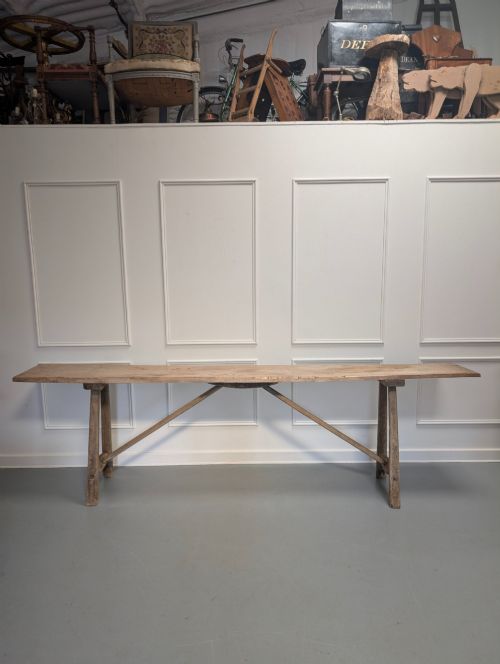
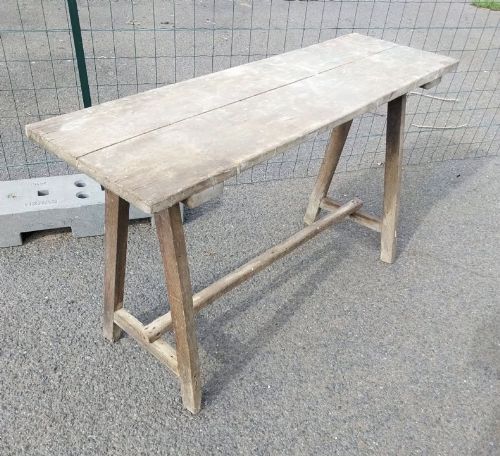
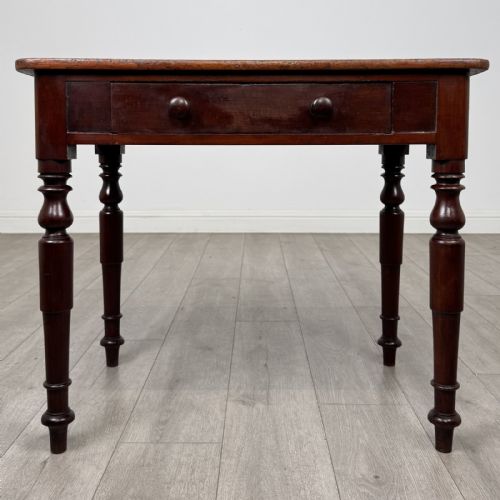
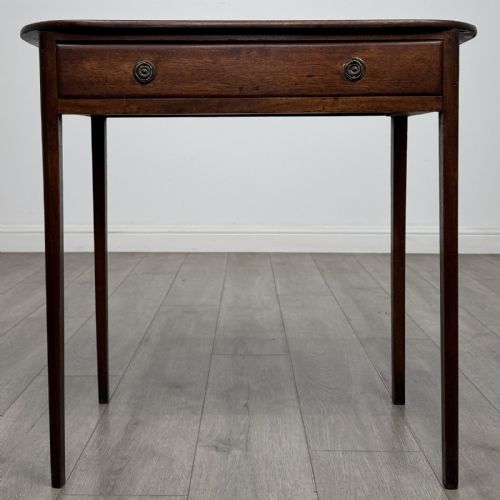
A vintage wood console typically manifests as a side table, writing desk, lowboy, or narrow hall table designed to fit flush against a wall. These pieces serve functional roles in entryways and reception rooms while providing surface area for lamps and decorative objects.
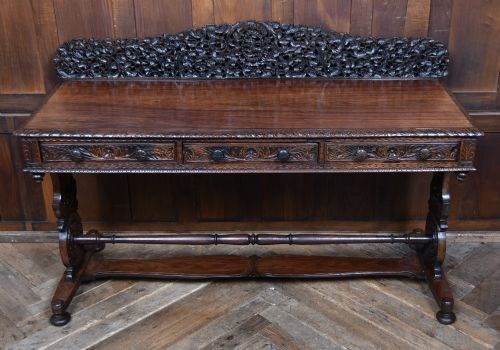
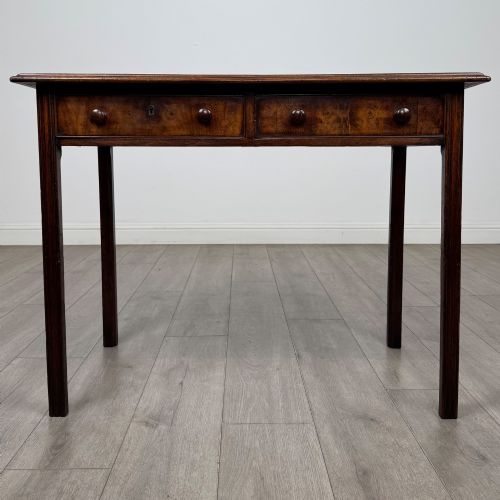
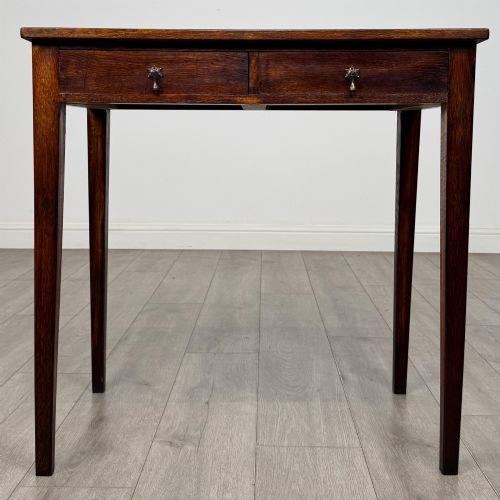
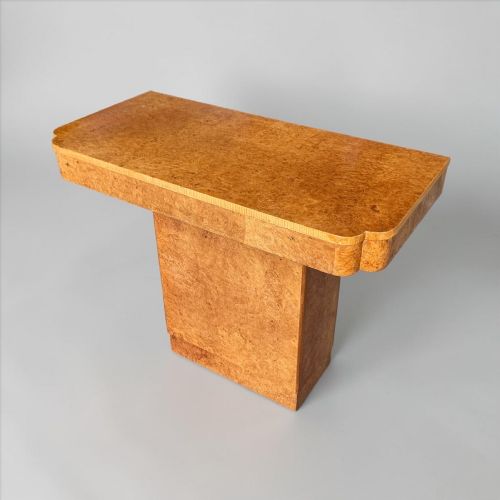
The selection ranges from Victorian and Edwardian examples to Art Deco and Jacobean Revival pieces. Buyers encounter various forms including demi-lune shapes, single drawer writing tables, and oak side tables spanning the nineteenth and early twentieth centuries.
Materials and construction methods
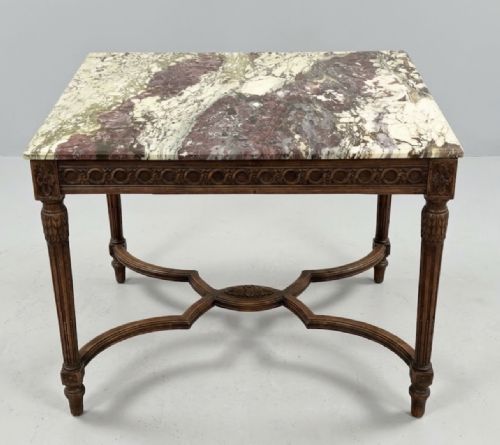
Craftsmen built these tables using primary hardwoods such as mahogany, oak, walnut, and burr walnut, occasionally incorporating brass hardware, marble tops, and iron elements. Timber selection dictated the structural integrity and visual grain pattern of each console.
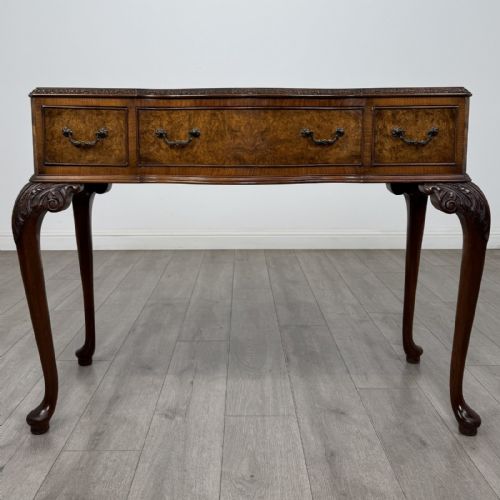
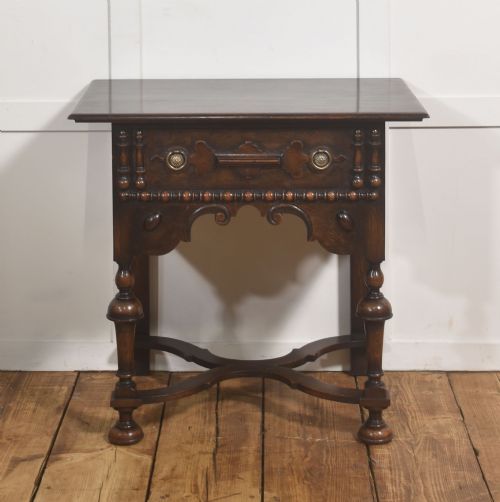
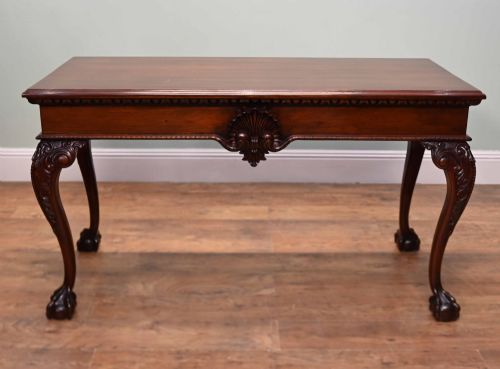
Joinery techniques relied on traditional hand-carved details, turned legs, cabriole legs with carved knees, and inlaid veneers. Carved woodwork and specific surface finishes defined the decorative ambition of the period.
Listings feature oak, mahogany, walnut, and padouk woods, spanning periods from the eighteenth century through the Edwardian era and Art Deco movement.
Factors determining quality
Quality rests in the choice of timber figure, such as figured walnut or dense mahogany, and the precision of the cabinetwork. Finer examples display crisply carved knees, balanced proportions, and careful matching of wood veneers.
The distinction between standard utility items and superior pieces often lies in secondary details, such as integrated drawer construction, original brass handles, and the integration of specialised surfaces like marble tops or fitted writing inserts.
The Vintage Wood Console Glossary
- Demi-lune
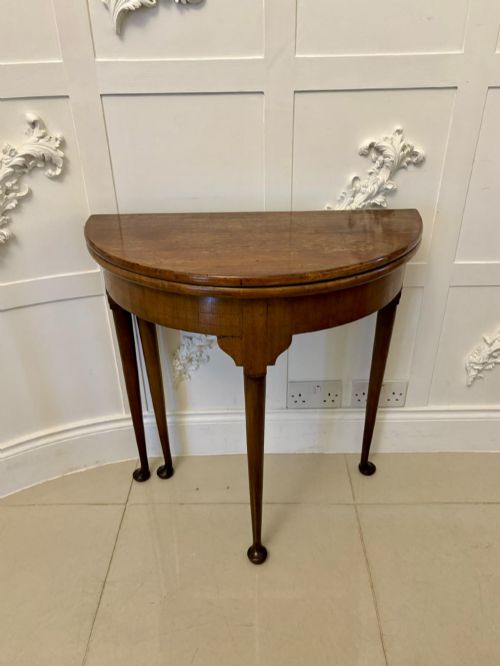
- A half-moon shape used for tables and cabinets designed to stand flat against a wall. This form saves floor space in narrow hallways.
- Cabriole leg
- A furniture leg that curves out and then in, mimicking animal legs. It frequently terminates in carved knees or pad feet.
- Lowboy
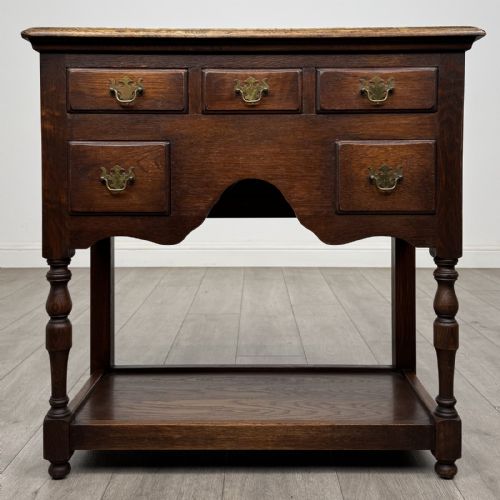
- A small occasional table with drawers, typically raised on four tall legs. They originated in the eighteenth century as dressing or writing tables.
- Chinoiserie
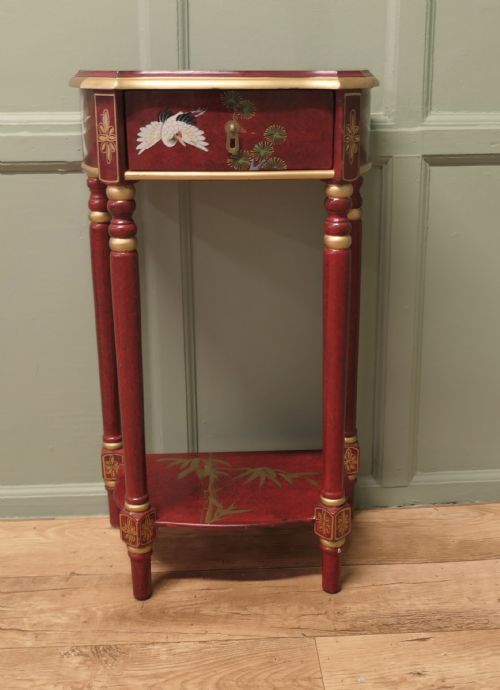
- European decorative art imitating Chinese artistic styles. This technique involves lacquerwork and motifs depicting imagined Asian scenes.
- Inlay
- A decorative technique where contrasting materials are inserted into wood surfaces. Artisans use veneers to create geometric or floral patterns.
Vintage Wood Console: Frequently Asked Questions
Where should I place a vintage wood console?
These tables suit narrow hallways, entryways, and reception rooms where floor space is limited. Their shallow depth allows them to sit against walls without obstructing pathways.
They function effectively as lamp tables or surface areas for keys and post, while writing tables can double as compact desks in home offices.
How do I identify a Victorian console table?
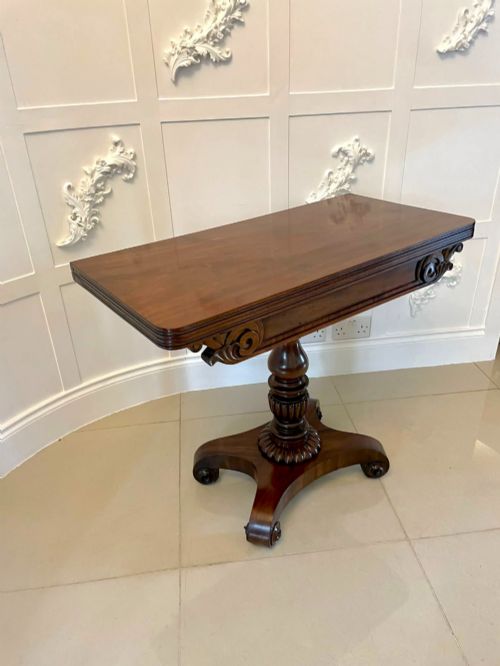
Victorian pieces often feature dense timbers like mahogany and walnut, paired with heavy turned legs or elaborate carvings. They frequently incorporate functional elements such as multiple drawers or shaped card table tops.
Comparing the hardware, timber density, and structural joinery helps distinguish nineteenth-century examples from later revival styles.
What is the difference between a console and a side table?
Console tables are traditionally designed to stand against a wall, sometimes anchored or supported by brackets, whereas side tables are freestanding pieces meant to sit beside seating.
In modern usage, the terms overlap significantly, particularly with narrow oak and mahogany tables that serve both placement functions.
How do I care for antique wood surfaces?
Maintain timber surfaces by dusting regularly with a soft, dry cloth and avoiding direct exposure to strong sunlight or moisture. Natural waxes help nourish older finishes without building up residue.
Keep wooden consoles away from direct heat sources to prevent the timber from drying out and the joints from loosening over time.