
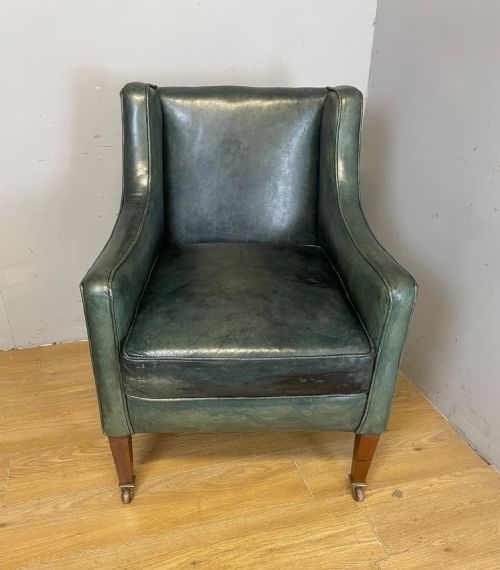
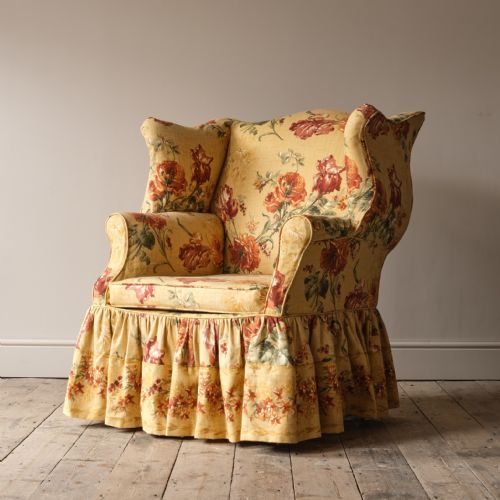
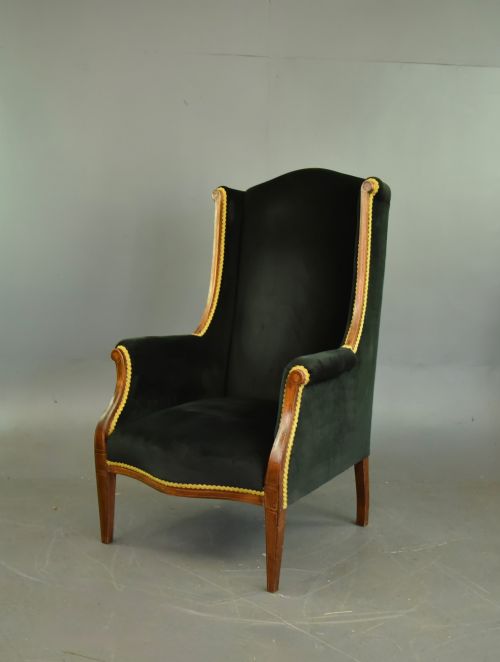
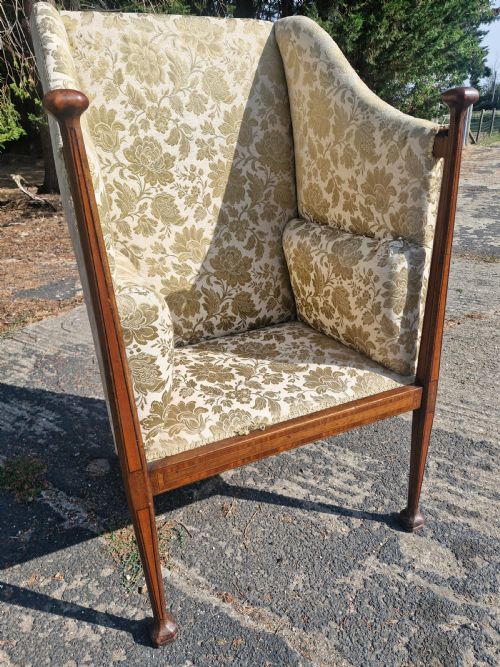
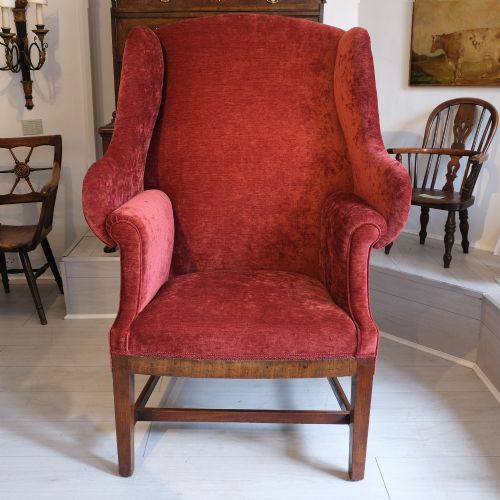
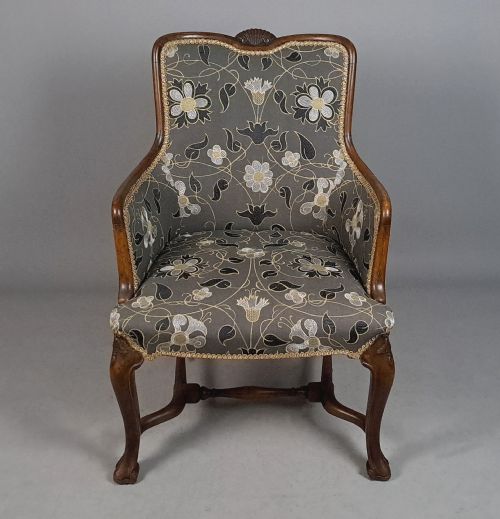


Vintage Winged Arm Chair
These vintage winged arm chair selections offer deep seats and high sides that keep draughts away while anchoring a traditional room.
Vintage Winged Arm Chair
A vintage winged arm chair is a substantial seating form designed with protective side panels flanking the backrest to shield the sitter from cold draughts. These pieces span several distinct eras, stretching from eighteenth century Georgian origins through Victorian and Edwardian interpretations up to the nineteen twenties.
Edwardian and late nineteenth century examples appear frequently across these listings, often displaying mahogany frames, inlaid wood details or bergère cane work. You will also encounter robust nineteenth century interpretations built in the Queen Anne manner, alongside earlier Georgian and eighteenth century specimens boasting deeper proportions.
Forms vary from classic high backed wingbacks to barrel back designs and fireside chairs upholstered in leather, cotton, or textured textiles. Mahogany and walnut dominate the structural timber choices, occasionally supported on tapered legs or decorated with brass accents.
Materials and construction methods
Makers constructed the structural frames of a vintage winged arm chair using hardwoods such as mahogany, walnut, oak, and general timber. These foundational frames frequently feature inlaid wood decorative work, exposed mahogany legs, or framed upholstered supports.
Upholstery materials range from traditional leather and cotton to ribbed textiles and woven bergère panels. Artisans completed these chairs with small details including brass hardware and careful fabric stitching.
The selection spans pieces from the eighteenth century, the Victorian era, the Edwardian period, and the nineteen twenties.
Distinguishing quality in construction
The distinction between standard examples and finer interpretations rests upon the crispness of the timber framing and the execution of inlaid wood details. Superior specimens show careful joinery in woods like mahogany or walnut rather than basic structural timber.
Upholstery execution and the selection of covering materials, whether leather, cotton, or textile, mark another tier in execution. Finer pieces maintain balanced proportions across the wings and backrest that reflect traditional Georgian or Queen Anne revival proportions.
The Vintage Winged Arm Chair Glossary
- Wingback
- An upholstered armchair featuring protective side panels attached to the backrest designed to trap heat and block room draughts. These wings became prominent during the seventeenth and eighteenth centuries.
- Bergère
- A closed armchair with upholstered sides and a cane or padded back panel. This French style influenced British cabinetmakers throughout the Edwardian era.
- Inlaid
- A decorative technique where contrasting strips of wood or other materials are inserted into hollowed recesses on the surface of the primary timber. Edwardian makers utilised this method on mahogany chair frames.
- Barrel back
- A seating form where the upholstered back curves continuously into the arms in a circular or semi-circular shape. This style provides an enclosed, supportive seating posture.
- Queen Anne style
- A graceful design movement characterised by pad feet, curved lines, and restrained ornament that experienced revivals during the Victorian and Edwardian periods.
Vintage Winged Arm Chair: Frequently Asked Questions
What is a vintage winged arm chair?
A vintage winged arm chair is an upholstered seat featuring high side panels designed to protect the occupant from draughts.
These pieces encompass styles from eighteenth century Georgian designs to Edwardian and nineteen twenties productions.
How do I identify an Edwardian model?
Edwardian versions often showcase mahogany frames with inlaid wood decoration, tapered legs, or bergère style panels.
Many examples from this period reflect lighter proportions while retaining the traditional high winged backrest.
What materials were used?
Frames are built from hardwoods including mahogany, walnut, and oak, alongside general timber.
Upholstery materials span leather, cotton, and various ribbed or textured textiles.
Where were these chairs placed?
They were traditionally positioned near hearths and fireplaces where the side wings could block cold air and retain warmth.
Today they serve as statement reading chairs in studies, living rooms, and libraries.