
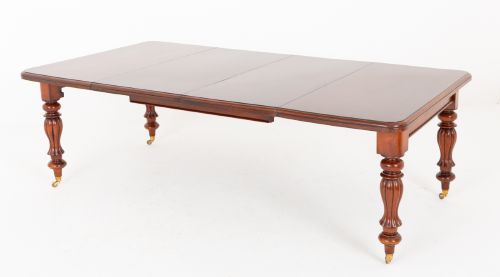
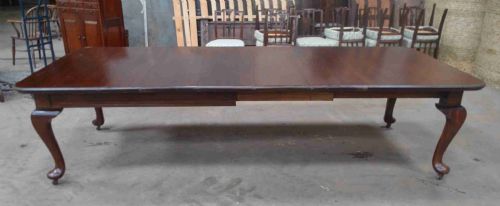
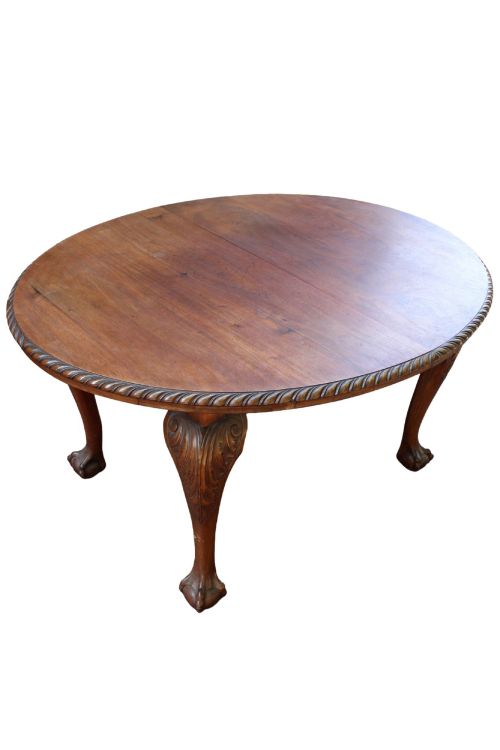


Vintage Wind Out Table
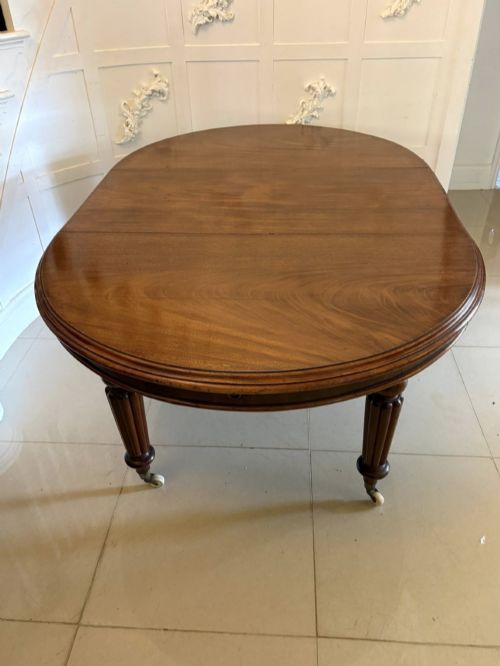
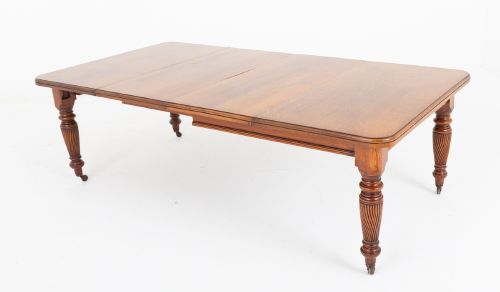
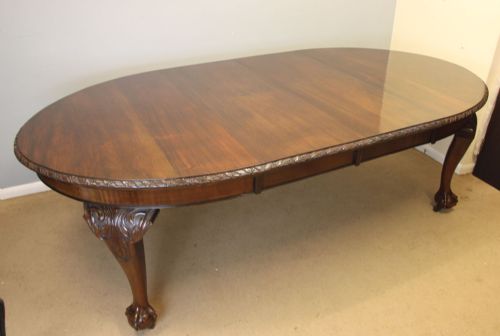
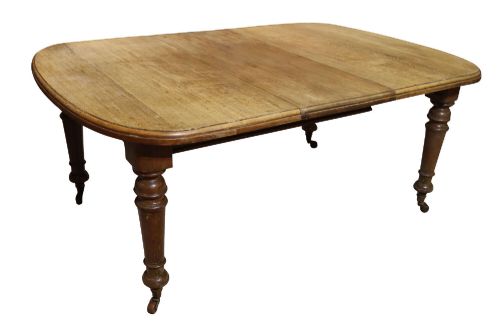
A vintage wind out table is a dependable mechanism for expanding dinner parties, forged in mahogany or oak during the nineteenth and early twentieth centuries.
Vintage Wind Out Table
A vintage wind out table serves as a functional dining centerpiece, designed with a hidden internal screw mechanism that expands the surface smoothly using a detachable crank handle. Buyers seeking this phrase typically encounter nineteenth-century Victorian or Edwardian formats constructed for practical hosting.
Most examples appearing in this inventory date from the Victorian and Edwardian eras, predominantly fashioned from rich mahogany or sturdy oak. These pieces range from standard six-seater configurations to larger formats capable of seating ten, often retaining their original leaves and castor wheels.
How they were made
Makers constructed these dining surfaces primarily using dense timber frames of mahogany and oak, occasionally incorporating bleached oak or Gothic styling. The internal mechanics rely upon robust iron, steel, and brass components to support the weight of multiple extension leaves.
The extending mechanism requires precise engineering, utilising a central metal screw thread operated by a crank handle that pulls the table halves apart uniformly. Brass and ceramic castors were frequently fitted to the legs to allow smooth movement across floorboards when adjusting the size.
Lost winding handles were historically replaced by resourceful owners using improvised socket wrenches found in the garden shed.
What varies in quality
Quality in a vintage wind out table rests upon the precision of the internal winding mechanism and the seamless alignment of the additional leaves. Superior examples maintain a flat, stable surface across all extensions without sagging at the joints.
The choice of timber grain and the integrity of the cabinet work dictate the overall standing of a piece, alongside secondary elements such as original brass fittings and castors. Tables retaining their matching period leaves command greater architectural harmony than those altered later.
The Vintage Wind Out Table Glossary
- Wind out
- A mechanical dining table design using an internal screw mechanism operated by a handle to extend the frame.
- Extending leaves
- Additional boards stored separately that insert into the centre of a table to increase its seating capacity.
- Castors
- Small wheel attachments fitted to the base of table legs to facilitate movement across floor surfaces.
- Mahogany
- A heavy, durable tropical hardwood favoured by nineteenth-century cabinet makers for its rich grain and deep colour.
- Gothic Revival
- A nineteenth-century architectural and decorative style characterised by pointed arches and medieval motifs.
Vintage Wind Out Table: Frequently Asked Questions
How does the winding mechanism work?
A removable metal crank handle inserts into a socket beneath the table rim, turning an internal screw thread that draws the two halves apart.
This action creates a central gap large enough to drop in one, two, or three matching timber leaves to lengthen the surface.
Can I seat ten people comfortably?
Many larger examples originating from the Victorian and Edwardian periods are specifically built to accommodate ten diners once fully extended.
Checking the overall length and leg clearance helps confirm whether a particular piece suits your dining space.
Are the extension leaves always matching?
Most period examples retain their original matching timber leaves, finished with the same grain patterns and edge profiles as the main top.
Consistency in wood tone across all sections indicates that the leaves were made alongside the primary table frame.
How do I care for mahogany surfaces?
Timber surfaces respond best to regular dusting with a dry cloth and occasional treatment with traditional beeswax to nourish the grain.
Avoiding direct sunlight and excessive heat protects the finish and prevents the wood from drying out over time.