

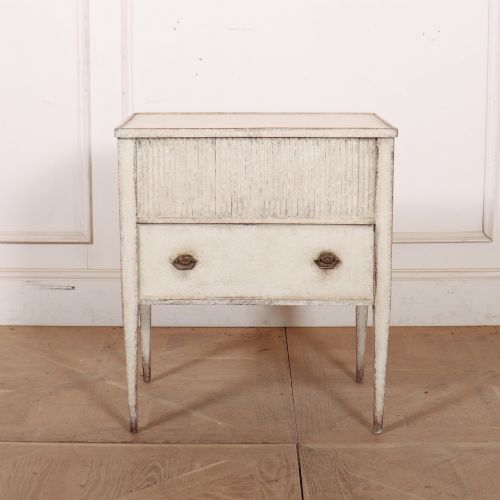

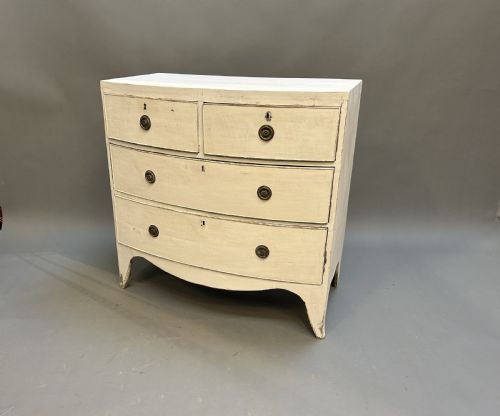


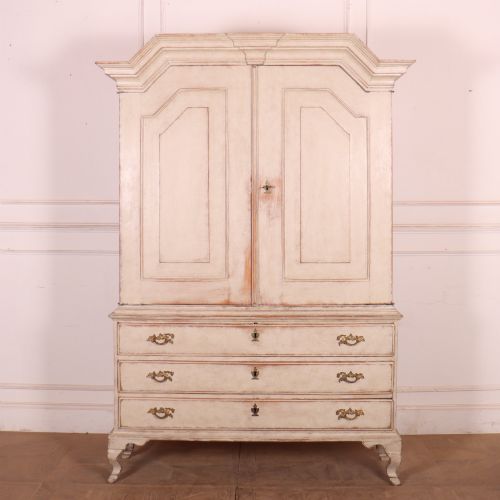
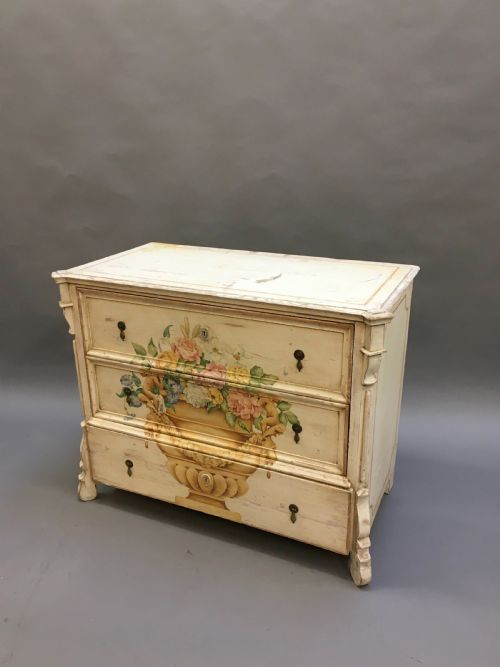

Vintage White Painted Chest
A vintage white painted chest brings immediate light and storage to a room, drawing on centuries of European country and formal traditions.
Vintage White Painted Chest
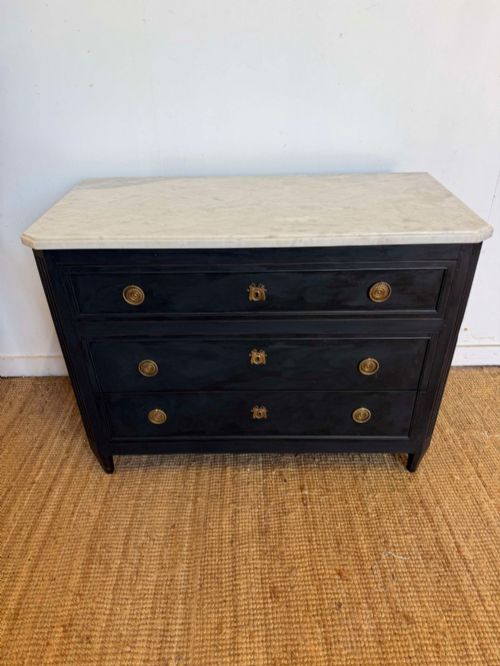
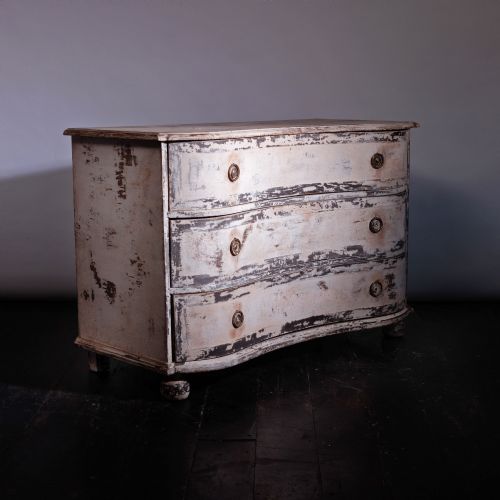
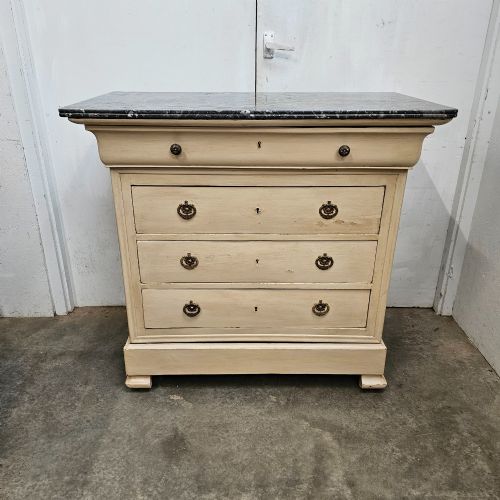
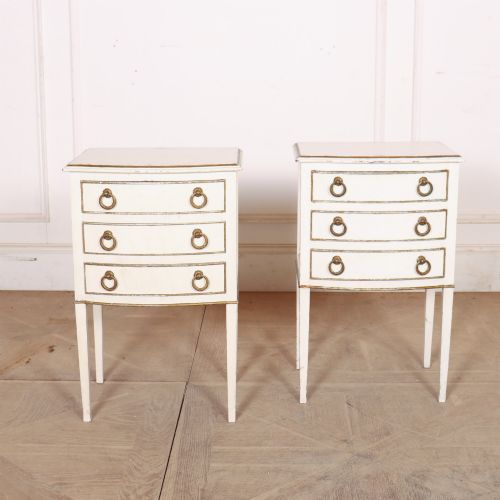
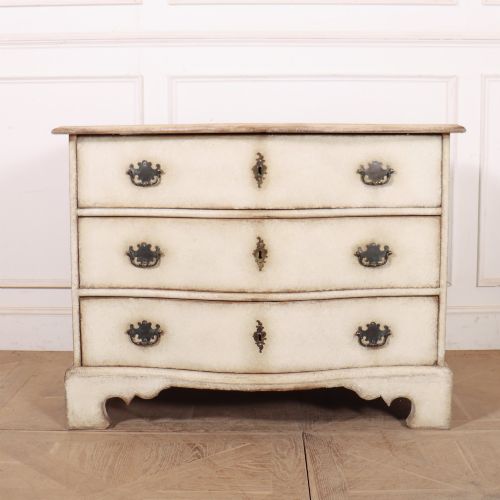
When you search for a vintage white painted chest, you encounter storage forms ranging from compact bedside commodes and tallboys to expansive shop fittings and serpentine chests of drawers. These pieces span the eighteenth, nineteenth, and early twentieth centuries, originating from workshops across France, Sweden, Britain, Germany, and Italy.
The version you meet most often on this page is the painted pine or hardwood commode, shaped with French Provincial, Gustavian, or Victorian sensibilities. They provide practical drawer space while carrying the softer surface textures of historic layered paint.
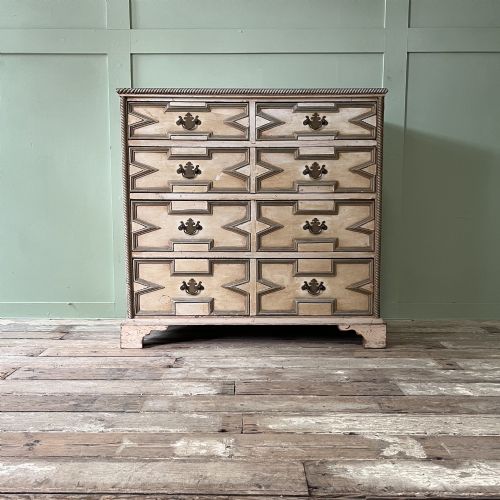
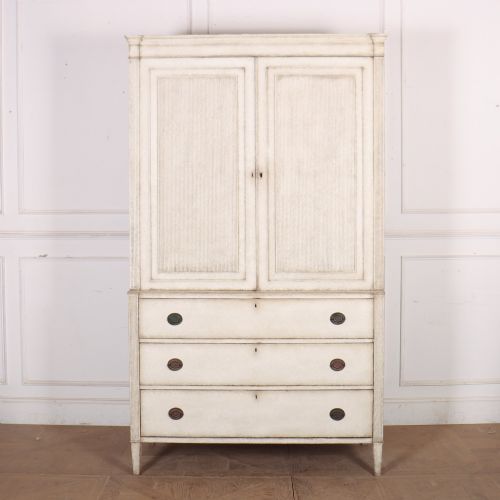
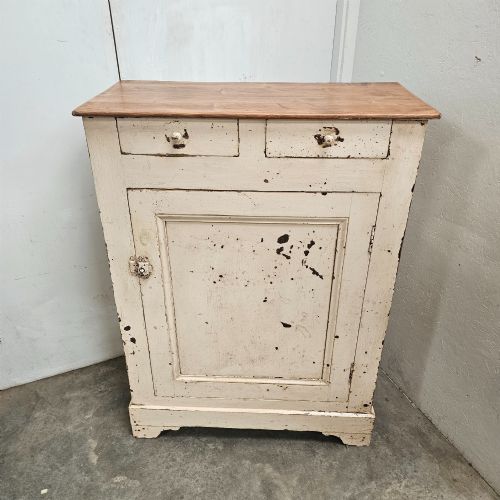
Beyond standard chests, the selection includes specialised storage such as linen presses, confituriers, and multi-drawer chemist shop fittings. Each form adapts domestic or commercial utility into a decorative focal point defined by its pale palette.
How they were made
Carpenters constructed these pieces primarily from solid pine, oak, and regional hardwoods, utilising traditional joinery such as dovetailing for the drawer boxes and mortise and tenon frames. Carved details on serpentine fronts and commode skirts demonstrate manual shaping with gouges and chisels before any colour was applied.
Makers finished the surfaces with historic paint layers, often white or cream, applied over wood grounds. Iron and brass hardware, including drop handles and key escutcheons, completed the construction, securing the functional integrity of each drawer and door.
Vintage White Painted Chest Retail Price Guide 2026
Typical asking prices for vintage white painted chest among the pieces listed under this phrase on Sellingantiques today, from the lower quarter to the upper quarter. They describe what is for sale here now, not the wider market.
Listings feature pine, oak, and painted wood items utilising iron and brass hardware across Swedish, French, and British regional styles.
What varies in quality
The distinction between tiers rests on the harmony of the proportions and the integrity of the original timber framing. Pieces with sophisticated serpentine contours or carved detailing reflect greater ambition from the cabinetmaker than plain rectilinear boxes.
Surface longevity dictates much of the appeal, where undisturbed historic paint finishes retain character absent in later, heavy-handed overpainting. The fluidity of hand-forged or cast brass and iron mounts further separates standard utilitarian items from finer salon or chamber furniture.
Sir Clough Williams-Ellis·Edwards and Roberts
The Vintage White Painted Chest Glossary
- Commode
- A low chest of drawers or cabinet, often featuring decorative curved fronts and cabriole or bracket feet. Originating in France, the form became popular across eighteenth and nineteenth-century Europe.
- Serpentine
- A furniture front curving inward at the centre and outward at the ends, creating a gentle wave shape. This contour requires precise carpentry and carving skill.
- Gustavian
- The Swedish interpretation of French neoclassical style, characterised by lighter proportions, restrained carving, and pale grey or white painted finishes. It developed during the late eighteenth century.
- Confiturier
- A small French cupboard originally designed to store confit jars and preserves. These compact pieces typically feature a single door and drawer.
- Dovetail
- A joint used to secure drawer corners, formed by interlocking wedge-shaped fingers. Hand-cut dovetails indicate earlier craftsmanship before machine production.
Vintage White Painted Chest: Frequently Asked Questions
Are these chests painted recently?
Many pieces retain historic or original white and pale paint surfaces applied decades or centuries ago. Other examples show later decorative painting that respects period forms.
Examination of the underlying wood and paint adherence helps determine the age of the finish. Dealers note original paint in the descriptions whenever possible.
Where should I place a commode?
These chests function effectively in bedrooms, hallways, and living spaces as statement storage units. Their pale finishes help brighten dark corners or smaller rooms.
Ensure the floor is level so the drawers open and close smoothly. Keep wooden furniture away from direct heat sources to prevent warping.
How do I date a pine chest?
Dating relies on examining construction methods, tool marks on the timber, and the style of the hardware. Hand-cut dovetails and forged iron fittings point towards earlier manufacturing periods.
Regional characteristics, such as Swedish Gustavian detailing or French Provincial shaping, also clarify the era. Comparing the piece to documented examples narrows the timeline.