



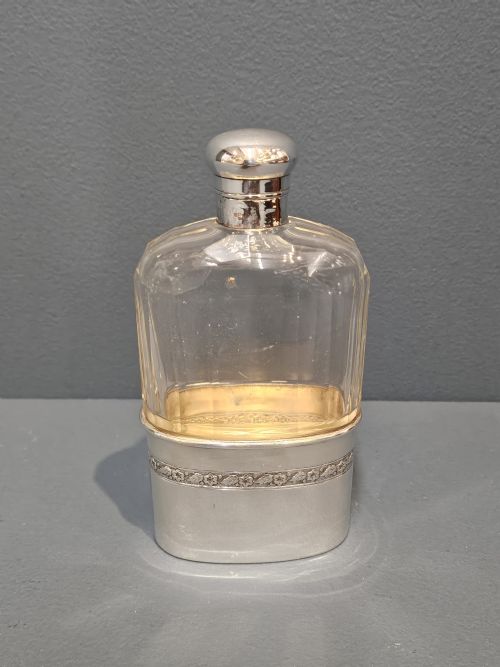
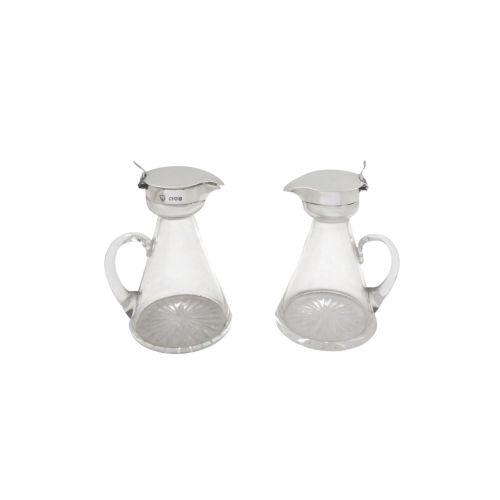
Vintage Whisky Decanter Silver
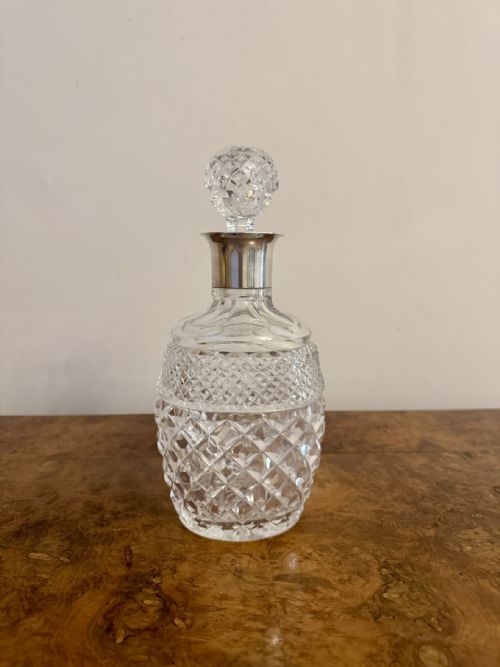
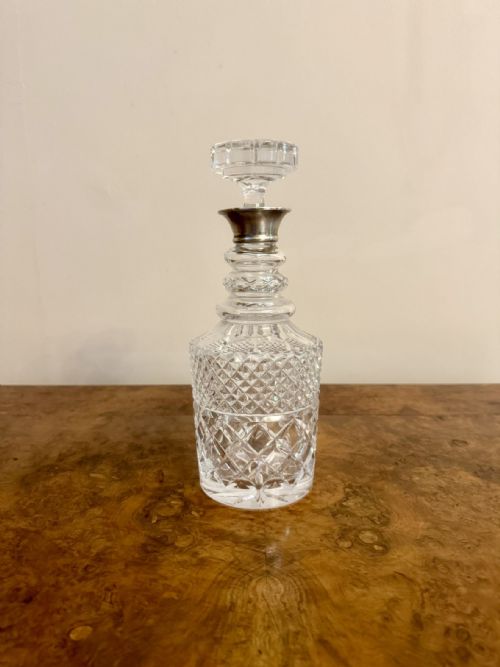
These vintage whisky decanter silver pieces bring period barware into modern homes with cut crystal, glass and hallmarked silver mounts.
Vintage Whisky Decanter Silver
When searching for a vintage whisky decanter silver piece, buyers encounter a range of barware designed to hold and pour spirits. The selection spans Victorian, Edwardian and Art Deco eras, alongside mid-century examples.
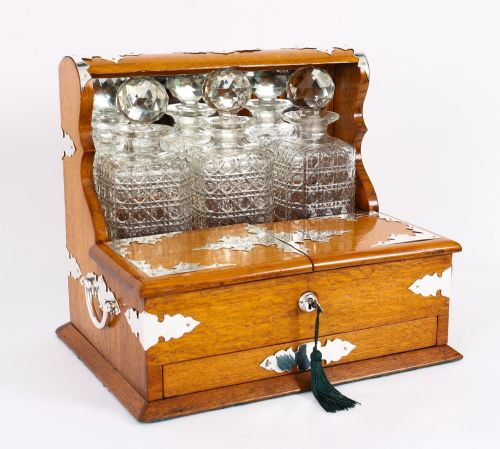
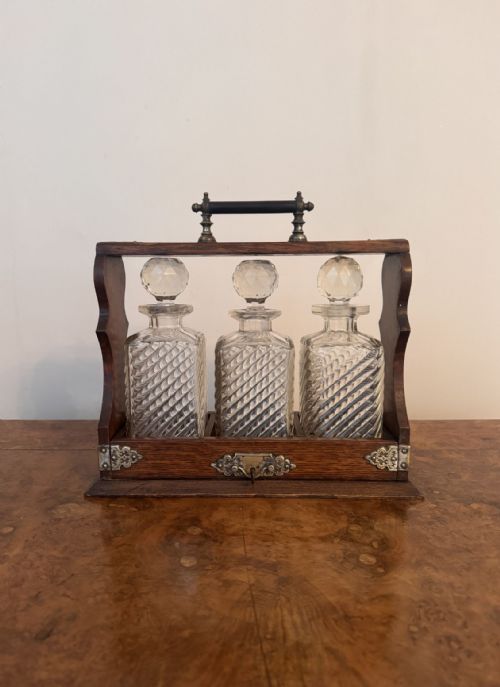
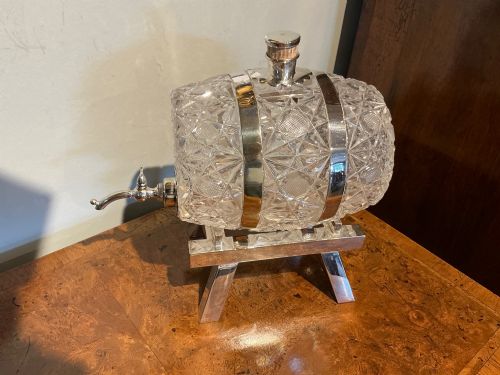
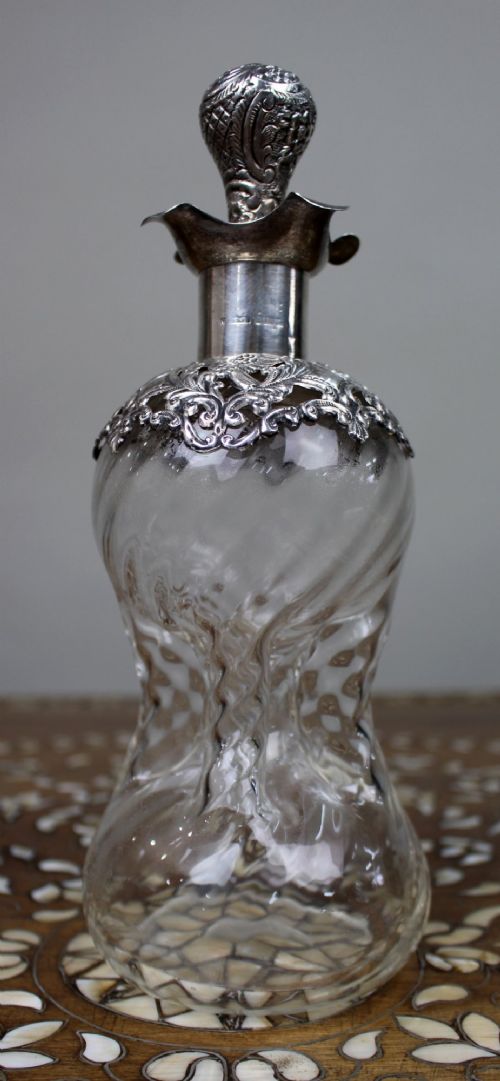
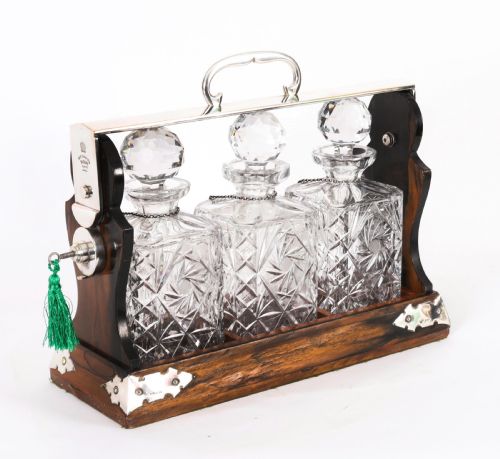
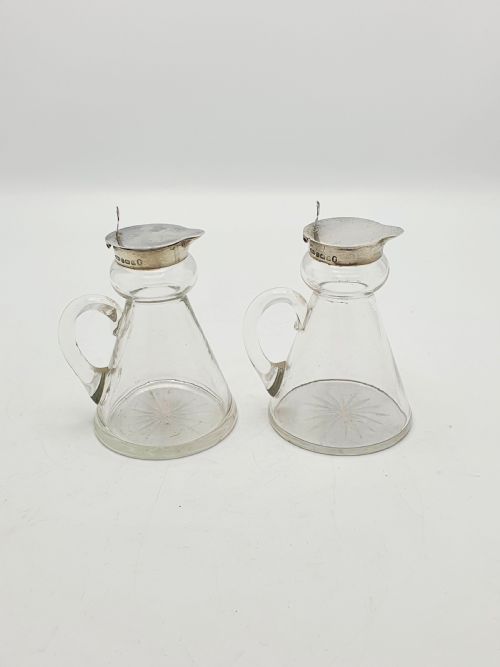
Most pieces on this page appear as single decanters with silver collars, whisky noggins with hinged lids, or multi-bottle tantalus sets housed in oak frames. Jugs, labels and hip flasks also populate the category.
Origins trace back to English workshops and makers utilising glass, crystal and precious metals for domestic entertaining. These vessels reflect the social habits of the nineteenth and twentieth centuries.
How They Were Made
Glass and cut crystal form the body of these vessels, shaped through blowing and wheel-cutting to catch the light. Metal mounts in sterling silver and silver plate secure the necks and mouths.
Silversmiths applied hallmarks to collars, lids and mounts, detailing assay offices and dates. Oak and coromandel timber provide the framework for tantalus sets, fitted with locking mechanisms.
Listings feature materials spanning cut crystal, sterling silver, oak, metal and silver plate across Victorian, Edwardian and Art Deco styles.
What Varies in Quality
The weight and clarity of the crystal separate standard vessels from finer productions. Deep hand-cut facets and unblemished surfaces indicate superior manufacturing.
Silver components show variation through thickness of metal, crispness of hallmarks and complexity of engraved or chased decoration. Fitted wooden frames with intact locks and keys elevate the standing of a tantalus.
Betjemann·Hukin and Heath·Elkington·Freeman and Son
The Vintage Whisky Decanter Silver Glossary
- Tantalus
- A locked wooden frame holding decanters securely so guests can view the contents without pouring a drink. These units typically feature silver-plated or metal locking bars.
- Noggin
- A small vessel designed for a single measure of spirits, frequently paired with a sterling silver mount and hinged lid. They appear alongside dedicated silver labels.
- Hallmark
- An official stamp applied to silver parts indicating the maker, standard of metal, assay office and year of testing. These marks help date the piece accurately.
- Glug glug decanter
- A vessel featuring a looped or multi-chambered neck that produces a gurgling sound when liquid pours out. Hukin and Heath produced notable examples of this form.
Vintage Whisky Decanter Silver: Frequently Asked Questions
What is a whisky noggin?
A whisky noggin is a small personal decanter designed to hold a single measure of spirit. It usually incorporates a glass body and a hinged sterling silver lid.
These pieces often include a matching silver label designating the contents. They date frequently to the Edwardian and George V periods.
How do I date a silver-collared decanter?
Dating relies primarily on the silver hallmarks stamped onto the collar, mount or lid. These marks identify the assay office and the specific year of testing.
Stylistic cues such as Art Deco geometric cuts or Victorian floral etching also provide a broad chronological framework.
What is an antique tantalus?
A tantalus is a locking barware stand that holds two or three decanters securely within a wooden frame. The mechanism prevents unauthorised access to the spirits.
Oak and coromandel served as common woods for these frames during the Victorian and Edwardian eras. They often feature silver-plated mountings and integrated games compendiums.
Are these decanters safe for modern use?
Most glass and crystal decanters with silver collars remain entirely suitable for holding and serving whisky today. The materials are durable and non-reactive with spirits over standard periods.
Care should be taken to hand wash the glass and avoid abrasive cleaners on the antique silver mounts.