


Vintage Whiskey Glasses
These vintage whiskey glasses and accompanying vessels span the Georgian, Victorian, and Edwardian eras, offering drinkers tactile pieces of bar history.
Vintage Whiskey Glasses
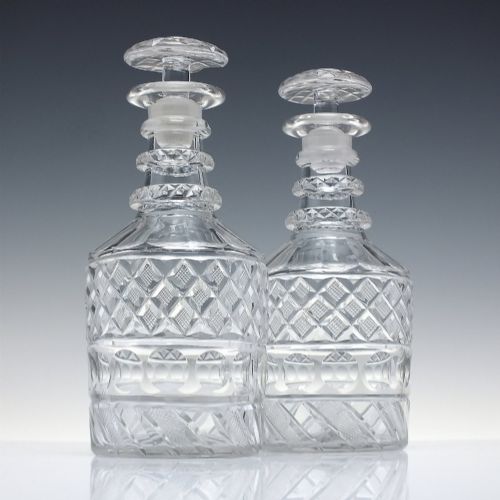
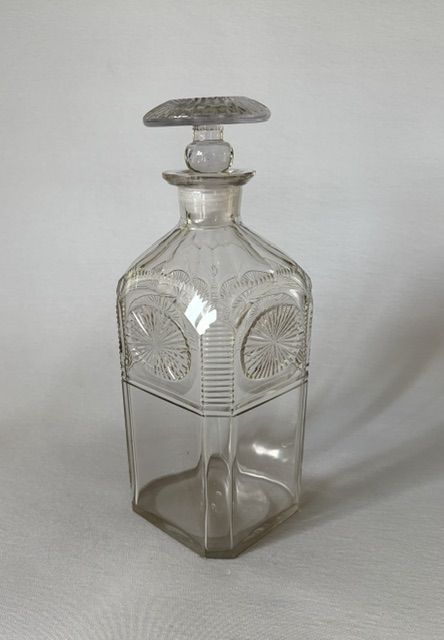
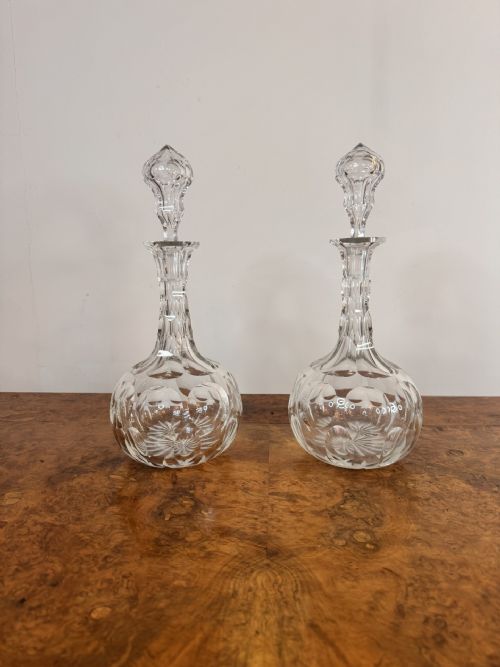
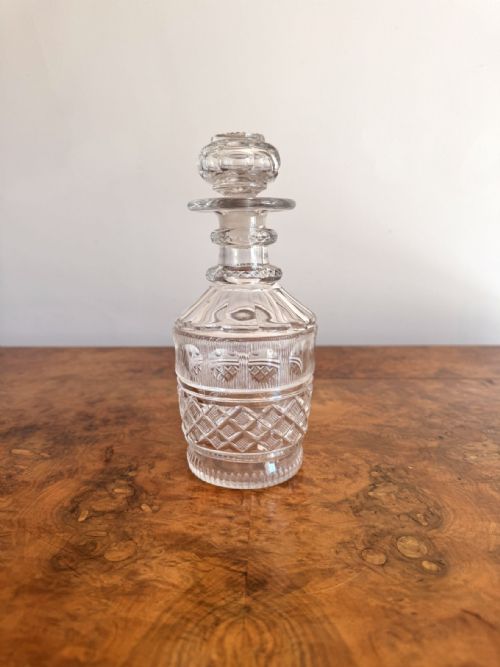
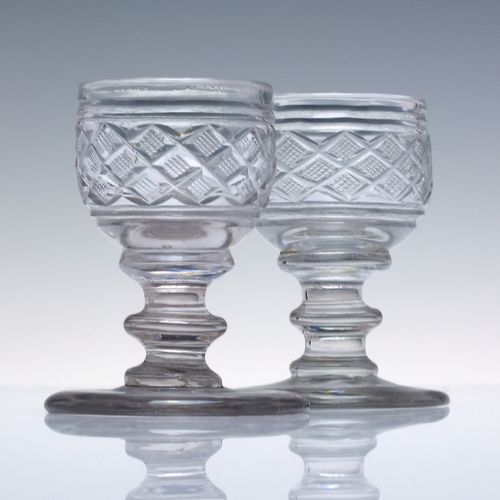
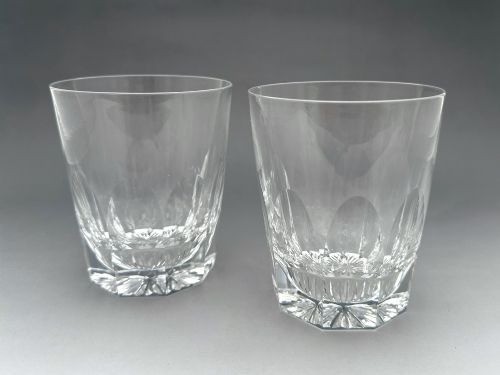
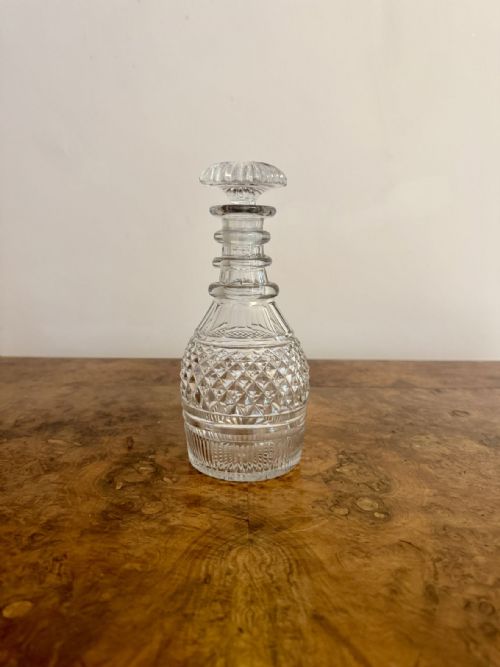
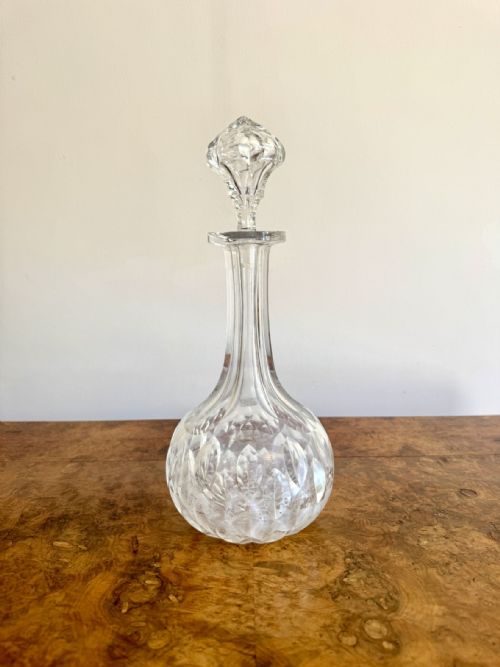
When you search for vintage whiskey glasses, you encounter everything from heavy dram glasses and cut crystal tumblers to silver-mounted noggins and decanters. The items on this page range from early nineteenth-century Georgian dram glasses to early twentieth-century Art Deco glassware and barware sets.
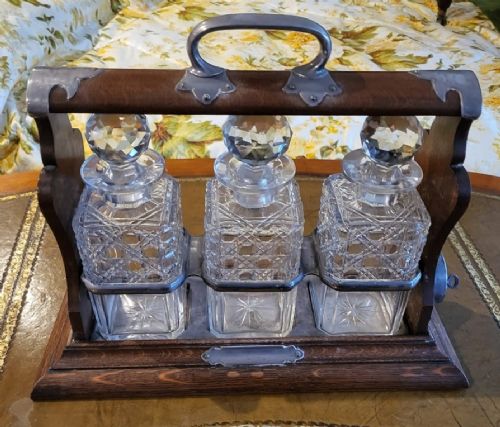
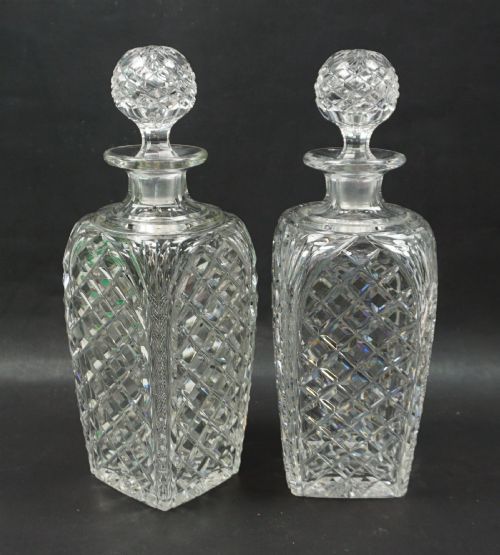
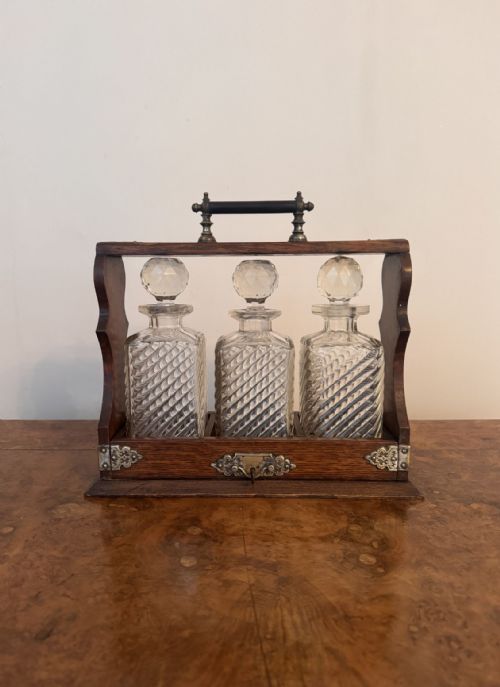
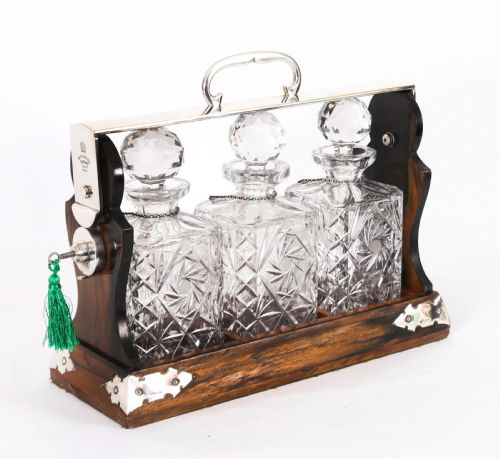
Tumblers and dram glasses dominate the glassware selections, accompanied by larger serving pieces like jugs and decanters housed in oak or coromandel tantalus frames. These vessels reflect the changing social rituals of spirit consumption across the Victorian, Edwardian, and George V periods.
How they were made
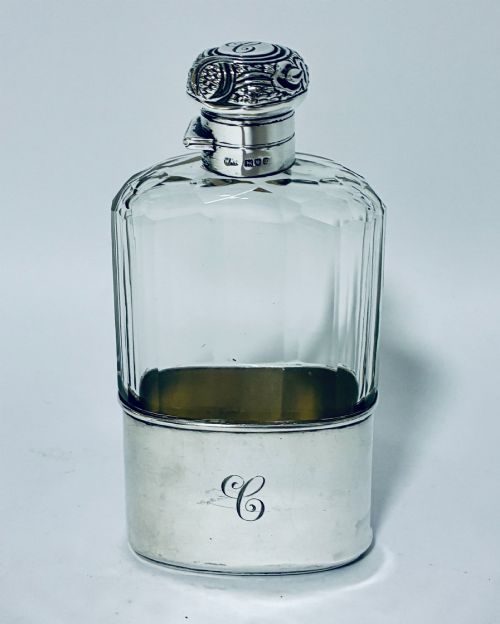
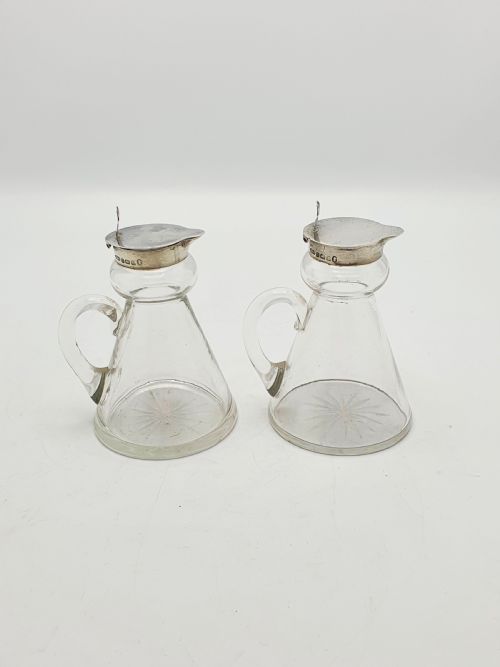
Makers utilised lead crystal and standard glass, applying deep wheel-cut geometric patterns to refract light through the spirit. Silver plate and sterling silver mounts provide rims, hinged caps, and removable cups, frequently bearing hallmarks that record the year of assay.
Woodwork forms a substantial part of the larger barware, with oak, satinwood, and coromandel constructed into games compendiums and lockable tantalus frames with brass hardware.
Vintage Whiskey Glasses Retail Price Guide 2026
Typical asking prices for vintage whiskey glasses among the pieces listed under this phrase on Sellingantiques today, from the lower quarter to the upper quarter. They describe what is for sale here now, not the wider market.
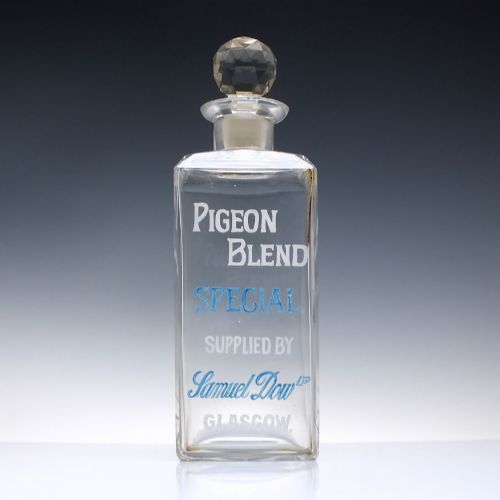
Pigeon blend whisky once travelled in enamelled Scottish decanters during the nineteenth century.
What varies in quality
The distinction between standard pieces and finer examples rests on the depth and crispness of the glass cutting, alongside the weight and clarity of the lead crystal. Heavier blank vessels with sharp, clean facets demonstrate superior workshop execution.
Mount quality dictates the upper tier of holloware and tantalus pieces, where heavy gauge sterling silver and solid timber cabinetry show substantial construction rather than thin plating or veneered carcasses.
Karl Palda·Betjemann·Asprey London
The Vintage Whiskey Glasses Glossary
- Tantalus
- A locking wooden frame holding three or more decanters, designed to display the spirit while preventing unauthorised access.
- Noggin
- A small vessel or jug designed for serving a single measure of spirits, typically fitted with a silver mount and a matching label.
- Dram glass
- A short, thick-based drinking glass intended for a measure of whiskey, often dating to the Georgian period.
- Lead crystal
- Heavy glass containing metallic oxide that increases brilliance and allows for deeper wheel-cutting.
- Hip flask
- A curved pocket container made of glass with silver or leather covering, utilised for carrying spirits outdoors.
Vintage Whiskey Glasses: Frequently Asked Questions
What is a whiskey noggin?
A whiskey noggin is a small serving jug holding a single measure, frequently paired with a silver label identifying the contents.
These pieces typically feature sterling silver mounts and a comfortable handle for pouring into a tumbler.
How do I date a tantalus?
Dantabus dating relies on the timber species, locking mechanism, and associated silver hallmarks on the decanter collars.
Victorian examples often employ oak or coromandel with brass hardware, while later versions adopt simpler silver-plated mounts.
Are these glasses lead crystal?
Many of the listed items consist of heavy lead crystal, which provides clarity and allows for deep decorative cutting.
Standard glass appears alongside crystal in smaller tumblers and nineteenth-century decanters.
How were tantalus frames used?
A tantalus holds spirit decanters securely within a locked wooden frame to restrict household access to expensive liquor.
Unlocking the handle allows the bottles to be lifted out for pouring.