





Vintage Walnut Writing Slope
A vintage walnut writing slope offers a handsome portable desk space, combining rich timber grain with practical compartments for correspondence and ink.
Vintage Walnut Writing Slope
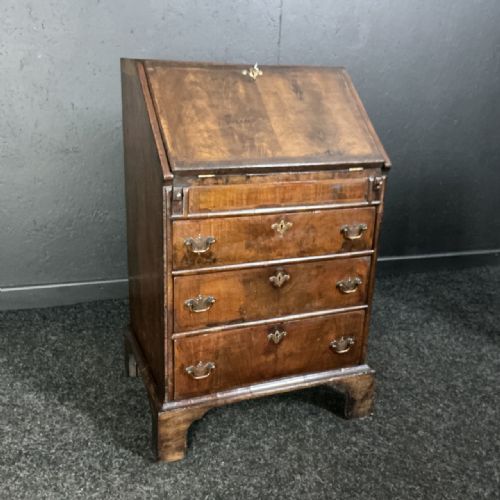
A vintage walnut writing slope encompasses folding portable boxes, standing bureaux, and compact desks designed for correspondence. These pieces appear across several periods, most notably the Victorian era and the Edwardian period, alongside examples originating in the Georgian and Regency eras.
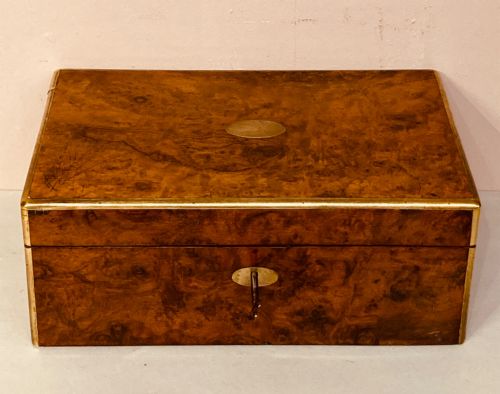
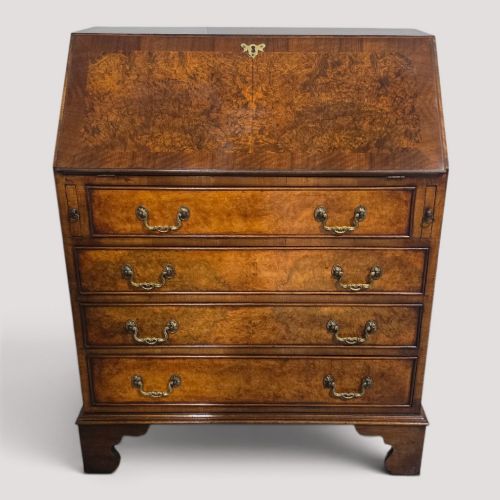
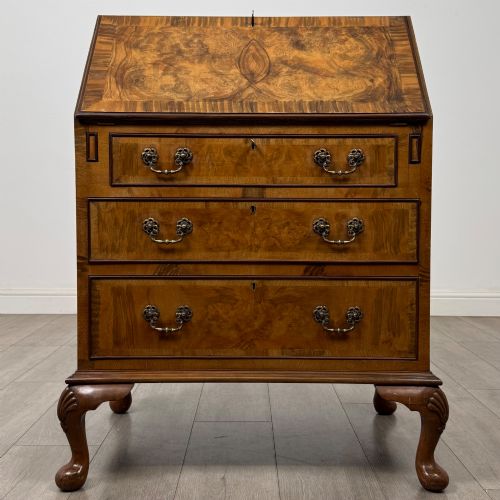
The portable folding box is the most frequently encountered version on this page, often featuring hinged lids that open to reveal a sloping writing surface. Alongside these compact slopes, buyers regularly find bureaux and larger desks incorporating walnut veneer, burr walnut, and fitted interior compartments.
Materials and construction
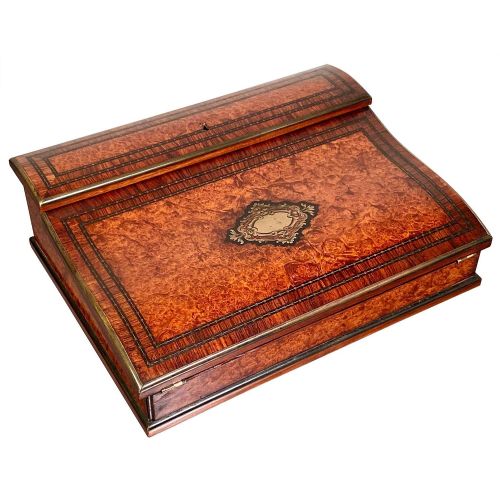
Carpenters utilised solid walnut and decorative walnut veneer over secondary timbers, frequently selecting burr walnut to create striking, figured patterns across the exterior lids and fall fronts. These surfaces are often accented with brass corners, inlay, or banding.
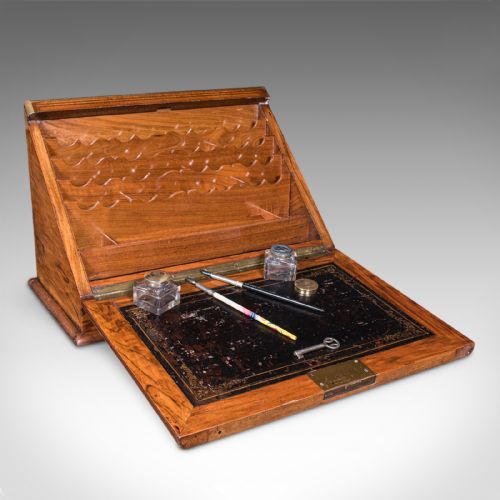
Internal fittings routinely incorporate leather writing surfaces, glass inkwells, and secret drawers concealed behind dummy partitions. Structural integrity relies on traditional dovetail joints and brass hinges designed to withstand regular opening and closing.
Vintage Walnut Writing Slope Retail Price Guide 2026
Typical asking prices for vintage walnut writing slope among the pieces listed under this phrase on Sellingantiques today, from the lower quarter to the upper quarter. They describe what is for sale here now, not the wider market.
Listings feature walnut writing slopes and bureaux spanning the 18th, 19th, and 20th centuries, alongside Edwardian and Victorian stationery cabinets.
Distinguishing quality
Quality rests upon the selection of timber veneers and the precision of the cabinetwork. Pieces featuring deeply figured burr walnut and balanced grain patterns across multiple panels demonstrate superior craftsmanship compared to plain timber surfaces.
The integration of secondary materials such as original brass mounts, fitted leather panels, and intact internal stationery compartments elevates an example. Finer pieces maintain alignment in their folding mechanisms and secret storage without relying on heavy modern intervention.
William Austin
The Vintage Walnut Writing Slope Glossary
- Writing slope
- A portable slant-lidded box designed to hold stationery and provide an angled surface for writing letters. These fold flat for transport and storage.
- Burr walnut
- A prized timber harvested from walnut tree growths, displaying intricate, swirling grain patterns. It is typically sliced into veneers for decorative furniture exteriors.
- Bureau
- A desk featuring a sloping fall-front flap that opens to reveal internal pigeonholes and small drawers. Many examples stand on bracket feet or dedicated framework stands.
- Secret drawers
- Concealed compartments hidden behind false partitions within a writing slope or bureau. Makers used these spaces for storing valuables and sensitive documents.
Vintage Walnut Writing Slope: Frequently Asked Questions
What is a vintage walnut writing slope?
A vintage walnut writing slope is a portable lidded box designed to provide a firm, angled surface for handwriting. Inside, compartments hold paper, pens, and inkwells.
These pieces reflect the styles of their respective eras, utilising walnut and burr walnut timbers shaped by cabinetmakers for everyday correspondence.
How were writing slopes used?
Owners used these boxes to write letters while travelling or sitting at a table. The hinged lid folded open to create a sloping writing plane lined with leather.
Stationery, nibs, and ink were stored securely inside the main body of the box beneath the writing flaps.
How do I identify the period?
Period identification relies on construction methods, brass hardware styles, and timber treatments. Georgian and Regency pieces often feature simpler brass bindings and proportions.
Victorian and Edwardian examples frequently introduce elaborate marquetry, varied internal stationery layouts, and figured burr walnut veneers.
How do I care for walnut veneer?
Walnut surfaces benefit from stable room temperatures away from direct sunlight and heat sources. This prevents the timber and underlying veneer from drying or cracking.
Occasional application of suitable wax polish helps maintain the lustre of the grain without building up heavy residues on the timber.