





Vintage Walnut Wall Clock
A vintage walnut wall clock brings rich timber grain and mechanical precision to a room, ranging from ornate Victorian carvings to streamlined Art Deco designs.

Vintage Walnut Wall Clock
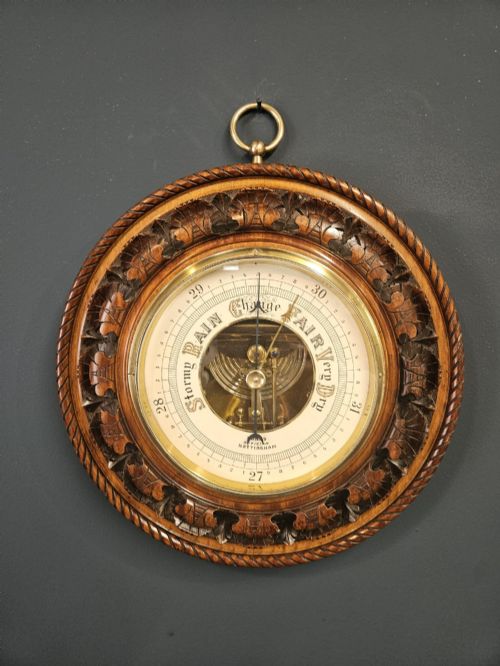
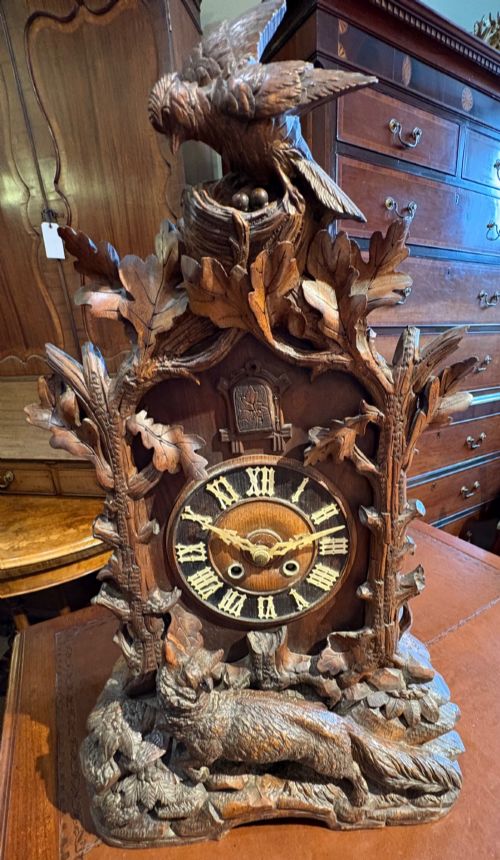
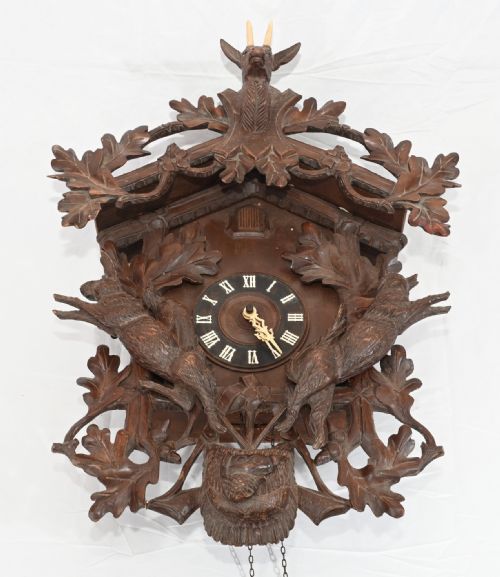
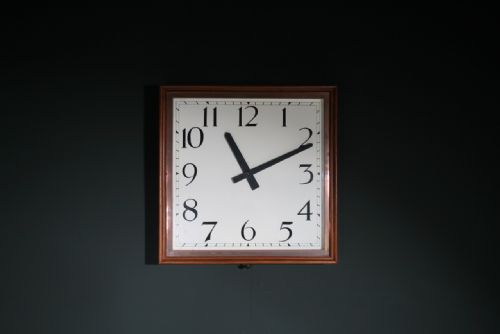
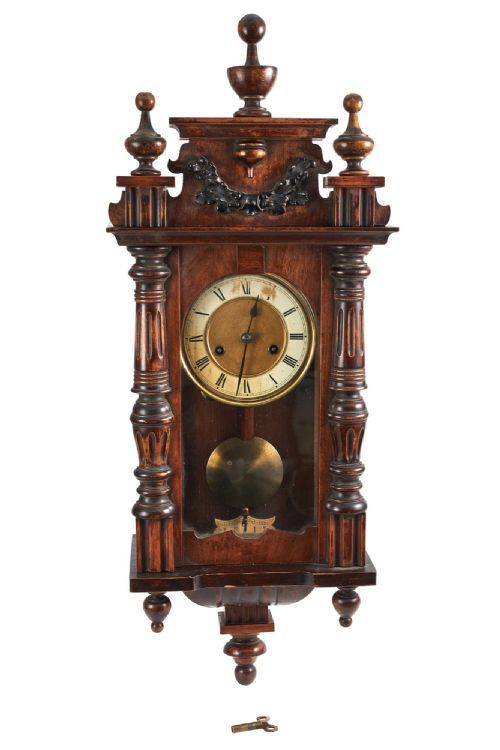
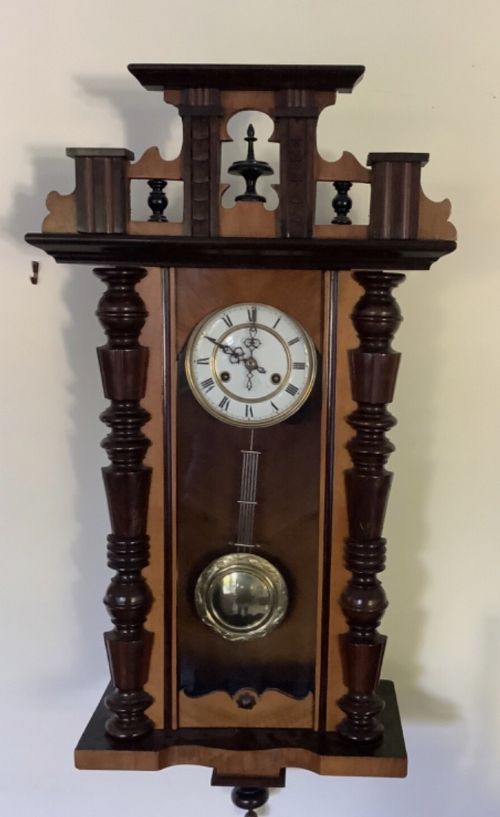
When you search for a vintage walnut wall clock, you encounter a selection spanning Victorian, Edwardian, and Art Deco periods, with origins in Britain, Germany, France, and the Black Forest. The pieces on this page include traditional Vienna regulators, carved Black Forest cuckoo clocks, striking wall clocks, and combined aneroid barometers.
The form is defined primarily by wall-mounted timber cases housing mechanical movements, often accompanied by brass pendulums, enamel dials, and glass viewing doors. The walnut timber appears in standard plain finishes as well as highly figured burr walnut, sometimes combined with ebonised wood or copper details.
Materials and construction
Cases are constructed from walnut and burr walnut, frequently featuring carved wood elements, applied mouldings, and ebonised highlights. Metal components such as brass, copper, and cast fittings provide the mechanical framework and decorative accents.
The listings on this page span the Victorian, Edwardian, and Art Deco eras, constructed primarily from walnut, burr walnut, and ebonised wood.
Assessing quality and craftsmanship
Quality reveals itself in the choice of timber and the depth of carving, where select burr walnut veneers and deeply hand-carved Black Forest foliage distinguish finer examples from plain production pieces. The crispness of the enamel dial lettering and the finish on the brass movement plates further separate superior horological work.
Proportion and architectural balance set the better regulator and banjo clocks apart, ensuring the dial, trunk, and lower door harmonise visually. Maker attribution, such as signed movements by established workshops, adds a distinct layer of quality to the physical execution.
Connell of London·Johann Baptist Beha·Payne of Tunbridge Wells·Gustav Becker
The Vintage Walnut Wall Clock Glossary
- Burr walnut
- A figured veneer taken from the burl growth of the walnut tree, prized for its swirling, organic grain patterns. It adds distinct visual depth to clock cases and barometer bezels.
- Vienna regulator
- A precision pendulum clock developed in Austria during the nineteenth century, known for its long glazed door and accurate weight-driven movement. These pieces often feature neoclassical architectural details.
- Aneroid barometer
- A weather-measuring instrument that uses a small, flexible metal box to detect atmospheric pressure changes without liquid mercury. They frequently share wall-mounted walnut cases with matching clock movements.
- Carillon
- A mechanical chime mechanism capable of playing multiple musical notes or quarter-hour tunes. These systems appear in mid-century Art Deco models housed in walnut cabinets.
- Ebonised wood
- Timber treated with a dark stain or finish to imitate ebony. It provides a sharp contrast against lighter walnut panels in Victorian and Black Forest designs.
Vintage Walnut Wall Clock: Frequently Asked Questions
How do weight-driven and spring-driven clocks differ?
Weight-driven movements rely on descending metal weights suspended by cords or chains to power the gear train, typically requiring vertical room inside a long case. They are frequently found in precision Vienna regulators.
Spring-driven clocks store energy in a coiled mainspring wound with a key, allowing for more compact case designs such as bracket clocks or shorter wall models.
What is a Vienna regulator clock?
A Vienna regulator is a high-precision timepiece developed in nineteenth-century Austria, characterised by a prominent pendulum and a long glass-fronted door that displays the swinging movement. These pieces were built for accuracy and often feature refined walnut veneer cases.
They earned their name because they met the strict timekeeping standards set in the Austrian capital, making them desirable fixtures in formal rooms.
How do I care for a mechanical wall clock?
Keep the clock away from direct sunlight, heating vents, and damp areas to protect the walnut timber veneer and the delicate metal components inside the movement. Ensure the case is hung level on the wall so the pendulum swings evenly without catching.
Wind the spring or weights gently using the correct key or procedure, and arrange for professional servicing every few years to keep the gear train clean and lubricated.
What is the difference between a timepiece and a striking clock?
A timepiece is a clock designed solely to indicate the hour and minute without any additional acoustic functions. It has a simpler movement train focused entirely on tracking time accurately.
A striking clock includes an extra gear train and hammer mechanism that sounds the hours or chimes quarter-hours on a gong, bell, or rod.