


Vintage Walnut Bar Trolley
A vintage walnut bar trolley brings distinctive Art Deco presence and practical mobility to modern entertaining.
Vintage Walnut Bar Trolley
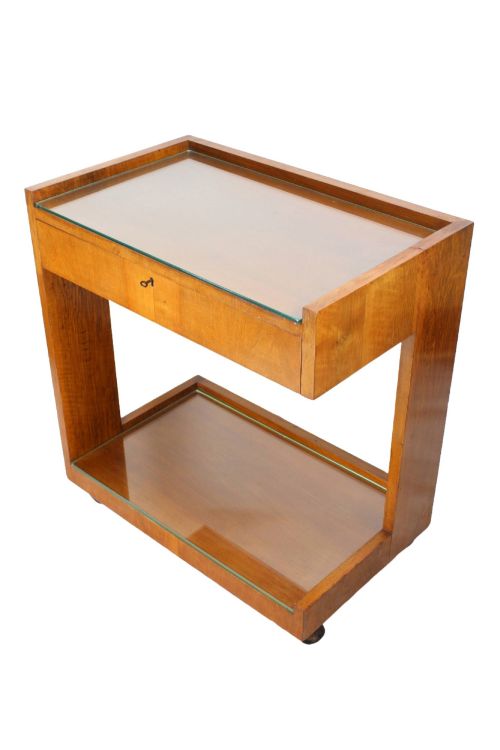
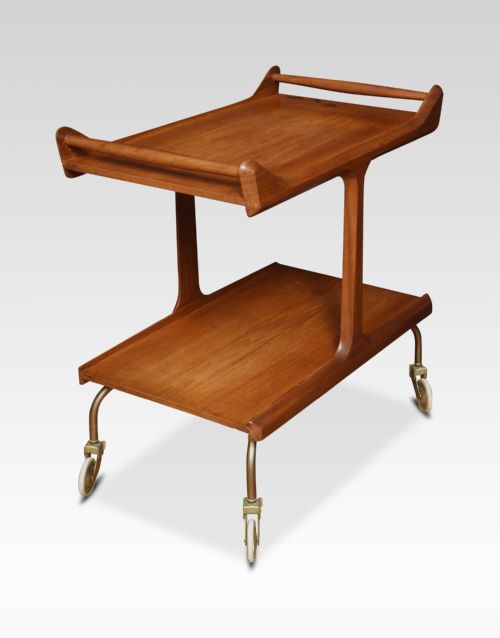
A vintage walnut bar trolley is a mobile serving piece designed for drinks and glassware, appearing most frequently in Art Deco and Mid-Century Modern styles. These items range from simple two-tier trolleys to metamorphic serving carts and pop-up cocktail tables.
The pieces listed on this page originate predominantly from the 1920s, 1930s, and 1940s. Forms include circular bar carts, streamline hostess trolleys, and side table drinks chests equipped with castors.
Materials and construction
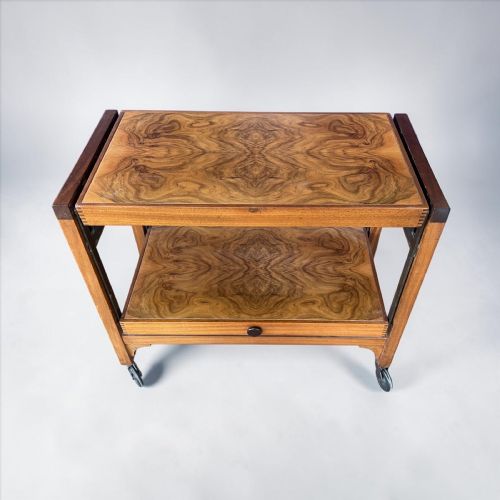
Construction relies heavily on walnut and figured walnut veneer, often paired with ebonised wood details. Metal and brass elements provide structural accents and support the mobility of the castors.
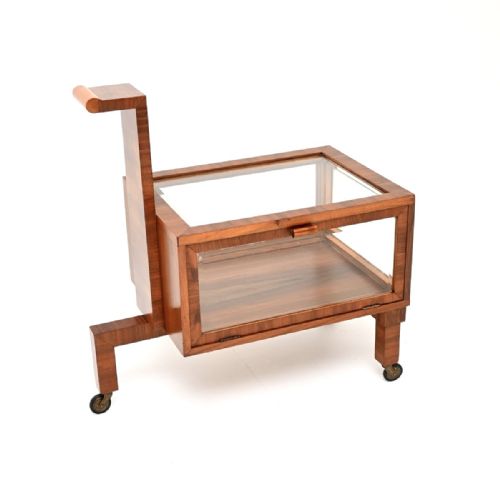
Glass is utilised for serving surfaces, while sophisticated internal mechanisms allow certain designs to transform from side tables into drinks chests or display cases.
Some trolleys incorporate clever metamorphic actions that let a modest side table suddenly reveal an entire hidden cocktail bar.
Assessing quality and craftsmanship
Quality rests in the grain pattern of the figured walnut and the execution of complex joinery found in metamorphic or pop-up mechanisms. Pieces that integrate smooth-rolling castors with sturdy multi-tier frames represent superior workshop standards.
The refinement of the silhouette, particularly in streamline and circular Art Deco designs, dictates the distinction between standard utilitarian service carts and high-style entertaining furniture.
The Vintage Walnut Bar Trolley Glossary
- Walnut
- A dense, dark timber valued for its rich grain patterns and suitability for fine veneer work. It serves as the primary material for surface construction across these trolleys.
- Metamorphic
- A descriptive term for furniture engineered to transform its shape or function, such as a side table that opens into a complete drinks chest.
- Castor
- A small wheel mounted on a swivel assembly attached to the base of the trolley. This allows the piece to move smoothly across floors during service.
- Ebonised wood
- Timber treated to resemble ebony, providing dark, contrasting trim details on Art Deco frames. It accentuates the lighter tones of the walnut veneer.
Vintage Walnut Bar Trolley: Frequently Asked Questions
What is a vintage walnut bar trolley used for?
These trolleys were originally designed to hold decanters, glassware, and bottles for serving guests during the home cocktail hour. Today, they function both as mobile drinks bars and as decorative side tables.
Their multiple tiers and fitted surfaces provide ample space to display glassware while keeping beverage collections organised within living spaces or dining rooms.
How do I date a vintage walnut bar trolley?
Dating relies on stylistic markers such as the streamline curves and geometric shapes characteristic of the Art Deco period. Most examples date from the 1920s through to the 1940s.
Construction methods, the specific figuring of the walnut veneer, and the integration of mechanisms like pop-up tops or metamorphic frames also help establish the decade of manufacture.
Are these trolleys sturdy enough for daily use?
Constructed from solid timber and sturdy veneers supported by metal frames and castors, these pieces were built for practical hospitality. Their robust builds allow them to bear the weight of bottles and glassware.
Routine care involves gentle cleaning of the wood and glass surfaces, ensuring the castors remain free of debris to protect both the furniture and your floors.
What styles are available for these trolleys?
The selection is dominated by Art Deco designs, featuring circular formats, streamline silhouettes, and occasional Mid-Century Modern influences. These styles emphasise geometric symmetry and rich wood grains.
Variations include two-tier serving carts, display cases combined with serving surfaces, and specialised cocktail tables with hidden compartments.