



Vintage Wall Shield
A vintage wall shield brings tactile authority to a room, turning bare plaster into a focal point of heraldry, taxidermy or carved timber.
Vintage Wall Shield
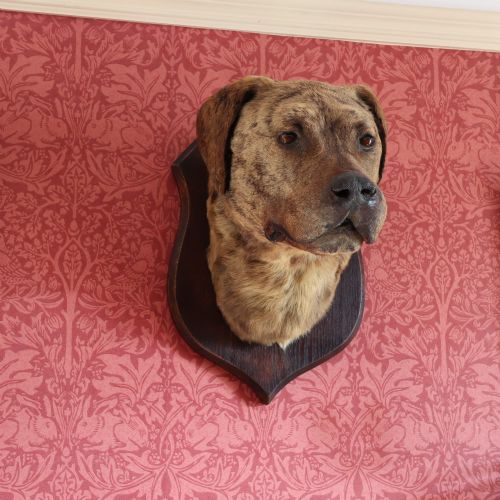
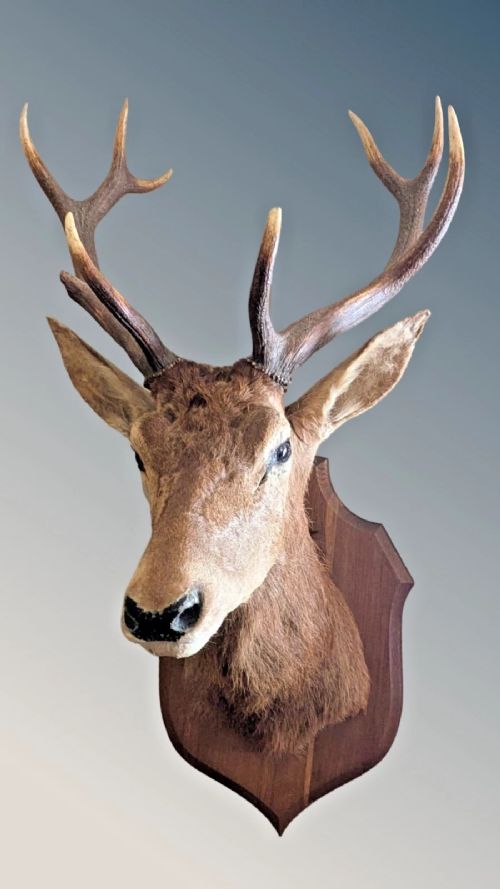
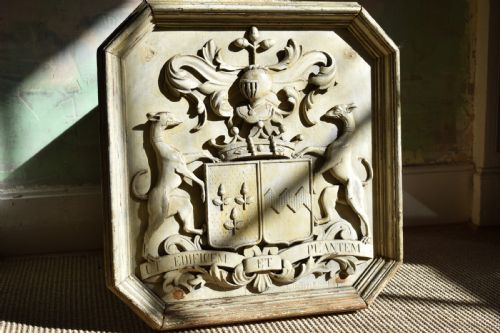
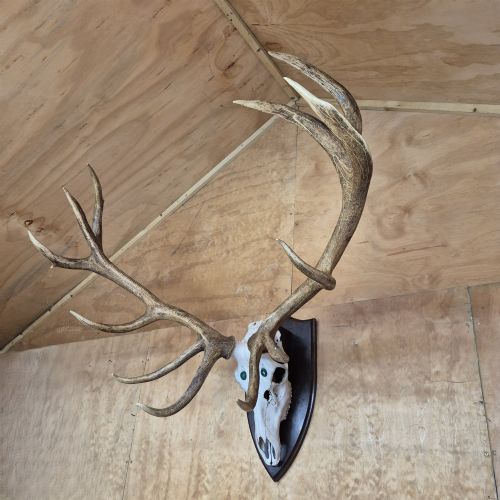
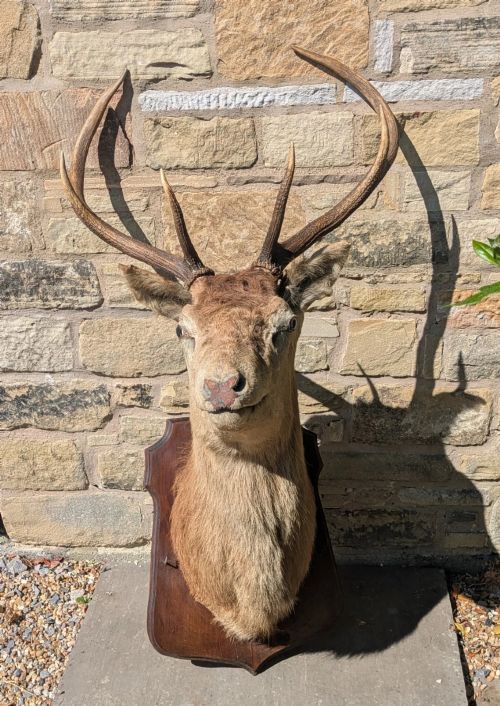
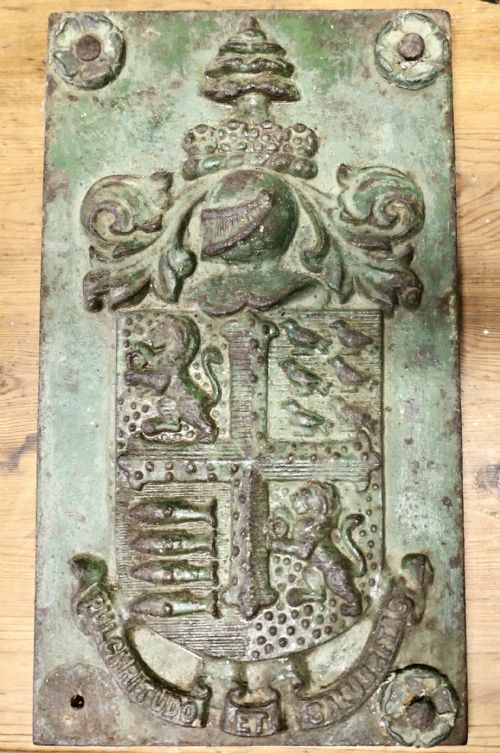
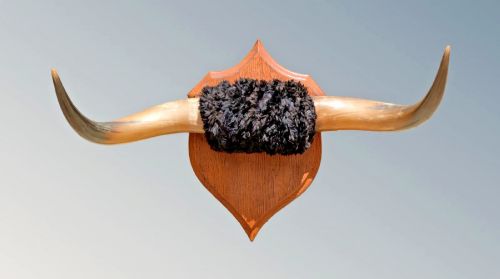
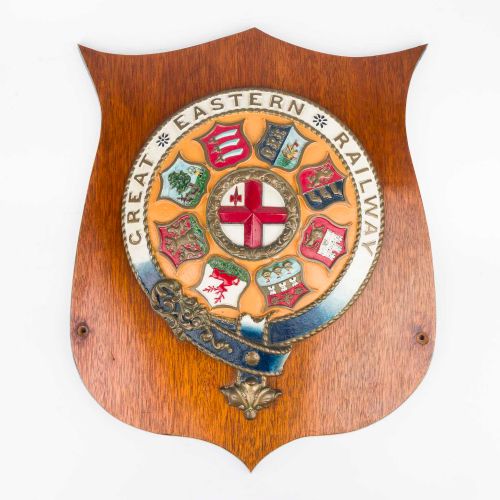
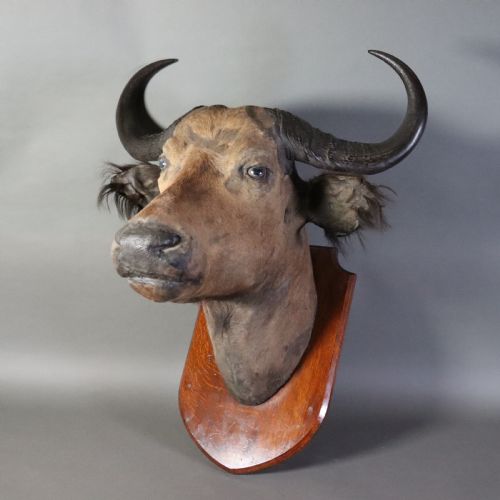
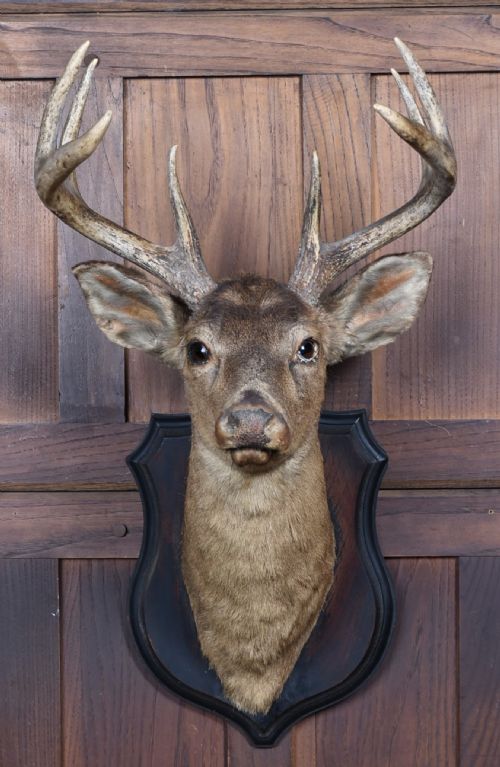
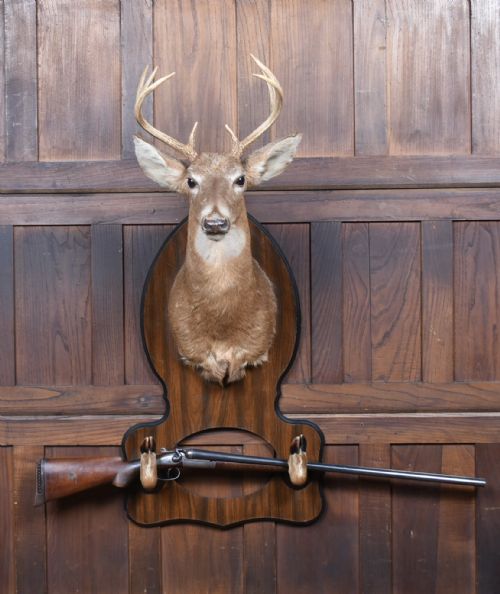
A vintage wall shield groups together several distinct forms, from taxidermy mounts set on wooden backs to cast iron armorial plaques and heraldic displays. You will frequently encounter taxidermy trophies, such as stags' heads and fox masks, mounted directly onto oak or carved shields.
The materials span natural bone, antler and taxidermy hide alongside solid brass, cast iron and carved hardwoods. These pieces originate from periods ranging from the Victorian era through the Edwardian years and into the Art Deco epoch.
Beyond animal mounts, the selection incorporates decorative wall mirrors and commemorative plaques shaped in the classic shield outline. These objects served as corporate insignia, railway crests, sporting trophies and lodge decor.
Materials and construction
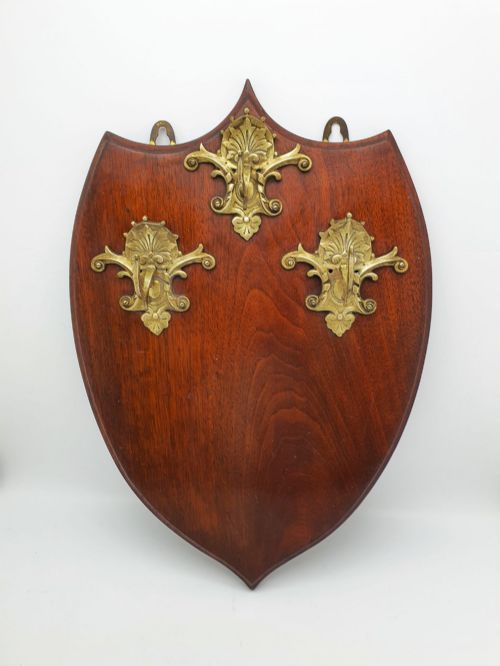
Taxidermy shields rely on seasoned oak or mahogany backing boards carved to shape, upon which natural horn, bone and hide trophies are securely fixed. Master taxidermists shaped these mounts to present realistic posture while integrating sturdy metal hanging brackets.
Metal shields and armorial plaques utilise cast iron, solid brass and silver-plating, often finished with engraved foliate decoration or applied heraldic enamel. Woodwork involves careful turning, shaping and inlay to frame mirrors or support key boards.
Vintage Wall Shield Retail Price Guide 2026
Typical asking prices for vintage wall shield among the pieces listed under this phrase on Sellingantiques today, from the lower quarter to the upper quarter. They describe what is for sale here now, not the wider market.
Several foxes are recorded watching proceedings closely from their vintage wooden shields.
Judging quality and craftsmanship
Quality rests primarily on the prestige of the maker and the crispness of the modelling, particularly in taxidermy specimens and cast metal heraldry. Pieces bearing attribution to established workshops display superior anatomical accuracy and cleaner casting lines.
The choice and preservation of materials dictate the enduring appeal of each piece, from richly grained carved walnut and oak to unblemished brass fittings. Original mounting hardware and untwisted antlers separate standard decorative items from finer examples.
Edward Gerrard and Sons·Peter Spicer and Sons
The Vintage Wall Shield Glossary
- Armorial
- Relating to heraldry or armorial bearings. These plaques display official crests and family coats of arms.
- Taxidermy mount
- The art of preserving and mounting animal specimens. In this category, specimens are fastened to wooden shield bases for wall display.
- Heraldic
- Pertaining to heralds or heraldry. These designs show formal coats of arms, badges and lineage symbols.
Vintage Wall Shield: Frequently Asked Questions
How do I hang a heavy shield?
Heavy taxidermy mounts and cast iron shields require direct fixing into masonry or solid wall studs using heavy-duty picture hooks and rawlplugs.
Avoid relying on standard plasterboard fixings, as the combined weight of the timber backing and specimen places significant downward leverage on the wall.
Where were these shields originally displayed?
Many of these pieces adorned Highland lodges, Victorian country houses, railway boardrooms and municipal offices as symbols of achievement or corporate identity.
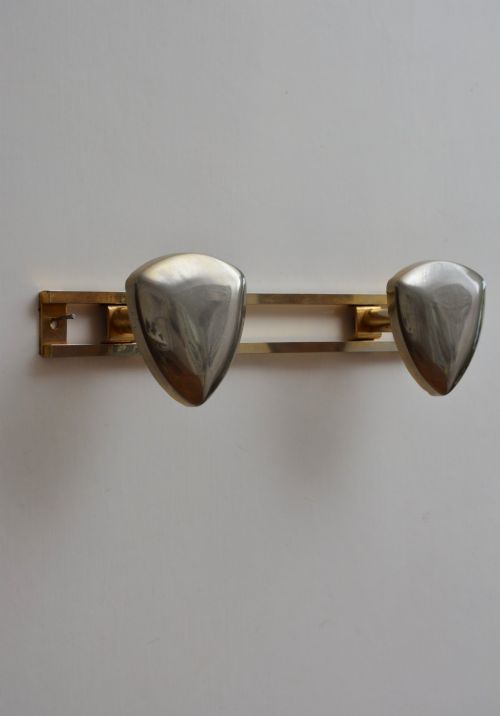
Hotel receptions and gentleman's clubs also utilised shield-backed key boards and armorial plaques to project authority and tradition.
How do I date a cast iron shield?
Dating relies on examining the casting quality, the style of the lettering, and any visible maker's marks or registration numbers on the reverse.
Victorian and Edwardian pieces typically feature heavier cast construction and hand-finished details compared to later mid-century reinterpretations.