


Vintage Wall Peg Rail
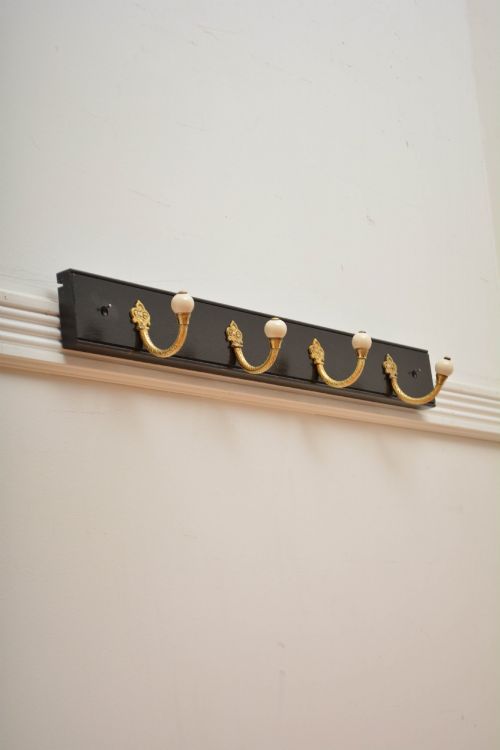
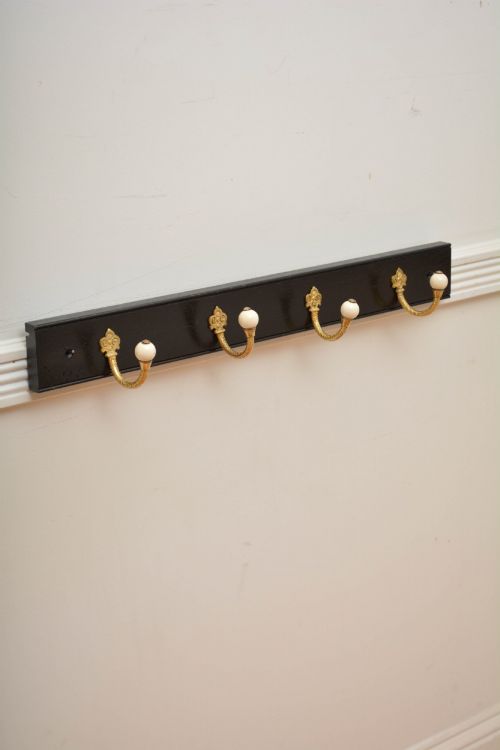
These vintage wall peg rail examples bring practical hallway storage with character, forged in brass, iron, and rich woods across several eras.
Vintage Wall Peg Rail
A vintage wall peg rail provides functional hanging space mounted to domestic walls, serving cloakrooms, reception halls, and utility spaces. The pieces gathered here range from simple utilitarian boards to detailed hall furniture.
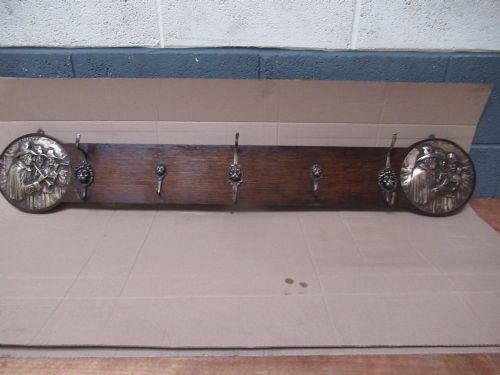
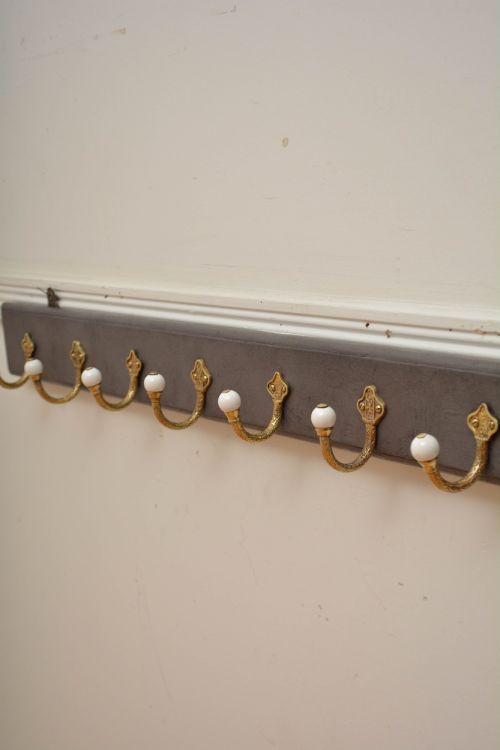
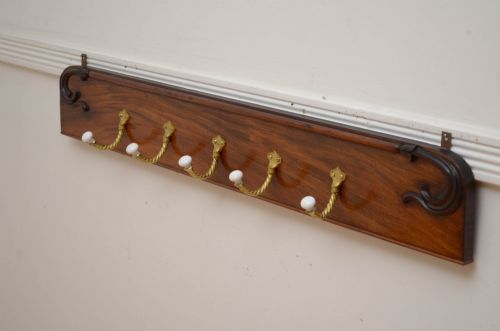
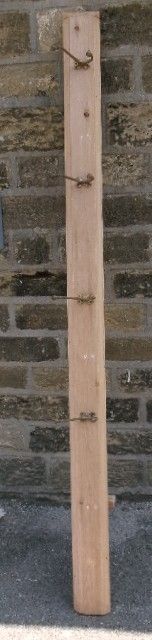
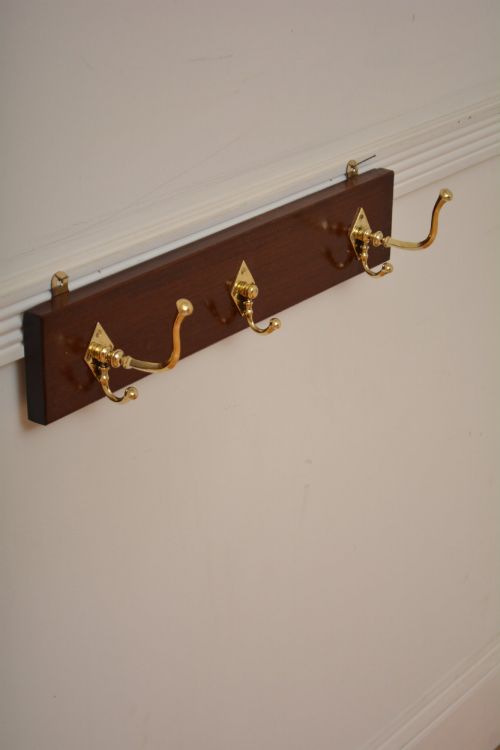
Most examples you will encounter date from the Victorian and Edwardian periods, alongside earlier Georgian items and later 20th-century designs. Backboards appear in woods such as pine, mahogany, oak, and beech, often holding brass, iron, or ceramic hooks.
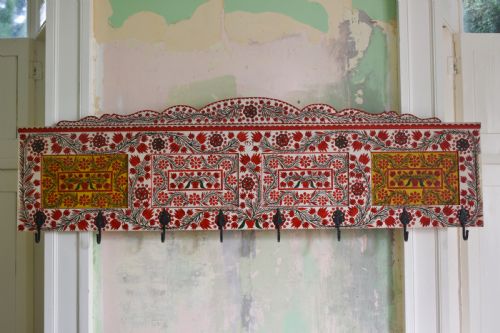
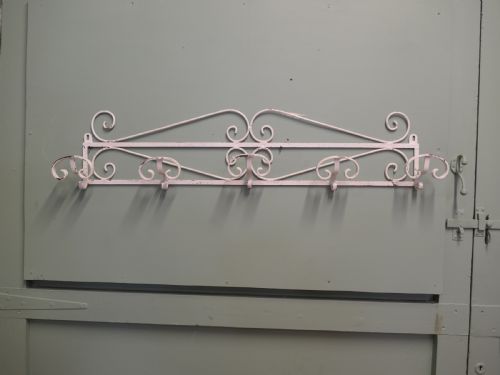
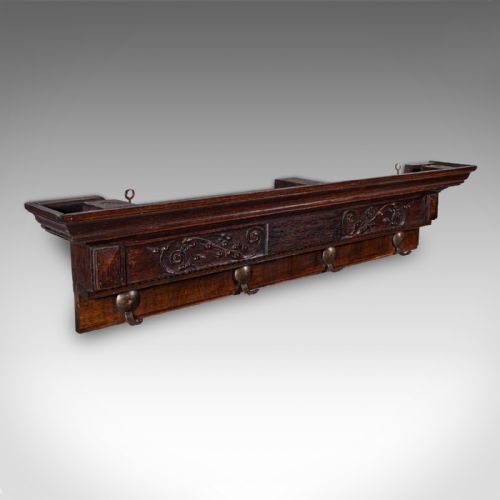
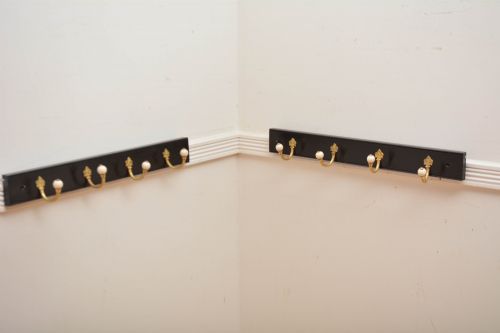
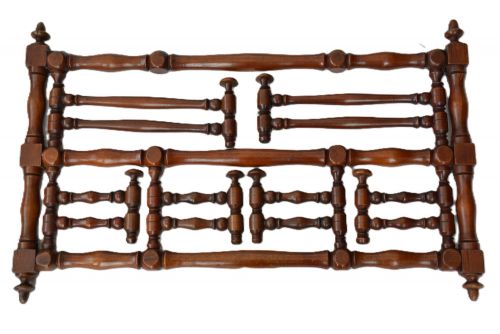
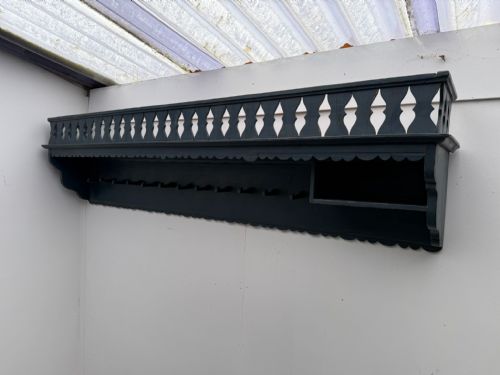
Variations in format include long racks with multiple hooks, pairs of hooks, and specialised combinations incorporating hat shelves. Painted surfaces and ebonised finishes also feature across French, English, and Hungarian styles.
Materials and construction
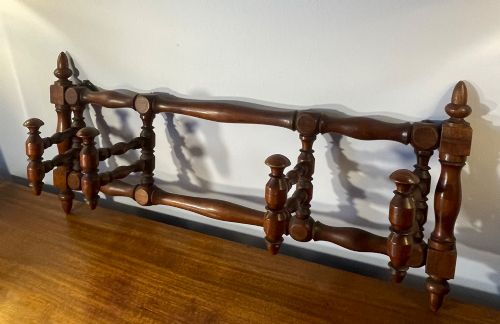
Backboards are shaped from solid timbers like pine, oak, and mahogany, sometimes painted in original colours or ebonised for a formal appearance. Joinery remains straightforward, designed for secure wall mounting in busy domestic settings.
Hooks are manufactured from cast brass, wrought iron, and sometimes fitted with ceramic elements or rope twists. These metal and ceramic components are secured directly to the wooden rails with original screws or fixings.
Vintage Wall Peg Rail Retail Price Guide 2026
Typical asking prices for vintage wall peg rail among the pieces listed under this phrase on Sellingantiques today, from the lower quarter to the upper quarter. They describe what is for sale here now, not the wider market.
Some Edwardian visitors to the hall hung their boaters on hat racks while smoothing their moustaches in the mirror.
Assessing quality and character
Quality rests in the substance of the backboard and the casting of the hooks. Solid hardwoods and heavier brass or wrought iron mountings distinguish sturdier pieces from simpler pine alternatives.
The integrity of the original hooks and mounting plates matters greatly. Pieces retaining matched sets of cast brass, ceramic-tipped, or decorative hooks command stronger interest than those with replaced hardware.
The Vintage Wall Peg Rail Glossary
- Backboard
- The horizontal strip of wood that carries the individual hooks and fastens to the wall. It provides the structural backbone of the rack.
- Ebonised
- Wood finished to resemble ebony through staining or painting. This dark, polished treatment was popular in formal Victorian furnishings.
- Aesthetic Movement
- A late 19th-century design style emphasising visual beauty over narrative content. Pieces from this movement often display refined brass detailing.
- Bentwood
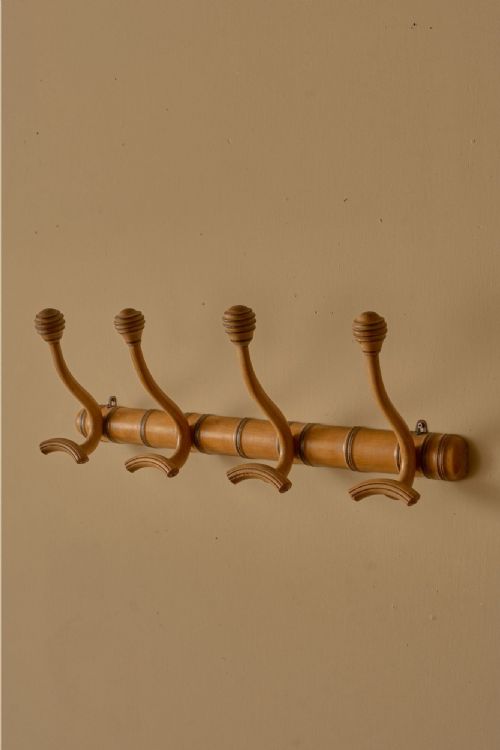
- Wood heated and bent into curved shapes. This technique creates graceful, continuous lines for hooks and frames.
- Wrought iron
- Iron beaten and shaped by hand while hot. It yields durable, textured hooks typical of rustic and industrial styles.
Vintage Wall Peg Rail: Frequently Asked Questions
Where should I hang a vintage peg rail?
These rails suit hallways, boot rooms, and kitchens for organising coats, hats, and everyday accessories.
Ensure you fix the backboard securely into wall studs or use appropriate masonry plugs to support heavier garments.
How do I know the period of a rail?
Dating relies on the wood types, screw fixings, and the manufacturing style of the metal hooks.
Victorian and Edwardian examples often feature heavy brass or ceramic-capped hooks mounted on mahogany or pine boards.
Are the hooks always original to the board?
Most retain their original hardware, visible through consistent wear and matching patination on the metal.
Occasional replacements happen over decades of domestic use, which is common in functional antique utility items.
Can these rails hold heavy winter coats?
Sturdier hardwood rails with deeply screwed iron or brass hooks easily handle heavy outdoor garments.
Lighter pine or bentwood versions work best for hats, scarves, and lighter jackets.