

Vintage Wall Hat Hanger
These vintage wall hat hanger pieces are sturdy brass and timber wall fixtures designed to hold everyday garments, combining practical storage with period character.
Vintage Wall Hat Hanger
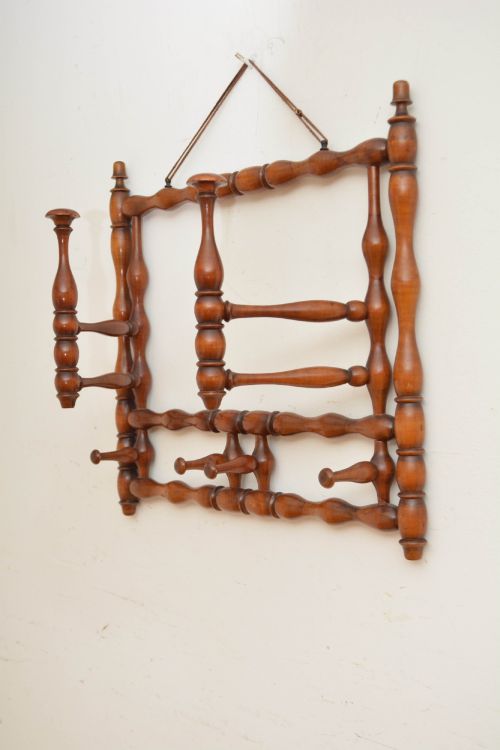
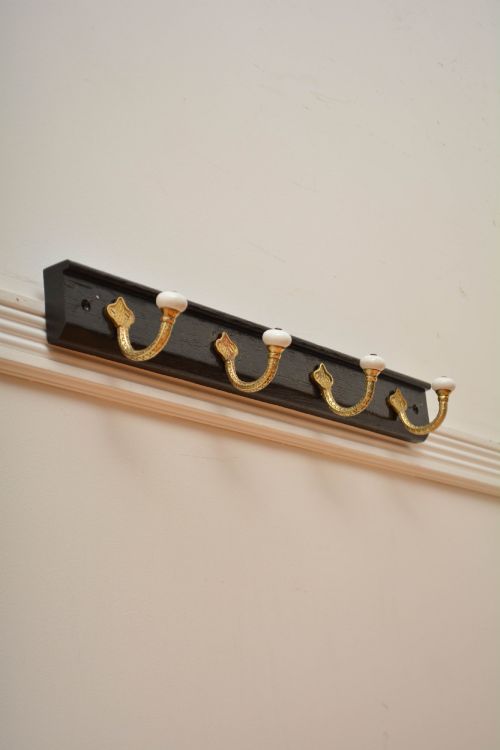
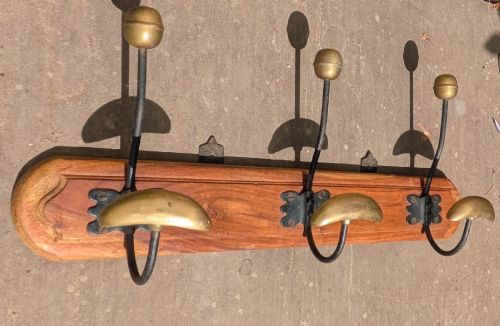
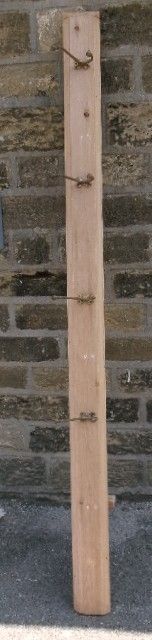
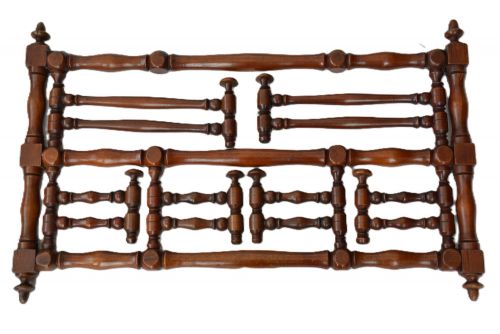
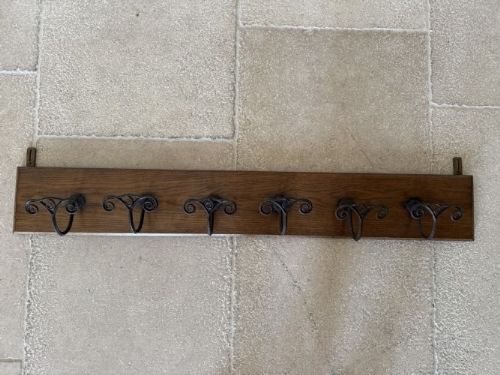
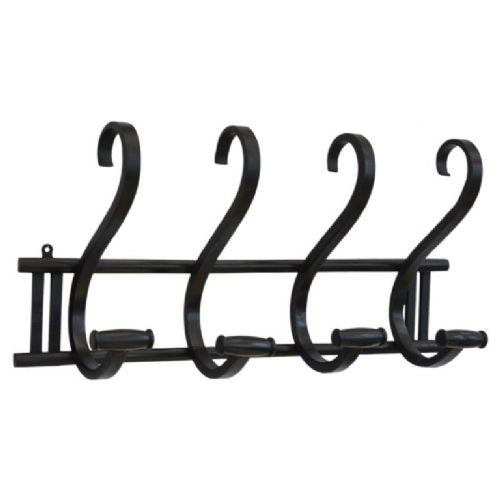
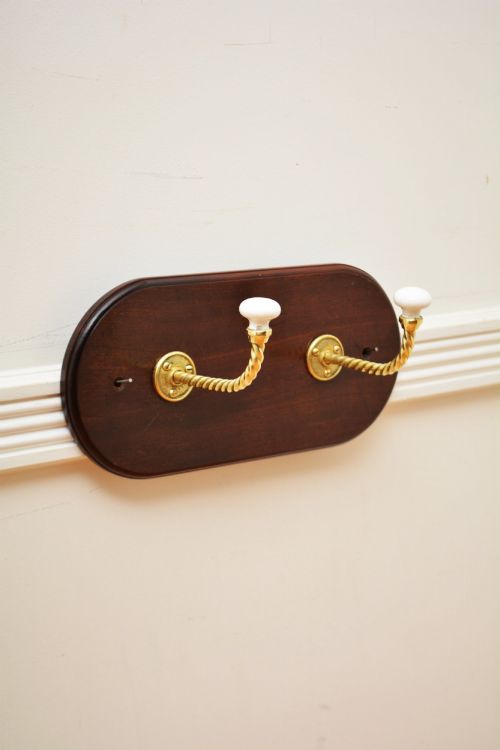
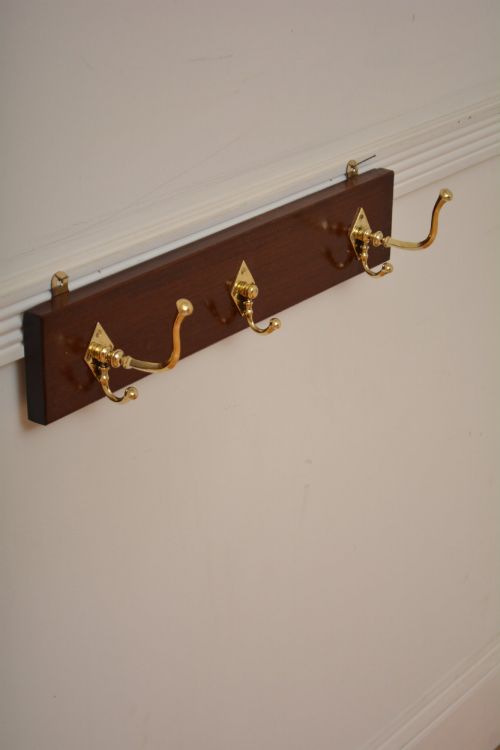
A vintage wall hat hanger provides robust domestic storage through wall-mounted hooks and racks spanning the Victorian era to the 1930s. These pieces include single pairs of hooks mounted on simple timber backboards as well as larger French hat and coat racks.
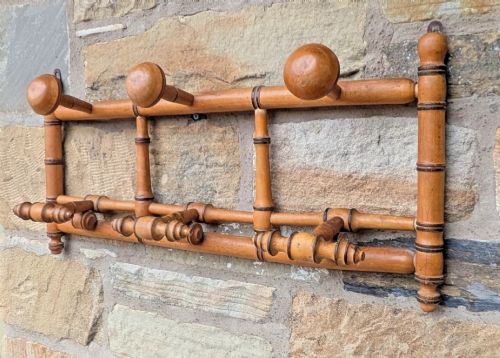
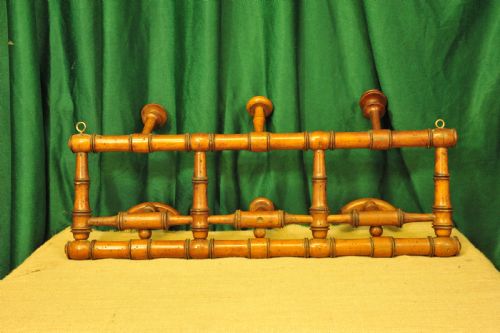
Period variations span late 19th-century aesthetic movement pieces and French faux bamboo styles through to geometric Art Deco metalwork. Each configuration reflects the specific storage demands of its original domestic or hospitality setting.
Materials and construction
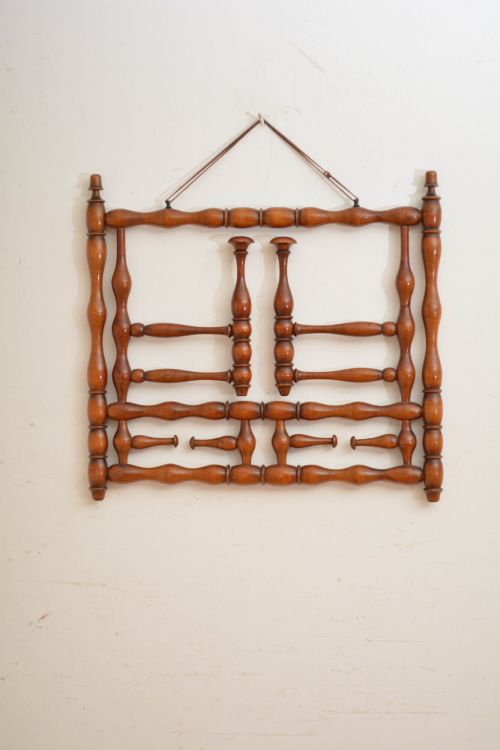
Makers utilised solid hardwoods such as oak, mahogany, beech, and pine to form the backboards and wall plates that support the weight of heavy garments. These timbers were frequently ebonised, polished, or shaped using turned wood and simulated bamboo techniques.
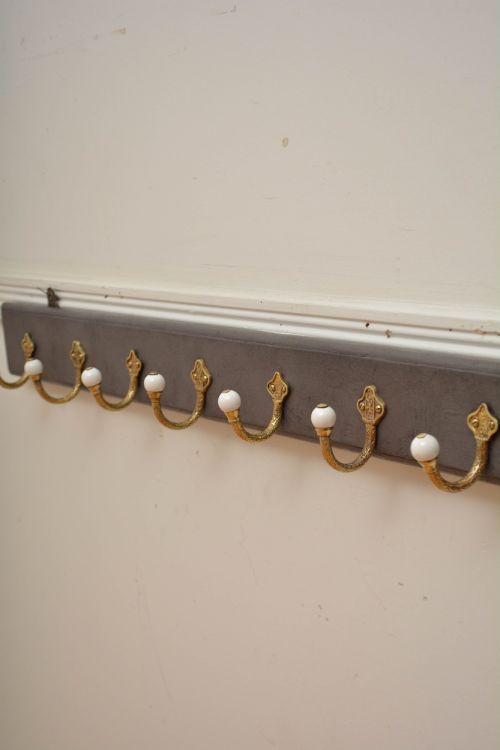
Metal components relied on cast brass, bronze, wrought iron, and gold or silver metal finishes to create durable mounting plates and double hooks. Ceramic elements were often incorporated into the hook designs for decorative contrast.
Assembly methods combined wood-screws and fitted mounting plates to secure the hooks firmly to their supporting timber backboards. Structural integrity depended on the gauge of the cast metal and the density of the wood.
Vintage Wall Hat Hanger Retail Price Guide 2026
Typical asking prices for vintage wall hat hanger among the pieces listed under this phrase on Sellingantiques today, from the lower quarter to the upper quarter. They describe what is for sale here now, not the wider market.
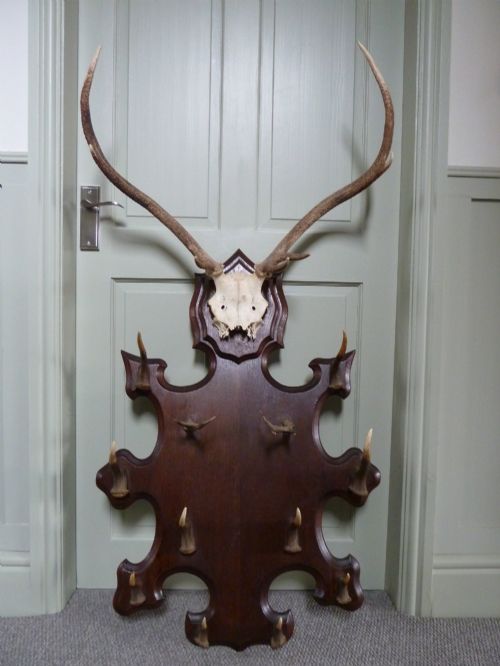
Taxidermy horns occasionally found their way into hallway fittings, offering guests a decidedly rural place to deposit their hats.
Judging quality and execution
Quality reveals itself in the weight and crispness of the cast brass or bronze work on the mounting plates and hooks. Superior examples display intricate detailing and robust construction without thinning or bending under pressure.
The selection of timber significantly affects the overall character of the piece, with dense grain figures in mahogany and golden oak marking out finer examples. Simpler pine backboards offer a more utilitarian domestic finish.
The integrity of the original assembly, including matching hook sets and well-preserved surface patination, separates standard utility items from more decorative domestic furnishings.
The Vintage Wall Hat Hanger Glossary
- Backboard
- The horizontal timber plank that secures the hooks to the wall. It distributes the weight of garments across multiple fixing points.
- Portmanteau
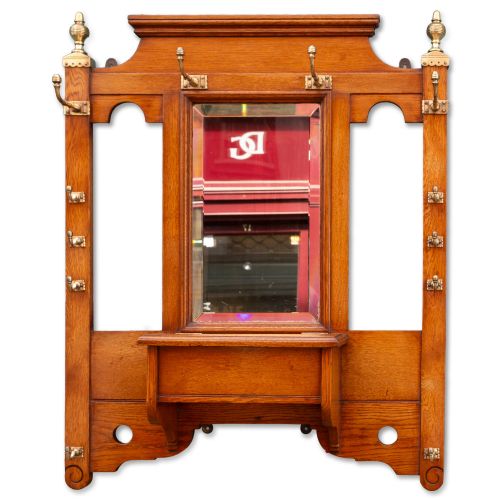
- A large wall-mounted combination piece incorporating coat hooks, hat storage, and frequently a mirror. These fixtures served as hallway focal points in larger period homes.
- Ebonised
- Timber treated with a dark stain or chemical finish to imitate ebony. This technique was popular during the Victorian period for accentuating brass fittings.
- Faux bamboo
- Wood turned or carved to replicate the segmented joints of natural bamboo. This decorative style appeared widely in French wall racks from the late 19th century onwards.
- Aesthetic movement
- A late 19th-century design style prioritising visual beauty over narrative function. Pieces from this period often combine contrasting materials like mahogany and brass.
Vintage Wall Hat Hanger: Frequently Asked Questions
How do I mount a heavy coat rack securely?
These wall fixtures require firm anchoring into wall studs or solid masonry using appropriate screws and wall plugs. Because heavy winter garments and hats exert significant leverage, proper fixing ensures the timber backboard remains flush against the wall.
Distributing the weight evenly across multiple mounting holes prevents the wood from warping or pulling away under load.
What is the difference between Victorian and Art Deco hat racks?
Victorian pieces typically favour dark timbers like oak and mahogany paired with heavily cast brass or ceramic-tipped hooks. They often emphasise ornate craftsmanship and traditional domestic utility.
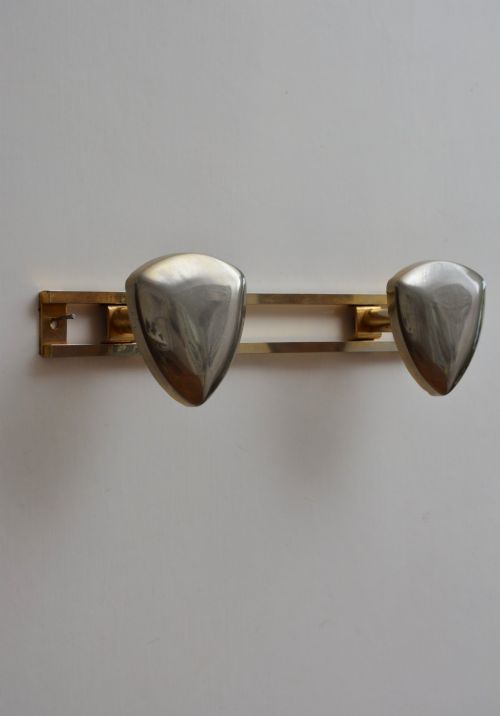
Art Deco versions from the 1920s and 1930s introduce streamlined metalwork, wrought iron, and geometric shield shapes. These later designs reflect a shift towards more industrial and modernist hallway aesthetics.
Were these racks originally used in hallways?
Most of these pieces were installed in entrance halls, boot rooms, and bedrooms to receive outdoor garments upon arrival. Their sturdy construction allowed households to hang heavy wool coats and hats daily.
Larger mirrored portmanteaus served a dual purpose in entrance spaces, allowing occupants to check their appearance before leaving the house.
How do I clean brass and timber components?
Timber backboards benefit from occasional treatment with appropriate furniture wax to nourish the grain and preserve the surface finish. Avoid harsh chemical cleaners that might strip the historic patina.
Brass and bronze hooks can be dusted regularly with a soft cloth. Retaining the aged metallic surface is generally preferred over aggressive polishing.