

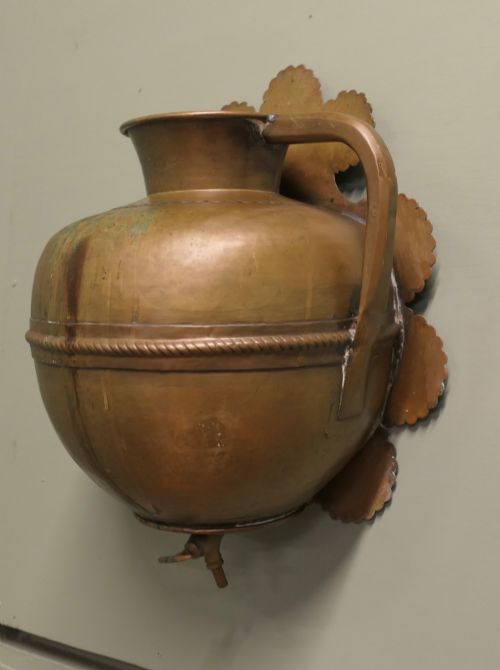
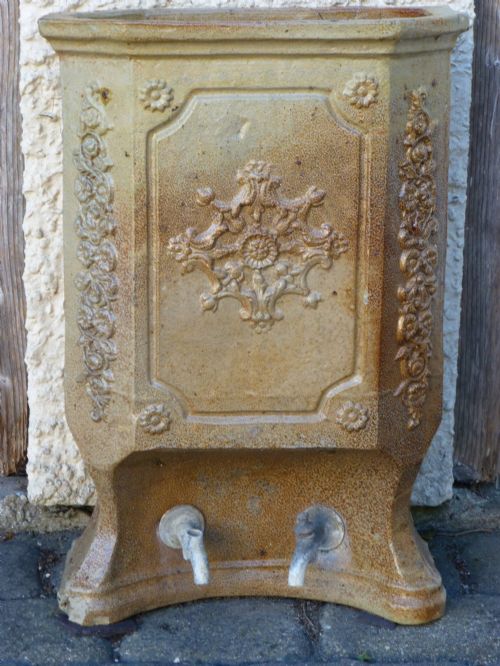





Vintage Wall Cistern
These vintage wall cistern examples and associated hanging weather instruments offer a practical connection to historical utility and interior design.
Vintage Wall Cistern
When you search for a vintage wall cistern, you are encountering a diverse group of wall-mounted utilitarian objects and scientific instruments including barometers and water vessels. The listings on this page span several centuries and styles, dominated heavily by stick barometers alongside water filtration vessels and rain catchers.
The selection ranges from George III mahogany cases to 19th-century French salt-glazed stoneware and brass water vessels. Buyers will find that stick barometers form the majority of the items catalogued under this heading, reflecting both domestic weather tracking and historical interior utility.
How they were made
The construction of these pieces relies on traditional cabinet-making timbers such as mahogany, oak, walnut, and ebonised woods to house delicate glass barometer tubes and mercury columns. Metal elements utilise cast brass, copper, and silvered brass for dials, cistern covers, and taps.
Water vessels employ salt-glazed stoneware and hand-made brass fabrication methods. Scientific instruments incorporate precise glass working and engraved scale plates alongside timber case construction.
Vintage Wall Cistern Retail Price Guide 2026
Typical asking prices for vintage wall cistern among the pieces listed under this phrase on Sellingantiques today, from the lower quarter to the upper quarter. They describe what is for sale here now, not the wider market.
The current listings combine 19th-century French brass rain catchers and stoneware water vessels with British 18th and 19th-century oak and mahogany stick barometers.
What varies in quality
Quality differences emerge in the execution of the timber cases, from plain mahogany boards to finely figured veneers and bow-fronted designs. The precision of the maker's engraved brass scales and the integrity of the original glass tubes distinguish the output of notable scientific instrument makers from standard commercial pieces.
The material composition of the cistern housing, whether simple oak or heavy salt-glazed stoneware, dictates the character and weight of the object. Finer examples display meticulous attention to jointing and casework detail.
The Vintage Wall Cistern Glossary
- Stick barometer
- A tall, wall-mounted weather instrument utilising a vertical glass tube filled with mercury to measure atmospheric pressure against a fixed scale.
- Fortin barometer
- A specialised stick barometer featuring an adjustable cistern leather base to set the mercury level precisely to the zero point of the scale.
- Salt-glazed stoneware
- Ceramic fired at high temperatures with salt introduced to the kiln, creating a dense, vitrified finish ideal for water filtration vessels.
- Bow-fronted
- A cabinet or case design featuring a convex, curved front profile that projects outward from the wall.
- Silvered brass
- A metal plate treated with a silver compound to provide a bright, readable surface for engraved graduations and maker signatures.
Vintage Wall Cistern: Frequently Asked Questions
How do I hang a stick barometer safely?
These instruments require secure wall fixings capable of supporting their dense timber and glass weight, typically utilising dual mounting points to keep the mercury tube strictly vertical.
Ensuring the case hangs plumb is essential for accurate atmospheric readings and prevents undue stress on the antique fixings.
What is the difference between a cistern and a barometer?
A cistern in this context generally refers to a vessel designed to hold liquids, such as water filtration fountains or rain catchers made of brass and stoneware.
A barometer is a sealed meteorological device containing mercury that measures atmospheric pressure rather than retaining fluids.
How do I identify the wood on these pieces?
Examination of the grain patterns and colour helps distinguish between mahogany, oak, walnut, and ebonised finishes used across the 18th and 19th centuries.
Many listings specify the primary timber in their titles, aiding in period and regional attribution.
Are these barometers still accurate for weather forecasting?
While historic barometers record genuine atmospheric pressure changes, antique mercury instruments serve primarily as decorative and historical scientific objects.
Modern forecasting relies on digital instrumentation, but these traditional devices still respond correctly to local barometric shifts.